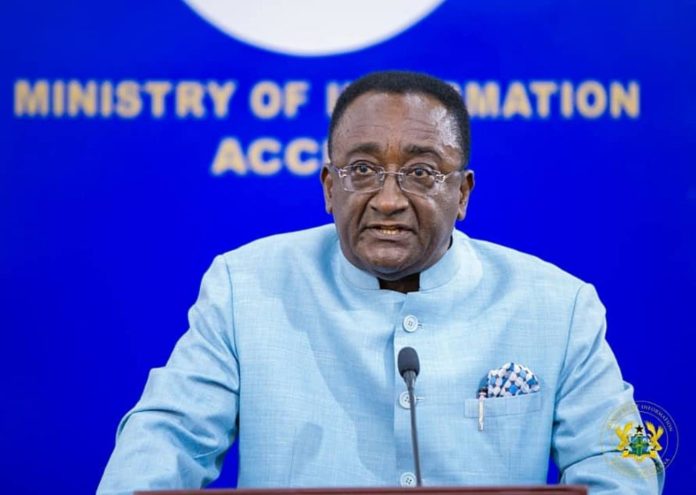

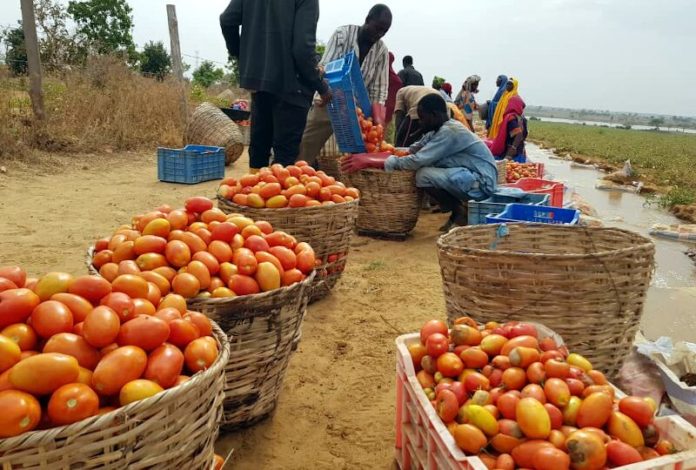
The Ministry of Food and Agriculture says the passing of the Grains Development Authority bill will address the current challenges of food fluctuations in the country.
AGRA President Dr. Agnes Kalibata has been appointed to the high-profile Climate Overshoot Commission.
The President of Alliance for a Green Revolution in Africa (AGRA), Dr. Agnes Kalibata, has been selected as one of 16 eminent members of the Climate Overshoot Commission.
Komenda Sugar Factory to import raw sugar for processing – Board
The Board of the Komenda Sugar Factory has announced that it will import raw sugar to support what will be produced locally in order to operationalize the Komenda Sugar Factory.
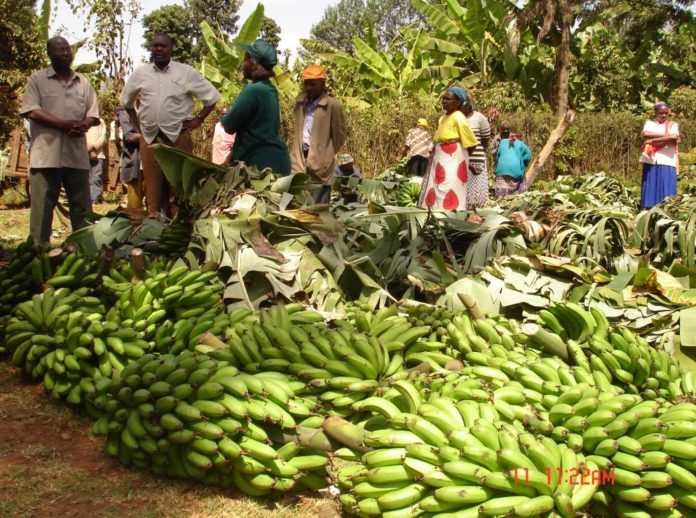
Ghana to import plantain from Rwanda.
Ghana virtually imports everything including water, salt, toothpick, cassava, and many others. The shocking news this morning is Ghana is preparing to import plantain from Rwanda.
CSIR – SARI develops technology to increase the yield of legumes to enhance food security.
The Council for Scientific and Industrial Research — Savanna Agricultural Research Institute (CSIR-SARI) has developed a technology to increase the yields of grain legumes, such as cowpea, Bambara bean groundnut, and soybean to ensure food security.
Cocoa production to fall by one-third – Report.
Cocoa production for the 2021/22 cocoa season has been forecasted to fall by one-third due to less conducive weather conditions and the outbreak of swollen shoot disease.
According to the International Cocoa Organisation’s (ICCO) monthly report for April 2022, the global 2021/22 cocoa market will fall into a deficit of 181,000MT from a surplus of 215,000 in 2020/21. Global 2021/22 cocoa production will fall by 5.2 percent year on year (y/y) to 4.955 MMT from a record 5.226 MMT in 2020/21.
“Available information on crop sizes in main cocoa origin countries of West Africa suggests that the 2021/22 cocoa season is heading toward a world deficit of approximately 181,000 tonnes mainly due to a shortfall in the Ghanaian production. Indeed, less conducive meteorological conditions and the outbreak of swollen shoot disease are the major contributing factors for the production decline,” the report said.
Reports by Reuters in April suggested that harsh weather conditions due to the harmattan winds are expected to reduce cocoa production in Ghana by at least 31 percent in 2021/22 from the season before. It further reported that country’s total production is projected not to exceed 710,000-720,000 tonnes this year, mainly because of a climate that has been catastrophic for cocoa.
Consequently, the swollen shoot disease outbreak could further deepen the woes already predicted.
Swollen shoot disease.
In late 2021, 43,281 cocoa trees affected by the swollen shoot disease were destroyed on 106.58 hectares of farmlands in the Dormaa Central Municipality of the Bono Region. The move was made proactively to avoid the disease spreading further.
This disease, according to COCOBOD, is estimated to have an infection rate of 20 percent of the country’s cocoa trees.
The cocoa farms in the Western North Region of the country have been the subject of rehabilitation under the National Cocoa Rehabilitation Programme (NCRP). These regions have been affected by the swollen shoot disease, which has had devastating effects on the country’s prime crop.
Approximately 11 percent of cocoa farms in the region, 51,537 hectares out of 487,386, have been rehabilitated under the programme so far. The NCRP was launched in 2017 by COCOBOD and financially supported by the African Development Bank (AFDB), with the objective of treating farms affected by the virus and replanting infected cocoa plants with disease-tolerant and early-bearing, high-yielding varieties.
As part of the programme, compensation is also to be paid to participating farmers and landowners for up to two years after the plantation.
Côte d’Ivoire cocoa production.
In Côte d’Ivoire, the 2021/22 cocoa production is also expected to be lower than the 2020/21 crop. As of May 1, 2022, cumulative arrivals of cocoa beans in the country were seen at 1.807 million tonnes; down by 3.2 percent compared to the volumes recorded in the same period of the previous cocoa year.
“Less supportive meteorological conditions can be cited as a cause of the expected lower production in Côte d’Ivoire,” ICCO said.
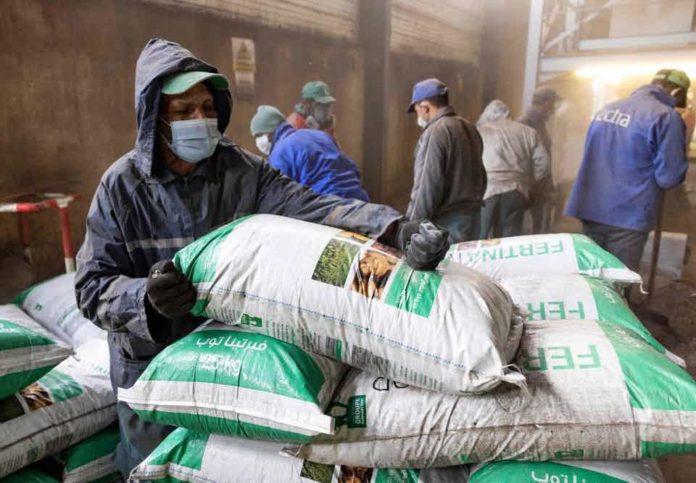
Fertiliser shortages: The poultry industry could suffer greater shocks, says Akufo-Addo.
President Akufo-Addo said the crisis in Ukraine has compromised the food security of Africa through the unavailability of fertiliser.
President Akufo-Addo has said the country’s poultry industry could suffer greater shocks from the feritliser shortages being experienced across Africa.
He said Ghana’s maize and soy production could be affected adding “our poultry industry could suffer greater shocks.”
Akufo-Addo said the growing concerns of fertiliser shortages across Africa including Ghana are very worrying.
The president sounded the alarm while opening the 22nd Academy of African Business and Development Conference (AABD) at the University of Professional Studies in Accra on Wednesday (18 May).
He said the crisis in Ukraine has compromised the food security of Africa not only by the disruption of commodity import but also by the unavailability of fertiliser for crops.
Clarion call.
Akufo-Addo said the current derangement in the global commodities market, supply chains and logistics should represent a clarion call for Africa to rise up and stand on her own feet.
He said Africans must, therefore, take advantage of the historic opportunity that the African Continental Free Trade Area (AfCFTA) presents as it provides both impetus and catalyst for much needed sustainable development adding that “the time to pursue the path of prosperity and self-respect for our nations and continent is now.”
Africa beyond aid.
Speaking on the theme: “Sustainable Development Beyond Aid: The Focus for Africa?” President Akufo-Addo said the concept of Africa beyond aid is about acknowledging that “we must develop in a sustainable manner “recognising that we must take the bull by the horn and take responsibility for our sustainable growth while pursuing our fellow African countries as key stakeholders in our own development.”
The African Business and Development Conference (AABD) is an annual conference aimed at facilitating multidisciplinary research by stimulating collaborations between Africa based researchers and professionals and their counterparts around the world by broadening and deepening global understanding of various issues relevant to Africa’s business and development, as well as advancing solutions to some of her challenges.
The conference which started on Tuesday (17 May) is expected to end on 21 May 2022.
The government instituted measures to strengthen food security by extending the temporary ban on grain exportation.
The government has extended the temporary ban on the exportation of grains including rice, maize, and soya beans.
The ban is to last for an additional six months effective April 1, to September 30, 2022.
“On account of this directive, consequential action is being taken to ensure strict enforcement at all Metropolitan, Municipal, and District Assemblies (MMDA’s),” the Ministry of Food and Agriculture (MoFA) said in a letter to the Ministry of Local Government, Decentralisation and Rural Development dated May 16, 2022.
MoFA further requested that the Local Government Ministry issue the required directives to MMDAs take the necessary action with the involvement of the District Security Councils (DISECs) to disseminate information and intensify the monitoring of trucks carting grains from market centers to neighbouring countries.
“We urge that prompt action is taken at all times with the involvement of the security agencies to give full effect to the directive of His Excellency the President,” the letter concluded.
The extension of the temporary ban on grains comes amidst the food shortage crisis as a result of the Ukraine war and a poor harvest season in the country.
It’s crazy to blame Russia and Ukraine for the hunger in Africa – Former President, Mahama.
The Former President, John Dramani Mahama has said it does not warrant blaming Russia and Ukraine for the hunger in Africa. This comment comes after the World Bank said the world is facing a “human catastrophe” from a food crisis arising from Russia’s invasion of Ukraine