
Home Blog Page 181

U.S. Supreme Court signals interest in child-slavery cocoa lawsuit.

A farmer breaks cocoa pods with a hooked knife, showing the beans inside, at Ghana plantation.

The U.S. Supreme Court signaled interest in giving companies a broader shield from lawsuits by victims of overseas atrocities, asking the Trump administration for advice on a case stemming from child slavery on cocoa farms in the Ivory Coast.

Nestle’s U.S. unit and Cargill Inc. are urging the court to end a suit that accuses them of complicity in the use of forced child labor in the African country. The Supreme Court on Monday asked U.S. Solicitor General Noel Francisco to advise whether the justices should hear the companies’ appeals.

The case would test a centuries-old law, the 1789 Alien Tort Statute, that became a favorite tool of human-rights activists before the Supreme Court started scaling it back. The court decided in 2013 that the law generally doesn’t apply beyond U.S. borders, and in 2018 that foreign corporations can’t be sued in that context.

But a federal appeals court said the allegations against Nestle and Cargill might have enough of a U.S. connection if the plaintiffs amended their lawsuit to provide more specifics.

“The allegations paint a picture of overseas slave labor that defendants perpetuated from headquarters in the United States,” the San Francisco-based appeals court said.

The case, filed by six former slaves who were kidnapped from their native Mali, has been moving up and down the federal court system since 2005. The companies are accused of aiding and abetting slave labor by giving Ivory Coast farmers financial assistance in the expectation that cocoa prices would stay low. The suit alleges the companies were fully aware that child slavery was being used.

The ex-slaves say children were forced to work as much as 14 hours a day, given only scraps to eat, and were severely beaten or tortured if they tried to escape.

In its appeal, Nestle USA said the plaintiffs “have not even alleged that their injuries can be traced to the domestic conduct of a defendant.” The company said it “unequivocally condemns child slavery.”

Cargill said the plaintiffs “do not allege they worked on a farm from which Cargill purchased cocoa or to which Cargill provided any form of assistance.”

Combined, Ivory Coast and Ghana produce almost 60% of the world’s cocoa, according to the U.S. Labor Department’s Bureau of International Affairs.

“Latest estimates found 2 million children engaged in hazardous work on cocoa farms in these two countries,” the bureau says on its website.

In 2001, several chocolate giants — including Nestle — entered into an agreement to eliminate by 2005 “the worst forms of child labor” in the growing and processing of the cocoa beans they use. The deadline has been extended multiple times. There’s now a target of reducing such labor 70% by this year, but the Washington Post has reported that the companies probably won’t meet that timeline either.

Last year, two U.S. senators — Democrats Sherrod Brown of Ohio and Ron Wyden of Oregon — asked customs officials to block Ivorian cocoa imports unless the shipments could be certified as free of child labor. A federal investigation into the matter started in October.

Multinational companies have faced dozens of suits accusing them of playing a role in human rights violations, environmental wrongdoing, and labor abuses.
Ad article

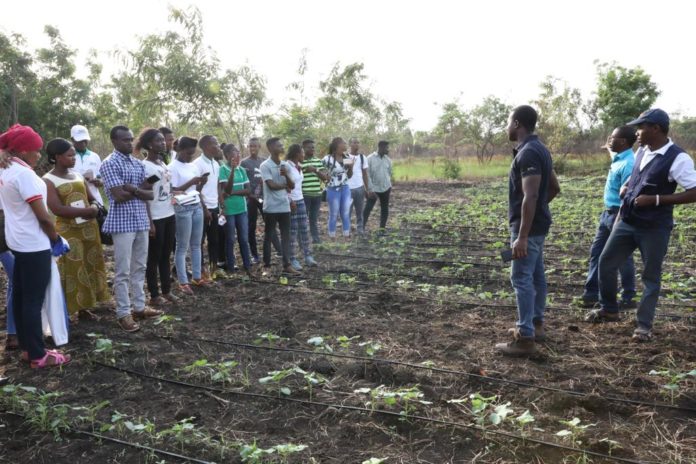
The 3rd Agric Students Career Guidance and Mentorship Dialogue Set for March.

The 3rd edition of the Agric Students Career Guidance and Mentorship Dialogue Boot-camp (AG-STUD) 2020 is scheduled to take place on Tuesday, March 10th to Friday, March 13th, 2020 at the Coconut Groove Hotel, Sakumono, Accra.

Ad article

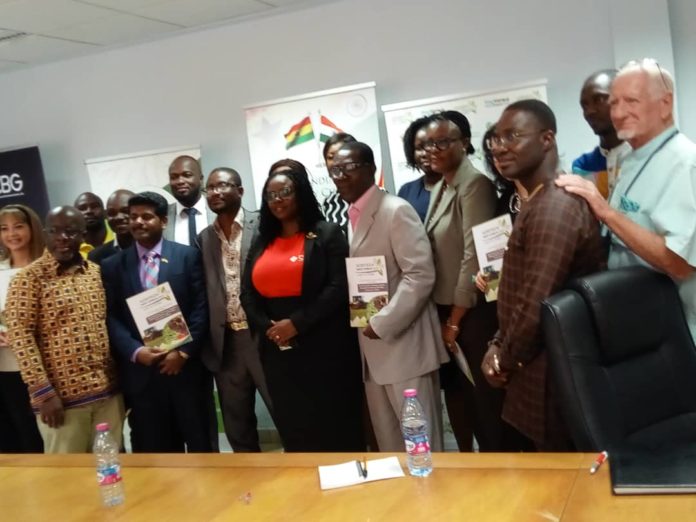
Agritech West Africa 2020 launched.

The agriculture sector in recent years has appreciated significantly with the introduction of agronomical practices, improved seeds, technology and many more, yet the sector has not been fully utilized.

Ad article

Popularizing Ghana Rice with Weak Support System.

It was not surprising to hear the Ghana rice run out of stocks in a certain part of the country in the wake of the “Eat Ghana Rice” campaign. Ghanaians are now enthused about the health benefits and have developed the taste for the locally produced rice. Several complaints were made by individuals and organizations that went through “hell’ during the festive seasons in accessing the Ghana rice even at the major market centers and shops in the cities.

Ad article

Rwanda pilots ‘revolutionary’ potato seeds.

A seed breeder working in a potato seed multiplication greenhouse in Musanze District. The True Potato Seed technology will replace commonly used potato tuber seeds,

The Rwanda Agriculture Board (RAB) has started testing True Potato Seeds, which are produced by Solynta, a Dutch firm that develops hybrid potatoes.

Ad article

Prof. Eric Danquah to serve on board of new $25m USAID Food Security Initiative.

Director of the West Africa Centre for Crop Improvement (WACCI) at the University of Ghana, Prof. Eric Yirenkyi Danquah, has been appointed to serve on the board of a new $25 million United States Agency for International Development (USAID) food security initiative. The Cornell University-led initiative called the Innovation Lab for Crop Improvement (ILCI) is a new global food crop research program that will work to deliver enhanced agricultural production tools in developing nations across the world.

Ad article

Alliance for Science Ghana sends its End of Year Statement.

Alliance for Science Ghana is an organization that seeks to promote access to scientific innovation as a means of enhancing food security.

Ad article

“Take the Ghana Rice Campaign to the International Community” – H.E Rawlings.

Former President of the Republic of Ghana, Jerry John Rawlings is urging the Rice Value Chain Actors to extend their campaign to the international community to promote the consumption of produced-in-Ghana rice.

Ad article

“Executive Order must be Adhered Too” – Stakeholders tells State Institutions.

Chief Executive Officer for the John A. Kufuor Foundation Prof. Baffour Agyeman-Duah is urging the public and government institutions to start using Ghana Rice for their programmes and activities as directed by the President.

Ad article

The 2019 Igniters urged to contribute their quota to end hunger strike on African Continent by 2023.

The Ignite 2019 successfully ended with fifteen women from and across the African continent, networking, sharing ideas and connections to change and transforming the scope of women in the Agric value chain at Silver Towers in Accra.

Ad article