ZThe Ministry of Food and Agriculture (MoFA) will on Tuesday, March 12 launch a nationwide registration of farmers as part of the second phase of the Planting for Food and Jobs Programme (PFJ Phase 2).
The Minister of Agriculture, Dr Bryan Acheampong, in a press conference on Monday, March 11, 2024, encouraged farmers nationwide to participate in the upcoming registration process.
He highlighted that farmers should vehemently take part in the registration process as it will aid them in future endeavours. He made farmers aware that the registration of PFJ will span across all 16 regions and 261 districts in Ghana, with the process commencing today.
He urged all Ghanaians, particularly, farmers, and agricultural product producers to reach out to their local agricultural district offices, extension offices, or agents in any of the 261 districts to register for the PFJ2 programme.
“The farmer registration for PFJ will be conducted across the 16 regions and 261 districts in Ghana. To facilitate the process, a mobile and web application platform which is a Ghana agriculture and agribusiness platform, GAP .com has been developed.” The Minister indicated.
Furthermore, agricultural extension agents and technical officers have been trained on how to use the platform and equipped with tablets and necessary data to capture farmer information for the Planting for Food and Jobs Phase II programme.
Dr. Acheampong stressed that the PFJ programme is a well-thought-out initiative aimed at building on the successes of the initial programme while addressing any shortcomings encountered.
“Additionally, agricultural extension agents and other technical officers have been trained on how to use a platform and provided with the necessary tablets and data to capture every farmer that we are going to on board for the Planting for Food and Job Phase II program.”
The PFJ Phase 2, which was initiated in August last year, aims to provide an input-credit guarantee system for farmers to address the challenges faced during the first phase of the programme.
The World Bank Board of Directors today approved an additional $40 million in IDA grants to the Accelerating Impacts of CGIAR** Climate Research for Africa project (AICCRA), a significant step towards advancing climate-smart agriculture (CSA) technologies and addressing critical gaps in climate resilience and food security in Ethiopia, Ghana, Kenya, Mali, Senegal, and Zambia.
The new financing, allocated to CGIAR centers through the International Center for Tropical Agriculture (CIAT), will facilitate the validation and dissemination of CSA technologies and methods in the beneficiary countries, which represent various agro-ecological zones vulnerable to the impacts of climate change. With this operation, farmers and livestock keepers will be equipped to predict and prepare for climate-related events more effectively, along with improved access to climate advisories directly connected to actionable response measures. This will enable communities to protect their livelihoods and the environment more successfully.
“We are committed to working closely with our partners to ensure that farmers and other stakeholders benefit from innovative solutions to address the challenges posed by climate change,” said Chakib Jenane, World Bank Regional Director for Sustainable Development. “Investing in climate-smart agriculture is essential for enhancing food security and economic development in a sustainable manner.”
The AICCRA project aims to strengthen the capacity of governments, regional organizations, farmers, and other relevant stakeholders and enhance access to—and use of—climate information services and validated climate-smart agriculture technologies in Africa. The additional operation will finance the scaling-up of key activities in the six beneficiary countries, including knowledge generation and sharing, strengthening partnerships for delivery, and validating CSA innovations through piloting. Most importantly, it will support the establishment of a Regional Hub for Fertilizer and Soil Health in West Africa, aimed at improving long-term soil health and climate resilience in the sub-region.
In addition to the World Bank’s commitment, other partners are stepping forward to support the AICCRA project. The Bill & Melinda Gates Foundation intends to commit $18.8 million in parallel financing to catalyze AICCRA’s impact. Furthermore, the Office Chérifien des Phosphates (OCP) will provide $5 million to support the new hub for soil fertility.
“These collaborative efforts reflect a shared commitment to addressing the challenges posed by climate change and soil degradation in Africa,” said Boutheina Guermazi, World Bank Director of Regional Integration for Africa and the Middle East. “The effects of climate change on the food security situation in Africa calls for regional solutions and strong partnerships to achieve sustainable impacts and reduce poverty on a livable planet.”
The International Development Association (IDA) is the World Bank’s fund for the poorest. Established in 1960, it provides grants and low to zero-interest loans for projects and programs that boost economic growth, reduce poverty, and improve poor people’s lives. IDA is one of the largest sources of assistance for the world’s 76 poorest countries, 39 of which are in Africa. IDA resources help effect positive change in the lives of the 1.6 billion people living in the countries that are eligible for its assistance. Since its inception, IDA has supported development work in 113 countries. Annual commitments are constantly on the rise and have averaged $21 billion over the past three years, with about 61% going to Africa.
**CGIAR (formerly the Consultative Group for International Agricultural Research) is a global partnership that unites international organizations engaged in research aimed to reduce rural poverty, increase food security, improve human health and nutrition, and sustainable management of natural resources.
Contacts:
In Washington: Caitlin Berczik, cberczik@worldbank.org
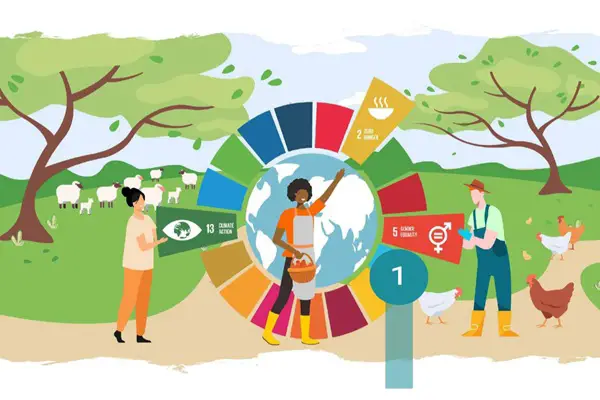
The Food and Agriculture Organization (FAO) has taken significant steps to promote gender equality and empower women in agriculture through its free gender courses.
The FAO Policy on Gender Equality 2020–2030 underscores the critical role of gender equality in achieving FAO’s mission of a world free from hunger, malnutrition, and poverty.
This policy provides a comprehensive framework to address persisting inequalities between men and women in agriculture and rural development, aiming to build sustainable food systems and resilient societies.
Importance of Gender Equality in Agriculture
FAO recognizes that gender disparities hinder progress in agriculture and rural development. By eliminating these inequalities, FAO aims to create inclusive food systems that benefit both men and women. The organization emphasizes the importance of a gender-responsive organizational environment and sets minimum standards for gender mainstreaming across all functions.
FAO’s Approach to Gender Equality
FAO adopts gender-transformative approaches to advance gender equality and empower women in rural communities. These approaches challenge discriminatory norms, attitudes, behaviors, and social structures to promote equal opportunities for men and women. FAO supports governments in creating an enabling environment for both genders by advocating for gender integration, enhancing capacities, and collecting sex-disaggregated data.
Closing the Gender Gap in Agriculture
Gender inequalities in food and agriculture have significant economic implications, costing the world approximately $1 trillion. FAO highlights the need to address disparities such as limited access to resources, higher unpaid care burdens for women, and wage gaps in the agricultural sector. By empowering women and closing these gaps, FAO believes that global productivity could increase significantly, contributing to poverty reduction and food security.
FAO’s commitment to promoting gender equality through free gender courses reflects its dedication to empowering women in agriculture and rural development. By addressing gender disparities and fostering inclusivity, FAO aims to create a more equitable and sustainable future for all individuals involved in food production and rural livelihoods.
AS farmers protest across Europe, blockading cities, smashing through police barricades, and dumping manure, European politicians are falling over themselves to promise increased trade barriers against African food and agriculture imports.
But how is it that locking out Zambian cott, South African oranges, and Kenyan horticulture has become such a burning issue for Africa’s biggest agricultural trading partner?
The answer lies in pest control.
For when the European Union launched its Green Deal climate action plan in 2019, with the noble aim of reducing the emissions driving climate change, it threw in an extra green target of phasing out the use of pesticides.
It seemed a sweet political move for the European Commission at the time, following countless distorted campaigns from environmentalists exploiting the membership and revenue power of claiming food and drink contamination and environmental catastrophe.
Facts weren’t a necessity in this: the point was scary headlines. Just one example, now impacting most of Africa, were claims that one of the world’s newest and cleanest insecticides was wiping out bees, essential to the pollination of human food. It made a powerful narrative, creating images of a future world devoid of pollinated fruits.
It just didn’t happen to be true. The pesticides don’t affect bees and the bee population is rising rapidly everywhere, including in nations still using the targeted pest controls. But the bee campaign, and many others claiming far-fetched health and environmental risks, had, by then, driven public opinion and pseudo science into a frenzy of opposition to pesticides
The timing couldn’t have been worse, as climate change began inexorably increasing the range and volume of plant pests and diseases.
Thus, as Europe rolled out ever more bans of pesticides deemed low risk elsewhere, its agricultural production began stagnating and declining. It gave farmers rounds of compensation, rising to now half their income. But, as the pest losses mounted, European producers began protesting against ‘unfair’ competition from imports still allowed to use pest protection, very often from Africa.
This saw Europe turn to the mission of enforcing its extra pesticide ‘precautions’ in Africa too. It began by moving most of the Maximum Residue Levels for these risk-approved pesticides to a technical zero. This triggered a World Trade Organisation dispute that is still running, driven by the US and India, but including multiple African nations, decrying the effective pesticide bans as trade barriers.
The EU then additionally introduced new lists of quarantine pests, most of which required the banned pesticides to control.
African agricultural exporters were caught in an effective pincer movement, locked out by pests they could no longer control.
In West Africa, the impact on the cocoa sector, which alone accounts for over a third of all African agricultural exports to the EU, has been so severe, cocoa prices have now soared. Coffee has also been hurt, while, in Southern Africa, the fruit and nut industries, which account for another 14 percent of Africa’s total agricultural exports to the EU, are hanging on a thread. Last year, Europe demanded South Africa chill all oranges for export at below 2 degrees Celsius for 20 days before shipping instead of using pest protection, triggering industry warnings of a 20 percent fall in exports and thousands of job losses.
But, in Kenya, efforts to maintain flower, fruit and vegetable exports to the EU have triggered even greater extremes, with the local banning of pesticides targeted by Europe drawing warnings from the CEO of the Kenya Fresh Produce Consortium of a $1bn food production loss per year. More recent estimates show the country will move into a food crisis from 2025 as a result.
For Africans cannot survive if maize is left for the Fall ArmyWorm that destroys up to 70 percent of crops, or cocoa is given up to mirids that also damage over 70 percent, wheat to complete destruction from leaf rust, and coffee to coffee berry borer.
African governments are juggling between limiting their export collapse – to maintain import funds without which all development slows – and ensuring food production and food security at home.
It is a dire trade-off – being driven by a policy so divisive in Europe that the European Parliament, last October, voted against a new bill to further halve its own pesticide use, while EU President Ursula von der Leyen has said pesticide withdrawals have now become “a symbol of polarisation” for the EU.
In Africa, they are creating poverty, hunger and reversed development, and now the solution to Europe’s newest political protests over them is to hit Africa harder still.
The Deputy Minister for Agriculture, Hon. Yaw Frimpong has indicated that phase II of the PFJ would provide crucial support to the women farmers with access to input that will require beneficiaries to register their lands with the District Directorate of Agriculture by the end of March 2024 to enhance agricultural productivity.
He revealed this at the 6th Annual Gathering of the Royals, organized by the Agrihouse Foundation under the theme “Seeds of Change: Cultivating Gender Equality in Agriculture and Honoring Women’s Advancement” at the GNAT Hall, Accra.
In a call to action, Hon. Yaw Frimpong urged Queen Mothers to play a pivotal role in facilitating access to land for the youth, particularly women, encouraging them to take advantage of the input credits to engage in commercial agriculture to address unemployment.
“I plead with the queen mothers to assist in providing lands to the youth and inspire them, especially women, to seize this opportunity to advance commercial agriculture to achieve self-sufficiency in food production and reduce importation by 10% to 20% by 2027”, the Deputy Minister emphasized.
“After reviewing the Planting for Food and Jobs initiative, we have identified several gaps, such as the need for financial assistance and recognizing the potential of women in agriculture. Therefore, we are giving access to input credits under Phase 2 of the Planting for Food and Jobs program”, He said.
“Beneficiaries will need to have land and register with the District Directorate of Agriculture to qualify from now to the end of March. The program will specifically target registered farms cultivating tomato, onion, pepper, rice, maize, soya, sorghum, plantain, cassava, yam, and poultry, which will be connected to aggregators who will provide agricultural inputs on credit through extension officers. At the end of sales, the cost of input will be deducted from the total revenue then pay you what is left”, the Honourable clarified.
He added that to alleviate the challenges of marketing and selling produce, off-takers will be appointed to purchase goods directly from farms and transport them to warehouses. This streamlined process aims to support farmers, relieve them of the struggle to sell their produce, and ensure the efficient distribution of agricultural products to consumers.
“An off-taker will purchase produce from the farms, relieving farmers of the burden of marketing and selling. Processors and breweries will be linked to warehouses to further enhance the agricultural value chain and vice versa”.
The Deputy Minister assured stakeholders of improved infrastructure, including road networks, to support agricultural activities effectively. “We will ensure all roads are motor-abled and properly maintained as per request by the queen mothers to support agriculture practices”, Hon. Yaw Frimpong said underscoring the government’s commitment to enhancing the agricultural sector’s productivity and sustainability.
The Queen Mothers in Ghana have called on the Ministry of Food and Agriculture to engage directly with farmers to understand the challenges the farmers encounter during production.
Some Ga Kenkey vendors in Accra are now considering charging customers for the previously complimentary pepper as economic challenges in Ghana worsen, contributing to a broader increase in the cost of living.
The latest economic data indicates a marginal rise in the year-on-year inflation rate for January 2024, with the current inflation rate reaching 23.5%. Ghana joins other Sub-Saharan African countries grappling with notably high inflation rates.
Essential ingredients for staple meals, such as Jollof, Banku, Fufu, and Kenkey, have witnessed inflation rates surpassing 40% in January.
Fresh tomatoes, carrying a significant 1.2 weight in determining national inflation, have surged by 52.3%, while other crucial elements like pepper, onions, and fish have inflation rates double the national average.
Despite being one of the more affordable food options in Accra, Ga Kenkey is expected to see a price increase. The local delicacy, traditionally served with pepper sauce, slices of onions, tomatoes, and fish, may no longer include these accompaniments free of charge.
Kenkey sellers are contemplating a review of their operational costs to cope with the continuous surge in market prices. Consequently, the previously complimentary pepper sauce with slices of onions and tomatoes might now come with an additional charge.
Many Kenkey vendors cite the high pricing of goods in the market as the driving force behind their decision. The shift raises questions about the perspectives and experiences of these market workers in the face of economic challenges.
“The prices of goods have gone up in the market. The price of the green pepper has increased astronomically. If we don’t increase the prices of kenkey, we will run at a loss.”
“There’s a high possibility we might start selling the red pepper and the shito. We can’t continue to give it for free. We will package them in small bottles and sell them. Very soon the pepper will be sold.”
Some patrons of Kenkey have shared varied views on this decision to price the pepper accompaniment, previously provided for free.
“I like kenkey so if the pepper is going to be sold, we will buy it. Prices of goods are very high now, it’s not their fault, so I understand them.”
“I think it’s outrageous,” another said.
Speaking to Citi News, General Secretary of the General Agricultural Workers Union (GAWU), Edward Kariwe, explained the rationale behind the pricing of goods by farmers before reaching the market.
Edward Kariwe believes that this decision by Kenkey sellers to increase pricing is only a reflection of the government’s failure within the agriculture sector.
Also, the Ranking Member on the Agric and Cocoa Committee in parliament, Godfred Seidu Jasaw, believes that the government would have to provide proper incentive systems for farmers to improve the agricultural sector.
“It’s not the farmers creating the price hikes, at the farm gate, it’s low but then you will also have to sympathise with those who make it possible to pick up the produce from the farm gate to the market centres.
“It has to go through a mirage of challenges, bad roads, fuel cost and other labour cost along the value chain. About one-third would have rotten by the time it gets to the markets,” he said.
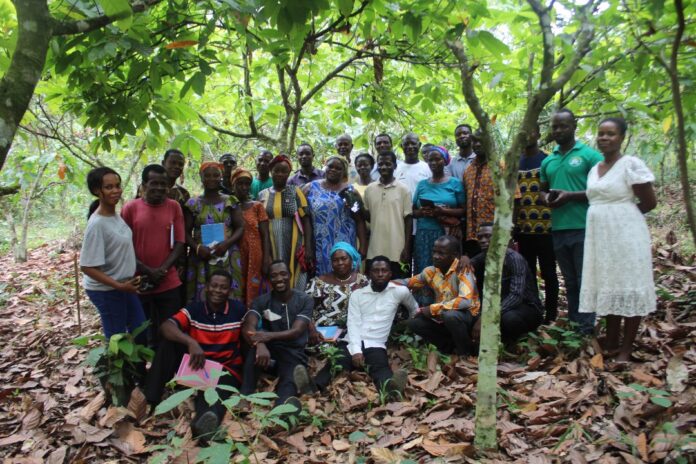
The Conservation Alliance International has partnered with Rainforest Alliance, an International Non-profit Organization to support farmer groups and their communities to address broader landscape issues by practicing Good Agricultural Practices (GAPs) in their various farms.
Liaison Lead for the project, Raymond Owusu Achiaw, speaking at the initial meeting held at Twifo Afeaso in the Central Region for over 30 farmers of the Conservation Cocoa Association, explained that “Strengthening the Traceability, Accountability, and Resilience of Farmer Groups (STAR) project” is tackling two key areas in sustainable cocoa production in Ghana namely Geodata and Landscape approaches.
According to him, all targeted farmer group members will have farm geodata by mid-2024 and also 70% of targeted farmers are expected to adopt certification in their operations linked to Rainforest Alliance certification standards.
He stated that through tools like farm data collection and a dedicated geodatabase, the project will empower 30 target farmers in Ghana’s Kakum landscape to adopt Integrated Management Systems (IMS) which will help them achieve certification.
“Our project will also address broader landscape issues by promoting Good Agricultural Practices (GAPs) and also equip farmers with business skills through the SMART approach which will help them see “farming as a business” he said.
Field Co-implementation Lead, Ama Akyema Sasu mentioned that the initial phase of the project will identify knowledge gaps, while subsequent phases bridge them through farmer field school trainings.
She explained that they are working to increase net yields of target farmer group members and also increase net income of farmer group members in the selected communities.
“I am hopeful that this project will increase the percentage of farmer group members with traceable farms which will impact positively on cocoa production” she stated.
Field Implementation Lead for Conservation Cocoa Association, Ebenezer Darko was optimistic that formalizing relationships with international organizations like Rainforest Alliance would propel them implement Good Agricultural Practices in their communities.
“It is our hope that 80% of target farmer groups will adopt good agricultural practices and about 70% of target farmers adopt a Marketing and Rural Transformation (SMART) approach in their operations” he added.
Drinking water, a very important lubrication for the body system, has gone through many prices in the past few years, as Nigerians grapple to meet up with the increasing high cost of living.
Now, a bag of sachet water that was sold for N50 naira is now N500 in some areas.
Those who purchase water in less quantity now buy a sachet or two for N50.
Even the well-to-do Nigerians have gone through various means to cut costs in the area of water consumption.
Some have dumped bottled water, which now costs N300 per bottle in some cities; they now improvise by carrying sachet water in used bottles.
Some have resorted to boiling borehole water and sieving it into empty used bottles after it cools off.
This has reduced patronage and, subsequently, dropping the income of beverage hawkers.
Economy & Lifestyle discovered that to make ends meet, these hawkers have now returned to iced water (water poured in white nylons and refrigerated or added to block to get cold), as it was years back, which comes cheaper and affordable.
Such sellers are seen in school vicinities, market places and motor parks in smaller towns and cities in the country.
Mrs. Dorathy Ehis, a seller of sachet and bottled water in Benin said she had to improvise by selling ice water to increase sales.
“I never thought ice water would be sold in Nigeria again since the 90’s.
“But the continuous increase in the price of sachet and bottled water has left many drinking borehole water.
“My sachet and bottled water business is not moving at all.
“A bag of sachet water is sold for N500 here. It was sold for N300 a few months ago.
“In a day I sell 40 bags of pure water because those hawkers used to buy from me. But now, they only buy a few.
“So I added the selling of ice water which goes for three N20 because of the cost of nylon and boiling of borehole water before icing it.
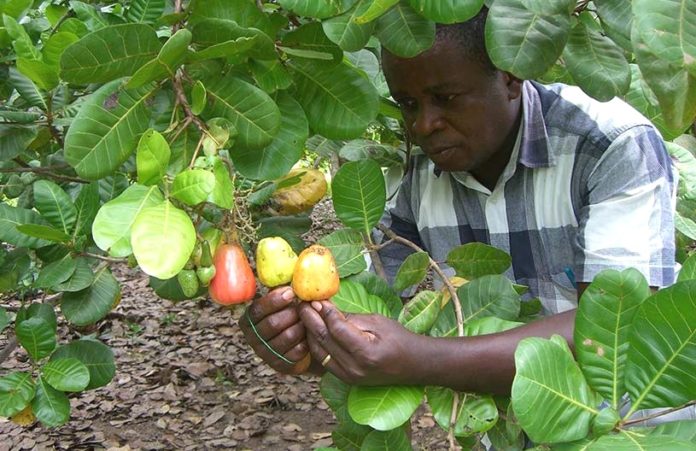
With an average estimated cashew export earnings of US$350million per annum, Cashew Watch Ghana (CWG) – a civil society organisation – has said the country has yet to fully take advantage of the US$7billion global market.
Cashew Watch Ghana described the current earnings as below potential, emphasising that the country has potential to fetch more than US$660million if government and the private sector capitalise on the current global prospects of the economic tree to promote production, value addition and exports.
The country’s cashew export earnings in 2020, which was US$340million, according to CWG, should only be a starting point to make more progress toward harnessing the full potential of the sector.
With an estimated annual production of between 110,000 and 130,000 tonnes of raw cashew nuts, the CWG advocated that more efforts be put in place to enhance production, storage and value addition. If harnessed properly, it said the sector will be able to contribute significantly to not only job creation, but poverty reduction.
Globally, the market size of the nut crop is currently around US$7billion and projected to hit a value of US$10.5billion by 2031, according to CWG.
With the current annual production, the African Cashew Alliance has estimated that about 85 percent of the raw nuts are exported, with the crop, in the past five years, being one of the top non-traditional export commodities of the country.
Despite this, the sector is plagued with many challenges, including low production volumes, poor value chain coordination and inadequate support.
For instance, although there are 14 cashew processing factories nationwide, the majority of them have either shut down or are producing undercapacity due to lack of raw cashew nuts.
Processed cashews offer a variety of products, including snacks, food ingredients, cashew milk, cashew butter, cashew cheese, cream, yoghurt, medicine, powder, oil, skin pomade, biofuel among others.
Notwithstanding the benefits the country enjoys from the cashew value chain, especially export earnings from raw nuts, there are huge untapped opportunities which could be maximised.
The cashew processing sub-sector, which is deemed profitable and accounts for almost half of profits in the industry, comes with several challenges – including labour costs, quality control, energy costs, logistics, price fluctuations, among others.