There’s a looming diplomatic row as Burkina Faso’s Military leader Ibrahim Traoré has disclosed that his country will consult Mali and Niger to take a final decision on whether to allow Ghanaian traders and other West African nationals to do business in their countries.
He said a final determination would be made on the matter as consultation would first have to be made by leaders ofNiger Mali and Burkina Faso.
”We remain pan-African. Anyone in Africa or an African who wants to come to Burkina, is welcomed. We will decide what measures to take in due course regarding traders coming from Ghana, Nigeria and other West African countries),” he said.
The three nations officially announced last week that they were departing from the sub-regional ECOWAS trading bloc.
This raised fears from the Ghana Union of Traders (GUTA) which said its members import vegetables and other livestock from Mali Burkina Faso and Niger would be affected.
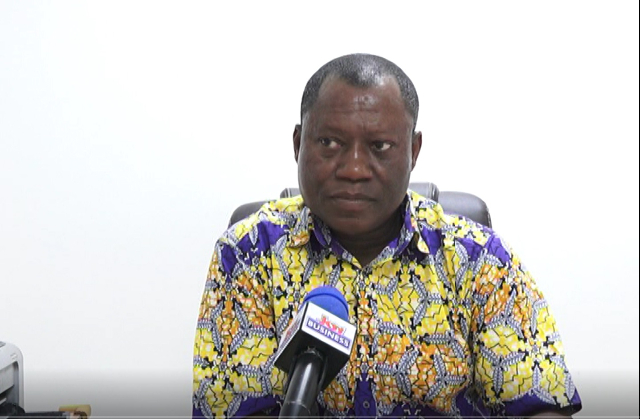
“This thing is going to affect us more than the other member states. We should bypass the ECOWAS to find an immediate solution,” Dr Joseph Obeng, President of the Union told Joy News.
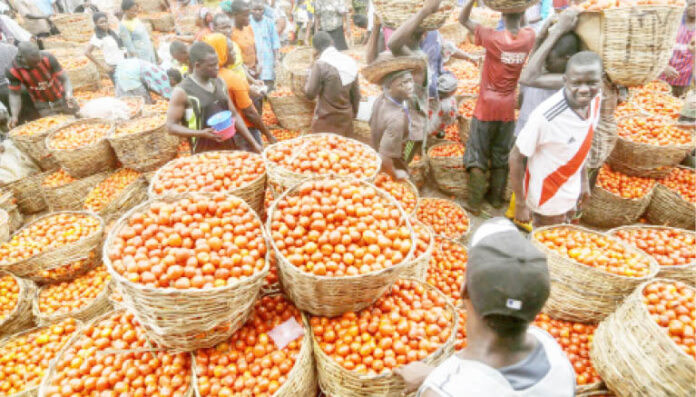
He added “the cross border trading activities that goes on is going to be impacted negatively. Look at the cola nut that we ship to Niger, the onions that we bring from there and the tomatoes that we bring in.
“Also consider the bulk of things that the Burkinabes come to buy from us [in Ghana] so definitely it’s going to have a negative impact”.
Ibrahim Traore added that the departure from ECOWAS is well thought.
He added “it’s not a burst of anger. If it was an outburst, we would have done it a long time ago”.
Parliament has directed the Ministry of Food and Agriculture (MOFA) to provide compensation to farmers who suffered losses due to the avian influenza or Bird Flu outbreak between 2015 and 2018.
The 2022 Auditor General’s Report has revealed that a significant portion of the allocated compensation funds, exceeding GH¢1.8 million, remains unutilized in the Ministry’s account.
The Ministry of Agriculture contends that the funds have not been distributed because affected farmers have not communicated the necessary details to the Ministry.
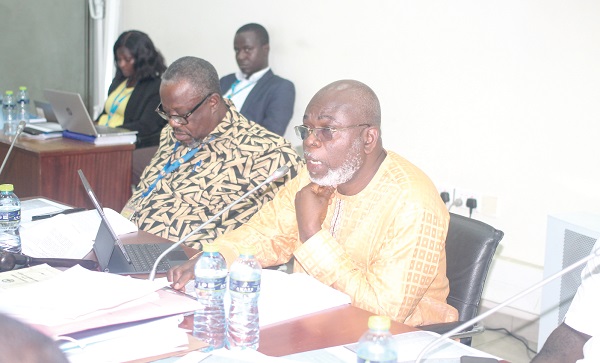
However, during a Public Accounts Committee session, the committee’s chairman, James Klutse Avedzi, instructed the Agriculture Ministry to locate the affected farmers and disburse the funds within the next month.
“I am sure you have a list of the farms that are affected and a certificate for destroying the birds as well. All that you need is to have the affected farmers’ bank details to do the transfer and I am sure that you have the contact details of these farmers.
“So we are giving you one month to disburse the monies to them quickly. Call them so that they will give their bank details so you can do the transfer for them.”
The Ghana Cocoa Board (COCOBOD) has clarified that all cocoa processing companies established in Ghana after November 2001 are legally allowed to import cocoa beans for processing within the country.
This statement comes in response to a misrepresentation on social media regarding the circulation of an official letter granting Afrotropic Cocoa Processing Company Limited permission to import cocoa beans for processing.
In its official statement issued February 4, 2024, COCOBOD called on the public to disregard the false claim derived from the leaked letter, emphasizing that the practice of importing cocoa beans is intended to assist companies in meeting their desired recipes for chocolate production and other purposes.
Regarding the leaked letter, COCOBOD expressed concern over misinterpretation on social media platforms and subsequent dissemination of misinformation. The board cleared the air, stating that all post-November 2001 cocoa processing companies in Ghana have the legal right to import cocoa beans for processing within the country.
The statement also shed light on the industry’s long-standing practice of blending Ghana’s premium cocoa with beans from other producing countries.
Ghana’s cocoa is known for its exceptional quality, and the importation of cocoa beans allows factories to manage costs and implement operational strategies effectively.
This practice, which has been in place for over 20 years, has enabled companies to import cocoa from countries such as Cote d’Ivoire, Togo, Nigeria, and Ecuador.
COCOBOD reiterated its commitment to ensuring the sustainability and growth of the cocoa industry in Ghana.
The board continues to explore innovative approaches to support cocoa processing companies, enabling them to maintain high standards and meet the demands of the chocolate market.
The Ghana Cocoa Board has approved the request of Afrotropic Cocoa Processing Limited to import 2,500 and 1,000 tons of cocoa from Cote D’Ivoire and Nigeria, respectively.
In a letter signed by the Chief Executive Officer of Cocobod, Hon. Joseph Boahen Aidoo, dated January 25, 2024, regarding the importation of cocoa beans from Cote D’Ivoire and Nigeria, he indicated that the importation must be done through the sea and must pass through the Tema port.
The CEO highlighted that Afrotropic Cocoa Processing Limited, upon receiving approval, must also go through the required process to obtain authorizations from state institutions like the Customs Division of the Ghana Revenue Authority before commencing the importation. Ghana Cocoa Board, therefore, requested Afrotropic to provide detailed information on the name of the vessel, shipment schedule, quantity of beans to be imported, and the expected date and time of arrival.
The Ghana Cocoa Board has noticed that there has been widespread circulation of this official letter to Afrotropic Cocoa Processing Company Limited, and it has been a subject of misinterpretation on social media, leading to misinformation.
The Ghana Cocoa Board, through their Public Affairs Department, has clarified the letter Cocobod wrote to Afrotropic Cocoa Processing Limited in a press release dated February 4, 2024, to address the misinterpretation of the letter.
The Board highlighted four clarifications to the letter:
All processing companies in Ghana established post-November 2001 are permitted by law to import cocoa beans for processing in Ghana.
The practice is to help the companies meet their desired recipes for chocolate production and other uses.
Ghana’s cocoa is premium cocoa, and as part of cost management and operational strategy, companies often blend premium Ghana cocoa with less premium cocoa beans from other producing countries.
It is an industry practice that has existed for over 20 years to allow factories to import from other countries, including Cote D’Ivoire, Togo, Nigeria, and Ecuador.
The Ghana Cocoa Board, therefore, urges the public to disregard the misinterpretation of the letter leading to misinformation.
Only 15.0% of farms in Ghana are commercialized, C-Energy Global Holdings has stated.
It report on “Creating Agriculture Financing Schemes for Sustainable Agriculture and Food Security” also revealed that only 4.0% of total bank lending in Ghana went into agriculture in the last five years.
The report said low mechanization, poor farm recordkeeping, poor rural transportation infrastructure, post-harvest losses, among others are the core challenges affecting the agriculture sector performance and hindering finance for the sector. Typically, agriculture portfolios are thin for all financier groups.
“Agriculture however remains rain fed and on a subsistence basis with only 15% of farms in Ghana commercialized. Low mechanization, poor farm recordkeeping, inadequate storage & processing capacities, poor rural transportation infrastructure and post-harvest losses are the core challenges affecting agriculture sector performance and disincentivizing financing for the sector”.
Considering the existing funding gaps, the report, said more interventions are expected from funds and financial institutions especially the Agriculture Development Bank and Ghana EXIM Bank whose core mandates include providing funding to actors in the agriculture value chain.
Ghana’s agriculture economy is valued at about $12.6 billion. The sector contributed an average of 20% to Gross Domestic Product in the last five years.
Cash crops and other commodity exports from agriculture account for 20-25% of total export revenues for the nation.
The sector is also responsible for employing over 35% of the total employed labor force.
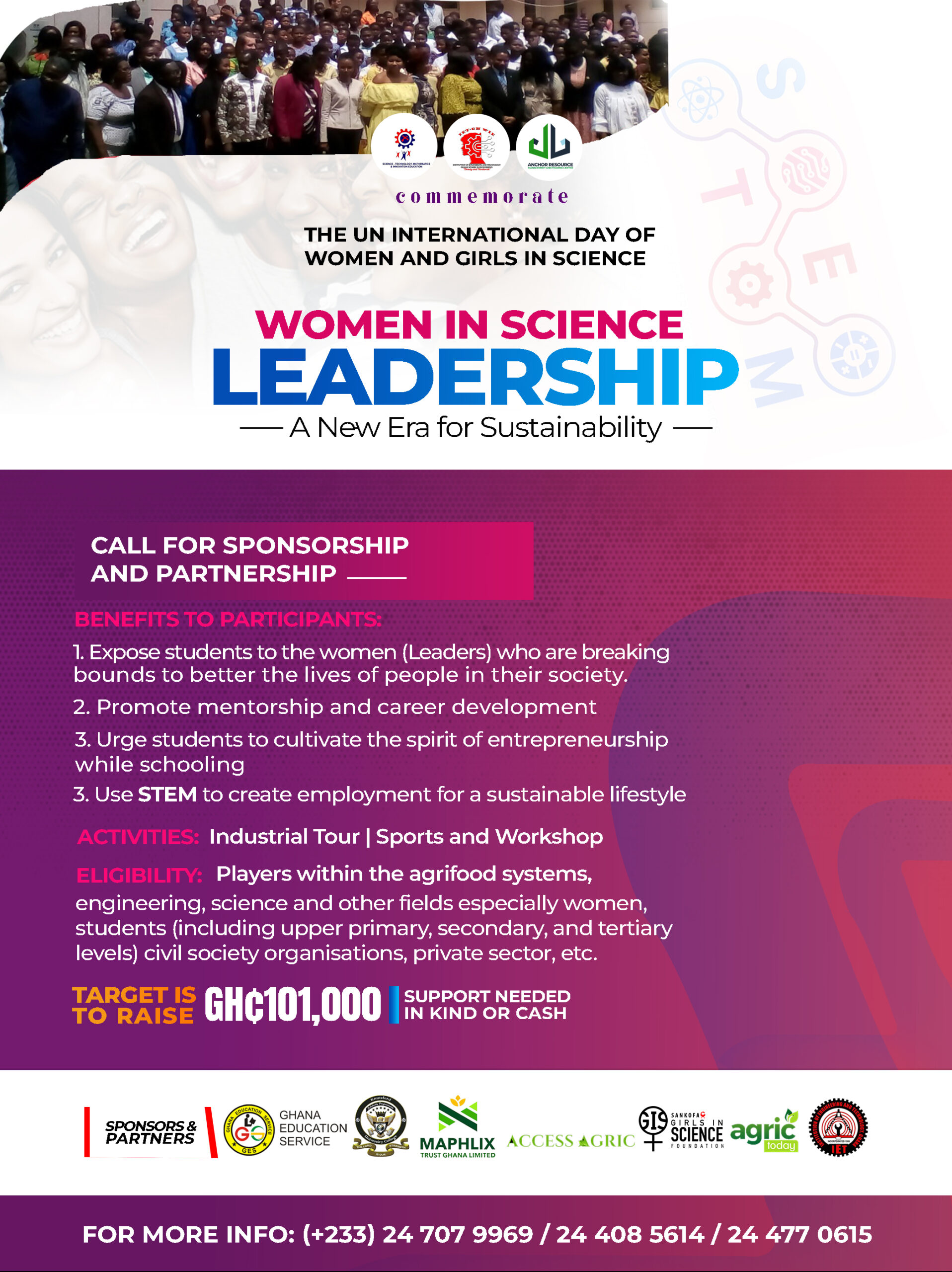
The UN International Day of Women and Girls in Science, celebrated on 11th February, is an annual international day event to recognize the critical role women and girls play in science, technology, engineering and mathematics (STEM).
In Ghana, the Day is usually designated to promote STEM education among girls. It is also used to project women in STEM-related fields and their achievements to motivate more girls to venture into male-dominated fields. Since 2019, the Greater Accra Regional Unit of the Ghana Education Service (STMIE/STEM Unit) has been collaborating with several stakeholders to commemorate this important occasion.
This year, the STMIE/STEM Unit, in collaboration with Women in Engineering (WIE) and Anchor Resource Management and Trading LTD (ANCHOR), will be celebrating the Day by focusing on women in agribusiness and engineering. The overall objective is to use the Day as a platform to draw attention to the strong linkages between STEM disciplines and Agribusiness, and thus expose the students or girls to appreciate the good side of agriculture and the numerous opportunities available to help them to be independent and to live a sustainable lifestyle.
The Day will be commemorated worldwide under the theme: “Women in Science Leadership: A New Era for Sustainability”.
Brief background
Gender equality has always been a core issue for the United Nations. It is an undeniable fact that gender equality and the empowerment of women and girls will make a crucial contribution not only to economic development of the world, especially Africa, but also to progress across all the goals and targets of the 2030 Agenda for Sustainable Development.
Yet, there exists a significant gender gap across all the various economic and developmental actors, globally. Typically, gender gap has persisted throughout the years at all levels of STEM disciplines all over the world. Even though women have made tremendous progress towards increasing their participation in higher education, they are still under-represented in these fields.
In Africa, for example, only 30% of science professionals are females. Ghana follows this trend; only 14% of all students attending university are females and women made up 26% of PhD graduates in 2018. (Sources: UNESCO Science Report, 2021 & UNDP Ghana)
On 22nd December 2015, the United Nations General Assembly met to adopt resolution 70/212 titled “International Day of Women and Girls in Science”. This resolution formally proclaimed February 11 as the annual observation of the International Day of Women and Girls in Science.
2.Benefits to participants: Participants especially students or girls will have the platform to connect and network with industry experts and players in agrifood systems, engineering, and other related field of interests. Especially to:
(a) Expose students to the women (leaders) who are breaking bounds to better the lives of people in their society.
(b) Promote mentorship and career development to supports the next generation of women leaders in STEM
(c) Urge students to cultivate the spirit of entrepreneurship while schooling
(d) Use STEM to create employment for a sustainable lifestyle.
3. Proposed activities, 3 main (key highlights):
(a) An industrial tour to 2 agro-processing companies (Friday, 9th February, 2024). The objective of the tour is to expose STEM students to practical working environment with theoretical learning and pave the way for them to gain more insights into the industries.
(b) Sports (Sunday, 11th February, 2024): Health walk in the morning and other sport activities including athletics, football, indoor games, volleyball, table tennis, etc.
(c) Workshop (Monday, 12th February, 2024): Main features include –
i. Pitching of products from agribusiness women and exhibition of science projects.
ii. Training session including best farming practices and types, products, agrotech, agribusiness, data analytics, climate technology, etc.
iii. Talks including health and wellness, links between STEM and Agrofood Systems, strategic leadership, career counseling (science, agribusiness, and its affiliates).
The venue for the Sports and Workshop activities is at Knutsford University College, East Legon, Accra.
4. Eligibility: Players within the agrifood systems, engineering, science and other fields especially women, students (including upper primary, secondary, and tertiary levels) civil society organisations, private sector, etc. Target size: 300 participants
5. Support needed: Cash or kind donations are highly welcomed. The target is to raise a total of GH¢101,100. This is geared towards social mobilization, refreshments and the training of the students.
Only 4.0% of total bank lending in Ghana went into agriculture in the last five years.
According to C-Energy Global Holdings, the constrained access to funds from most banks can be traced to the perceived risks of poor record-keeping practices which affect the assessment of farmers’ creditworthiness, extremely low level of agriculture mechanisation coupled with post-harvest losses.
The outturn of these risks, it said can be seen in the sector’s deficient performance and high credit defaults. Non-performing loans for the sector averaged 30% over the last 5 years relative to the 17% averaged by the banking industry across all sectors, evidencing banks’ hesitation to fund the agriculture sector.
“Until the funding gaps are fully plugged, food insecurity remains a threat to the nation”, it added.
It also expressed worry about the abysmal performance of food production in the country.
Therefore to reverse this trajectory, it is calling for access to sustainable financing is needed to improve productivity and scale up production to support the rest of the region.
Ghana witnessed slight improvements in productivity in the initial stage (Phase 1) of the Planting for Food and Jobs Initiative and other government intervention programmes.
However, the country saw an unprecedented rise in food prices in 2022 evidenced by the national food price index which increased by 23.8% in 2022.
C-Energy Global Holdings said this widened the country’s exposure to food security risks.
The country ranked 83rd amongst food-secure countries in the world according to the Global Food Security Index- 2022 report with a score of 52.6%.
In the wake of climate change, the country’s food security is also at risk. Ghana is one of the top 10 countries impacted severely by climate change despite contributing the least to global warming.
Agric economyvalued at $12.6bn
Ghana’s agriculture economy is valued at about $12.6 billion.
The sector contributed an average of 20% to GDP in the last Five years. Cash crops and other commodity exports from agriculture account for 20-25% of total export revenues for the nation.
The sector is also responsible for employing over 35% of the total employed labor force. Agriculture however remains rainfed and on a subsistence basis with only 15% of farms in Ghana commercialized.
Low mechanization, poor farm recordkeeping, inadequate storage & processing capacities, poor rural transportation infrastructure and post harvest losses are the core challenges affecting agriculture sector performance and disincentivizing financing for the sector
Two farmers, Kwame Appiah, 44, and Thomas Brekese 57, are in critical condition battling for their lives at the St. Francis Xavier Hospital in Assin Fosu and Assin Manso Health Center respectively.
Both victims and two others who are currently on the run engaged in a fierce scuffle and subsequently inflicted cutlass wounds on themselves.
Narrating the cause of the incident, the victim Kwame Appiah said while on his farm, Thomas Brekese and his accomplices confronted and accused him of harvesting their fish.
They had set up a fish trap on river Ochi at Besease but met the trap empty upon checking which they suspected Kwame Appiah of stealing the fish from the trap.
The accusation did not please Kwame Appiah the victim resulting in a fight between them and subsequently causing harm to themselves.
The accused person without any provocation threatened and started butchering him. He retaliated by pulling out his cutlass started hacking him too.
The case has been reported to the Police Station for an investigation.
The former Communications Director of the Coalition of Concerned Teachers (CCT) Norbert Gborgbortsi has claimed that about 40 to 50 % of some private senior high schools which were once very popular have been turned into poutry and pig farms.
According to the Educationist, these schools have folded up due to frustration their proprietors have had to endure due to the implementation of the Free Senior High School programme.
Speaking on Ghana Kasa show on Kasapa 102.5FM Tuesday, Norbert Gborgbosti who did not name any of such schools turned into a poutry of pig farm, alleged there’s a calculated move to collapse private schools so there will be only public schools operating at the Senior High School level.
”Schools established by private individuals which will serve as competition to the government schools are being closed down so we have like the Nkrumah’s era one party state, so that we have only government schools that are operating.
They know that if they allow the private schools to operate at their maximum and the public schools becuase of free SHS they have lots of students in there, the rate at which absorption is done will reduce, thereby making the private schools more popular.
So they have to find a way of collapsing them, making them not workable and when you do this you are collapsing the whole nation. Because the State will be denied taxes that would have come from the private schools,” he told host Bonohene Baffuor Awah.
Mr Gborgbortsi added: ”It is not surprising that some of the private senior high schools in the country have turned into poultry and pig farms.
It is very wrong, about 40 to 50% of private schools which were very popular have been turned into poultry farms and they are using it for other things becuase the fustration is too much.
Even this year, more schools will fold up. During last year’s placement for BECE graduates, I encountered more than 10 students who had good grades but just because they attended private schools they were not placed in any school. And then when you go to the Education Office, the officers will tell you that next time, let your children attend government schools and not private schools so that it will be easy to place them in senior high schools.
It is something that is planned and known to everyone, so when you do a review, you will correct all these mistakes and make sure you encourage competition. Who told you it’s through monopoly that Free SHS will be sustained.”
Significant surges in imports from Ukraine threaten, if continued, the stability of some European farming sectors, according to the European People’s Party Group (EPP).
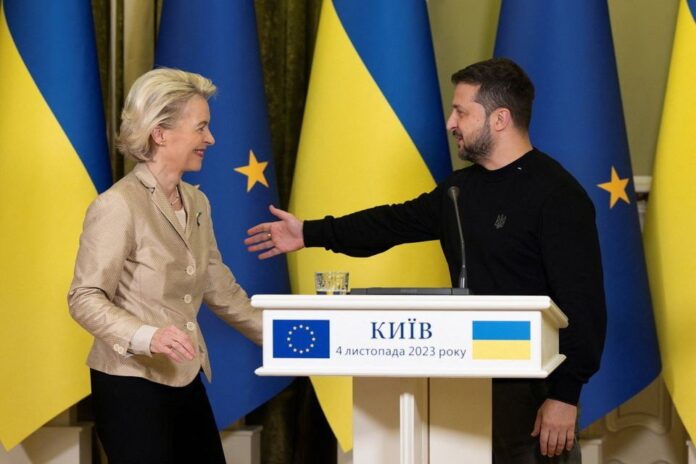
In a letter to President of the European Commission, Ursula von der Leyen, the EPP group has voiced “the concerns of several EU agriculture sectors that are being severely affected by unlimited imports from Ukraine, following the implementation of Autonomous Trade Measures (ATMs).
While it says it wants to underscore its unwavering support for the Ukrainian people and its commitment to backing any initiatives aimed at assisting them in dealing with the aftermath of the conflict stemming from Russian aggression, it goes on to say “we think proper reflection should be given to certain sectors, which seem to shoulder an additional burden of this support and contend with an unprecedented influx of imports from Ukraine.
“Specifically, farmers and producers in the poultry sugar and eggs sectors are grappling with significant surges in imports from Ukraine, posing
– if continued – a threat to the stability of these sectors and jeopardizing the future of their producers.
“The redirection of volumes, originally intended mainly for third countries,
predominantly to the EU, is causing substantial disruptions to these markets.”
It also says differences in production standards and the absence of a level playing field are giving rise to unfair competition anda simple continuation of the current ATMs is untenable and some adaptations and safeguards need to be injected.
The letter goes on to say the Commission must propose solutions to safeguard these affected sectors while ensuring an adequate level of support for Ukraine.
“Considering options such as registering imports with a deposit system and establishing thresholds beyond which exports should be directed towards third countries could be a viable path forward and should be taken into account by the Commission.
“It is also crucial for Ukraine’s future recovery to maintain some access
to export markets in third countries and prevent it from becoming overly reliant on EU exports. Moreover, these markets in third countries could be occupied by Russia, which would lead to further economic and political tension.”
Last year a leaked analysis suggested the integration of Ukraine into the EU could cost some €186 billion over seven years and result in significant cuts to Common Agricultural Policy Payments in existing countries.