The Ministry of Fisheries and Aquaculture Development has pledged to cut the importation of fish into the country.
According to its Deputy Minister, Moses Anim, it will adequately support local fish farmers to boost fish production. “Let me reiterate that where we are today, with all the challenges of post-covid, the countries that will survive are those that will increase their import substitution. We need to reduce importation of fish”, he said.
He stated that Ghana cannot generate foreign income for the purposes of importing fish.
“I still stand by the word that if you want to import fish, look for your forex to do that. We cannot generate forex in this country and others will use it to go and import. It will mean we would have to increase production in aquaculture here,” he said
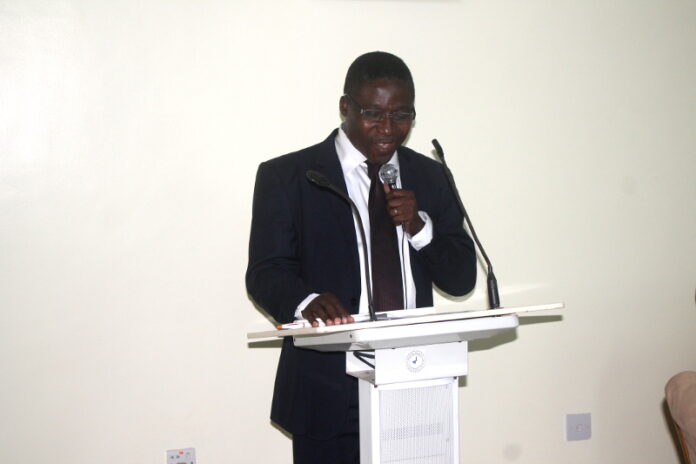
Speaking at a Dinner and Awards Night organised by the Chamber of Aquaculture Ghana under the auspices of the Ministry and the Fisheries Commission, Mr. Anim called on researchers and academia to partner industry players in improving the sector.
“I decided to keep some catfish, not for commercial purposes but to learn about the difficulties in the sector. I can say for a fact that experiencing the challenges firsthand has enlightened me. What do we do then? It’s up to us to work together. Academia, researchers and stakeholders need to come together and solve the bottlenecks, remove the hurdles on the way and make sure that cost of production come down,” he stated.
Chairperson of the Chamber for Aquaculture Ghana, Dr. Ruby Asmah indicated the maiden edition of the Aquaculture Awards was to acknowledge stakeholders that have survived the turbulence of the sector and industry players that have contributed to the recovery process.
“This programme is to acknowledge the efforts of people who have worked tirelessly in the sector. The aquaculture sector in Ghana has had its ups and downs and I think the most difficult period was when the disease outbreak occurred in 2018”.
Dr. Asmah said the situation compelled some farmers to go down while others gradually recovered.
“To a lot of people, that appeared to be a critical moment. Some went down and never came up again but others survived. We’re seeing some of them recovering”.
He maintained that there is the need to critically observe players in the industry to support them.
“I was looking at the production figures and I was really pleased to see how that they are going up again. There are people in the background who have worked tirelessly to see the industry progress,” she said.
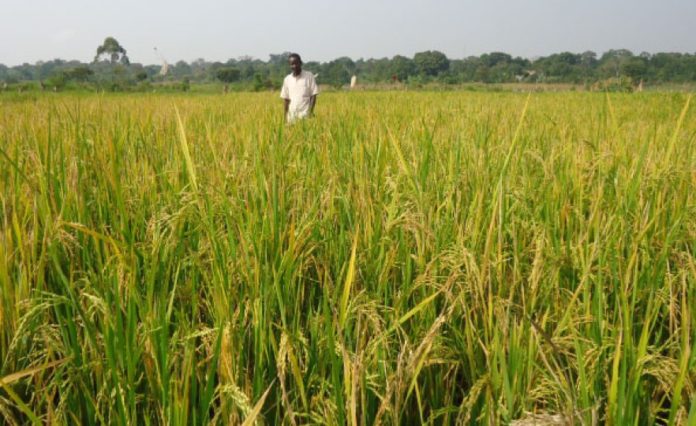
Mr Daniel Noble Awume, Hohoe Municipal Chief Executive (MCE) has revealed that Jospong Group of Companies is collaborating with farmers in the Municipality to develop rice valleys for sustainable commercial production.
The Council for Scientific and Industrial Research (CSIR) Food Research Institute (FRI) has embarked on the commercialisation of all its research findings. It is, therefore, seeking the right partnerships to make that materialised.
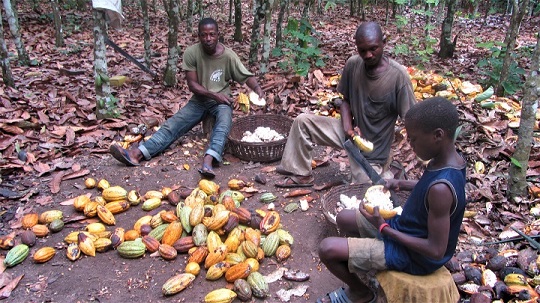
The Management of Ghana Cocoa Board (COCOBOD) has indicated that a statement by Former President John Dramani Mahama regarding the increase in cocoa producer prices every year during his administration was inaccurate.
The management of COCOBOD said the records available point to the opposite.
This was after Mr Mahama accused the Akufo-Addo-led government of destroying the cocoa sector.
Mr Mahama indicated that cocoa farmers used to be paid instantly during the era of the National Democratic Congress (NDC) whenever they sold their cocoa.
But, he said, it now takes the farmers three months to receive their cash.
Also, he added, the farmers no longer enjoy free fertilizer as they used to during the period of the NDC.
These factors have negatively impacted the cocoa business, Mr Mahama said during his campaign tour of the Western North Region on Tuesday April 25 to be elected flagbearer of the NDC.
The 2020 presidential candidate of the NDC said “every year, we adjusted the producer prices for cocoa but currently, the government does little adjustment once in four years, this has affected the cocoa business badly, it is no longer lucrative.
“Cocoa farmers are now selling their lands to galamseyers because it is no longer profitable, it takes the farmers three months for them to get their funds when they sell their cocoa but under the NDC it was instant payment. We also gave cocoa farmers fertilizers free of charge.
”But in a statement, the management of COCOBOD said “Management also wishes to place on record, that the Former President’s statement regarding the increase in cocoa producer prices every year during his administration is inaccurate, since the records available point to the opposite.
“Specifically, there was no upward adjustment of the producer price of cocoa in the 2012/2013 Crop Season. Similarly, the producer price of the preceding season was maintained for the 2015/2016 Crop Season, with no upward adjustment.
Indeed, within a three-year period of the Former President’s administration, i.e. the 2010/2011 to 2012/2013 crop season, there was a total of six (6) percent increase in the producer price. In contrast, within the last three years, there has been a 23 percent, 0 percent and a 21 percent increase in the producer price of cocoa.”
It is important to note that the producer price is largely determined by international market prices as well as other industry costs, and every effort is made to arrive at a producer price that is fair to farmers even when international market conditions are unfavourable, the statement said.
“We further wish to put on record and also assure the general public that the cocoa industry is not collapsing as being portrayed by the Former President. Ghana recorded its highest ever cocoa production volume of one million and forty-five thousand five hundred metric tonnes (1,045,500) in the 2020/21 Crop Season. A cocoa industry which holds the position as the second highest producer in the world cannot also be said to have collapsed.
COCOBOD continues to invest in interventions which will ensure not just the sustenance but the growth of the industry. Notably, the Hand Pollination Programme that increases pod count; the Mass Pruning Programme to enhance pests and disease control and induce flowering as well as the Cocoa Rehabilitation Programme which seeks to deal with the Cocoa Swollen Shoot virus disease that has ravaged about 45% of our cocoa tree stock. This is the biggest intervention that has ever been made to reverse the major threats that face the industry.”
The Minority in Parliament has risen to defend former President John Mahama and his claims about the cocoa sector.
The Former President, John Mahama claims the country’s cocoa sector is on the verge of collapse because of the mismanagement of the sector by the government.
Addressing party supporters and branch executives at the start of his two-day campaign tour of the Western North Region, Mr Mahama said the government’s failure to adjust the producer price of cocoa annually delayed payment of farmers for cocoa beans combined with other factors to destroy the sector.
The Ghana Cocoa Board (COCOBOD) refuted claims by the former president that the cocoa sector in Ghana has collapsed. It described such statements as misleading and detrimental to the cocoa sector, which forms the foundation of Ghana’s economy.
Reacting to this development, Ranking Member on Parliament’s Food, Agriculture and Cocoa Affairs Eric Opoku accused COCOBOD of peddling falsehood.
“Ghana COCOBOD must know that they cannot seek refuge in lies to cover the havoc they have wrecked on the cocoa sector, the untold hat ships unleashed on the Ghanaian cocoa farmer and the crass incompetence, mismanagement, recklessness and insensitivity demonstrated so far.”
The Minority accuses President Akufo-Addo’s government of worsening COCOBOD’s plight from the state where it met it.
“In 2017, the NDC handed over a prosperous and thriving cocoa industry with buffers in the cocoa stabilization fund, farmers’ welfare fund, depreciation fund, farmers’ housing fund, and others including GH₵29 million set aside for the rolling out of the cocoa farmers pension scheme envisaged under the P.N.D.C.L 81.
Shockingly, the Akufo-Addo’s government has dissipated all these buffers within 6 years, leaving nothing for the industry to lean on in times of difficulties.
Again, the Board has been incurring losses since Nana Addo assumed office. COCOBOD is yet to explain why the cocoa industry cannot be profitable under the Nana Addo/Bawumia government. Available records indicate the following;Year LossesGH GH GH₵’million2017-395.0, 2018-78.2, 2019-320.6, 2020-426.0″
The group went ahead to tout the NDC’s records in the cocoa sector.
“In the entire four-year period of President John Mahama, producer price of cocoa was increased by 124.1 per cent (from GH₵212 in 2013/14 to GH₵475 in 2016/17) contrasted with 68.4 per cent in the last six years under Nana Addo (from GH₵475 in 2017/18 to GH₵800 in 2022/23).
It must be noted that the highest jump in producer price in the last two decades happened under John Mahama in the 2014/15 season (from GH₵212 to GH₵345 – 62.7%).”
Vice President Dr Mahamudu Bawumia has implored investors from Austria to take advantage of Ghana’s economic and political stability to invest in the country.
Speaking at B2B session with the Austrian delegation led by the Federal Chancellor, Karl Nehammer, in Accra under the auspices of the Foreign Affairs Ministry and the Ghana Investment Promotion Centre, the Vice President reiterated Ghana’s commitment to strategic partnership with the private sector and enhanced efforts for industrialization and productive transformation to achieve sustainable economic growth.
He said Ghana is open for business and is eager to forge mutually beneficial rewarding relationships with Austria.
As Ghana and Austria seem to forge stronger bonds, we have to sustain such relationship through improved technical and science-based education, technology and also address unfair trade relations among others,” he stressed.
He noted that the Austrian Federal Chancellor’s participation at this business forum also demonstrates the commitment of the Austrian government to enhance collaboration between the private and public sectors of the two countries for mutual benefits.
He noted that Ghana has a stable political environment, strong democratic culture, safe and happy people underpinned by freedom of expression.
In the volatile West Africa, Ghana is ranked as the most peaceful country and the second most peaceful country in Africa, he further emphasized.
He also noted Ghana has an educated and competitive and trainable labour force which should motivate the Austrian investors to consider investing in Ghana.
He observed the timing for the meeting was auspicious as the devastating effects of COVID-19, climate change and the ongoing energy and food crisis have demonstrated the need for increased global collaboration.
These global developments have amplified protection and distortions of supply chains with ramifications for economies in the continent including Ghana,” he stated.
Dr. Bawumia however noted that Ghana has initiated steps to bounce back stronger.
Ghana had its fair share of these burdens and is making concrete efforts to bounce back stronger, ” he stressed.As we pull together to revive the global economy, and secure our future against economic, environmental, health security threats the contribution of Africa to these efforts cannot be understated.
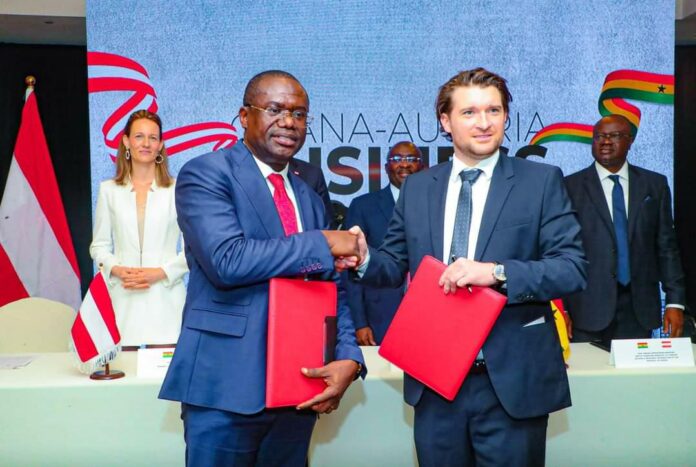
Dr. Bawumia was pleased to see the union of Jospong Group and Komptech as the two signed a 30 million Euro agreement to support rice, maize and soya production in the country production in Ghana.
The agreement, which was signed by the Executive Chairman of Jospong Group, Dr. Joseph Siaw-Adjepong and Markus Maierhofer on behalf of Komptech, will see Komptech providing machinery and technological support to the Jospong Group rice project.
Komptech is one of the leading international technology providers of machinery and systems for the mechanical and biological processing of solid waste.
The Jospong Group rice project which is being championed by the Asian African Consortium (AAC) is an integrated rice project is to make Ghana self-sufficient in rice production resulting in significant economic benefit for the country”.
Executive Chairman of Jospong Group, Dr. Joseph Siaw Agyepong, in a brief remark invited other stakeholders to join this initiative to improve Ghana’s food security by producing locally the food that it imports.
He said, the project team has invited the business mogul, Ibrahim Mahama, and other like-minded businessmen to be part and support the consortium.
Karl Nehammer, the first leader of Austria to visit Ghana, in his remark, noted that Ghana has been a reliable partner to Austria and Austria will continue to deepen its engagement with Ghana, adding that trade between the two countries has increased in the past few years.
We therefore see great potential for more development and our aim is to create a partnership of equals for mutual benefits,” he emphasized.
Background
Last year, Asian African Consortium entered a partnership with major rice industry players in Thailand to develop an integrated rice farming project. This move by the Jospong Group stemmed from the government’s decision to boost the economy through import substitution.
A core team later visited Thailand for the Ghana-Thailand Business conference in March 2023 with researchers from various universities in Ghana as well as major players in the rice industry.
Last year, Ghana spent over GH¢6.8billion (equivalent to US$560 million at current market rates) importing rice, a grain that can be produced locally.
While total rice consumption stood at 1.4 million metric tonnes in 2022, imports valued at US$560 million accounted for 800,000 metric tonnes (mt) of the consumption figure, with domestic production catering for the remaining demand – according to data from IDH Sustainable Trade, a foundation headquartered in The Netherlands.
Similarly, according to the Ministry of Food and Agriculture, between 2010 and 2020 the country’s rice imports hit a staggering US$8 billion. This, in addition to imports of other food items that can be produced locally, has been a major source of concern for stakeholders
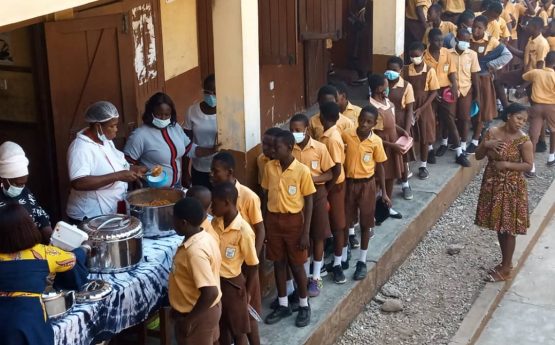
Caterers under the School Feeding Programme have declared a nationwide strike following the government’s failure to pay them their arrears and increase the amount per child.
The aggrieved caterers drawn from various regions across the country who converged in the Ashanti regional capital, Kumasi stressed that laying down their tools is the only option available to them now.
Speaking at a news conference, the caterers lamented that they are going through harsh economic times as a result of the situation.The leadership of the caterers has thus urged all members across the country to join the strike to impress on the government to address their concerns as early as possible.
One of the leaders of the caterers, Gifty Asamoah addressing the media said they have exhausted all their funds and are yet to get any feedback from the government on when their arrears will be paid them.
She claimed that despite providing essential services in schools, school-feeding caterers are not given the same level of respect given to other professions.
“School feeding caterers are public servants like teachers, Police, Doctors, nurses and other employees that provide state services but we are being discriminated against. Can government refuse to pay teachers for even one month, why are they doing the opposite when it comes to caterers? A contract is a contract and our human rights must be abused.”
The caterers have also threatened to embark on a nationwide demonstration if their arrears are not paid as early as possible.
Associate Professor, Courage Kosi Setsoafia Saba of the University for Development Studies (UDS) has been appointed the second time by the United Nations and World Health Organization to join FAO/WHO expert meetings on microbiological risk assessment (JEMRA).
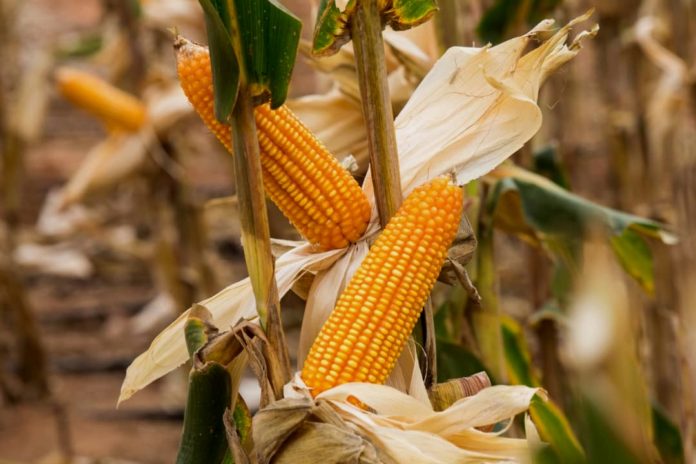
On his farm in the state of Mato Grosso, Brazil’s grain basket, Ilson Jose Redivo finished planting his maize – also known as corn – crop a few weeks ago, acting quickly once he’d harvested the soybeans that he’d grown on the same fields.
In this region of west-central Brazil, the fields stretch as far as the eye can see and the schedule is well established: The farmer plants the two crops, soybean and maize, on “almost 100 percent” of his over 1,550 hectares (3,800 acres). The maize will be harvested in June.
The maize is a second crop, or “small crop,” which Brazilians call a “safrinha.” Over the past decade, the second crop has turned into Brazil’s main crop and taken an increasing share of world production.
This year’s expected production should hit a record, making Brazil the world’s leading maize exporter ahead of the United States, a position it has only reached once before, in 2013.
Production is expected to hit 124.9 million tons (up 10.4 percent compared to last year), of which 76.3 percent is second crop, according to the latest report from the National Supply Company (Conab), published this week.
This is despite a “delay in the soybean harvest” due to a “surplus of rain” in Mato Grosso, the country’s main producer of soybeans and maize, where the mild winter and the distribution of rainfall allow a second annual harvest.
Powered by GMOs
The increase in the price of the cereal grain, driven by the opening of maize ethanol plants from 2017, has encouraged producers to invest more in “safrinha,” says Redivo, who spoke by phone to AFP.”
Corn as a second crop has become more attractive, so we have acquired more fertilizers, genetically improved seeds and farm machinery that allows for faster and more accurate planting,” he stresses.
“We have been able to increase the area” devoted to corn cultivation, “improve our productivity and thus increase our production significantly.
“Genetically modified varieties now occupy almost all of Brazil’s cornfields.
With such production forecasts, “the country should increase its exportable surplus,” which will enable it to sell more abroad, points out Joao Pedro Lopes, of the commodity market analysis firm StoneX.
Geopolitical events and climate have put Brazilian corn in high demand, especially with problem harvests in the traditional corn powerhouses of the United States, Argentina and — because of the war– Ukraine, another grain basket nation.
Demand has also risen with the opening of the Chinese market following the signing of an agreement between Brasilia and Beijing in early 2022, Lopes says.
Challenges ahead
According to the US Department of Agriculture, Brazil could export 52 million tons of corn this year, up from 31.9 million tons in 2022, and dethrone the US, whose exports are projected at 49 million tons.
“Brazil is emerging as the competitor to the US and has the capacity to increase production further. There is still a lot of land available for this crop” on already opened agricultural plots, “and our productivity can still progress,” assures Enori Barbieri, vice president of the Brazilian Association of Corn Producers (Abramilho).
But to improve its performance, Brazil must “succeed in raising its investment in agricultural equipment,” in order to “speed up sowing and harvesting,” and “continue to improve its logistical infrastructure to dispose of production,” warns Lucilio Alves, a researcher at the Center of Advanced Studies in Applied Economics at the University of Sao Paulo.
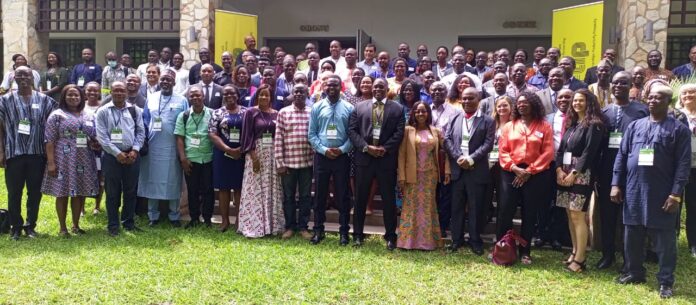
To develop actionable and outcome-oriented strategies to address the challenges of fluctuating prices facing Ghana’s fertilizer and agro-input market, the African Fertilizer and Agribusiness Partnership (AFAP), in partnership with Feed the Future Policy LINK, has met to discuss innovative approaches to improving the availability and affordability of fertilizer and agro-input to smallholder farmers in Ghana and across Africa.