
The government remains committed and on course with initiatives geared toward promoting food sufficiency and boosting agricultural development under the GhanaCARES programme, Minister of Finance Ken Ofori-Atta has said.
Ad article

The government remains committed and on course with initiatives geared toward promoting food sufficiency and boosting agricultural development under the GhanaCARES programme, Minister of Finance Ken Ofori-Atta has said.
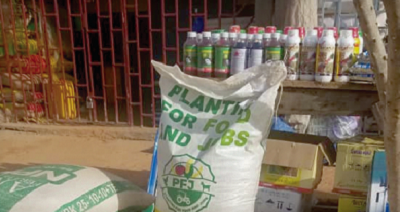
The Finance Minister Ken Ofori-Atta has touted the achievements of the Planting for Food and Jobs Initiative.
Planting for Food and Jobs is a flagship agricultural Campaign of the Government, with five implementation modules.
Presenting the 2023 mid-year budget in Parliament on Monday, July 31, the Finance Minister said that the initiative has brought substantial improvements in Ghana’s agriculture sector.
“This has resulted in increased food security, employment along agricultural value chains, and accessibility of raw materials for developing industries.
“The programme has directly contributed to increased crop yields for major food staples such as maize, rice, and soya by 135 percent, 67 percent and 18 percent respectively within the period,” he said.
He added “After a comprehensive review, Government is finalising PfJ Phase II to ensure a more efficient and targeted support for the agricultural sector.
“The key elements of Phase II are Inputs Credit System, Storage and Distribution Infrastructure, Commodity Trading and Digitised Platform.”
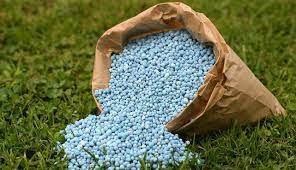
The 2022 Auditor-General’s report has revealed Payment of GH¢7,192,235 received from individual cocoa farmers for supply of Cocoa Hi Tech (fertilizers) could not be traced to the co-operative they belong.
Under the Hi-Tech/CODAPEC program, payment is expected to be made into a designated bank account by the Licensed Buying Companies (LBCs) and Farmer Co-operatives. Thus, the payment should be made by the co-operatives or LBCs and not the individual members.
However, under the programme fertilizers procured by Ghana Cocoa Board (COCOBOD) are distributed to the farmers through the LBCs and the farmer co-operatives.
According to the report, some farmers who are members of the co-operatives pay directly for the fertilizers distributed to them into the designated bank account with their individual personal names instead of using the name of the LBC or co-operative thus making it very difficult to trace and update the indebtedness of the co-operatives or the LBCs with payments received.
“This practice made it difficult to determine the indebtedness of each co-operative or LBC to COCOBOD. The practice could also create an opportunity for co-operatives or LBC and their members to default on the payment of the fertilizers without notice as COCOBOD was unable to determine their outstanding balances.”
Management responding to the findings of the report said “the total amount of GH¢7,192,235 were paid into COCOBOD’s bank account by various cocoa farmers without indicating the co-operative groups they belong to. Majority of the payments relates to the period 2018 to 2021 making it difficult to trace the farmers and their co-operatives.
However, staff of COCOBOD on the field were tasked to liaise with Community Extension Agents (CEAs) to identify the co-operatives the farmers belong to in order to allocate the amount to the appropriate co-operative account.
The exercise led to the identification of the co-operatives of some farmers, and an amount of GH¢2,118,600 of the unallocated receipts have now been allocated thereby reducing the unallocated balance to GH¢5,073,635.”
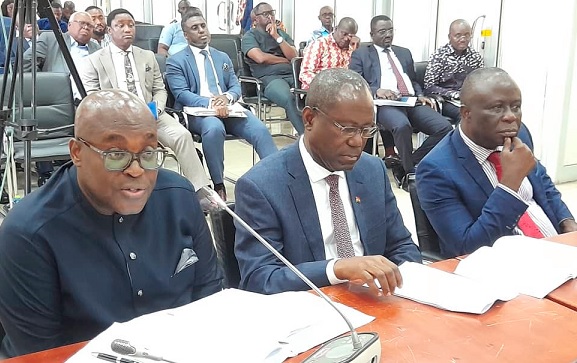
The directed the Ghana Cocoa Board (COCOBOD) to produce a report on payments made to cocoa road contractors from 2020 to the present.
The committee particularly directed the Chief Executive Officer (CEO) of COCOBOD, Joseph Boahene-Aidoo, to produce the report in two weeks, failure of which he and other top management members of the board would be sanctioned.
He referred to Article 103 (3) of the Constitution which stipulates that “(6) A committee appointed under this article shall have the powers, rights and privileges of the High Court or a Justice of the High Court at a trial for— (a) enforcing the attendance of witnesses and examining them on oath, affirmation or otherwise; (b) compelling the production of documents; and (c) issuing a commission or request to examine witnesses abroad”.
“I am using these powers to demand for that document.
This is a committee of Parliament, and this is a Constitution that gave us that power, and so we want you to give us that report,” the chairman demanded.
Engaging the CEO of COCOBOD over some infractions contained in the Auditor-General’s 2021 Report on the board, Dr Avedzi said: “Whether the report has been submitted somewhere else, we are demanding it, and we give you two weeks.
“It is a report and the work has been done.
It is a matter of pulling it from the drawer,” he said.
Dr Avedzi gave the directive when the COCOBOD CEO and other management members appeared before the committee yesterday.
Per the Auditor-General’s report, the records of COCOBOD showed that the board had been burdened with a relatively high loan portfolio over the years.
It said the board had debts totalling GH¢12.3 billion on its records as of the end of the 2019/2020 financial year.
“The debt burden resulted in increased finance costs over the years.
This, if not managed effectively, could lead to the crippling of the cocoa industry,” the report said.
A member of the committee, Kwame Governs Agbodza, asked the COCOBOD management what part of the company’s indebtedness was to cocoa road contractors for works certified in 2020.
He also quizzed if the figure owed contractors had improved or depreciated in terms of debt situation regarding cocoa roads.
In the view of the Member of Parliament (MP) for Adaklu, cocoa road contractors were also Ghanaians who aided the work the board did in the country, and thus there could not be a better opportunity for COCOBOD to give them (contractors) some assurance.
The information we want is not witch-hunting but just to find information to the problem that affects everybody in this country,” he said.
When the chairman asked Mr Agbodza if the report was submitted to him, the Adaklu MP said the immediate former Minister of Food and Agriculture “did make a public comment that he submitted the report to Parliament”.
Intervening, Dr Avedzi questioned why since September 2020 when the board’s account was prepared, management did not have money to pay cocoa road contractors.
He, therefore, directed that in providing the information to the committee, the board must disclose what was the current debt of COCOBOD to cocoa road contractors as of September 2020.
Dr Avedzi pointed out that the last time the CEO of COCOBOD appeared before the PAC, the committee demanded that he furnished them with an indebtedness report on cocoa roads.
“We demanded the report but you did not provide it to the committee.
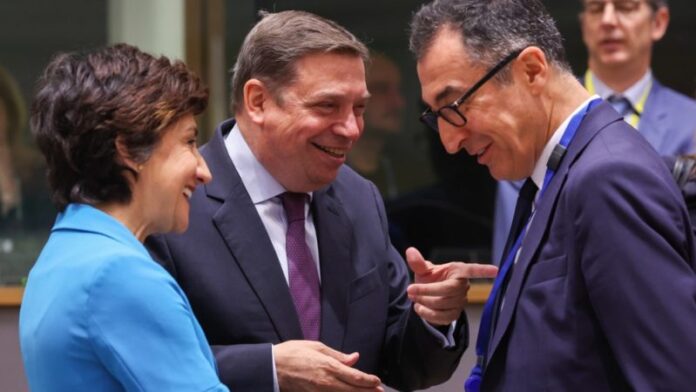
The agriculture ministers of Spain and Germany have opposite views on what the European Food Safety Authority’s (EFSA) recent verdict on glyphosate should mean for the decision on re-approving the contentious herbicide.
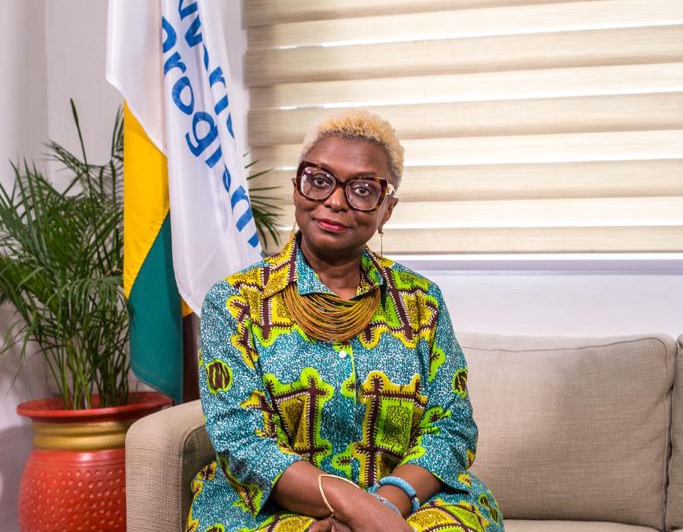
World Food Programme (WFP), Has Signed a Partnership with Agrihouse Foundation towards the 5th Edition of the Women in Food and Agricultural Leadership Training Forum (WOFAGRIC) and Gold in The Soil Awards. set for July 26th to 27th at the Bedtime Hotel in Koforidua in the Eastern Region.
The partnership, in the form of technical and financial assistance to help women farmers, farmers with disabilities and agro-processors to foster the growth of Ghana’s Agriculture sector and generally improve food and nutrition security.
Speaking about the partnership, Mrs. Barbara Tulu Clemens, WFP Country Director, emphasized the importance of supporting marginalized groups, especially women, youth, and people living with disabilities, as outlined in WFP’s Next Generation Country Strategic Plan for 2024-2028. WFP’s cross-cutting objectives include identifying fundings for climate adaptive projects and working with key Ministries and Organizations to explore opportunities for climate offset credit.
“We have identified funding for climate adaptive projects as one of the key cross-cutting objectives within our country strategic plan for WFP. Our aim is to collaborate with the Ministry of Food and Agriculture and the Ministry of Finance to identify opportunities for climate offset credit, which aligns with interventions like the WOFAGRIC and gold in the soil awards intervention,” she added.
The WFP Country Director, also emphasized that WFP is committed to achieving Sustainable Development Goal 2, which is zero hunger. Additionally, she advised the youth to consider agriculture as a laudable vocation, highlighting its importance in promoting food security and sustainable development.
Mrs Clemens said during the two-day event, WFP would lead discussions on changing entrenched socio-cultural norms and breaking traditional barriers critical to the development of Agri women in the agricultural value chain -the role of stakeholders.
She said they will also lead, training and mentorship section to empower and train women farmers and farmers with disabilities to help build up their capacity to scale up their business Management, Food Safety and Quality Standards. Adding that smallholder farmers would get the opportunity to learn about innovations and technologies, participate in trainings, exhibitions, field demonstrations and market linkages.
The Executive Director of Agrihouse Foundation, Alberta Nana Akyaa Akosa expressed her appreciation for the World Food Programme’s partnership and emphasized the World Food Programme’s pivotal role in empowering women in agriculture and promoting food security. She highlighted WFP’s steadfast commitment to fostering progress and resilience in vulnerable regions and its recognition of the crucial contributions of women and girls in shaping societies, which align perfectly with the mission of the Women in Food & Agriculture Leadership Training Forum (WOFAGRIC) and Gold in The Soil Awards.
“Together, we stand united in our dedication to leave no one behind and advocate for a future where hunger is eradicated, and prosperity is attainable for all. This partnership exemplifies the transformative power of agriculture, making a positive impact on the lives of millions and paving the way for a more sustainable and equitable future,” she added.
The theme for the 5th edition of the Women in Food & Agriculture Leadership Training Forum (WOFAGRIC) & Gold in The Soil Awards is “OVERCOMING THE BARRIERS TO WOMEN AGRIBUSINESS DEVELOPMENT: THE ROLE OF STAKEHOLDERS.” This year’s forum aims to celebrate and recognize the outstanding achievements of women farmers and women with disabilities while fostering collaborative efforts towards gender equality and sustainable agricultural practices.
The Women in Food and Agricultural Leadership Training Forum (WOFAGRIC) and the gold in the soil awards now in its fifth year, is an interventional platform that provides opportunities for women farmers and farmers with disabilities across various value chain in the agricultural sector, that seeks to recognize, celebrate, award, mentor and train them.
Now in its fifth year, the Women in Food & Agricultural Leadership Training Forum (WOFAGRIC) & Gold in The Soil Awards is an annual Regional rotational intervention, that has moved from the volta Region, Ashanti Region, Western and Western North Regions and Upper East and Upper West Regions providing mentorship, networking, and financial support to over five thousand (5000) women across the agricultural value chain. The program targets women farmers and farmers with disabilities, agripreneurs, key stakeholders, development partners, researchers, farmer groups, government agencies, businesses, professional advisors, and corporate organizations, further fostering a more inclusive and sustainable agricultural sector.
The two-day event to be held at the Bedtime Hotel in Koforidua, will feature over 600 participants engaging in activities, including break-out panel discussions, training workshops, exhibitions, trade shows, speed networking, and mentorship sessions. These components will empower participants to gain valuable insights, exchange best practices, and forge collaborations that have the potential to reshape the future of agriculture in Ghana.
One of the highlights of the event will be the prestigious Gold in The Soil Awards, recognizing and honouring exceptional women farmers and women with disabilities who have made remarkable contributions to the agricultural industry. Their unwavering dedication, innovative approaches, and transformative impact will be celebrated, inspiring others to follow in their footsteps and drive further progress within the sector.
As Agrihouse Foundation continues its journey towards agricultural transformation, the role of women farmers and women with disabilities cannot be overstated. Their resilience, expertise, and determination are integral to ensuring food security, promoting sustainable practices, and fostering economic growth.
World Food Programme’s partnership with Agrihouse Foundation reaffirms its strong belief in the potential of Ghanaian women to drive transformative change in agriculture. By collaborating on this empowering initiative, the World Food Program continues to be a driving force in the nation’s progress and prosperity, actively contributing to the growth and development of the agricultural sector.
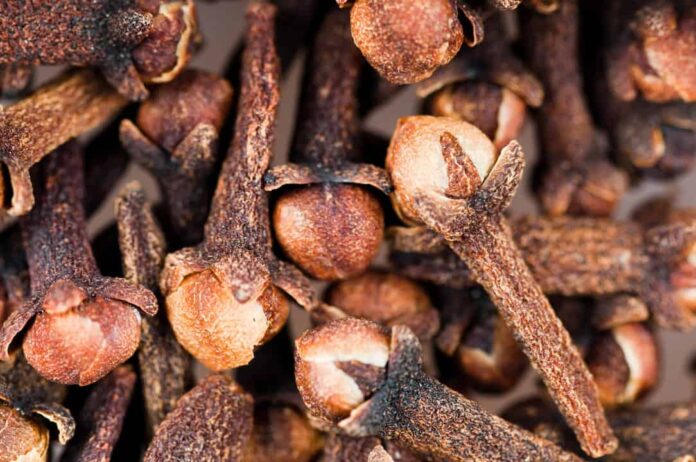
If you’ve come across mice in your home, it’s time to act fast, mice infestations can become a huge problem, and it’s time to tackle the problem before it gets out of hand!
When you see mice, many people go straight to the traditional methods, such as traps and/ or poison. However, if you’re like us, and if you’re looking for a more natural approach, we’ve got you covered, because today we are talking about using cloves to keep those pesky mice away!
Cloves contain a substance called eugenol, which has quite a unique and strong odor. This scent is believed to be unappealing to mice, turning their adorable little noses up at the smell.
But wait – there’s more! The eugenol in cloves might just be potent enough to mask the scent of the food they’re after, making it difficult for the mice to find their way to your pantry.
So, where should you place these delightful little cloves in your home to keep mice at bay, and how many cloves are needed? Let’s continue our research and uncover the aromatic clove secret.
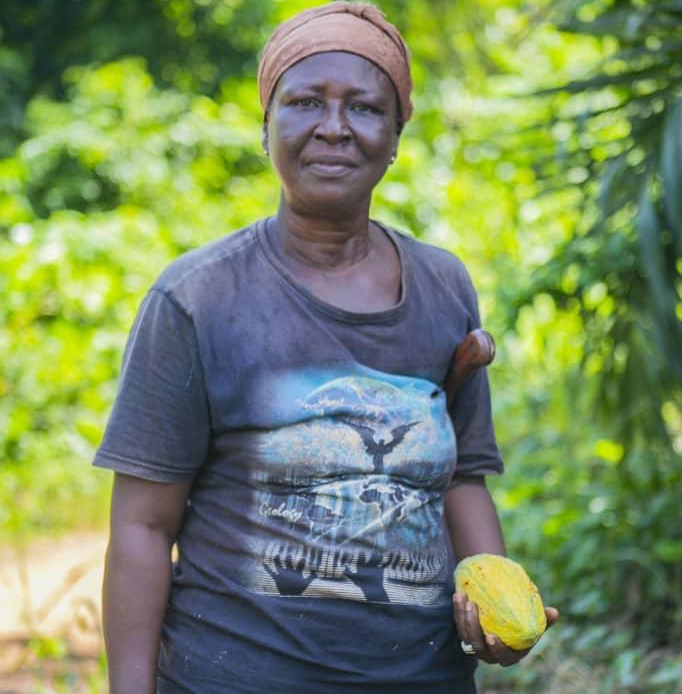
The Queen Mother of Abomasu, Obaapanin Konadu Kontie II, has become a beacon of inspiration through her dedication to farming and community development. With an impressive agricultural enterprise spanning 30 acres of cocoa, 2 acres of maize, 5 acres of palm nut, and 5 acres of plantain and cassava, Konadu Kontie II has transformed her passion for farming into a catalyst for positive change.
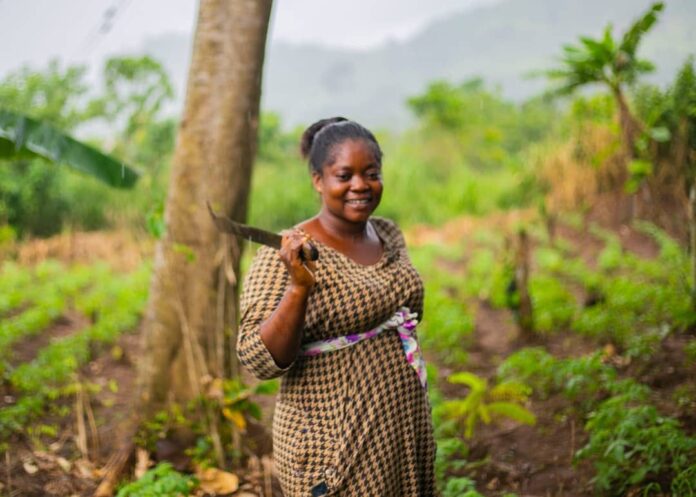
Eva Amene, a 30-year-old farmer from Otoase, has become an inspiration to many as she combines her passion for farming with a heartwarming commitment to helping orphans in her community. Eva’s dedication to agriculture has not only brought her personal success but has also enabled her to make a positive impact on the lives of others.

Maize originated in Mexico thousands of years ago and has since spread throughout the world. Today, it is one of the most widely grown grain crops in the world, with global production reaching over 1,2 billion tons in 2021.
According to the United States Department of Agriculture (USDA), world production is expected to be marginally down in 2022/23 at 1,16 billion tons, around 6,52 million tons less year-on-year.
Importance of maize
Maize is a vital staple food for millions of people. It is particularly important for food security in developing countries, where it is a dietary staple and a critical source of calories, protein, and micronutrients for millions of people.
Maize is a versatile crop that can grow in a variety of climates and soils, making it an ideal crop for small-scale farmers in developing countries. It is a source of food for both humans and animals and can also be used for industrial purposes such as the production of biofuels, starch, and oil.
In many countries, maize is the primary staple food, and it provides a significant portion of people’s daily calorie intake. For example, in sub-Saharan Africa, maize accounts for more than 30% of the daily calorie intake, and in some countries, accounts for up to 50% of the total calorie intake.
Maize is also an important source of essential nutrients such as carbohydrates, fibre, vitamins, and minerals, which are vital for human health. In addition, maize is a low-cost food source that is easily accessible to low-income households.
Given its importance in global food security, the production and distribution of maize are critical to ensuring food security in developing countries. Governments, international organisations, and other stakeholders are working together to improve maize production, increase yields, and promote the adoption of more sustainable and climate-resilient farming practices to ensure that maize remains a reliable and accessible source of food for millions of people around the world.
World trade
The US is the world’s biggest producer and exporter of maize. In 2022/23, the USDA
expects the country to produce 13,7 billion bushels (approximately 500 million tons). This is almost 200 million bushels down on the previous season, but still puts the US in first position as the world’s largest producer of the crop. Major markets for US maize include Mexico, Japan, and South Korea.
China is the world’s second-largest producer of maize, and in 2021/22 it produced 277,2 million tons of the commodity. Most of this, however, is consumed locally. It remains a major importer of maize, too, importing the grain largely from the US, Ukraine, and Brazil.
Brazil is the world’s third-largest producer of maize, followed by Argentina. Brazil is expected to produce 127 million tons, and Argentina 40 million tons in the 2022/23 season.
The severe drought in Argentina is largely to blame for the production estimate being lowered from the initial 44 million tons predicted.
In terms of imports, Mexico takes first place. Most of the country’s imports are from the US. Mexico recently issued a decree banning genetically modified (GMO) maize for human consumption. This has brought US maize imports into question, as around 90% of all US maize is GM. Japan is the second-largest importer of maize, with most of its imports coming from the US. The country uses maize for animal feed and industrial purposes.
South Korea is the third-largest importer of maize, with most of its imports coming from the US and Brazil. The country uses maize for animal feed and industrial purposes.
In addition to these countries, other important maize producers, exporters and importers include Ukraine, India, South Africa, and the EU. The global maize trade is influenced by many factors, including weather conditions, trade policies, and demand from different industries
History of maize production
The history of global maize production can be divided into several distinct periods:
Pre-Columbian era (before 1492)
Maize was first domesticated in Mesoamerica (present-day Mexico and Central America) over 8 000 years ago. Maize was a critical crop for the indigenous peoples of the region, who developed a wide variety of maize cultivars adapted to different climates, soils, and growing conditions.
Colonial era (1492-1800s)
After the arrival of Europeans in the Americas, maize was introduced to other parts of the world, including Europe, Africa, and Asia. It quickly became a popular crop in many parts of the world, particularly in regions with tropical and subtropical climates.
Industrialisation era (the 1800s-1900s):
The industrialisation of agriculture in the late 19th and early 20th centuries led to significant increases in maize production. New technologies such as hybrid maize varieties, synthetic fertilisers, and mechanised farming equipment enabled farmers to increase yields and produce maize more efficiently.
Green Revolution (the 1950s-1970s):
This was a period of rapid agricultural development that focused on increasing crop yields through the use of high-yielding varieties, synthetic fertilisers, and pesticides. Maize was one of the key crops targeted by the Green Revolution, and as a result, maize production increased dramatically in many parts of the world.
Modern era (1980s-present):
Today, maize is grown in almost every country in the world. Production has continued to increase over the past few decades, driven by growing demand for maize as a food and feed crop, as well as the use of maize in industrial applications such as biofuels. However, production also faces significant challenges, including climate change, soil degradation, and the need to improve the sustainability of maize farming practices.
Production in Africa
Maize is a staple food crop in many African countries. However, it is not native to the continent and was introduced by European explorers and settlers during the colonial period.
Maize was first introduced to Africa in the 16th century by Portuguese traders, who brought it to the east coast of the continent. From there, it spread throughout Africa, becoming a popular crop in many countries.
During the colonial period, maize production increased significantly as European settlers encouraged the cultivation of the crop to feed their growing populations. In the 20th century, the use of hybrid seeds and modern farming techniques further boosted maize production.
Today, the crop is grown in many African countries, with the highest production levels found in countries such as South Africa, Nigeria, and Tanzania. It is an important food crop for many people in Africa, providing a source of carbohydrates, protein, and other essential nutrients.
However, there are also challenges associated with maize production in Africa, including drought, pests, and disease. In addition, there are concerns about the environmental impact of large-scale maize cultivation and the use of chemical fertilisers and pesticides. As a result, many farmers in Africa are exploring sustainable farming practices and alternative crops to reduce their environmental impact and ensure long-term food security