
There is no denying that the calories in mangoes that come from sugar may contribute to the increased blood sugar in diabetic people.
Efforts are underway to ensure approval for Ghana’s first GMO crop.
Senior Research Scientist at the Savannah Agricultural Research Institute (SARI) of the Council for Scientific and Industrial Research (CSIR) Dr. Jerry Nboyine explained efforts are underway to ensure approval for Ghana’s first GMO crop, the pod borer resistant (PBR) cowpea.
This was revealed at a four-day workshop themed, Speaking Science Ghana, which brought together senior and junior scientists with academic institutions and research organisations across the country for training on best practices in science communication.
The GM cowpea has been developed to resist the deadly pod borer which could cause up to 100% crop yield loss on farms. “With PBR Cowpea, farmers can attain the potential yields of most commercially released cowpea varieties which is about 2 tonnes per hectare. This is about a four-fold yield increment over existing yields,” he explained.
He said approval of the variety will help ensure “protection of our environment from hazardous insecticides, protection of cowpea farmers from pesticide poisoning, and protection of consumers from pesticide poisoning.”
“With GM cowpea, Ghana can attain food sufficiency in the area of cowpea production. Nigeria has commercialised PBR Cowpea and will soon export grains to Ghana informally. Our market women will buy cowpea from Nigeria and there is no guarantee that some PBR Cowpea will not be included in what is brought into Ghana,” he observed.
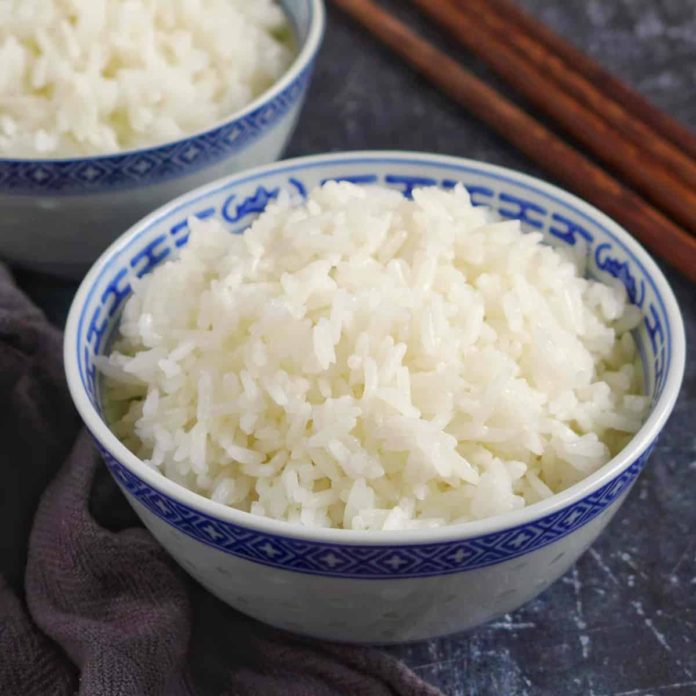
Dr. Maxwell Darko Asante who is Deputy Director of the Crop Research Institute of the CSIR also told the participants Ghana is additionally developing a GM rice (NEWEST rice).
He said the GM rice being developed uses nitrogen efficiently, uses water efficiently, and has salt tolerance.
“The lead Nitrogen – Use Efficient lines have a yield advantage of 15-30% compared to the non-GM version on nitrogen-deficient soils,” he explained.
He said if this crop gets adopted, resource-poor farmers who cannot afford the recommended levels of fertilizer can still have good yields.
This will improve livelihoods, mitigate the effects of climate change, as well as help ensure marginal areas which cannot support rice production, could be cultivated.
Participants’ reaction
Research scientist at BNARI Dr. Elaine Azu who participated in the science communication training said it has equipped her with the appropriate tools to communicate about science and technology’s role in agricultural production.
“Now I have the skills to be able to go out there… It’s time for the public to know what scientists are doing in the lab. To my fellow scientists, step out, and let people know how science can contribute to the development of Ghana,” she said.
Sandra Nsoh who is a teaching assistant at the Department of Biotechnology at the University for Development Studies told the media she learned a lot from the workshop.
“I am a very good speaker, but this training has really sharpened my communication skills. One speaker said the new generation of scientists should be active on social media platforms. I intend to wake myself up and speak more about science,” she said
There will be starvation without an import for a month. – Kareweh.
The General Secretary of the Ghana Agricultural Workers Union, Mr. Edward Kareweh, has said that Ghana does not have enough food available to feed the people for even one month without an import.
Pig farmers attribute the hike in the price of pork to the high cost of feed.
The Pig Farmers Association of Ghana is attributing the recent increase in the price of pork to the increase in feed and other factors.
24,000 persons benefit from NEIP’s youth in an innovative agriculture training programme.
The National Entrepreneurship and Innovation Programme (NEIP) has commenced training of some 24,000 youth under the “Youth in Innovative Agriculture Programme” under the government’s new Ghana Cares Obaatan Pa programme.
The training started on 9th May 2022 and will end on 9th June 2022.
All 24,000 applicants have so far been posted to private business incubation hubs and consultants who will take beneficiaries through the training, which will be done in batches.
The programme enlisted young people between the ages of 18 and 40 who are already into agriculture to be trained and given funding to expand their businesses.
Shortlisted applicants will receive funding and technical services support after they have gone through training and mentoring.
The Ghana CARES (Obaatanpa) programme is an audacious GH¢100 billion post-COVID programme from the government being implemented by the Ministry of Finance to stabilise, revitalise and transform Ghana’s economy to create jobs and prosperity for Ghanaians over a three-year period.
The areas covered under this phase of the Youth in Innovative Agriculture Programme include the following Agric Business sectors:
· Vegetable Farming
· Maize Farming
· Poultry/Livestock
· Yam/cassava
· Agro-Processing
This programme is part of the government’s efforts toward supporting commercial farming and attracting educated youth into agriculture to help ensure food security and to help close our food import substitution gap.
Ghana: Entrepreneur taps into international demand for local food products.
Fafali Azaglo founder of Selasie Farms and Groceries, a food processing and packaging company in Ghana, more than two decades ago. Over the years, the business has produced different products based on market demand, finding success in powdered or dehydrated authentic Ghanaian favourites such as banku mix (a blend of fermented maize and cassava dough), Hausa Koko (a spicy millet porridge), akyeke (a grated and fermented cassava side dish), and kokonte (dried cassava flour). Jeanette Clark spoke to Azaglo about how she built the business and entered the export market.
Follow the demand
Selasie Farms and Groceries was founded in 1997 after Azaglo decided to move away from primary agricultural production into agro-processing. In the years prior – from 1992 up until 1996 – she had run a mixed farming business that included poultry rearing, a piggery, and the cultivation of maize and cassava.
In the transition, Azaglo used crops from her own farm to process into popular products and sell on the high streets of Accra. Customers sometimes requested specific items and if she didn’t have them, Azaglo sourced the ingredients from market sellers and processed and sold them the very next day. In this way, the company’s offering was built on market demand.
As the years progressed, Azaglo realized she needed to get the equipment in place to run a professional operation. She steadily added dehydration and packaging machines at a facility in Greater Accra on land the family-owned.
The farms have since been sold and the company now sources from suppliers and farmers. All the processing is done in-house, except for the cooking palm oil, which is done by the supplier itself and then packaged and sold by the company as Selasie Zomi.
Convenience and nostalgia
Azaglo believes the company’s products are popular owing to the convenience it brings. “Preparing these meals from scratch really takes a long time. Also, the diaspora who have left Ghana, long for the food of their home and want to buy it where they now reside.”
From very early on, the company provided some of its goods to third parties who exported on a smaller scale to these customers, but Selasie’s first direct overseas shipment came in 2015 after a call from a distributor in Australia. “She had seen my plantain fufu and wanted to do business. She traveled to Ghana, visiting both my house and factory before ordering the goods she wanted,” says Azaglo. “It was a 20-footer container!”
The customer was so impressed and eager to do business that she made the full payment upfront to secure the shipment. More export customers followed, and in 2019, around 40% of sales were geared towards the export market with customers in the UK, Spain, US, Italy, and Canada.
Selasie handles the export logistics for the UK client: arranging for the container and shipment itself. The American and Spanish clients have agents in Ghana who collect the order and manage the export and shipping independently. Upfront payments of between 60% and 70% are due by the clients before processing.
The benefits of exporting clients
When the pandemic hit, Selasie’s local sales suffered. Where the balance was 60/40 in favour of domestic, it tilted 80/20 towards exports in 2020. Restrictions on local movement resulted in a lower retail turnover and the company lost its listing in certain stores.
Selasie Farms and Groceries produces a variety of foods such as banku mix and Hausa Koko.
Selasie Farms and Groceries products are stocked in 58 outlets in Greater Accra – including Spar, Shoprite, Marina Mall, and Max Mart – but others have dropped off and Azaglo is now trying to revive these relationships. “I am reaching out, writing letters, and sending our new price list, hoping orders will follow.”
The favourable payment terms from export clients are another reason why Azaglo prefers to grow her international sales. Some supermarkets in Ghana pay only after 30 days. For the smaller ones, the company often has to wait much longer. This severely impacts the company’s working capital.
Since the company started, local competition has also increased. Many competitor companies have entered the fray, offering the same items as Selasie. “The domestic market is flooded. Another reason why I want to run away to the international market” laughs Azaglo.
Investment for growth
In 2021, the factory underwent renovations to obtain international food safety HACCP certification. With this in place, the company will be able to export to even more markets.
However, Azaglo has identified one obstacle in the way of growth: the capacity of the factory’s current dehydrator. “Our dehydrator can manage 200 kilograms in 12 hours. When we get big orders, the drying time is too long and I am losing customers,” she says.
“Currently, I am looking for equity partners or a grant to boost this capacity. We need a new dehydrator that could double our output, handling 200 kilograms in six hours.”
Products with potential
Azaglo highlights a few items that she believes have a growing market: the Hausa Koko, the banku mix, the cooking palm oil, high-quality cassava flour, and the crispy gari.
She has high hopes for a specific cereal mix with millet and soya bean that Selasie developed that could benefit growing children because of its nutritional value. When it was launched a couple of years ago, some local hospitals used it as part of their catering service. “When we introduced it, it was really popular. Although owing to the rising price of millet, I made the cost decision to limit production as customers were not ready to pay the difference,” she explains. Thanks to increasing queries, Selasie recently resumed sales of this product.
The reasons for the success of the other products range from the convenience of the ready mixes to the current shortage of wheat flour caused by the conflict in Ukraine. More people are turning to high-quality cassava flour.
“People are also choosing healthier food, having been reminded of the importance of health during the Covid-19 pandemic,” she says. “Our food is manufactured in a hygienic environment; it is healthy and contains nutrients and fibre. On top of that, our packaging is world-class.”
Selasie is trying out three new products: a cashew paste, a sweet ready-to-eat gari mix, and a bitter cacao butter that can be used in hot drinks. “We are testing the ground to see if there could be a market,” she notes.
Mechanization is critical to addressing Food Security challenges in the country – Agric Ministry.
The Ministry of Food and Agriculture has asked farmers to consider mechanisation as a way of addressing issues of food security.
Vertical integration is important for profitable agribusiness in Africa, says investor.
Successful agribusiness ventures in Africa often require vertical integration whereby the supply chain of a company, or parts of it, is integrated and owned by that company. This is according to Euler Bropleh, founder and managing director of investment firm VestedWorld. Speaking at the recent African Private Equity and Venture Capital Association conference in Dakar, Senegal, Bropleh gave the examples of two of VestedWorld’s portfolio companies, Tomato Jos and Victory Farms.
Kosmos Innovation Center, Mastercard Foundation launch initiative to promote agric, MSMEs.
The Kosmos Innovation Center (KIC) in partnership with the Mastercard Foundation has launched the KIC Business Booster – an acceleration programme aimed at scaling Micro, Small, and Medium Enterprises (Agri-MSMEs) in the agriculture sector in Ghana.
MUST-READ: Stop organic farming to help future food crisis, says Syngenta boss.
Organic farming yields can be up to 50% lower than non-organic farming, depending on the product, claimed the Syngenta CEO.