top ad
Home Blog Page 119

Soya bean processors lament over losing industry to Indians.

Local soya bean producers and processors have lamented that a lack of attention from the government has resulted in the collapse of the industry-leading to the total export of raw soya beans produced in the country.

This, they pointed out, can be blamed on the high cost of poultry feed in the country, since soya is an important ingredient used in the preparation of poultry feed.

Data from the Council for Scientific and Industrial Research (CSIR) show that soya beans are not only important in poultry feed production but can also be processed to produce (assuming the beans are non-GMO and organic) vegetable oil, tofu, meat-substitutes like soya-mince and chunks, milk, ice-cream and a host of other healthy, vitamin-E and protein-rich foods – creating thousands of jobs for Ghanaians while affording them access to relatively cheap nutrition.

The CEO of soya processing company Taipana Limited and Convener of the Rice Millers Association of Ghana, Yaw Adu Poku, said local processors have lost the market to Indian investors who buy all the raw beans and add value to them before re-importing them to Ghana.

“All of us who went into soya processing are on our knees,” Mr. Adu Poku said – recounting that a solar plant he invested in over a decade ago that could produce 50 tonnes of vegetable oil is no more because the government only concentrated on producing the beans without proper policies for off-takers.

“Government policy was only to create a job for the farmers. So, the farmers produced and there was no buyer. We stepped in to buy, but there was no deliberate policy to support the processors and so the Indians took advantage of the loopholes.”

Mr. Adu Poku said proposals and lobbying have been carried out by soya bean processors to convince the government it should be included in its flagship programme One District, One Factory – but to no avail. “With soya bean processing, you can kill 20 birds with one stone. Exporting the raw beans is not in our interest. Processing it right here will support our poultry industry, and Ghana will not have to import eggs from Burkina Faso.”

The main challenge
Mr. Adu Poku explained that some Ghanaian processors in the initial stages had a challenge with extracting 90 percent of the oil from beans when producing the poultry feed.

Even though this was a challenge with some local processors, he maintained that such processors needed government support to upgrade their operations and also buy new equipment. “But because there was no policy to support the local processors, the Indians saw an opportunity there and created a market for the raw beans to be exported without processing.”

He stated that the move killed local processors as poultry feed and vegetable oil from Indian flooded the market, forcing local processors to shut down their companies.

Mr. Adu Poku narrated that he had to lay off tens of his workers as production capacity began to decline. “I do not have any grudge with the Indian investors. I am rather speaking to our government that we are losing millions of dollars from importing vegetable oil and expensive poultry feed.”

Way forward
Mr. Adu Poku stated that with the Ghana Commodity Exchange (GCX) in existence and operating, there is no reason to reinvent the wheel. He appealed for the Ministry of Food and Agriculture to include revamping soya bean processing plants in the One District, One Factory policy.

He is optimistic such a move would enable processors to access cheaper funds to make their products competitive. “We can do it here in Ghana. Why should we produce raw soya beans for export, then we go and import it back with added value at a high cost? Look at the amount of foreign exchange used to import oil into the country,” he noted.

Ad article

USAID/Ghana, USAID/Trade Hub, and Burt’s Bees partnered to train Ghanaian women shea farmers in beekeeping.

Burts Bees shea butter production photo caption 4. A SheKeeper in northern Ghana working with melted shea butter. Photo credit: Burts Bees

In West Africa, shea butter production is traditionally a women’s vocation. An estimated 600,000 women depend on the industry for income. To increase streams of income for women shear farmers, an American company that sources shea butter and beeswax in partnership with the United States Agency for International Development’s (USAID) mission in Ghana, and USAID/ West Africa Trade & Investment Hub (Trade Hub) to train Ghanaian women shea farmers in beekeeping.

The partnership project with the title “SheKeeper” is to train 1,200 Ghanaian women shea farmers in beekeeping to be able to diversify and substantially increase their income.

“This partnership with Burt’s Bees will increase private investment and demonstrate that shea collectors can profitably produce and sell beeswax, shea, and honey to meet the growing demand for these commodities. Additional private investment by Burt’s Bees will create greater economic opportunities and a better quality of life for more of the 16 million women collecting and processing shea across 21 African countries,” the USAID/Ghana Mission Director, Sharon Cromer said.

Burt’s Bees is leveraging its grant from USAID/Ghana through the Trade Hub to introduce beekeeping and create efficiencies by supporting honey, beeswax, and shea production.

The partnership will upgrade a shea processing facility outside of Tamale, Ghana, that will significantly increase its capacity to produce hand-crafted shea butter and reduce its need for firewood, improving health and safety conditions for workers and mitigating environmental impact.

According to Shannon Hess, Burt’s Bees Director of Responsible Sourcing, the USAID Burt’s Bees SheKeeper activity will foster community and commercial partnerships with shea-producing women’s groups by introducing the multi-generational practice of beekeeping.

“Beekeeping opens opportunities for greater economic empowerment of women and youth and increased biodiversity for future generations,” she expressed.

Burt’s Bees will select at least three women’s groups from within its shea supply chain to pilot this beekeeping project, providing equipment, training, and export market linkages. Burt’s Bees’ suppliers will purchase and export all shea and beeswax sourced from these groups, giving farmers a reliable and sustainable buyer.

Through this project, USAID/Ghana and the Trade Hub expect to see the value of shea and beeswax exports, including to the United States, increase by at least $1 million through 2024.

USAID is the lead U.S. Government agency that works to end extreme global poverty and enable resilient, democratic societies to realize their potential. USAID’s activities and strategic partnerships support Ghana’s journey to self-reliance through an integrated approach to development, advancing accountability, sustainable systems, and inclusivity.

The West Africa Trade & Investment Hub (Trade Hub) is a USAID-funded initiative that catalyzes economic growth through co-investing with the private sector to generate new investment, create new jobs, and increase the value of regional and international exports from West Africa.

Burt’s Bees is a dermatologist-approved natural skincare brand, offering clean and consciously crafted lip balm, skincare, makeup, and more designed to work with skin and uplift the spirit. Formulas are over 95 percent natural origin, with responsible sourcing, recyclable packaging, and no animal testing.

Ad article

National Farmers’ Day: Planting for Food and Jobs; a tool to achieving SDG 2.

The Municipal Chief Executive of the Ga East Municipal Assembly in the Greater Accra Region Hon. Elizabeth Kaakie Mann has lauded the Planting for Food and Jobs programme as a tool to achieving the Sustainable Development Goal (SDG) 2.

Sustainable Development Goal 2 aims to achieve zero hunger, achieve food security, improve nutrition and promote sustainable agriculture.

“Ghana, through Planting for Food and Job Programme is working tirelessly to achieve the sustainable development goal (SDGs), the goal 2 that enjoins Nation to end hunger, achieve food security, improve nutrition and promote sustainable agriculture by the year 2030”, Hon. MCE said.

She said this during the 37th National Farmers’ Day celebration at the Ga East Municipal with the theme: “Planting for Food and Jobs; Consolidating Ghana’s food systems”.

She emphasized the need to network and strengthen the actors along the agricultural value chain, farmers, processors, marketers, transporters, import dealers, agricultural service providers, researchers, extension agents and the assembly.

She acknowledged the farmers for their immense contribution to achieving food security and encouraged the farmers to continue with the noble work and assured them of government support to make agriculture lucrative.

The Member of Parliament for Dome Kwabenya constituency, Hon. Sarah Adwoa Safo pointed out that the government’s vision to transform and modernize agriculture is anchored in the flagship programme playing a pivotal role in the development of Ghana.

She explained that agriculture has moved from being subsistence to agribusiness for the youth aiding in achieving food security.

She encouraged the youth to venture into farming, change attitudes towards agriculture and add value to the produce to maximize profit.

The overall best farmer at the Ga East Municipal Farmers Day Celebration 2021, Maurice Baffoh Addai a 34-year-old young man encouraged the youth to change their perception of agriculture and venture into agribusiness.

Ad article

Market women call for the inclusion of National Farmers’ Day.

National Farmers’ Day is celebrated to honour and recognise the immeasurable contributions of farmers to the country’s food security and socio-economic growth. The event is celebrated every first Friday of December each year.

The importance of a farmer would is not felt if the products do not get to the final consumer, therefore, it is very important to acknowledge the value chain actors during such national awards celebration.

“We the market women, as well as the Farmers, fishermen, intermediaries (direct marketers), food processors are critical actors in the agricultural value chain, therefore, we should be recognized during the National Farmers Day Celebrations”, the Queen mother of Dome Market, Abena Fosua bemoaned.

Speaking to Agric Today Media the Queen mother said that it is the market women who directly buy farm produce from the farmers in the hinterlands to the cities for consumers, without their intervention the produce could rot at the farm, therefore, they should be recognised when awarding farmers for their contribution to the economy.

She expressed her disappointment for exempting the market women, aggregators, and other stakeholders in the value chain from the national awards.

Zakari Gariba a butcher lamented that the National Farmers Day Celebration does not give true reflection because the celebration leaves out critical players that complete the sector.

Butchers play important role in the livestock sector making every size and quantity of meat and other livestock products available for the consumers.

He appealed to the government to consider and reform the criteria for selection of the Farmers’ Day Awards to include the sector players. These will encourage the youth to do the direct marketing of farm produce.

Ad article

Weather patterns are a major threat to food security in Upper West Region – Regional Minister.

The Upper West Region has over the years provided large quantities of cereals, shea butter, yam, mango, and a host of other fruits and vegetables to feed the country.

Ad article

Gov’t supports 500 poultry farmers in Central Region

The government has supported more than 500 poultry farmers in parts of the Central Region to expand their farms and create jobs.

Ad article

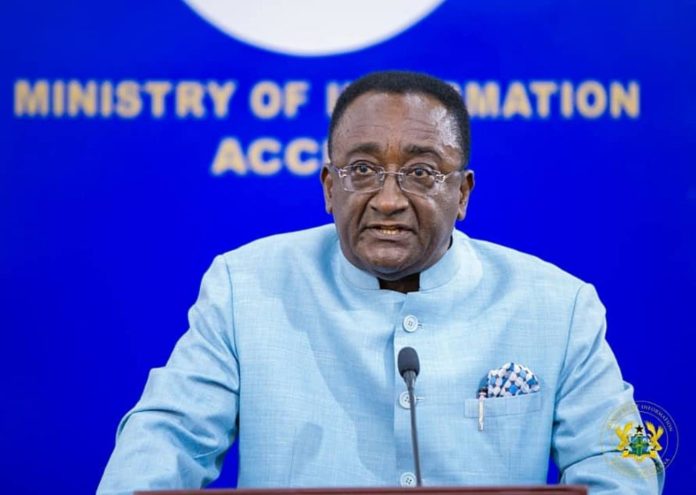
Government leveraging on e-agriculture to empower farmers – Hon. Owusu Afriyie-Akoto.

The Minister for Agriculture has reassured that the government is leveraging on its digitalisation drive to spearhead technology-driven agriculture to empower farmers through e-agriculture.

Ad article

Agriculture is a potential game-changer for Ghana’s economy – Ehunabobrim

Ehunabobrim Prah Agyensaim VI, Paramount Chief of Owirenkyi Traditional Area, has urged Government to channel financial resources to the Agricultural Sector because it had the potential of changing Ghana’s economy for the better.

Ad article

Land litigation and estate developers disrupting food production in Awutu-Senya–Agric Director.

Mr. Edward Laryea Koney, the Municipal Director of Agriculture of Awutu-Senya-East at the Central Region, has stated that land litigation coupled with activities of estate developers, is taking a toll on agriculture production in the area.

According to him, the phenomenon, which continued to cause a reduction in farmlands, did not only disturb food production but also affect the livelihoods of farmers.

“Estate developers are taking over all the lands. Someone will start farming and then somebody from nowhere will come and claim ownership of the land, sometimes, turning into a court case. So, most of the farmers are now ‘perching’ on the farmlands.

“Other times the owners reclaim the land at a time the crops have not mature and they don’t even allow them to harvest before the land is taken away from them”, he lamented.

Mr. Koney was speaking on the sidelines of the Municipality’s Farmers Day celebration and indicated that the Area is now shifting towards non-traditional farming, which required a small area of land to undertake.

He said his office is mobilising the youth and equipping them with the necessary training and logistics for the new farming module.

“What we are doing now is that we are forming groups so that they will go into non-traditional farming like rabbit rearing, grasscutter, and poultry, which actually occupy just a small land size area.

“There are people who are into mushroom production as of now and so, we are mobilising the young ones to train them to go into this non-traditional farming because of the land issues,” he explained.

Mr. Koney said his outfit is negotiating with the Assembly for support to enable them realise that vision.

Touching on other issues, Mr. Koney disclosed that the recent case of bird flu that rocked some parts of the country this year ravaged six farms in the municipality where a total of 3,970 birds were affected between July and October.

Of the number, 1,327 of the birds died before the laboratory confirmation results from the Accra Veterinary Laboratory were received.

The rest, he revealed, were destroyed and a destruction certificate issued while intensive surveillance was also instituted to prevent a further outbreak, he added.

The Agriculture Director disclosed that there had not been any case of bird flu for the past month and prayed for its complete eradication.

Ad article

COCOBOD projects US$50bn value-added revenue.

COCOBOD is projecting an ambitious target of raking in US$50billion in annual revenues from processing cocoa into other value-added products by the year 2030.

Data from COCOBOD indicate that some progress has been made in value addition to cocoa, with the volume of cocoa value addition moving from 25 percent in 2018 to a current 40 percent and constituting an about-327,000 tonnage of processing.

Chief Executive of COCOBOD, Joseph Boahen Aidoo, told the B&FT at the recently held Ghana Cocoa Awards in Accra that the organisation’s priority is to ensure increased cocoa production is matched by an increase in domestic processing – with an objective to reach 50 percent local processing by 2024.

Domestic cocoa processing installed capacity has significantly progressed from 64,500 metric tonnes to a national installed capacity of 544,000 tonnes, indicating underutilisation in some factories.

Indeed, the call for value addition has enabled COCOBOD to support local cocoa processors – Cargill and Barry Callebaut, Olam among others – to expand their processing capacities. Other processors including Cocoa Processing Company (CPC), West African Mills Company Ltd. (WAMCO), Niche Cocoa, Touton, Plot Enterprise, Chocomac and Nutcao have all expanded their capacities to meet expected demands.

Africa produces nearly 75 percent of cocoa, with Ghana and Ivory Coast controlling more than 60 percent of the commodity. Ironically, all five of the continent’s biggest economies – Nigeria, Egypt, South Africa, Algeria and Morocco – heavily import chocolate from western countries that source their raw cocoa from Africa.

But Mr. Boahen Aidoo reiterated that COCOBOD is focused on moving the narrative from exports of raw beans to exporting value-added cocoa products which will make Ghana a beneficiary of the over-US$100billion global chocolate value chain.

The global chocolate value chain, which is currently estimated at US$130billion, only brings some US$3billion in foreign exchange to Ghana as a result of it exporting the raw beans, according to COCOBOD. “COCOBOD remains determined to facilitate adequate production and reliable supply of cocoa beans, as well as supporting the private sector to push Ghana into becoming the chocolate and confectionery hub of Africa within the next decade,” Mr. Boahen Aidoo indicated.

He also underscored the need to create job opportunities through enhancing the value chain into processing in order to create employment for the teeming African youth.

“We urge processing, manufacturing, packaging, distribution and allied companies to consider the numerous investment opportunities in the cocoa sector, and channel their resources to such areas. We ask brand owners to take advantage of this to promote their brands; COCOBOD is ready to give all necessary support,” he added.

Gov’t ready to support COCOBOD achieve its aim
Chief of Staff of the Republic of Ghana, Akosua Frema Osei-Opare, speaking at the same ceremony noted that despite accomplishing a number of its objectives in the cocoa industry, the government is willing to extend its support to COCOBOD to help attain progress in the cocoa processing sub-sector.

“Having come this far in the areas of farmer welfare protection and cocoa production, among others, this government wants to turn its attention to local cocoa processing, value addition and consumption. The government has already demonstrated that it can achieve what it sets out to accomplish within the cocoa industry.

“It is therefore throwing a challenge to management of COCOBOD to take the industry to its next level by expanding the cocoa processing sub-sector and increasing consumption; both locally and within the sub-region. This has the potential to significantly increase revenue generated from the cocoa industry for the country, and indeed improve a lot of stakeholders including our cherished cocoa farmers. You can count on the support of the government in this regard,” she added.

Eradicating child labour in the cocoa industry
Speaking on the theme ‘Celebrating Ghana’s Historic Cocoa Production Milestone- A golden opportunity for the local value addition Agenda’, she indicated that her outfit is committed to eradicating child labour in the cocoa industry – adding that implementation of the Cocoa Management System (CMS) by the Ghana COCOBOD has further driven her interest to tackle the menace, and calling on all stakeholders to support the initiative.

“As a former Deputy Minister for Manpower, Youth and Employment who spent a lot of time working on the issue of child labour, I am still committed to seeing its eradication from every facet of this country. From my engagements with stakeholders in the cocoa industry, I am happy to note that the path we created has been enhanced through various anti-child labour programmes and initiatives.

“I was further encouraged when I learnt about the Cocoa Management System (CMS), which is being spearheaded by COCOBOD. It promises to greatly enhance our capacity to track various activities within the cocoa sector, including activities that may be construed as child labour – so that suitable interventions can be immediately deployed to correct any such incidents. I ask you as stakeholders to rally behind the CMS project and make it a success,” she noted

Gov’t support to cocoa industry’s achievements
She said despite the devastating effects of COVID-19, Ghana under the leadership of Nana Akufo-Addo has attained an all-time high annual cocoa production volume of about one million and seventy thousand tonnes (1,070,000 tonnes). This feat was attained through effective implementation of the productivity enhancement programmes aimed at increasing yield from an average of 450 kilogrammes per hectare to 1,000 kilogrammes per hectare, in the medium-term.

She stated that: “The industry has in the past half-decade been confronted with low terminal prices for cocoa on the international market. Unfortunately, the situation has in recent times been exacerbated by the COVID-19 pandemic and its aftermath.

“Whereas cocoa-producing countries around the world responded by reducing the amount they pay to their farmers, President Akufo-Addo – in spite of mounting international pressure -reinforced his commitment to Ghana’s Cocoa farmers by maintaining the farm gate price in the early period of his first government; and tasked the cocoa regulator to devise a sustainable solution to the challenge.

“Through a historic joint effort by the president and his Ivorian counterpart, we have succeeded in achieving a Living Income Differential of US$400 per tonne of cocoa for our cherished farmers expressed through a major leap in the producer price of cocoa; farmers in Ghana and Cote d’Ivoire are better-off compared to farmers in the other cocoa-producing countries.”

Ad article