top ad
Home Blog Page 120

Effects on our organism when drinking orange juice on an empty stomach.

Orange juice taken on an empty stomach will improve the functioning of our organism thanks to all its properties

Starting the day by ingesting foods that provide us with nutrients and vitamins is one of the healthiest things we can do to take care of our well-being. For this reason, orange juice on an empty stomach is a very positive option for the organism.

And the orange is one of the fruits belonging to the citrus family that will bring more vitamin C to our body. And one of the most common and richest ways to ingest all its benefits is in the form of juice.

We can drink it at any time of the day, but certainly, at breakfast time our body will absorb more effectively all its properties.

What are the benefits of orange juice on an empty stomach?
For this reason, orange juice has become one of the most common food supplements to take on an empty stomach. And is that accompanied by a good toast and other fruits, can help the proper functioning of the organism during the day.

In this case, experts recommend drinking freshly squeezed orange juice on an empty stomach. To get all the benefits, nutrients and vitamins positively affect our health.

Orange juice diet
The vitamin C contained in oranges will have a very healthy effect on our immune system. This will help us to prevent a large number of diseases and avoid the proliferation of bacteria and viruses inside us.

In addition, orange juice and the vitamin C it contains are also perfect for preventing colds and flu. But, above all, it is also a good ally to prevent anemia because it helps the effective absorption of iron from food.

Other benefits of orange juice on an empty stomach
In addition to preventing illnesses, colds, colds, and the onset of flu and anemia, orange juice is also positive for eliminating toxins from our organism.

On the other hand, the intake of orange also favors the reduction of uric acid. One of the most common diseases is gout or arthritis. To prevent them, it is best to drink orange juice every day on an empty stomach and to level the uric acid levels in our organism.

Antioxidant orange juice
Orange contains flavonoids and essential oils that increase the health of our body. This increases the health of our skin as it helps prevent premature aging of skin. In addition, it will also prevent the appearance of acne, blemishes, and wrinkles.

According to experts, for every 100 grams of product, we will obtain 64% of the recommended daily amount of vitamin C. So it is very healthy to include it daily in our diet.

Ad article

43 illustrious personalities and agro-industries awarded at the 4th Ghana Agribusiness and Excellence Awards.

The 4th Ghana Agribusiness Leadership and Excellence Awards with the theme: “Sustainable Agribusiness: A Catalyst for Industrial Development, Food Security and Job Creation” has awarded 43 illustrious sector players for their immense contribution to the sector at Marriot Hotel, Accra.

Ad article

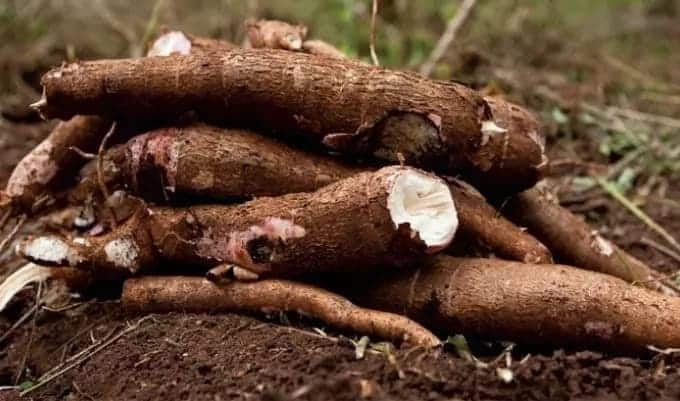
Nigeria leading globally in yam, cassava, rice production – FG

For the past three years, Nigeria has been leading globally in the production of yam, palm oil, cassava, maize, and rice, the Federal Government has said.

Minister of Agriculture and Rural Development, Muhammed Mahmoud, disclosed this at the maiden edition of the National Agribusiness Stakeholders’ and Investment Summit in Abuja on Tuesday.

He told delegates at the summit that Nigeria’s agricultural potential was huge, with over 84 million hectares of arable land of which 40 percent was cultivated, adding that the country’s population of over 200 million had made it Africa’s largest market.

“It is remarkable that in the past three years Nigeria has taken a leading role globally in cassava, yam, maize, palm oil, and rice production,” Mahmoud said,

He added, “We are currently the largest producer of rice in Africa with a production level of over nine million metric tonnes from 2019. The Federal Government is investing in the development of additional 10 large-scale integrated rice mills across the country.

“Their combined minimum capacity is 320MT per day, which when completed will enhance Nigeria’s self-sufficiency in rice production.”

The minister pointed out that the agricultural sector currently accounts for 24.14 percent of the nation’s Gross Domestic Product and 75 percent of the total non-oil exports.

On the impact of the sector in poverty alleviation, the minister said, “It is notable that through various empowerment support initiatives in

production, processing, and marketing of agricultural commodities, we have lifted a total of 4,205,576 Nigerians out of poverty in the last two years.”

He said the government would continue to work for a sustainable and viable economic climate that would attract local and foreign investments.

“The Federal Government has deliberately designed agricultural investment incentives to support high-level private sector participation,” Mahmoud stated.

He noted that while some of these incentives were in form of tax holidays, exemptions and reliefs, there were many that leveraged specific government policies, performances of companies, as well as relevant international investment treaties.

Ad article

Rainforest Alliance introduces Community Listening Program to address issues at cocoa farming communities.

Rainforest Alliance has taken a judicious step by introducing the Community Listening Program (CLP) in the Western North Region of Ghana to help address challenges hampering the cocoa and forestry sectors in the country.

The program was launched in Sefwi Datano and will be implemented in areas where RA operates in the country.

The Country Director of Rainforest Alliance Ghana, Mr. Kwame Osei said the objective of the program is to get the inputs and feedback more systematically from those at the center of their mission.

He explained that the work of the Rainforest Alliance is to cultivate rural prosperity, bring real, measurable benefits for farmers, forest communities, and indigenous peoples around the world.

Mr. Osei said RA works with millions of farmers and forest communities all over the world to promote sustainable and climate-smart practices to improve livelihoods, both of which are critical to building farm and farmers’ resilience, reducing deforestation, and increasing biodiversity.

“We work with forest community members, smallholder farmers, farmworkers, and farm owners to ensure Rainforest Alliance programs reflect their needs and interest on an ongoing basis,” he said.

Chief Programme Officer, Rainforest Alliance, Ria Stout explained that the program will enable them to receive honest and open feedback at the community level in the local language.

She added that this initiative will allow the Rainforest Alliance and its partners to get to the core issues of the farmer.

“Farmers issues are on my heart and I believe that sustainable agriculture, and targeted set of innovations, and the Farm Requirements can help farmers produce better crops, adapt to climate change, increase their productivity, set goals to achieve their sustainability performance, and target investments to address their greatest risks” she pointed out.

The Senior Director Africa for Rainforest Alliance, Rene Magermans indicated that they are introducing this program because it is an essential tool to support sustainable agricultural production and protect the forest.

“Through dialogue with farming and forest communities, we will distill and analyze their feedback on the effectiveness of our mission delivery and incorporate it into all aspects of our work” he indicated.

The Divisional Chief of Sefwi Wiawso Traditional Council and Patron of the Landscape Management Boards (LMBs), Nana Kofi Nkuah II speaking on behalf of the farmers revealed that programs implemented by the Rainforest Alliance have helped reduce rural poverty in the area.

He used the opportunity to thank the Rainforest Alliance for helping build an alliance to protect forests, improve the livelihoods of farmers and forest communities, promote their human rights, and help them mitigate and adapt to the climate crisis.

“In the area of restoration and preservation of forests and biodiversity, I am very happy that Rainforest Alliance together with its partners and communities raised and distributed over 200,000 tree seedlings from 2018 to 2021.

These seedlings have been planted on fallow lands and agroforestry systems covering an area of over 1,500 hectares.

In addition, four community nurseries have been established in the Sui landscape, and managed by the Landscape Management Boards (LMBs) to supply tree seedlings as a means of contributing to the mitigation of climate change and restoring degraded landscapes” he said.

Ad article

Cocoa farmers fight to save cocoa-growing settlements.

This cocoa-growing settlement was all but destroyed last year by Ivorian forest agents, leaving farmers to rake through their beans amid broken concrete and other remnants.

Ad article

The price of gari and beans shoots up by 100%

Sellers of gari and beans popularly called ‘gob3’ or ‘Red Red’ in the Ashanti Region especially in Kumasi are no more selling the dish at one cedi.

A bowl is now going for one cedi fifty pesewas at the cheapest.

This is because the price of beans has shot up by 100% since October and consumers have started feeling the impact.

22-year-old Godbless Nuamah loves gari and beans. That is his go-to meal every day before the day ends. A day without eating this food means he has to spend more.

“Beans is one of my favorite foods because it’s less expensive as compared to the other foods,” he said.

His daily budget has been affected due to the price increase. As a student, the meal sustains him through the day at a minimal cost but the situation is different now.

“With four cedis I used to get satisfied but now I have to buy more than four cedis or I have to go for a second round to get fully satisfied,” he bemoaned.

Afia Mansah carefully pounds this quantity of beans in a mortar. This activity is to easily separate the chaff from the beans properly before she cooks it.

She then pours the beans on a perforated wooden tray, rubs her hands on the beans to get rid of the chaffs.

This is meant for her “gob3” food joint at Ayigya in Kumasi. Though a sack of beans is expensive, Mansah complains “the sack is full of chaffs”.

Just like other “gob3” sellers, she has increased the price of her beans to stay in business.

“I have stopped selling the beans at 1.00 cedis, it’s now 1.50pesewas or 2.00 cedis. Though I have increased the prices I hardly make profits like I used to,” she lamented.

Beans in retail are often sold in locally measured cups, container bowls, and sometimes bags for wholesale.

A cup of beans in the Kumasi Central Market was sold at 2.50p between January and September. It has suddenly shot up to 5.00 cedis per cup.

“The price of the beans keeps going up, that is why we have increased the prices and our customers complain about the new price,” she noted.

A bag of imported beans from neighbouring French-speaking countries sold between 300 cedis and 400 cedis at the beginning of the year, is now sold at 600 cedis.

Alhaji Baba is an importer of staple food. He attributes the increase to the CFA and the high cost of fertilizer prices.

“We import the beans from most of the French countries, unfortunately, the CFA keeps increasing. Most of my colleagues have stopped importing the beans,” he said.

Meanwhile, Baba’s customer, Comfort, says “she is unable to buy beans in large quantities due to the high price coupled with an increase in fuel prices.

“I can only afford to buy two sacks of beans with an amount of 2,000 cedis,” she said.

Well, it is evident that until the Ghana cedi stops depreciating and fuel prices are reduced, food prices will keep going high.

Ad article

37 personalities, organisations Receive honours at 3rd Ghana Cocoa Awards.

Joseph Boahen Aidoo, right, receiving the Lifetime Achievement Award at 3rd Ghana Cocoa Awards from Akosua Frema Osei-Opare, Chief of Staff of Ghana

Ad article

The new price for Cashew is to be announced in December.

Chief Executive Officer for Tree Crop Development Authority (TCDA), Williams Quaitoo, has said the minimum fixed price for cashew in the 2021-2022 season will be announced by the agriculture ministry in December this year.

Ad article

Benso Oil leads the pack for the GSE rally in October.

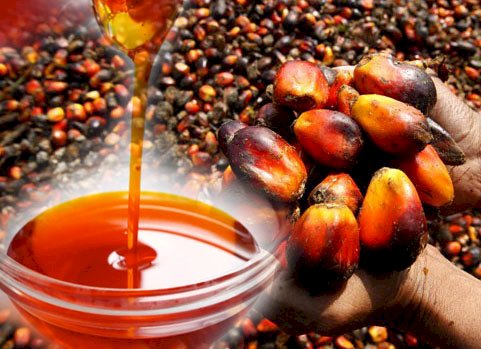
Indigenous oil palm producer Benso Oil (BOPP) has continued its fairytale run on the local bourse, leading the gainer’s table as its shares price grew by 74.83% from GH¢2.86 to GH¢5 in the month of October.

The rally, which began in June with the share price at GH¢2, has since gained 203% on that price valuation – bested only by FanMilk on the GSE for year-to-date performance. This has been sustained largely due to investor confidence in the firm’s performance beginning 2020 and an appreciation of the global price of palm oil, which has grown from an average of US$471 in 2018 to US$1,061 in Q2 of 2021.

A perusal of BOPP’s financials shows that its revenue grew from GH¢79.09million in 2018 to GH¢95.6million in 2019. FY2020 saw revenue reach GH¢123.8million, representing a 29% growth, and GH¢104.4million at the end of June this year – with the oil palm producer on course to meet its projected revenue target of GH¢194.5million by year-end. At the end of the third quarter, it had attained GH¢150.9million in revenue.

Commenting on the company’s performance when it met investors during a ‘Facts Behind the Figures’ session organised by the GSE, its Director, and General Manager, Samuel Avaala said: “2H2021 topline growth of 63% is attributable to the bullish world market crude palm oil prices, coupled with higher crop productivity from both the nucleus plantations, smallholders and out-growers. Operational efficiencies have also seen sustained high levels and continue to improve while cost discipline practices have ensured that unit production costs remained controlled in line with plans.

“This performance comes on the back of sustained operational efficiencies, strong production volumes, and the recovery of world market crude palm oil prices which began in early 2020. Benso Oil Palm Plantation PLC is set to maintain the strong profit trend by the end of the year by leveraging on its core competencies for production and taking advantage of the bullish world market price trend.

“The company is committed to conducting its business in a socially responsible and ecologically sustainable manner, through using internationally accepted best practices which deliver sustainable stakeholder and shareholder value.”

The share price of BOPP had soared to GH¢6.05 at beginning of the second trading week in November, as investors appear to have pitched their camp with BOPP – also based on its extensive community-wide social responsibility programmes, including its clinic.

Rest of the pack
The market is guaranteed its highest return in half a decade with the Composite Index (GSE-CI) returning a favourable 47.52% year-to-date (YTD). The equities market was also driven by the appreciation in the share price of Fan Milk Limited (FML), Republic Bank Ghana (RBGH), Enterprise Group (EGL) as well as Total Ghana, which realised about 39.75%, 39.53%, 9.13%, and 7.96% rise in share prices respectively.

Per the October 2021 data released by the Exchange, the main market’s cumulative performance from January to October 2021, in relation to the comparable period in 2020, shows there was a marginal dip in the volume of shares traded by 3.53% from 439.39 million last year to 423.91 million in 2021. Yet, in value terms, there was an increase of 39.26% from about GH¢341.71million to GH¢445.26million – indicating a continuous rise in the value of shares on the local equities market.

Accordingly, the year on year, market capitalisation and primary index, the GSE Composite Index (GSE-CI), shot up 21% and 55.90% respectively, with analysts anticipating further bullishness on the local bourse.

Ad article

Certitude report is critical in journalism – Rainforest Alliance.

The media is one of the most important institutions in every country that educate, inform and relay information to the general public, however, some journalists do arm-chair journalism that jeopardizes the credibility of the institution.

To have in-depth knowledge of the Rainforest Alliance Certification and its activities, two days capacity workshop with the theme “Ensuring People and Nature Thrive in Harmony” has been organized for the agricultural journalists in Accra.

At the workshop, journalists were urged to critically examine facts when discharging duties especially on Rainforest Alliance Certification and activities to farmers.

Agriculture is a noble and skillful sector, however, working with the sector needs comprehensive knowledge and understanding for good and efficient output.

“Any time the media is reporting on Rainforest Alliance Certification programs, it will actually be something the media should understand; the way the schemes work, the requirements that the farmers need to follow, the benefits farmers gain for joining the scheme”, Mr. Joseph Yaw Mensah, the Senior Associate Training and Certification of Rainforest Alliance said.

He acknowledged the tedious work the media is performing for the country, yet there are some technicalities in the agriculture sector especially, certifications that the media need to have in-depth knowledge when reporting on them.

He mentioned that Rainforest Alliance has customer services that are ready to respond to every question and clarification that any media house needs in the discharge of its duties.

Reuben Nana Yaw, the National Coordinator of Ghana Agriculture and Rural Development Journalists Association (GARDJA) commended the Rainforest Alliance for such a workshop to educate the journalists on expectations from the media as certitude reportage is a concern.

He entreated the organizations to avail themselves of the media houses for clarification on typical issues. Some of the organizations or institutions become adamant to provide research clarifications, therefore, making the report vague.

He called on other institutions and organizations to follow suit to train the journalists to abreast them on the current technical advancement of their institutions or organization.

The Rainforest Alliance is an international non-profit organization working at the intersection of business, agriculture, and forest to make responsible business the new normal. The organization is all about changing the way the world produces, sources, and consumes.

The core interventions of the Rainforest Alliance are Landscapes and Communities, Reimagining Certification. The supporting interventions are Advocacy and Tailored supply chain services.

Ad article