top ad
Home Blog Page 121

‘It’s difficult to feed our families’: Volatile cocoa prices are pushing West African farmers further into poverty.

“With this price of 825 francs and the costs of production, we’re going to find it difficult to feed our families, to look after ourselves, and to invest in the farms,” Doumbia said via video call. “We accept the price because we have to.”


But she said higher prices also created headaches for cocoa producers, as chocolate makers allegedly resist paying higher market values.


In 2019, Ivory Coast and Ghanaian authorities introduced a Living Income Differential, which added $400 to the price of a ton of cocoa in a bid to protect farmers from poverty.


However, some chocolate companies reportedly tried to avoid complying with the LID. Mondelez International was accused by authorities of failing to pay the premium — an allegation it denied — while U.S. candy giant Hershey turned to futures exchanges to avoid paying the additional cost, Reuters reported. Hershey said in a statement at the time that it would not discuss details of its specific buying and hedging activities. The company told the news agency it bought cocoa “from a variety of suppliers and sources,” including some that saw it pay Ghana and the Ivory Coast’s LID premium.


“A year ago, when the price was 1000 francs, we were struggling to sell our cocoa because Big Chocolate thought it was too expensive,” Doumbia told CNBC. “So yes, it’s difficult to accept a lower price, but now we might actually be able to sell all of our cocoa.”


Doumbia said she has seen soil fertility decrease over the years, which she attributes in part to climate change, prompting her to dedicate four hectares of farmland to rubber instead of cocoa.


“Producing cocoa is a culture in Ivory Coast, we produce the most in the world so it’s not going to disappear overnight,” she told CNBC. “At least every family has a person that produces cocoa – it’s what we love to do, it’s our job, it’s in our hearts.”


But she added: “People are abandoning cocoa for rubber. With such painful work and such a low price for cocoa, you’re going to see that more and more for sure.”


According to a 2018 report on the industry from the VOICE Network — a global network of NGOs and Trade Unions — large chocolate companies increased their profits after the Ivory Coast’s cocoa prices dropped significantly in mid-2017.


Dutch chocolate maker Tony’s Chocolonely pays a premium on top of the farmgate price when it purchases its cocoa. It recently announced plans to increase that premium from $462 per metric ton – 26% above farmgate price – to $793 per metric ton – 54% above farmgate price – for the 2021/22 season.


Paul Schoenmakers, head of the impact at Tony’s Chocolonely, accused so-called Big Chocolate of “turning a blind eye” to the plight of African cocoa farmers “in quite a terrible way.”


“For decades, they’ve come up with all these fancy programs and the reality is that they haven’t yielded any results,” he told CNBC via telephone. “And that’s mainly because they still pay too little for cocoa.”


He added that paying the price suggested by Tony’s would cost around 0.7% of annual global chocolate revenues.


“Given that this sector is super-rich, they’d still make massive profits every year,” Schoenmakers said. “This is about shipping part of the value to the first part of the supply chain, the cocoa farmers, and it’s the right thing to do.”


According to Fairtrade, the average cocoa farming household in the Ivory Coast is made up of eight people and has an annual income of around $3,000. But Fairtrade’s research concluded the average cocoa farming household should be earning about $7,500 a year to cover their full cost of living.


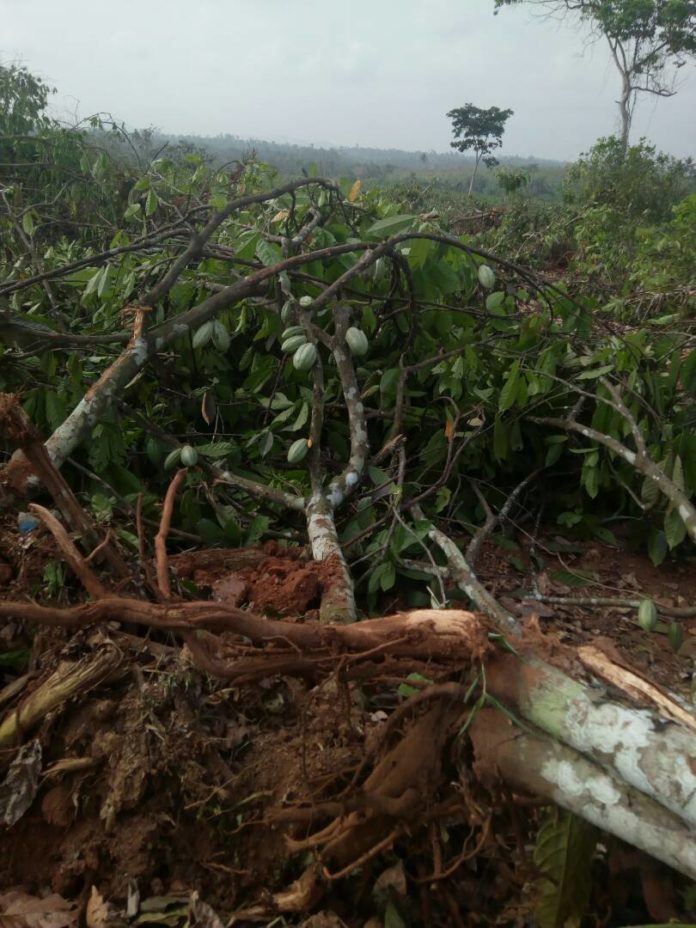
“Price matters,” David Finlay, senior supply chain manager at The Fairtrade Foundation, told CNBC in a phone call. “We see this price drop as problematic, not just because we think it will lead to reduced incomes for cocoa farmers, but because we think those lower incomes will exacerbate other social and environmental problems, like deforestation.”


Chocolate giants weigh in.
Mars Wrigley, which makes M&Ms and Snickers bars, told CNBC in a statement that today’s supply chain was “not in line with our ambition that everyone — especially cocoa farmers — should have the opportunity to thrive.”


“Through our Cocoa for Generations strategy, ongoing support for the LID, and disclosure of our progress publicly, we remain focused on the critical issues that need to be addressed for cocoa farming families to thrive and be sustainable,” a spokesperson said via email.


Meanwhile, confectionery giant Ferrero said it had been working to improve the livelihoods of farmers in the Ivory Coast for years, adding that its objective was “to build value chains and work to maintain them.”


Cadbury maker Mondelez International told CNBC it was committed to boosting farmer incomes, noting that it had developed and invested $400 million in the sustainable cocoa sourcing program Cocoa Life.


A spokesperson for Nestlé told CNBC in an email that it began rolling out its cocoa sustainability program more than a decade ago. The company announced in September that it would implement new living income programs for farmers.


Meanwhile, Lindt & Sprüngli – which sources its West African cocoa beans from Ghana – told CNBC it had initiated a program in 2008 aimed at improving the quality of life for farmers.

Ad article

Agricultural Manufacturing Group supports the development of entrepreneurs at UGBS.

Agricultural Manufacturing Group (AMG) Ghana, a leading fertilizer marketing and technologies manufacturer is supporting the development of student entrepreneurs at the University of Ghana.

Ad article

Focus on agric, manufacturing to deliver jobs for the youth – Prof. Quartey

The Director of the Institute of Statistical, Social and Economic Research (ISSER)-University of Ghana, Professor Peter Quartey, has advised the government to focus on two main areas – the agriculture and manufacturing sectors – if it wants to deliver sustainable jobs to tackle youth unemployment menace in the country.

Prof. said given the enormous amount of arable land available in all parts of the country, it presents the best opportunity for the government to introduce policies that will make agriculture attractive to the youth – as its value chain will further lead to job creation in the manufacturing sector.

“Agriculture and manufacturing are the two areas where we should be creating more jobs. We have to make agriculture more attractive. We have a lot of fertile lands, so we can go into commercial farming and support large-scale farmers.

“Then, we look at the value chain. We need to process more of the agricultural products. Once you process, it becomes manufacturing. To what extent are we promoting the manufacturing of agricultural products? This is for the private sector, but the government should provide the enabling environment for the private sector to flourish and be able to expand and employ more,” Prof. Quartey said.

Another area the professor encouraged the government to be particular about is the financial sector, as its robustness is what drives economies that want to industrialise and create jobs. “The financial sector should also be looked at because it is the engine of growth. When it goes down, it affects all critical sectors. So, agriculture, industry, and the financial sectors should be the main areas driving job creation,” he said.

Speaking ahead of the 2022 budget presentation sometime this month, Prof. Quartey said it will be better for Finance Minister, Ken Ofori-Atta, to provide data on how the growth of the economy has translated into job creation in all sectors, in order to guide future policies on where to channel resources.

“We don’t want to see jobless growth, whereby we are one of the fastest-growing economies but do not translate into higher numbers in employment. It means the sectors that create the jobs are not growing, and so we want to know more about which sectors have grown and how we are tackling unemployment to minimise the challenge of jobless growth,” he said.

The promised jobs that are yet to come
The government, in the 2021 mid-year budget, said it was going to create someone million jobs in the next four years to alleviate the jobless situation among the youth through interventions under the Ghana CARES programme.

The initiatives, according to the finance minister, will be to promote growth in Small and Medium Enterprises (SMEs), support new ventures, and stimulate innovation and start-ups.

One of such programmes, the minister said, is the Enterprise and Youth Support Fund (EYSF) which aligns with the government’s overall strategy of developing a competitive and viable private sector economy through the ‘YouBanc’ initiative that has the aim of financing youth-led start-up businesses across the country.

As part of this initiative, the minister said the government will be setting up an online investment hub for youth across the country to access information for the purpose of establishing businesses. Under this initiative, it is estimated that over 100,000 jobs will be created.

Ad article

Local poultry products shortage looms as Xmas beckons

Ghanaians who prefer local poultry products for the festive season will either have to pay higher for the product or settle for imports, as poultry farmers struggle to secure day-old-chicks in time for Christmas in addition to other challenges threatening to collapse the sector.

In an interview with Michael Nyarko-Ampem, a leading farmer in the poultry sector. He bemoaned about the myriad challenges which have culminated in the looming shortage despite all efforts by stakeholders including government, farmers, banks, and importers of day-old chicks, to help salvage the situation.

He noted that COVID-19 has pushed more than 200 poultry farmers and their farms out of business and pushed the price of raw materials for feed higher, thus reducing margins; avian flu is ravaging more than 150 farms in the Ashanti and Bono Regions, and farmers are struggling to secure day-old-chicks in time to be ready for the annual Christmas festivities.

“We usually use imported day-old-chicks and/or hatching eggs which are hatched locally, but due to the COVID-19, we couldn’t secure the eggs in time. With Christmas, there is a deadline we work with. If you are unable to secure the day-old-chicks by the second week of October, you will struggle to meet the time,” Mr. Nyarko-Ampem told.

The devastating impact of COVID-19
“The COVID-19 led to a slowdown in sales which resulted in a cut-back on production, and this drove many farmers out of business. For the Ashanti, Bono East, and Bono Regions, where we have the bulk of poultry farmers, I can roughly say about 200 farmers exited the industry,” he said.

“In Ghana, we experienced a total lockdown at Accra, Tema, and Kumasi for only three weeks due to pandemic; however, some countries – especially where we secure the day-old chicks, experienced longer complete lockdowns and so farmers were not working. Then we have avian flu devastating farms this year, too,” he said.

Gov’t’s good intentions
Despite the government’s intentions and support for the sector, Mr. Nyarko-Ampem believes the looming shortage of local chicken for Christmas couldn’t have been avoided since most of the causes are external and not internal.

“The government is aware of all the happenings. The Agric Ministry is doing its best when it comes to the supply of raw materials and importation of day-old chicks but the shortages are global; and so, even with permits for importing day-old chicks, the suppliers are unable to supply,” he said.

He pointed out that the situation is so severe that some suppliers of day-old-chicks outside the country and locally, had to refund monies to farmers because they were unable to meet the demands.

Ghana currently spends almost US$400million on chicken imports annually, which represents about 200,000 to 250,000mt. While local producers are striving to increase their market share which currently stands between 20,000 to 25,000 or 10 percent of imports, Mr. Nyarko-Ampem is worried that activities this year could reverse all the gains made by locals and place the entire industry in the hands of importers.

The government introduced the Broiler Revitalisation Programme which the Agricultural Development Bank (ADB) supported farmers with GH¢500million to revive the poultry sector. The initiative aims to invest a total of GH¢500million of soft loans in businesses in the poultry value chain to help de-risk their operations, increase chicken production and cut out the imports.

In partnership with the Ministry of Food and Agriculture (MoFA), Bank of Ghana (BoG), Ghana Incentive-based Risk Sharing System for Agricultural Lending (GIRSAL), and the Out-grower and Value Chain Fund (OVCF), the programme is meant to end the country’s dependence on imported poultry products and create jobs for the youth.

Ad article

Mechanisation is the key to ensure self-sufficiency in rice production – MOFA.

Mechanisation is the key service needed by farmers for Ghana to become self-sufficient in rice production.


The Director of the Agricultural Engineering Services Directorate at the Ministry of Food and Agriculture, A. K. B Deyang said l quality mechanized tools for land preparation, planting and harvesting can greatly improve the productivity of small-scale farmers, particularly rice growers.


He was speaking at a training programme organized by the John A. Kufuor Foundaton and partners in the Volta Region for 120 machinery service providers and 120 machinery operators from 147 districts.


The objective of the training is to equip them with the requisite knowledge and skills on proper handling and maintenance of agricultural machinery, as well as business development to enhance agricultural productivity.


The training forms part of a new phase of the “Public Private Partnership for Competitive and Inclusive Rice Value Chain Development: Planting for Food and Jobs (PFJ) Rice Chapter Project.”
The initiative popularly called the Ghana Rice Project is being rolled out by the Ministry of Food and Agriculture, the John A. Kufuor Foundation, Hopeline Institute, Sparkx Farms and Volta City Farms.

It is funded by the Alliance for a Green Revolution in Africa (AGRA).


Mr. Deyang explained that the initiative is sought to link existing mechanisation service providers and interested farmer groups to government’s periodic highly subsidized mechanisation equipment and other flexible opportunities initiated by MoFA to strengthen service delivery.


“We are here to assist farmers to grow; take this mechanization training home and make good use of it,” he said.


Ing. Eugene Moses Abio who is National Training Coordinator at the Agricultural Engineering Services Directorate of MOFA identified low technical skills as a major challenge militating against efforts to expand on the provision of mechanized agricultural services to farmers.


He said the ministry has been at the forefront of the importation of mass agricultural machinery and equipment to support farmers under subsidized and concessionary terms.


But poor handling and operation of equipment, leading to premature and frequent breakdowns as a result of low skill and technical knowhow of tractor operators, has derailed the initiative.


In order to fix this challenge, Ing. Ababio says the ministry is working with development partners to offer training directed at mechanization equipment operators across the country.


“The Ministry of Food and Agriculture in collaboration with the John A. Kufuor Foundation and other consortium partners are helping to train service providers across the country to help improve agricultural mechanization in Ghana,” he said.


Abudulai Yakubu, an expert in Agriculture mechanisation and facilitator of the 4-day training said the initiative is directly in line with the agricultural mechanisation strategy of the government of Ghana to modernize agriculture.

He indicated that the program is designed to train, educate, and empower users of agricultural tractors and other farm equipment.


“It is expected that at the end of the training operators will demonstrate underpinning knowledge of the concept and operating principles behind the operations, functions and proper adjustment of agricultural machineries and equipment,” Mr. Yakubu said.

“They will be equipped with requisite knowledge, skills and attitude to train especially their counterparts to apply the best practices of standard operating procedures in the use of agricultural machineries and equipment,” he added.


Programme Officer at the John A. Kufuor Foundation Jude Bopam said availability of quality mechanization service ia a major challenge for smallholder farmers, especially those in the rice value chain, which had necessitated the intervention by the Foundation and its partners.


In all, 242 participants have been trained at both Wenchi and Adidome mechanization training centers. Some 151 operators were issued with Driving Licenses E by the DVLA under the program.

Ad article

The world’s most consumed edible oil is facing a supply crunch.

Palm oil production in Malaysia is on course for its weakest showing in five years as planters grapple with the worst-ever labor shortage in the second-biggest grower, and the low yields are likely to last through March.

The country’s output may slide below 18 million tons this year, according to Nageeb Wahab, chief executive at the Malaysian Palm Oil Association, a growers’ group that represents 40% of palm plantations by area. That’s a drop of at least 6% from last year and the lowest annual volume since 2016.

Palm, the most consumed edible oil, has been a leading driver of this year’s stunning rally in global vegetable oil markets. Lower supplies in Malaysia and a crop disaster in Canada, the top grower of canola, have coincided with pent-up demand as economies reopen. Palm oil has repeatedly notched fresh records, while canola climbed to an all-time high and soyoil hit a 13-year peak in May.

“Even before the pandemic we were already short of workers — mainly harvesters — but it was never this bad,” Nageeb said by phone from Kuala Lumpur. “The shortage is becoming worse month by month. This is a historic crunch of workers and it’s causing a multi-year shortfall in production.”

Yields will taper down toward the year-end and will likely remain weak in the first quarter of 2022, Nageeb said. Production may improve in the second quarter, but on the condition that harvesters — including the 32,000 foreign workers the government had approved — are allowed to enter the country.

Moreover, the lack of skilled harvesters on estates has left fresh fruit bunches rotting on trees, preventing farmers from capitalizing on palm’s record rally. It also means that they’ve “missed the boat” on the crop’s high production months that usually run from August to October, Nageeb said.

“We never had that peak production this year because of the high crop losses,” Nageeb said. The industry is losing around 20%-30% of potential production this year and will miss out on about 20 billion ringgit ($4.8 billion) in revenue, or about double the amount last year.

Malaysia’s Prime Minister Ismail Sabri Yaakob has offered a glimmer of hope on the labor shortage, saying Friday that the country will allow entry of fully-vaccinated migrant workers into the plantation industry on a case-by-case basis, although the quota and arrival dates have not been decided.

The volatile mix of production issues, either because of the weather or coronavirus restrictions, and resurgent global demand mean the industry is in the midst of unprecedented times. “We’re in uncharted waters because of historically high prices and price volatility,” said Marcello Cultrera, an institutional sales manager and broker at Phillip Futures in Kuala Lumpur.

Ad article

13 Agriculture students leave Ghana for an internship in Israel.

The Chief Director of the Ministry of Food and Agriculture on Monday charged graduates from agricultural institutions embarking on an internship in Israel to be good ambassadors of the country and come back as better agricultural scientists.

Robert Patrick Ankobiah tasked the students to be disciplined and “Go and acquire the needed practical experience to help in the development of the country’s agricultural sector because others have gone and upheld the flag of Ghana very high.”

Mr Ankobiah gave the advice when he bid farewell to the 13 students at the Kotoka International Airport.

The exchange programme offers opportunities to Ghanaian agriculture students to travel to Israel for an 11-month practical internship.

It is part of the country’s move to modernise agriculture and boost the sector for sustainable growth.

Mr Ankobiah assured the students of the government’s support throughout the programme and urged them to take advantage of the opportunity for the good of the country.

Prince Kwame Boakye, the Internship Programme coordinator said the students would visit farmlands and other agricultural sectors in Israel to learn practical knowledge of the Israeli agriculture system.

He said Ghana had been offered 200 slots for the exchange programme, out of which 85 had so far travelled.

Ad article

Drink cashew milk for a good night’s sleep.

Did you know that apart from cashew energising you and keeping you satiated, it can also help you relax at the end of the day and calm your nerves to ensure a good night’s sleep?

Cashews with their creamy and slightly sweet taste is a perfect snack for your mid-day cravings. Cashews are also a popular addition in Indian curries to make them richer as they add to their consistency and thickness. Did you know that apart from energising you and keeping you satiated, they can also help you relax at the end of the day and calm your mind to ensure a good night’s sleep.

Many people love to have cashews but they are also wary of them thinking they will lead to rising in their cholesterol levels. Almonds and walnuts on the other hand are more popularly advised to cut the risk of various diseases compared to cashew nuts.

However, contrary to the popular belief, cashews have zero cholesterol and are rich in protein, healthy fats, and antioxidants. They also help you sleep better.

Take a few cashews, soak them in milk for about 4-5 hours. Now grind them in a smooth paste. Put the paste in a vessel and add milk to it. Mix and add some more milk. Boil it, add sugar to it and then have it hot or cold according to your taste.

Cashews have zero cholesterol and provide the body with useful minerals and also calm your mind. So now that you know that cashews are as good for health as almonds and walnuts, do not forget to include them in your diet.

Ad article

Gov’t assures of addressing agric sector challenges

The government is working assiduously to mitigate notable challenges currently confronting the country’s agriculture sector and to ensure that such hitches do not continue into next year, Deputy Minister of Food and Agriculture, George Boahen Oduro, has said.

The minister was speaking at the 10th edition of the Ghana Economic Forum (GEF) in Accra on the topic ‘Investment in agribusiness; critical vehicle to promoting economic growth and development’, and said the myriad challenges which have confronted the sector, particularly this year, are something that government has taken seriously to resolve in order to protect the sector’s gains.

“We are hoping that 2022 will be better than this year. What we went through in terms of delayed payments to fertiliser suppliers really affected farming this year, coupled with the shortage of certain foodstuffs such as maize for consumption and for the poultry industry,” he said.

He further stated that the ministry is currently going through the budget cycle to ensure adequate plans are made for the implementation of agriculture sector policies next year.

Some agriculture sector stakeholders who attended the event were however optimistic and expectant that, at least, 5 percent of the total national budget will be allocated to the sector.

But Hon. Oduro said the issue of percentage allocation is always agreed upon with the Finance Ministry, adding: “The Ministry of Finance will determine how much is available based on policies to be implemented”.

Current agric sector challenges
Ghana’s agriculture sector experienced several setbacks in 2021, as there have been shortages of several feed ingredients including maize, wheat bran and soya bean, particularly for the poultry sector, due to exports to neighbouring countries coupled with exorbitant prices slapped on these items.

The menace of fertiliser smuggling and delay of payment to fertiliser distributors under the Planting for Food and Jobs (PFJ) programme has created dire consequences for the over-1.5 million farmers under the programme.

As of July this year, the government has been able to pay some GH¢250million out of GH¢940million owed dealers in fertiliser since last year.

The minister, nonetheless, maintained that the ministry is conscious of the challenges and will jealously guard the sector against any such complications next year.

Women in agriculture
Hon. Oduro assured of the government’s commitment to supporting women in agriculture to thrive.

“MoFA has a directorate for women in agriculture, and the aim is to empower women groups in agriculture in order to support them in mechanising farming. We have some consignments of equipment coming from Brazil and the ministry has targetted such implements for women groups in agriculture, particularly in rice farming,” he said.

Professor Irene Egyir, Dean of the School of Agriculture-University of Ghana and who was also on the panel, said it is important for the government to prioritise women in agriculture by offering them all the necessary incentives which enable them to thrive.

Ad article

Cocoa farmers’ pension funds will be prudently managed – NPRA.

The Chief Executive Officer of the National Pensions Regulatory Authority (NPRA), Hayford Atta Krufi, has assured that adequate measures have been put in place to prudently invest pension funds of cocoa farmers under the Cocoa Farmers Pension Scheme to benefit contributors.

The scheme commenced on October 1, 2021, and is designed to cater for cocoa farmers after they retire from active work on their farms.

Assuring farmers that strict measures have been put in place to protect their funds, Mr Krufi maintained that all operations of the scheme will be implemented in accordance with provisions of the NPRA.

“I can assure you that every contribution to the scheme is safe. The regulator has a constant monitory supervisory role over all the activities of the scheme, and our immediate mandate is to protect the farmers’ contributions,” he said at a media engagement with journalists in Accra.

Providing details of how the Cocoa Farmers Pension Scheme will work, Mr Krufi stated that the fund will be governed by an 11-member Board of Trustees licenced by the NPRA.

To enhance transparency in its operations, he explained that the Board will include four cocoa farmer representatives nominated by farmers and one representative of the Licenced Buyers Association, as well as other industry players.

He added that the scheme has a fund custodian, fund managers and a fund administrator as service providers who are all independent of Cocobod and government.

“To further ensure transparency in work of the scheme, all service providers under the scheme are registered by the Securities and Exchange Commission and licenced by the NPRA,” he said.

Mode of contribution
Speaking on the procedures designed for farmers to make contributions to the scheme, Mr Krufi announced that a registered farmer is required to make a mandatory 5 percent contribution of his or her produce while COCOBOD makes a 1 percent commitment to the fund.

He clarified that a farmer at his or her option may elect to make additional voluntary contributions ranging from 2.5 percent to 10 percent of the produce.

He stated that the farmers’ contribution will be deducted from the proceeds of the produce at the sale point.

“I must say that 25 percent of the farmers’ total contribution will be credited to their Personal Savings Account and the remaining 75 percent credited to the retirement account established for the individual farmer.”

Mr Krufi disclosed that a farmer qualifies for retirement after having contributed for five years, provided the farmer has attained the age of 55 years.

Benefits
As part of measures to encourage more farmers to join the scheme, Mr. Krufi stated that an incentive has been embedded in the scheme to allow farmers to
have access to 25 percent of their personal savings account balance prior to retirement.

“Thereafter, he or she may withdraw up to 20 percent of the personal savings account every two years after first withdrawal,” he said.

Ad article