top ad
Home Blog Page 123

Agric Ministry pursuing the creation of Grains Development Authority.

The Minister of Food and Agriculture, Dr. Owusu Afriyie Akoto, has announced plans to establish the Grains Development Authority, among others to further the development and regulation of the market for the produce.

The Grains Development Authority, which will replace the Grains and Legumes Development Board (GLDB) set up in the 1970s, is expected to have a wider mandate to absorb most of the functions that have been abdicated by the current Board.

The mission of GLDB is to produce and distribute good quality foundation seeds of cereals, legumes, and vegetable seeds as well as vegetatively propagated planting materials of cassava, plantain, yam, and citrus seedlings.

But with Ghana making substantial gains in the grains sub-sector, Dr. Afriyie Akoto assured that the creation of the Authority would be a major boost to the export market and also help put in place price control measures. To this end, he observed that various stakeholder consultations have been done while waiting to table the idea before Cabinet for approval, and subsequently Parliament.

The proposed Authority is hoped to contribute significantly to complement the achievements being realized under the government’s flagship agricultural programme – Planting for Food and Jobs (PFJ), introduced in 2017. “We are building institutions to underpin the gains that we have made,” he stated.

Dr. Afriyie Akoto, who was speaking at a press engagement in Kumasi on agric sector developments, indicated that add some other authorities would be proposed to cover some other areas of the sector.

The Ministry of Agric, he mentioned, is keen on ensuring that Ghana becomes the food basket of West Africa, having exported over 130,000 metric tons of 19 food items to neighboring countries, in 2019. Against this background, he dunked speculations by some leading members of the opposition political parties that the country would experience a food crisis in the coming years.

Dr. Afriyie Akoto, for instance, disclosed that Ghana is a net exporter of maize, with the volumes of production still increasing. “Maize production has gone from 1.8 million tons to 3 million metric tons in 2020. Our target is to double that to 6 million metric tons in the next two or three years because the farmers are showing keen interest in the programme that we have put together.”

He acknowledged that Ghana is on course to becoming self-sufficient in rice production, latest by 2024, and targeting 1 million metric tons of soya

Ad article

Dr. Nteranya Sanginga appointed as new AFAP Chairman.

Dr. Nteranya Sanginga, the Chair-Elect of the AFAP Board of Trustees.

The African Fertilizer and Agribusiness Partnership (AFAP) has appointed Dr. Nteranya Sanginga, a Ph.D. holder in Agronomy/ Soil Microbiology and the Director-General of the International Institute of Tropical Agriculture (IITA) as the Chair of the AFAP Board of Trustees.

Dr. Sanginga has dedicated all his life to the service of the agriculture space. He has more than 35 years of experience in international agricultural research and development, research administration and management, and resource mobilization, particularly in the field of applied microbial ecology, plant nutrition, and international natural resources management in Africa, Latin America, and Southeast Asia.

It is, therefore, a privilege for AFAP to appoint a leader with decades of experience, and the vision to transform the organization into a more impactful institution in Africa.

Appreciating the appointment, Dr. Sanginpa commended the organization for elating him with such a position.

“Dr. Namanga Ngongi has been my mentor whose shoes are rather big for me to wear. I am humbled by the appointment and promise to do my best to advance the course and mandate of AFAP of bringing access and availability of yield-enhancing production inputs to smallholder farmers”, Dr. Sanginga said.

As part of his contribution to the youth development in the sector, Dr. Sanginga, in his long-term career has focused on mentoring and building the capacity of the youth in the agriculture and agribusiness in Africa.

Contributing to the agriculture sector, he has transform IITA from a Pan-African research organization into the largest international agricultural research centre in tropical Africa, developing solutions to agricultural and development challenges and contributing to food and nutrition security in the region.

Dr. Nteranya Sanginga succeeded Dr. Namanga Ngongi, the founding Chairman of the African Fertilizer and Agribusiness Partnership (AFAP).

The African Fertilizer and Agribusiness Partnership (AFAP) is an independent non-profit organization that adds value to the agriculture inputs and agribusiness value chain by building the capacity and linking African Hub-Agrodealers and smallholder holder farmers to global inputs and output market companies.

Ad article

National Cocoa Rehabilitation Programme in limbo.

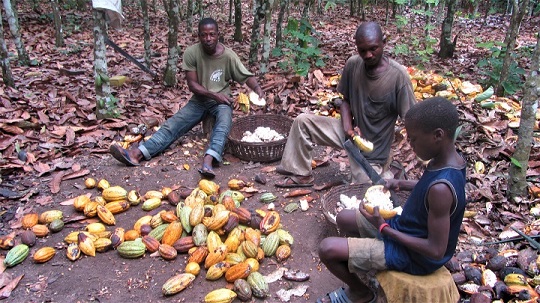
The government’s national Cocoa Rehabilitation Programme risks total collapse following an admission by some supervisors and cocoa farmers that the Programme is crumpling and needs to be rescued immediately.

The youth providing labour and technical support said heavy workload, delay in payment and lack of quality tools will put the Cocoa Rehabilitation Programme in limbo, as more youth are seriously reconsidering their participation in the programme.

“This poor approach is discouraging us from the Cocoa Rehabilitation Programme; managers of the programme do not have us at heart, they tell us what they don’t believe in their hearts,” the youth said.

This was disclosed during an interaction with members of the Ghana Agricultural and Rural Development Journalist Association (GARDJA) when they visited some communities in the Western North to ascertain challenges confronting cocoa production in the region.

Some of the communities visited include Ahwiaa, Suroano, Daboase, Manso Nkwanta, Adjakaa Manso, Ntrentreso and several others.

Farmers said the discussion had been that the youth could find employment in agriculture but more times the sector is being mismanaged, the very sector that could employ the majority of the youth of Ghana.

“Most of the youth in the region thought that the Cocoa Rehabilitation Programme that has been introduced by the government would create employment for them instead, people are brought from elsewhere to do the work, how do we close the unemployment gap in our communities?” the farmers quizzed.

Secretary Sefwi Bekwai Cocoa Farmer’s Cooperative Union Mr. Nicholas Kwabena Gbadago explained that managers of the National Cocoa Rehabilitation Programme are killing the vision and mission behind the programme.

“The government has allocated over USD200 million of the $600 million syndicated loan facility it secured from the African Development Bank (AfDB) to the National Cocoa Rehabilitation Programme but it may not yield the needed results if urgent measures are not put in place.

COCOBOD promised to give an amount of GH₵1000.00 per hector to each farmer who has been affected by the disease but rather most of us received GH₵500.00 per hector instead of GH₵1000.00 per hector” he pointed out.

Chief Farmer of the Sefwi Ahwiaa Cocoa Farmers’ Cooperative, Mr. Peter Nkrumah said contractors that are assigned to provide labour and technical support are not serious minded people.

“We are losing our cocoa farms, this poor approach and strategy are discouraging us from joining the programme; which will lead to the further and rampant spread of the disease”, Mr. Nkrumah.

We want to own the Cocoa Rehabilitation Programme that has been introduced, just provide us with the technical support, we will take care of our own farms” he added.

Ad article

COCOBOD to sign a $1.5 billion Syndication Loan for 2021/2022 cocoa season.

Ghana Cocoa Board (COCOBOD) will later today sign a $1.5 billion Syndication Loan for the 2021/2022 cocoa crop season.

The facility, which is the largest deal in sub-Saharan Africa, will be used to finance cocoa purchases and related operational activities in the crop season.

The signing comes on the back of some positive developments in Ghana’s cocoa sector.

COCOBOD exceeded its production target to reach a record 1.06 million metric tons for the 2020/21 season, beating the previous record of 1.024 million metric tons in the 2010/ 2011 crop season. Also, global demand for cocoa is projected to grow by 2.2% for the next crop season.

Since the 1992/93 crop season, COCOBOD has consistently and successfully, through the pre-export syndicated finance facility, obtained a receivables-backed syndicated loan each year from the international money market to finance its cocoa purchases.

The latest loan facility, which has an interest rate plus LIBOR of 1.75%, is repayable in seven calendar months and projected to help purchase about 900,000 metric tonnes of cocoa.

Cocoa/Cedi buffer.
So far, the cedi has depreciated by about 1.30% to the US dollar, selling at about ¢6.25 to the US dollar on the interbank forex market.

Analysts have however calmed market sentiments about the recent persistent depreciation.

This is because the local currency will be bolstered by the expected COCOBOD Syndication Loan as well as other developments.

Importantly, the current pricing of the cedi to the dollar is also within the range of many research institutions’ forecasts for the year.

Ad article

Know the Ministers of Food and Agriculture from independence to date.

The 1st Agriculture Minister in Ghana in cloth.

The Minister for Food and Agriculture is the government official responsible for the Ministry of Food and Agriculture. The Minister is responsible to the government and the Parliament for the development of agriculture and maintaining food security.

This minister of Food and Agriculture of Ghana has in the past been also responsible for the Cocoa Affairs that has now been absorbed back into the Ministry of Agriculture.

These are the names of the Ministers of Food and Agriculture from the time of independence to date with their respective governments.


List of ministers

The first Ghanaian to head this ministry was Boahene Yeboah-Afari. The current minister is Owusu Afriyie Akoto (MP).

NumberMinisterTook officeLeft officeGovernmentParty
1Boahene Yeboah-Afari19561956Nkrumah governmentConvention People’s Party
2Francis Yao Asare19571960
3Kojo Botsio19601962
4Lawrence Rosario Abavana19621962
5Krobo Edusei19631965
6F. A. Jantuah196524 February 1966
7Jacob Ofori Torto19671968National Liberation CouncilMilitary government
8Albert Adomakoh19681969
9Kankam Twum Barima1969Busia governmentProgress Party
10Kwame Safo-Adu13 January 1972
11Major-General Daniel Addo19721973National Redemption CouncilMilitary government
12Colonel Frank Bernasko19731975
19751976Supreme Military Council
13Lt. Col. Paul K. Nkegbe19771979
14Major General Neville Alexander Odartey-Wellington19791979
15Colonel Samuel Akwagiram19794 June 1979
16Abayifa Karbo19791979Armed Forces Revolutionary Council
17E. Kwaku Twumasi1979Limann governmentPeople’s National Party
18E. K. AndahDecember 1980
19Nelson AgbesiDecember 198031 December 1981
20Bortei Doku19821983Provisional National Defence CouncilMilitary government
21John Ndebugre19841985
22Isaac Adjei-Marfo19851986
23Steve Obimpeh19861992
24Ibrahim Issaka Adam19927 January 1993
19931996Rawlings governmentNational Democratic Congress
25Steve Obimpeh (MP)19961997
26Kwabena Agyei (MP)19971998
27J. H. Owusu-Acheampong (MP)19987 January 2001
28Courage Quashigah1 February 2001[3]2005Kufuor governmentNew Patriotic Party
29Ernest Akubuor Debrah1 February 2005[4]7 January 2009
30Kwesi Ahwoi200924 October 2012Mills governmentNational Democratic Congress
24 October 20127 January 2013Mahama government
31Clement Kofi Humado (MP)30 January 201316 July 2014
32Fiifi Fiavi Franklin Kwetey (MP)16 July 20143 February 2016
33Alhaji Mohammed Muniru Limuna3 February 20167 January 2017
34Owusu Afriyie Akoto[5]28 January 2017incumbentAkufo-Addo governmentNew Patriotic Party


Ad article

Ad article

The shortage of food in Ghana: Exaggeration of PFJ figures is the cause – GAWUG.

The shortage and price hikes of food commodities have been attributed to the exportation of food commodities to other African countries, but the General Secretary of the General Agricultural Workers Union of Ghana (GAWUG), Mr. Edward Kariwe has refuted the assertion.

Exportation of rice, maize, and soybean have been declining and there is no way that could have had an effect on Ghana’s food system.

According to Mr. Kariwe, the success of the Planting for Food and Job (PFJ) was over-emphasized. In 2020, PFJ was successful that there was an abundance of food in Ghana and that maize production had increased by 110% and rice production 48%, projected figures had said.

Surprisingly, he said with such a remarkable increase in production as the figures suggest, how come there was no availability of maize between January to July and August as exportation has declined?

He suspected that the figures that were given in 2020 about the level of production were exaggerated and the figures did not support the availability of food in the country.

The General Secretary recalled that in 2018, Ghana exported more food commodities than in 2019 and in 2020, yet in 2018 Ghana did not have a food shortage, therefore, export cannot be the yardstick for the shortage and high cost of food commodities as Ghana exported less in 2020.

He acknowledged that Planting for Food and Jobs has made a success but it has been exaggerated. He called for a national conversation to probe into the real causes of the current country’s agriculture situation because the future looks very disastrous.

Ad article

The newly constituted fisheries commission board is tasked to end illegal fishing.

The Minister of Fisheries and Aquaculture Development, Mrs. Mavis Hawa Koomson has tasked the newly constituted governing board of the Fisheries Commission to find a lasting solution to the unending illegal fishing menace facing the country.

She said Ghana risked being sanctioned by the European Union (EU) if drastic measures were not implemented to curb the trend.

Ghana loses between US$40 and US$50 million annually through illegal fishing, popularly known as “Saiko”.

During the inauguration of the new board in Accra on Thursday, the Hon. Minster noted that illegal, unreported, and unregulated (IUU) fishing remained a major challenge in the sector. She, therefore, charged the newly constituted members to institute measures to help address the menace.

Mrs. Koomson said as part of the effort to address IUU, the Ministry, through the National Premix Fuel Secretariat had suspended the supply of premix fuel to some communities in the Greater Accra and Central regions who engaged in “Saiko”, to serve as a deterrent to other communities across the country.

“Until they come to tell us they won’t do it and we also believe that they won’t then we can supply them with premix,” she added.

She said so far about five persons had been arrested, prosecuted, and fined while over 20 generators had been seized in the process.

The Minister said the fisheries sector played a critical role in the socio-economic development in the country as it provided a livelihood for more than three million Ghanaians.

The government’s vision, she said is to transform and grow the aquaculture sub-sector to increase domestic fish production, reduce fish import and create job opportunities along the value chain by providing a conducive environment.

Key initiatives being undertaken to achieve this include the implementation of the Aquaculture for Food and Jobs (AFJ), improving the production and supply of good quality fingerlings, provision of extension services, provision of infrastructure (hatcheries), and essential aquaculture inputs, she added.

She disclosed that in the coming days, the Ministry would distribute over seventeen thousand bags of feed to the beneficiaries of the AFJ programme to boost production. Mrs. Koomson urged the board members to initiate policies and programmes to ensure the success of the programme.

The Minister also charged members of the board to prepare a new Fisheries Act to replace the existing Fisheries Act 2002 (Act 625); develop a new National Fisheries Management Plan to replace the previous Plan that expired in 2019 and prepare a new National Fisheries and Aquaculture Policy.

The members are expected to intensify the enforcement of the fisheries laws and regulations by the security agencies, implement the annual closed fishing season, as a stock recovery measure, in accordance with Section 84 of the Fisheries Act, 2002 (Act 625), prepare and issue canoe identification cards, as well as evaluate and License all vessels in the country.

The Chair of the newly constituted board, Professor Nunoo assured the Minister of the board’s readiness to work together to turn the fortunes of the sector and make it more viable.

“On behalf of my members, honourable Minister, we want to pledge that we are going to work very hard, we will be very truthful and work candidly, and passionately to help build the industry,” he assured.

The 11-member governing board is chaired by Professor Francis K. E. Nunoo, the Head of the Department of Marine and Fisheries Sciences, University of Ghana.

Other members include Dr. Michael Arthur-Dadzie, Esq., Director, Fisheries Commission; Mr Kofi Asumadu Apenteng, Ministry of Transport; Commodore Godwin Livinus Bessing from the Defence Ministry; Mrs Lydia I. Essuah, Ministry of Environment and Nana Jojo Solomon, Ghana Marine Fishing Officers Association.

The rest are; Dr Ruby Asmah, Water Research Institute; Mr Wilson Kwabena Darkwah, Ghana Irrigation Development Authority; Mr Stephen Adjokatcher, National Fisheries Association (Artisanal Fishermen); Mrs. Levina Owus; National Fisheries Association( Fishing Vessel Owners) and Mr Augustine Acheampong Otoo, President’s nominee.

Ad article

Cashew conference to address supply chain challenges

The 15th African Cashew Alliance (ACA) annual cashew conference that commenced yesterday has the objective of finding solutions to challenges facing the supply chain of the commodity.

The virtual conference which began yesterday will end tomorrow 17th September 2021 while the side events are slated for 20th – 24th September 2021. The theme for the conference is “A sustainable cashew supply chain for the future.”

Commenting on this year’s cashew conference, the Managing Director (MD) of the ACA, Ernest Mintah, said the choice of the conference’s theme was inspired by lessons learned from the outbreak of the COVID-19 pandemic and the impacts it had on the global cashew supply chain.

He explained that, while the cashew industry was not hugely affected by the pandemic as was initially feared, it has exposed some deficiencies in the global cashew supply chain that requires fixing.

“The COVID-19 pandemic exposed the industry to a lot of looming problems. The major one is the imperfect cashew supply chain where raw cashews are produced in Africa, exported to Asia for processing, and then to Europe and America for consumption. This supply chain is specifically too long and may not be able to resist future shocks in the industry. It also means that Africa will continue to be a mere producer of raw cashew and will benefit less in the huge potential of the industry,” he explained.

This, he said, has necessitated the need for discussions among cashew stakeholders to improve the global cashew supply chain into one that is financially, economically, and socially sustainable and beneficial to the entire global industry.

“We need to shorten the cashew supply chain by processing at (or) closer to origin. And that means cashew processing must be improved in Africa, where over 57% of global cashew is produced. This is necessary to sustain the global cashew industry,” he emphasized.

On her part, ACA’s Head of Communication, Blessing Okam, underscored the need for stakeholders in the industry to deliberate on finding means of sustaining the cashew supply chain for the future.

The conference attracted cashew experts and other prominent individuals in the global cashew space. Key among them are Ghana’s Deputy Minister for Food and Agriculture, Yaw Frimpong Addo, Burkina Faso’s Minister of Commerce, Industry and Handicraft, Harouna Kabore, Cameroon’s Minister of Agriculture and Rural Development, Mbairobe Gabriel.

Other speakers are Benin’s Minister for Agriculture, Livestock and Fisheries, Gaston Dossouhoui and Vice President cum Trade Promotions Director of the Vietnamese Cashew Association (VINACAS), Trans Van Hiep.

Ad article

Unlicensed palm oil operators to face the law by next year

The government is set to arrest and prosecute unlicensed and illegal artisanal palm oil producers and processors in the Country by next year.

The move is to drive away bad operators from producing unclean and unhealthy palm oil for consumption, which is causing a lot of illnesses, such as cancer.

The effort is expected to enhance market access for workers in the palm oil value chain in the producing districts and ensure that finished products meet both local and international market standards to generate income and taxes for development.

Paul Amaning, the National President of the Artisanal Palm Oil Millers and Outgrowers Association of Ghana, gave the hint during a product packaging training for palm oil producers at Twifo Hemang.

He noted, that a substantial part of Ghana’s palm oil imports could be sourced locally from artisanal palm oil producers if they met the quality requirements of both industrial users and palm oil exporters.

Mr. Amaning said the government was ready to support the millers with portable machines for palm oil processing at a convenient process within a shorter period of time.

He urged the artisanal mill owners to adapt to change and also work together as a team in advancing and digitalising the Palm oil business.

Mr. Amaning, further charged the participants to register their businesses to meet the requisite standards to enhance trading and also provide jobs to reduce unemployment and increase the living standards in the Country.

John Odai Tettey, the Regional Manager of the Food and Drugs Authority (FDA) schooled participants on the requirements of business registration for them to be able to operate without interference.

He added that food hygiene and safety should be the core element of all food preparation processes, including palm oil, hence the need for processors to obtain and regularly update their knowledge in food safety and good manufacturing practices.

Mr. Tettey advised consumers to stop demanding palm oil with a redder hue, explaining that such market preferences made some unscrupulous palm oil producers add substances to the product to change its natural colour, which could compromise food safety.

He urged the participants to be committed to ensuring the safety of their products to safeguard public health.

The Regional Manager advised the mill owners to follow the right procedures and measures to produce the best and quality product for the market.

Ad article