
top ad
Home Blog Page 162

Cocoa Farmers Pension Scheme ready to be launched – COCOBOD.

Chief Executive of Ghana Cocoa Board (COCOBOD), Joseph Boahen Aidoo

The Chief Executive of Ghana Cocoa Board (COCOBOD), Joseph Boahen Aidoo, has announced that his outfit has completed all processes required to launch the Cocoa Farmers Pension Scheme, pending presidential approval.

The scheme will be managed by the National Pensions Regulatory Authority (NPRA), and will establish a new system that aids cocoa farmers to benefit from a pool of funds when they grow old.

The move, according to Mr. Aidoo, is also aimed at formalising the activities of cocoa farmers to make agriculture attractive to the youth.

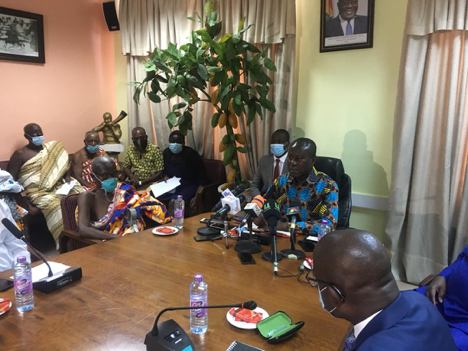
“We want to make farming attractive to young people, especially the youth in order to encourage them to venture into farming in general,” Mr. Aidoo said after the Ghana Cocoa Coffee and Shea Nut Farmers Association (COCOSHE) paid a courtesy call on him.

He added that the Pension Scheme will help cocoa farmers to sustain their farms even after death for the benefit of their families.

Mr. Aidoo explained that the initiative is being pursued to minimise all the risks associated with farming, and also remove the perception that farmers die poor.

“Farming is not for the poor,” he said, adding that the government is poised to change the narrative so as to encourage graduates to enter farming.

To make the system robust in the future, Mr. Aidoo said COCOBOD will soon roll out a new management system to gather the bio-data of all cocoa farmers in the country.

This, he stated, will also capture the land size, the number of cocoa trees, and soil fertility levels of all cocoa farms in the country in a single data pool.

He pointed out that the exercise will give COCOBOD an opportunity to streamline and evaluate all activities of farmers to better serve them.

“This will give COCOBOD the power to measure the output of cocoa farms and issue cards to farmers to help them sell their produce electronically.”

He disclosed that COCOBOD has already reached out to the Office of the Vice President to help the cocoa regulator digitize the sale of cocoa beans from farmers.

“When this is done, cocoa farmers will not have to walk long distances to sell their cocoa and receive cash. The system will enable another group to pick the beans at the farm, and then the farmer will receive a text message of payment into their accounts,” he said.

Mr. Aidoo was hopeful the president’s office will soon announce a date for launching the Cocoa Farmers Pension Scheme.

Presenting 100 tubers of yam and a ram to Mr. Aidoo as a sign of appreciation for establishing the Living Income Differential, the President of COCOSHE – Alhaji Alhassan Bukari, appealed for the government to quickly approve the pension scheme so it can come into force.

He praised the government for the cocoa rehabilitation programme that is being implemented in the Western North and Eastern Regions, stressing that it has restored hope to cocoa farmers.

“We have seen other programmes such as the irrigation projects, which were piloted on some farms, proving that we cannot depend on rain-fed agriculture anymore,” he said.

He added that the 28.2 percent upward adjustment in cocoa price this year demonstrates the government’s commitment to improving the livelihoods of cocoa farmers.

Source: thebftonline.com
Ad article

Ghana disputes a new report on child labour rising in West Africa cocoa farms.

Government officials in Ghana, as well as public commentators, are disputing the findings of a new report based on a recent study funded by the United States government which claims that the use of child labour has risen in cocoa farms in Ghana and Ivory Coast over the past decade despite industry promises to reduce it. The new report findings support an earlier one, which was similarly disputed by both West African countries

According to the new report, the levels are now higher than in 2010 when companies including Mars, Hershey, Nestle, and Cargill agreed to reduce the worst forms of child labour in Ghana and Ivory Coast’s cocoa sectors by 70% by 2020.

The two West African countries – which together produce about two-thirds of the world’s cocoa – had both questioned the methodology used in an earlier version of the report prepared by researchers from the University of Chicago in April this year.

Ghana’s government has again questioned the data in the revised report, released on Monday after the U.S. Department of Labor appointed a group of independent experts to conduct a review.

Ghana’s government was quoted in Monday’s report questioning the reliability of the figures that showed a reduction in the number of child labourers from the April estimate while maintaining a similar prevalence rate.

“This raises eyebrows about the reliability of the findings for any meaningful policy formulation and implementation,” Ghana’s ministry of employment and labour relations said.

However, the government, like that of Ivory Coast has reiterated its commitment to eradicating child labour in cocoa farming.

But this is being seen locally as being tactful, rather than accepting blame for an infraction that at best is grossly exaggerated.

While Ghana’s government officials are publicly questioning the veracity of the data – and privately questioning the motives behind the report – public commentators and labour experts are pointing out that those who conducted the study and who assessed the results simply lack understanding of the ways in which West African rural societies operate.

They point out that in actual fact most of the children identified as victims of child labour in the report are simply children helping out their parents on the farm after school; more often than not on a voluntary basis resulting from a sense of responsibility towards the family which is inculcated in them at an early stage in local society.

Even some children’s rights advocates agree that the report is largely built on misconceptions. Queries one, on strict condition of anonymity: “Why would a parent prevent his or her child from going to school just to work on a cocoa farm, even though the school is not only free but provides free meals as well?”

Instructively, that children’s rights advocate does not want to be quoted for fear of losing her funding which comes in part indirectly from the US government. Some analysts assert that the same prudent diplomacy is behind the rather subdued reaction of both the Ghanaian and Ivorien governments – neither wants to rock the boat which ferries substantial foreign aid into their respective coffers.

However, none of this completely changes the fact that true child labour still exists in both countries, which even critics of the report admit to; they simply insist that the report grossly exaggerates it.

Some critics go further to allege an Oliver Stone type conspiracy theory behind the report. They allege that both countries are being deliberately put on the defensive as retaliation for their recent success in imposing an extra US$400 per metric tonne ‘living standard differential’ on the cocoa beans they export. These conspiracy theorists assert that the report is part of a wider scheme to ensure that the two countries do not feel comfortable enough to attempt further, even more, ambitious efforts at influencing cocoa prices in their favour.

U.S. lawmakers have criticized the industry and U.S. customs authorities asked cocoa traders earlier this year to report where and when they encounter child labour in their supply chains.

Monday’s report cut the estimate of the number of children currently working in cocoa production in the two countries to 1.56 million, from more than 2 million in the April study, saying it had changed the ways it weighted its data. It did not give comparative totals from 10 years earlier.

But it said the proportion of children from agricultural households in cocoa-growing areas that are engaged in child labour in the cocoa sector across the Ivory Coast and Ghana had increased to 45% in 2018/19 from 31% in 2008/09.

The corresponding levels for hazardous work had risen to 43% from 30%, it added.

“Despite the efforts made by the governments, industry and other key stakeholders in combating child labour and hazardous child labour during the past 10 years, the child labour and hazardous child labour prevalence rates did not go down,” the report said.

It added that rates of child labour had stabilized since the last survey in 2013/14 and school attendance in cocoa-growing areas had risen even as cocoa production surged.

World Cocoa Foundation president Richard Scobey said the report showed child labour remains a persistent challenge but that government and company programmes to reduce it was making a difference.

“Targets to reduce child labour were set without fully understanding the complexity and scale of a challenge heavily associated with poverty in rural Africa and did not anticipate the significant increase in cocoa production over the past decade,” he added in a statement.

The International Cocoa Initiative (ICI), a foundation backed by industry and civil society, said what it called past sampling errors made it difficult to draw accurate comparisons over time.

Source: Goldstreet Business

Ad article

COCOBOD to inject US$200 million towards domestic cocoa processing.

The Ghana Cocoa Board (COCOBOD) will next year inject US$200 million into domestic cocoa processing.

The money will be given as a loan to augment the working capital of existing local processors that are struggling financially, as well as potential local processors.

This amount, which is expected to be used to buy cocoa beans, will add some 50,000 metric tonnes of beans to the country’s local cocoa processing capacity.

Currently, COCOBOD has signed an agreement with Cargill to add a new line that will increase its annual processing volumes locally from 60,000 to 90,000 tonnes.

President Nana Akufo-Addo in 2017 set the target of local processing to increase from the current 30% to 50% of the nation’s cocoa by the year 2022.

The $200 million and the expansion by international processors operating in the country are to facilitate the achievement of the government’s target.

As of the end of August this year, 11 local cocoa processors had processed 291,000 metric tonnes of cocoa beans.

It is estimated that Ghana will produce 850,000 metric tonnes of cocoa beans this year.

In the 2018/19 season, of the 812,000 metric tonnes of cocoa beans produced, local processors added value to 327,487.84.

Similarly, in the 2017/18 season, 311, 273.7, out of the 905,000 metric tonnes of cocoa beans, were processed by local processors.

Deputy Chief Executive of COCOBOD in charge of Operations, Dr. Emmanuel Opoku told The Finder that the $200 million is part of a US$600 million credit facility secured from the African Development Bank (AfDB) to invest into the cocoa sector to increase national cocoa production.

He stated that COCOBOD has already received $200 million of the money and is set to receive another US$100 million on December 28, 2020.

Dr. Opoku explained that COCOBOD last week concluded negotiations with AfDB to release the remaining US$300 million on March 6, 2021.

He noted that AfDB will only release the money based on agreements signed with local cocoa processors.

In view of the fact that the processors will have to apply and meet stringent conditions, including the provision of collateral, he said, the applicants have from now to February ending to meet all the requirements to pave way for the release on March 6, 2021.

According to him, the interest to be paid on the loans would be determined by the risks of each company.

To ensure that the money is put to good use, Dr. Opoku said COCOBOD and beneficiary companies would fashion out an arrangement that after the products are sold, the regulator would get paid first before the rest goes to the company.

Even before the money will be released, he said, COCOBOD has been supplying state-owned Cocoa Processing Company (CPC) and West African Mills Company Limited (WAMCo), in which government holds 40% shares, and Plot Enterprise under similar arrangements.

Some local processors owe COCOBOD over US$100 million as they could not pay for beans supplied them.

The management of Cocoa Processing Company (CPC), the biggest debtor, has called on President Akufo-Addo to intervene on behalf of the company over a debt repayment of US$108 million owed to COCOBOD and Afreximbank.

The company is expected to pay COCOBOD a debt amount of US$88 million for the supply of cocoa beans.

In spite of the debts owed by local processors, Dr. Opoku explained that studies have shown that local processors can be profitable, which informed COCOBOD’s decision to support the struggling companies.

He cited WAMCo, one of the struggling local processors, which posted US$2 million profit after its comeback within a period of one-and-a-half years, as an example that local processors can be profitable.

Other local processors include Olam, Niche Cocoa, Barry Callebaut, BD Associates, and Cargill.

Source: thefinderonline.com

Ad article

Food Sovereignty Ghana goes to court tomorrow on Ghana’s first GMO case.

Recently, Genetic Modify Foods (GMOs) are believed to have been introduced in Ghana’s food system creating anxiety among consumers. Ghana is believed to possess arable land for cultivation, so the question is why the introduction of GMOs?

An Organic Food Activist, Food Sovereignty Ghana, for the past years has resisted the introduction of GMOs into Ghana’s food ecology. As part of its mandate, the organization put forth a case at the Accra Human Rights Court to stop the justification of cowpea and other cereals GMOs in the country in 2017.

Upon preparation for the hearing, 20th October 2020 has been set for adjudication. According to the communication officer of Food Sovereignty Ghana, Mr. Edwin Kwaku Baffour, Ghana’s agriculture sector has four critical issues to look at rather than the introduction of GMOs.

He mentioned that transportation, lack of financial support to farmers, lack of irrigation, and post-harvest losses are the four major issues in the sector that contribute to food insecurity in the country.

“Introduction of GMOs would worsen the situation. The chemicals that are used for GMOs are the potency of killing the micro-organisms in the soil, and spraying with glyphosate would cause harm to the farmers and biodiversity”, he said.

To him, the policymakers should consider long-term food production in the sense of maintaining the micro-organisms in the soil rather than introducing GMOs to kill the micro-organisms in the soil with its chemicals for making the soil ineffective for future food production.

He urged all the stakeholders and private individuals to rally behind Food Sovereignty Ghana to fight for the welfare of the farmers and the general public.

Ad article

World Food Day: Government Is Committed To Food Security – Dr. Bambangi.

The government is committed to implementing comprehensive agricultural policies to ensure uninterrupted supply value chains and strong market linkages to deepen of food safety in all parts of the country.

Dr. Sagre Bambangi, Deputy Minister, Food and Agriculture in Charge of Annual Crops, said this at a flag hoisting ceremony held in Accra on Friday to mark the 40th World Food Day (WFD) in Ghana.

The Deputy Minister said the Government was presently putting in place a strategic response to safeguard Ghana’s food security status and ensure a robust food system that would minimize the impact of destructive forces in the short, medium, and long term.

The strategies include the promotion of value addition, agro-processing, expanded storage facilities, innovative marketing of farm produce, and mainstreaming of appropriate and improved technology to remove the drudgery of farming.

He said under the Nana Addo Dankwa Akufo-Addo administration, a strong partnership had been built with stakeholders to transform Ghana’s agriculture through the Agricultural Sector Working Group (ASWG) platform.

The ASWG platform provides the opportunity for reviewing policies, assessing the sector’s performance, sharing ideas, knowledge, and lessons to maximise the benefits of interventions in the sector.

Dr. Bambangi said Ghana had been on course and remained fully committed to achieving food security as the planting for food and jobs initiative had helped to ensure food security, evident by annual food surpluses and a new trend of food export into neighbouring countries.

Mr. Charles Abani, United Nations Resident Coordinator, Ghana, said there was an urgent need for all nations to put in more efforts to end hunger while ensuring that everyone had enough nutritious food to lead an active and healthy life.

He said next year, the UN Secretary General’s food system summit would be a critical moment in the global efforts to make food systems work for people

He called on consumers and the private sector to join the government in building a world free of hunger for all.

Ms. Rukia Yacoub, World Food Programme Representative and Country Director to Ghana, said the world produced enough food for everyone, but “there is still no access to nutritious and affordable food for everyone.”

She said smallholder farmers in developing countries needed support to grow crops in a more sustainable way.

“We need to build dynamic food systems which contribute to community-based agricultural growth and strengthen national economies,” she said.

Available statistics suggest that over 820 million people worldwide suffer chronic undernourishment, whiles 60 percent of women, and almost 5 million children under the age of five die of malnutrition-related causes every day.

The sad irony is that over 600 million people suffer from obesity with a further 1.3 billion deemed overweight. The grim statistics highlight a clear contrast and disproportion of food availability to people across the globe.

World Food Day (WFD) is celebrated every year on Friday, October 16th to promote awareness and trigger action towards the elimination of hunger, by calling global attention to ensure food security and nutritious diets for all.

Since the inception of the WFD, the focus of the celebrations has been to highlight the fact that food is a basic and fundamental human right that ought to be respected and enjoyed by everyone regardless of age, sex, and status.

This year’s occasion marks the 40th milestone of the World Food Day celebrations and it’s under the theme “Grow, Nourish, and Sustain Together our Actions are our Future”.

Source: GNA

Ad article

Pre-Harvest 2020: Women urged to recognize the Covid-19 pandemic as an opportunity rather than a challenge.

Women are the driving force in Ghana’s agricultural sector. They constitute a greater percentage of the working force in the agricultural value chain. The advent of Covid-19 has affected all sectors of the economy globally impeding women activities contributing to food security.

Women in the agricultural value chain have been impacted by Covid-19. Though this poses a lot of challenges, there are opportunities to leverage on as well.

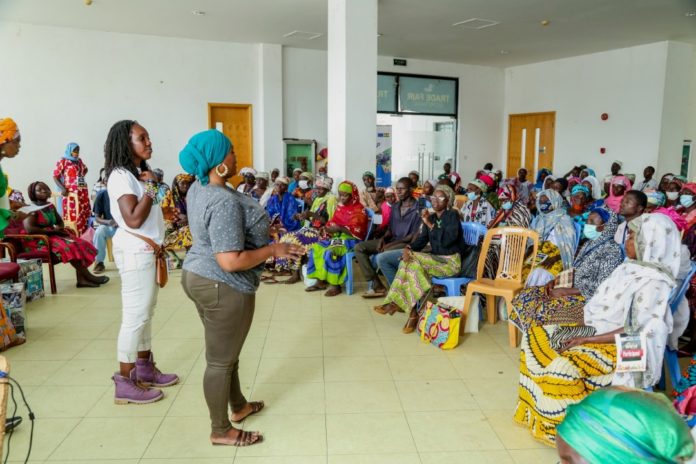
During a breakout session of Pre-Harvest 2020, women were urged to recognize the Covid-19 pandemic as an opportunity rather than a challenge. The session with the theme; Covid-19 And Beyond; Accessing and Understanding the Challenges and Opportunities for women in the agricultural value chain (production, processing, transportation, and marketing) equipped the women to work sedulously to explore the great opportunities that the pandemic has offered to the sector.

Speaking at the session, Madam Sandra Tagoe, the Commercial and Marketing Manager of Flour Mills Ghana Limited advised the women to tap onto the huge opportunity that the pandemic has presented to Africa. To her, the world is looking at Africa as the food basket of the world amid and post Covid-19.

Madam Sandra Tagoe, the Commercial and Marketing Manager, Flour Mills Ghana Limited addressing the women urging the women to consider the pandemic as an opportunity instead of a challenge.

“According to the United Nations Economic Commission for Africa (UNECA), Africa marginally produced an average of 3.2% prior to Covid-19 but now Africa which is the basket of production for food is producing an average of 1.8%. This is a big advantage the pandemic has offered to leverage on”, she said.

She urged the women to embrace the pandemic and observe all the protocols as it has come to stay. She admonished the women to add as value to their products as possible to achieve maximum profit.

Speaking on the opportunities that the pandemic has presented, India, the world’s number one producer of shallot onion to international marketing has banned its exportation of shallot onion to the international market as a result of the advent of Covid-19. This is a great opportunity presented to Ghana that is the 3rd producer of shallot onion to the international market. Ghana could take advantage to be the 1st producer and exporter of shallot onion to the international market.

Ad article

AMG fertilizers support AP Oak graduates in an Agribusiness reality TV show.

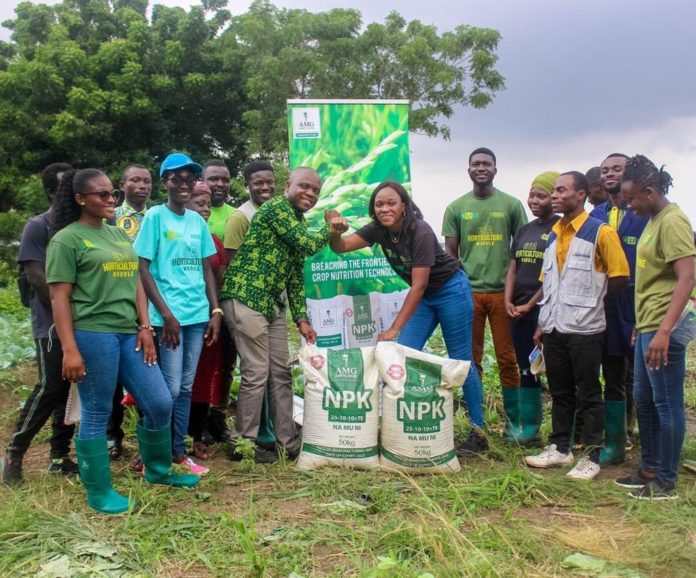
The Agricultural Manufacturing Group (AMG) Ghana’s leading importer and distributor of fertilizers has demonstrated its commitment to the growth of the agriculture industry through support for the Oak Graduate-In-Agribusiness Horticulture Reality TV Show.

The TV Reality Show is an initiative of AP Oak with support from HortiFresh is designed to promote agribusiness in a fun and easy-to-relate manner. The motive is to incite interest in agriculture among young people and encourage more women participation, particularly in agribusiness.

The support which came in the form of fertilizer donations is part of AMGs plans to support worthwhile endeavors that are focused on improving the agric industry through women and youth participation.

AP Oak is a first design woman based organization focused on grooming graduate agriculture enthusiasts and equipping them to start personalized agri-businesses.

Mr. Isaac Opoku-Commercial Manager for AMG Fertilizers explains that AMG believes in the potential of women and the youth to impact the agriculture sector and has thus decided to support the initiative.

“AMG is interested in women in agriculture. We, therefore, couldn’t turn down a chance to be part of a female-centered initiative such as this. We are equally interested in seeing the youth get more involved in agriculture hence our partnership with this project.”

Established in 2012, and with one of the strongest local presence, AMG also prides itself as a leader in the field of crop nutrition technology, with its continuous innovative development of wide ranges of quality fertilizer products and related services.

AMG finds satisfaction in providing small scale /large scale farmers with crop nutrition product/strategies that guarantees them high yields, through the adaption of cheaper but very cost-effective crop nutrition combinations.

Ad article

New law transfers oversight of Cocobod to the Agric Minister.

The Minister of Food and Agriculture, Hon. Dr. Afriyie Akoto Osei.

A new bill, the Ghana Cocoa Board (Amendment) Bill 2017, which will transfer ministerial oversight over Cocobod to the Minister of Food and Agriculture and reposition the board to deliver the target of producing 1m tonnes of cocoa annually, has been approved by parliament.

According to a report on the bill by the Constitutional, Legal and Parliamentary Affairs committee, per PNDC Law 81, the Minister for Trade exercises responsibility for Cocobod. However, the government considers it necessary to transfer the ministerial responsibility to the Minister of Food and Agriculture, the report said.

Moving for the adoption of the report, the chairman of the committee, Ben Abdallah Banda, said it became imperative to amend PNDC Law 81 to achieve the government’s objective.

The amendment means the Minister of Food and Agriculture will now be responsible for approval of prices of cocoa, coffee, and shea to be paid to farmers, issuance of general directions to Cocobod relating to the performance of its functions, and the making of regulations to ensure the effective performance of the functions of the board.

At the committee consideration stage of the bill, officials of Cocobod had informed members that the intended change in ministerial responsibility was to properly focus on cocoa production as the foremost function of the board.

The cocoa industry plays an important role in Ghana’s economy, employing about 800,000 people and generating about US$2bn annually in foreign exchange earnings.

Cocoa output reached a peak of 1m tonnes in the 2010-11 harvest season but has ranged between 800,000-900,000 tonnes since then as the sector struggled with diseased and aged trees. According to a Bloomberg report on September 29, production fell to a five-year low of fewer than 800,000 tonnes in the 2019-20 harvest season that just ended.

For the new (2020-21) harvest season which began this month, the government has raised the purchase price of cocoa from farmers by 28 percent to GH¢10,560 per tonne. This follows the successful implementation of the Living Income Differential (LID), whereby international buyers of cocoa pay an extra US$400 per tonne on top of the world market price to shore up the incomes of farmers.
Source: Business 24

Ad article

Pre-Harvest 2020: An important platform to assist farmers and the value chain actors to recover from the Covid-19 pandemic.

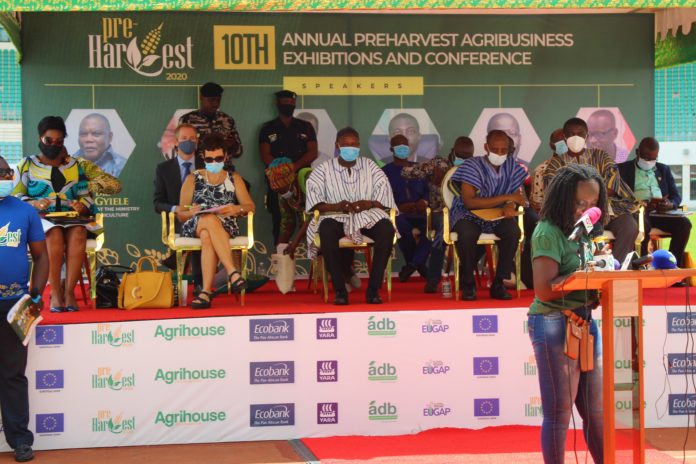
The 10th annual Pre-Harvest Agribusiness Exhibition and Conference have been ushered irrespective of the global pandemic with the theme: Covid-19 And Beyond; Solutions for Agricultural Transformation at Aliu Mahama Stadium, Tamale to create a platform to help farmers and the value chain actors to recover from the pandemic and continue on the good path of sustainable growth.

The Northern Regional Minister, Hon. Salifu Sa-eed welcomed the farmers, stakeholders, and the participants for making this year’s agribusiness conference and exhibition a success in the midst of the pandemic.

He lauded the Pre-harvest conference for creating a unique avenue for farmers to meet with the input dealers like fertilizer, irrigation, and seed companies, tractor machinery and equipment dealers, technology firms, banks and financial institutions, and a lot more at this crucial moment.

“The Pre-harvest has attracted value chain actors particularly farmers, buyers, processors, transporters, financial institutions, telecom companies and policymakers to a single forum that present unique opportunities for growth and expansion”, he added.

To him, the large pool of stakeholders makes the event the ideal platform for inciting transformation growth for agribusiness in Ghana and particularly in the Northern Region where a significant chunk of agriculture production takes place.

In a keynote address read on behalf of the Hon. Minister of State for Food and Agriculture, the Deputy Minister of Food and Agriculture, Hon. Sagri Bambangi said that the theme for the year clearly underscores the need to consider solutions that will help agriculture rebound post-Covid-19.

“I believe the theme mirrors the kind of approach we need to get the sector up and running at an optimum level. this solution as captured by the theme will give participants an opportunity to meet fertilizer, irrigation, and seed companies, tractor and machinery, and equipment dealers, technology firms, banks, and financial institutions, processors, researchers, government institutions, and development partners to interact, learn and partner for growth and expansion”, he issued.

He underlines the future of agribusiness as a renewed emphasis on value addition as the event seeks to project by improving the capacity of value chain actors through providing inputs to farmers and connecting them to consumers through general handling, processing, transporting marketing, and distribution of agricultural products.

He urged all farmers to follow suit as the world has moved from subsistence agriculture and bring to light the government’s vision of a more robust agriculture sector for Ghana to realize.

Gracing the opening of the Pre-harvest conference, the Ambassador of the European Union of Ghana Her Excellency Mrs. Diana Acconcia added that European Union has been committed to supporting Ghana to find effective responses to the Covid-19 crisis and this called for sponsoring this year’s event.

According to her, the event offers a great opportunity to exchange ideas on how to work better together with the national and international entities, public and private actors for the benefit of northern Ghana as a whole.

H. E mentioned that it is a great opportunity to discover the untapped potential to enhance the growth of agriculture in Ghana

She delightfully thank all the supporting partners, stakeholders, and Agri-house Foundation for making it possible for this year’s event.

In an interview with the Private Sector Team Leader of USAID, Pearl Ackah, uttered that despite the significant disruptions in the agricultural sector due to the pandemic, Agri-house considered it vital to continue discussions about the agricultural sector and enhance access to the market.

She assured that USAID continues to provide support to the sector through ADVANCE to reduce the impact of Covid-19 in 17 districts in northern Ghana. “Our appreciation to ADVANCE for its work to mitigate the economic effects of the Covid-19 pandemic on agricultural stakeholders and the Agrihouse Foundation for its role in organizing this event”, she issued.

“It is critical that we strengthen our commitments to collaborate, provide solutions for agriculture transformation, and assist farmers and businesses in the sector to overcome the challenges caused by the pandemic”, she advised.

She entreated all to utilize the knowledge and the skills that would be derived from the training sessions to promote the sector.

To end it all, the Executive Director of Agrihouse Foundation Alberta Nana Akyaa Akosa complimented the enormous support from USAID-ADVANCE, “We remain ever grateful to the vision of the USAID-ADVANCE whose foresight produced the master programme that we have been building on to come thus far”.

To mention few contributions of the Pre-Harvest event to farmers and the stakeholders in the agriculture value chain for the past nine years, the initiative has provided long-term market opportunities to over 97,000 less privileged farmers in the northern part of the country. The event has boosted the capacity of over 400 farmer-based organizations and aggregators to step up their role as market actors. The event has provided a platform for more than 10,000 commodity buyers to establish business relationships for the marketing of their produce.

She beseeched the chiefs, the Ministry of Food and Agriculture, and the Northern Regional Coordinating Council to allocate land for building Agric Project or event and training centre for the training of the young promising youth, as well as women.

Madam Alberta expressed her profound gratitude to the farmers, stakeholders, supporting partners, sponsors, the invited guests, and all participants for their support and time to converge at this year’s event irrespective of the pandemic.

Ad article

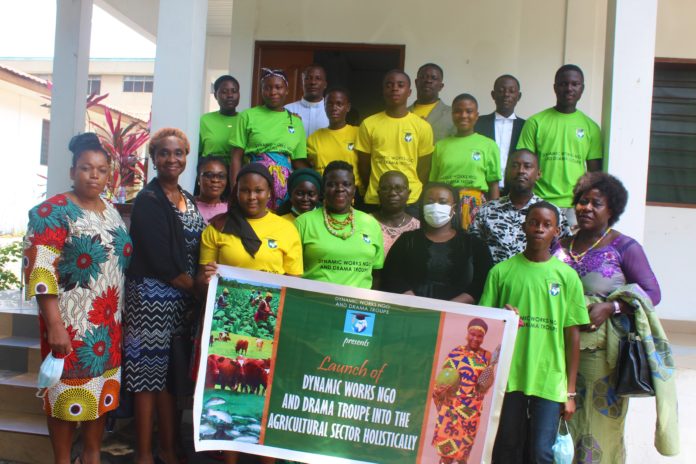
Engage drama to project messages across the agriculture value chain-WFP.

Drama is the specific mode of fiction represented in a performance like a play, poetry recital, and among others. Drama is a tool that enhances teaching and learning among all races and groups of people. To ensure adequate dissemination of information in the agriculture value chain, the World Food Programme has urged stakeholders to use drama as a means of educating farmers and producers in the value chain.

Ad article