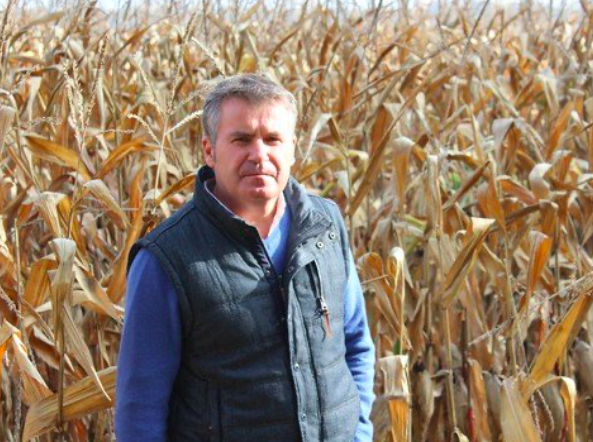
Richard Scobey, the President, World Cocoa Foundation
The World Cocoa Foundation is scheduled to receive the COVID Hero special award at the 2020 edition of the Ghana Cocoa Awards slated for November 14 at the plush Kempinski Hotel, Gold Coast City, Accra.
The organisation through a collective effort with Global Cocoa and Chocolate companies donated to the tune of US$835,000 to help cocoa farmers and their families fight the spread of COVID-19.
The funds were also used to support national emergency plans of governments in West Africa, Asia, and Latin America.
The World Cocoa Foundation (WCF) through the funds was able to support health efforts in other major cocoa origin countries, including Brazil, Cameroon, Ecuador, and Indonesia.
Tweeting on the recognition, WCF President Rick Scobey, said “we are honored to receive a special “COVID-19 Hero” award at the Second Ghana Cocoa Awards! Heartfelt thanks”
Aside from the collective effort, individual member organisations of WCF donated millions of dollars in funds used to cushion local relief programmes in the form of emergency medical supplies, PPE, soaps and sanitizers, and healthcare broadcasts through farmer communication channels with most of the money going to Côte d’Ivoire and Ghana, the biggest cocoa producers.
Also singled out for the COVID19 Hero special recognition is Mondelez International, one of the world’s biggest chocolate manufacturers, which donated a total of GHS1.33 million to various bodies in Ghana in response to the COVID19 pandemic.
ECOM Ghana, a leading licensed cocoa buying company in Ghana is also billed to receive the honour for stepping up to the countries emergency response with 1.2 Million Soaps to some 1.2 Million COCOBOD-registered farming families in all cocoa growing regions of Ghana. The gesture cost a whopping GHS2.4 million.
The COVID-19 Heroes Special Award of the Ghana Cocoa Awards celebrates human endeavour, philanthropy, leadership, and resilience in the face of the unprecedented challenge – the novel coronavirus disease – COVID19 pandemic.
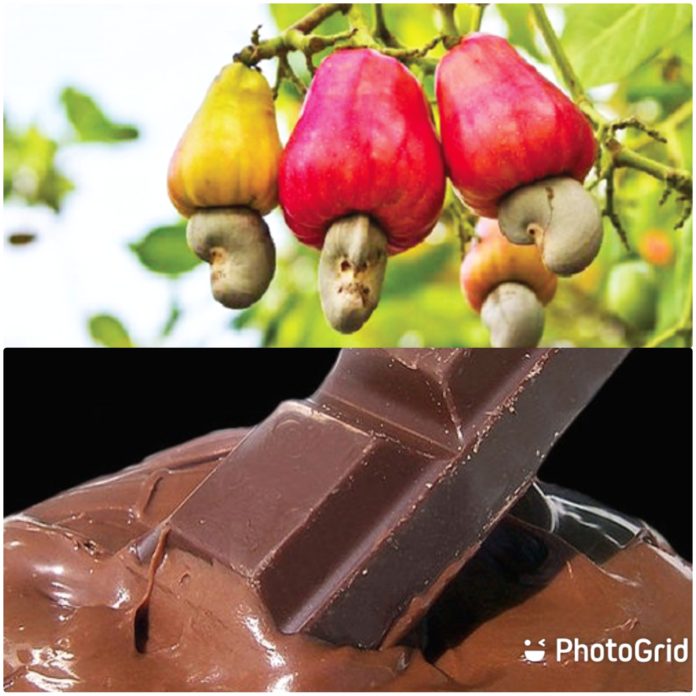
Two new Competitor Analysis reports recently released by the Ghana Export Promotion Authority (GEPA) indicate that massive untapped foreign market opportunities exist for both Ghanaian chocolate and cashew in-shell exporters desiring to operate at the higher end of the value chain.
This comes at a time the Authority is putting in adequate measures to facilitate the doubling of the country’s revenues from the Non-Traditional Export sector to US$5.2 billion by 2022, with the current total earnings being US$2.9 billion.
Regarding the export of chocolate, Ghana’s total earnings of the product and other food preparation containing cocoa recorded an annual income of US$13.4 million in 2019, representing an increase of 16.6% from the 2018 exports of the same product, which stood at US$11.5 million.
Indeed, there has been a gradual increase in the export of the products since 2017. The total earnings in that year recorded US$5.3 million with Nigeria emerging as the largest consumer of the product from Ghana since 2018, controlling about 71.7% of the Nigerian market.
Currently, the global demand for chocolate and related products is more than US$28.62 billion, indicating huge opportunities in the confectionery sector whiles the cocoa and chocolate market size was valued at US$ 44.35 billion in 2019 and is projected to reach US$ 61.34 billion by 2027, exhibiting a Compound Annual Growth Rate of 4.4% during the forecast period.
Since taking the full potential in this market is largely economies of scale, GEPA is advising exporters to focus on implementing market penetration strategies in order to attract the various untapped market.
In 2019, the total exports of chocolate from the USA and China were US$1.66 billion and US$331 million respectively. The largest export destination for China in the year under was Hong Kong (22.1%) whiles the USA destination markets were Canada (37.7%), Mexico (13.2%) among others.
Some Industry analysts assert that with the implementation of the Africa Continental Free Trade Area scheduled for January 2021 – aimed at increasing intra-African trade from the current 10% to 52% by 2022 – Ghana’s total dominance in the Nigerian market over the past years must encourage Ghanaian chocolate exporters to improve on their economies of scale.
Regarding the export of cashew nuts in the shell from Ghana, GEPA has identified potential growth at the current top export destinations.
With an estimated untapped potential of over US$600 million for Ghana’s cashew in-shell, Ghana exported close to US$400,000 of raw cashew in the shell to six countries in 2019, with Vietnam emerging as the main destination of the product from Ghana.
Although the total import value of the product into Vietnam and India recorded 1.7 million and 933, 000, Ghana’s share in these two countries for the year under review recorded 15.2% and 14% respectively.
However, countries in the sub-region namely Benin and Ivory Coast recorded significant shares than Ghana.
“Explore your existing possibilities in Vietnam and India as the market share of import from Ghana to these markets has to room for growth. Given Ghana’s supply capacity vis-à-vis the demand in Vietnam and India and other variables puts Ghana’s untapped potential in these markets at US$405.97 and US$241.64 million respectively”, the report said.
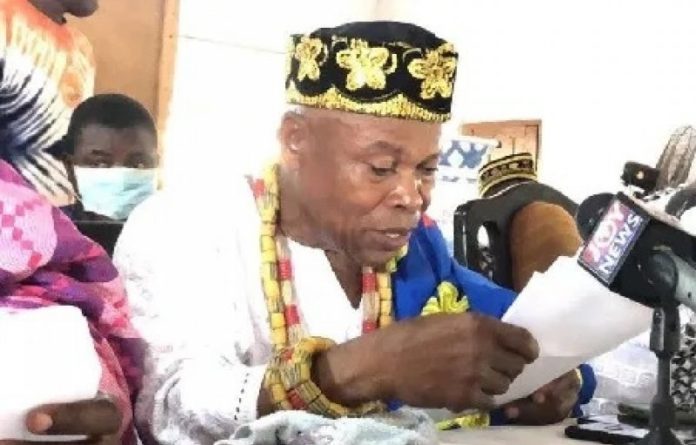
Torgbui Adrakpanya VI, the Paramount Chief and President of Afife Traditional Council, has asked the government to upgrade the Ohawu Agricultural College (OAC) to a fully-fledged University.
He said an agricultural University would enhance the training of students to provide the needed human resource base in the sector, increase production, add value to produce, and sustain the interest of the youth in the government’s policy on planting for food and jobs.
Torgbui Adrakpanya made the request during a durbar of Chiefs and people in honour of Nana Addo Dankwa Akufo-Addo at Afife in the Ketu North Municipality of the Volta Region as part of a tour of the area by the President.
He said that OAC established 58 years ago was the only institution of higher learning after Akatsi College of Education in the southern part of the region.
He said, “this institution attached to crop and soil research stations is critical for the development of the area since the majority of the people are predominantly farmers.”
Torgbui Adrakpanya appealed to the President to facilitate the construction of the deplorable roads at Afife and Tadzewu, especially the ones that link Afife Senior High Technical School and Afife Health Centre.
He said the Traditional Council had donated 4.5-acre land to the President as a token of appreciation of his visionary and sterling leadership style, which had brought respite to the population and greater laurels to the country.
Torgbui Adrakpanya entreated the President to build a retirement palace for himself on the parcel of land after his tenure and to settle at Afife.
He said the Afife area had seen multiple benefits from the policies, programmes and projects of the government, including school blocks, and health centre
Torgbui Adrakpanya was grateful to the President for the appointment of Mr. Pius Enam Hadzide as the Deputy Information Minister and appealed to the President to appoint more people from the traditional area in his second term.
“We pray for your re-election as President of Ghana to continue your development agenda while promising their support.”
President Nana Addo Dankwa Akufo-Addo said there were plans to upgrade the OAC.
Dr. Owusu Afriyie Akoto, Minister of Food and Agriculture said the government was working to turn Ohawu, Kwadaso, and Odwira Agriculture Colleges into Universities to champion the transformation in the sector.
He said the proposal was receiving attention from some partners in the Czech Republic and reassured the chiefs that the request would come to pass.
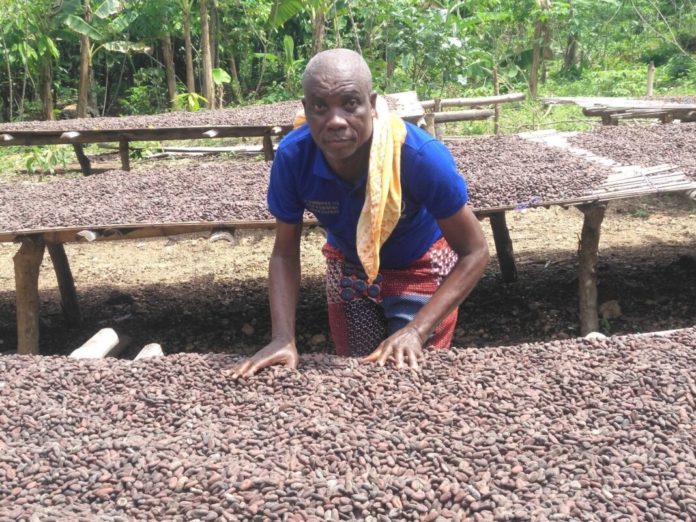
Some cocoa farmers in the Wassa enclave of the Western Region have resorted to proceeds they realise from trading-off portions of their farms to illegal miners in order to maintain their cocoa farms, the B&FT has gathered.
Sources say the inability of farmers to raise substantial funds during off-seasons to buy farm inputs like fertilisers and fungicides, as well as hire labourers, compels some of them to sell farmlands and cocoa farms to illegal miners – especially portions on the shoulders of streams.
Moreover, farmers who might not be under any financial pressure willingly sell cocoa farms to illegal miners. On the backdrop to cocoa swollen shoot virus disease (CSSVD) wrecking farms in the Wassa area and other parts of the country, farmers consider it prudent to sell farms to the ‘galamseyers’. The B&FT learned that an acre of farmland in that area is sold at around GH¢6,000 and above, with the valuation determined by the crops on the land.
The financial susceptibility of farmers and the lack-luster approach by authorities to stopping activities of illegal miners have culminated in endangering the sustainability of cocoa production in the Wassa enclave, which used to be an epic production area in the country. Besides, a lot of farms in the area are bedeviled with moribund trees while others have been attacked by the CSSVD.
These came up during a field trip by members of the Ghana Agricultural and Rural Development Journalists Association (GARDJA) to cocoa farming communities in the Wassa Amenfi East district of the Western Region. The trip to communities like Nananko and Kofi Manee was supported by SEND Ghana and Rainforest Alliance. It afforded the journalists an opportunity to ascertain the pressing issues undermining cocoa production and productivity among others.
Briefing journalists, John Ankomah Enu – Chairman of World Cocoa Farmers Organisation (Wassa Chapter), said illegal mining is the leading human-induced canker ruining cocoa production and the environment in that area, indicating this menace is not only destroying farms but also denying farming its needed youthful labour force.
“The youth in our communities have virtually shunned cocoa farming; they prefer galamsey where they will earn between GH¢100 to GH¢300 daily. Our communities are saturated with youthful populations including many migrants, but they are all doing illegal mining. The situation is also breeding all manner of social vices which were alien to our society in the past.”
The 69-year-old cocoa farmer appealed to the Ghana Cocoa Board (COCOBOD) – and for that matter, government – to find innovative means of making farmers more financially resourceful in order to discourage them from selling farms to illegal miners so as to safeguard the future of the country’s cocoa industry. He also advised colleague farmers to cultivate other food crops to earn them additional income during cocoa off-seasons.
On his part, Peter Ayimadu – a farmer, complained about the inadequate and uneven distribution of farm inputs, particularly fertilizers and fungicides. He said inputs distributed by the COCOBOD are woefully insufficient to meet farming needs, adding “the situation has pushed farmers to buy from the open market flooded with fake products.
“I requested 21 bags of fertiliser, but I received only four bags. I also had to share a bottle of agrochemical with another farmer. The mass-spraying gang on the other side has also been selective in this part of the country. These and many other challenges must be addressed if the country wants to achieve the one million metric tonne target,” he said.
Accra Ghana (26 October 2020) – From a total of 155 entries received for the 2020 edition of the annual Ghana Cocoa Awards, 82 nominees have been shortlisted for the 2nd Networking and Awards Gala Night on 14th November 2020 at the Kempinski Hotel Gold Coast City, Accra Ghana.
The eminent Advisory and Awarding Board, chaired by Professor Emmanuel Ohene Afoakwa, is presently assessing the finalist entries to deliver the ultimate winners for all categories. The winners will be announced exclusively at the Gala Night, which commences at 7 PM prompt.
The Ghana Cocoa Awards secretariat hereby announces for the information of the general public that 82 award nominees have been shortlisted for the 2nd Ghana Cocoa Awards, which comes off Saturday 14 November 2020 at Kempinski Hotel Gold Coast City, Accra Ghana. The finalists are drawn from a total of 155 entries filed by individuals, groups, and organizations operating within the Ghana cocoa industry.
The Awards are made up of 30 competitive categories including Agro Input, Ecotourism, Research, Production, Internal Marketing, Cocoa Financing, Processing, Artisanal Value Addition, Innovation, Journalism, Sustainability, and Leadership. A number of individuals and organizations will also be accorded Special Recognition in leadership and COVID19 Humanitarian efforts.
This year, two distinguished private sector actors qualified with very strong bids for the coveted Cocoa Personality of the Year honour currently held by the Chief Executive of Ghana Cocoa Board, Honourable Joseph Boahen Aidoo.
The second annual Networking and Awards Gala Night of Ghana Cocoa Awards (GCA) will be chaired by former Member of the Council of State and Presidential Adviser, His Majesty Ehunabobrim Prah Agyensaim VI, King of Owirenkyi Traditional Area (Assin Kushea) in the Central Region. The Chief Executive Officer of Ghana Investment Promotion Centre, Mr. Yofi Grant, is Guest Speaker.
The Special Guest of Honour for this year’s event dubbed the COVID19 Resilience Edition is the Chief Executive of Ghana Cocoa Board, Honourable Joseph Boahen Aidoo.
Ghana Cocoa Awards 2020 is on the theme “The Africa Continental Free Trade Area (AfCFTA) – Prospects and Opportunities for Ghana’s Cocoa.”
GCA is an independent industry awards scheme designed to spotlight and celebrate innovation, achievement, and excellence while offering an unparalleled platform for networking in the Ghana cocoa value chain.
Ghana Cocoa Awards is a concept of VC Media and supported by ECOM Ghana and AMP Logistics Ghana Limited.
We recognize by this initiative that it is the hard work and dedication of the Ghanaian cocoa farmer working in concert with the sector regulator – Ghana Cocoa Board – and industry that delivers the peerless world-acclaimed premium quality Ghana Cocoa, hence this initiative to recognize and honour outstanding achievements.
The cocoa sector accounts for 2.5% of Ghana’s GDP, 25% of foreign exchange earnings, and offers millions of jobs including livelihood for about 800,000 farming families. The impact of Ghana cocoa’s US$2billion forex receipt injected into the economy annually is felt in areas such as budget finance, infrastructure, education, health, and nutrition, among others.
A plan by the Ghana Tree Crops Development Authority (TCDA) to implement a pricing regime has been met with resistance by cashew growers.
The cashew farmers say the move will worsen their economic situation.
According to a report by Adomonline, the farmers say the Ghana Cashew Council (GCC), which is supposed to represent their interest on the TCDA, also seem to be in support of the decision they have described as unfair.
“According to the farmers, the GCC is making moves to dictate prices of cashew, setting an upper limit for cashew prices.
“Should the GCC go ahead to implement the new pricing regime, the farmers say their conditions will be made worse, especially when there are no support schemes put in place by the government for farmers,” the report on Adomonline said.
According to the report, the farmers also say the absence of bulk cashew exporters on the Ghana Cashew Council is largely to blame for the move to set the price for the non-traditional export product.
“We want to sell our products at competitive prices, depending on their quality so that we can pay back our [bank] loans and be able to expand our farms,” the report quotes a farmer who spoke to the news portal.
President Nana Addo Dankwa Akufo-Addo inaugurated the TCDA late last month to focus on the development of tree crops and the consequential benefits to be accrued to the country.
Inaugurating the Authority on Tuesday, September 29, 2020, at the Golden Bean Hotel in Kumasi, President Akufo-Addo explained that Government’s strategy is to promote the development of tree crops, other than cocoa, with equal or even higher economic potential.
The President explained at the inauguration ceremony that the Tree Crops Development Authority will lead the nation’s agenda for the diversification of Ghana’s agriculture by developing the tree crops sector.
The Savanna Agricultural Research Institute of the Council for Scientific and Industrial Research (CSIR-SARI) is carrying out a field trial of improved cowpea varieties in Wa to allow farmers to improve their lots when released for commercial production.
The CSIR-SARI is carrying out the trial in partnership with the International Institute of Tropical Agriculture (IITA) and the International Crops Research Institute for the Semi-Arid Tropics (ICRISAT).
The project is funded by the Bill and Melinda Gates Foundation (BMGF) under the Accelerated Varietal Improvement and Seed Delivery of Legumes and Cereals in Africa (AVISA) project.
Dr. Theophilus Kwabla Tengey, the Cowpea Breeder and Research Scientist at the CSIR-SARI, told a team of farmers at a research field in Wa that the new varieties were high yielding, early maturing, drought-tolerant, and climate-resilient.
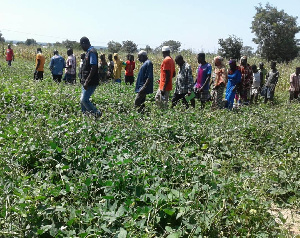
The 40 farmers from selected communities in the Wa West District and Wa Municipality were at the research field to conduct a participatory varietal selection on 11 new cowpea varieties to enable the CSIR-SARI to arrive at the appropriate cowpea variety for farmers in the region.
Dr. Tengey said there was a need for the CSIR-SARI to develop climate-smart crop varieties for farmers to produce due to the unreliable rainfall pattern in the country.
“Indeed, because of climate change, we need to develop climate-smart varieties. Climate-smart means that the variety matures early, and also fits into what consumers want. The farmers are here to help us select the materials that they want.
“The breeders have done their part by evaluating these varieties. Now, these varieties have reached a state that we want the farmers to also participate in the process,” Dr. Tengey explained.
He said the participatory varietal selection was necessary to increase the adoption rate of those varieties by the farmers.
Dr. Tengey noted that the farmers, who participated in the activity, selected cowpea varieties that were early maturing, have large seed size of a range of seed coat colors-white, brown and red, among other varieties.
He said that was partly because of the uniqueness of those varieties in the market and expressed the hope that farmers would adopt the new varieties when released to help improve their farming activities.
Dr. George Mahama, an agronomist at the Wa Station of the CSIR-SARI, observed that cowpea was one of the crops that could improve the livelihoods of farmers if they took its cultivation seriously.
He explained that both men and women could produce cowpea and urged the farmers to follow good Agronomic Practices, such as land preparation to help maximise the potential of the improved varieties.
Dr. Mahama advised the farmers to adhere to the appropriate planting distance – 60 cm between rows and 20 cm between plants in a row – to improve crop performance.
Some of the farmers expressed content with the crop varieties on the field and gave the assurance they would adopt them when released.
“If we get the early maturing crops it will help us because the rainfall here is not reliable,” Mr. Sansew Issahak, the Upper West Regional Chairman of Cowpea Farmers, said.
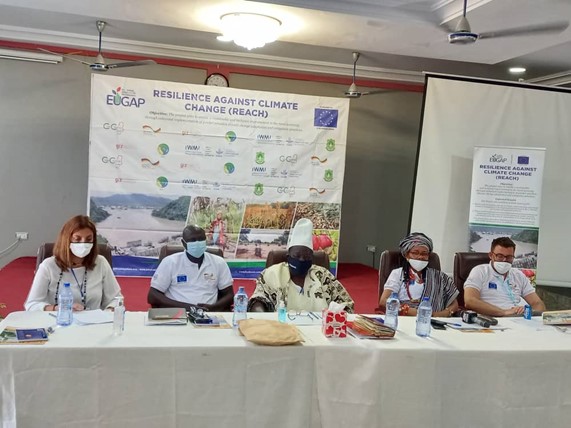
EU Resilience Against Climate Change (EU-REACH), on 13 October, kicked-off a 2-day workshop in Wa, Upper West Region, to share results of a socio-economic and gender baseline survey with stakeholders and partners.
The baseline results emphasized the status of social, economic, and gender aspects of the project area at the inception of REACH interventions. These findings will help inform the communities to be identified for specific development interventions for the REACH Project and provide the basis for monitoring progress and evaluating the effectiveness and impact of the interventions in the Project area.
Among other things the results revealed that the youth have very limited access to land and demonstrated that women were disadvantaged in terms of education levels, income levels, social capital, access to extension, access to assets, and control of the different assets and benefits coming from farming. These findings will inform planning and offer a strong basis for targeted and inclusive interventions to cater to women, youth, and vulnerable groups.
The workshop provided a platform for 56 participants comprising relevant Policy Makers, Traditional Authority, District and Regional Directors of Agriculture, Planning Officers, Representatives of Private Institutions and Non-Governmental Organizations to deliberate extensively and collectively, determine how best to ensure that REACH supports are gendered and consider the different interests of women, men, youth, children and people with disabilities to ensure an equitable improvement in the livelihood of all.
In his address at the opening of the workshop, Team Leader for the REACH project, Florian Johannes Winckler noted that “Since the inception of the project, we have been engaging stakeholders on a more sustainable way of building resilience to the menace of climate change from an institutional, communal and individual household level. These engagements in our estimation have been fruitful thus far and would continue to ensure a more concerted approach to implementing the project”.
“This workshop will find synergies that will help us fine-tune our activities to ensure an effective and a coordinated implementation of the REACH project,” he said.
Resilience Against Climate Change is an EU supported project that commenced in January 2019 and will run until the end of 2024. The project is being implemented by the Competitive Cashew Initiative (GIZ-ComCashew) and the International Water Management Institute, in close collaboration with the Ministry of Agriculture.
About REACH: The EU’s Ghana National Indicative Programme, 2014-2020 (Sector 2: Productive investments in agriculture) fully supports and contributes to the initiatives in the North-West Savannah zone through its “Productive investments for agriculture in the Northern Savannahs ecological zone Programme” comprising three interlinked components.
The EU-funded REACH Project which commenced in January 2019, is one of the three components. REACH itself, also has 3 components:
i) Provision of assistance to district planning teams to develop climate-smart development plans contributing to the Nationally Determined Contributions (NDCs) of the Paris Climate Agreement.
ii) Improving community and individual knowledge and practices in conservation agriculture (CA) through land-use mapping and the development of Community Action Plans (CAPs).
iii) Research into the impacts of climate change on social transformation to inform future planning decisions
Components i and ii are implemented by the Competitive Cashew Initiative (GIZ ComCashew), whereas component iii is managed by the International Water Management Institute (IWMI). All three components are implemented in close partnership and collaboration with the Ministry of Food and Agriculture. The programme will run until the end of 2024. For more information please visit: www.comcashew.org / http://www.a4sd.net
About International Water Management Institute: International Water Management Institute (IWMI) in collaboration with CSIR-STEPRI, UG, and UDS is implementing the Social Transformation Research component; that seeks to address the impact of climate, migration, gender, and youth on social transformation in Ghana. IWMI is a non- profit, scientific research organization focusing on the sustainable use of water and land resources in developing countries. Its research in Ghana has encompassed the three thematic areas of strengthening rural-urban linkages, promoting sustainable growth, and building resilience.
About GIZ: As a provider of international cooperation services for sustainable development and international education work, GIZ is dedicated to building a future worth living around the world. GIZ has over 50 years of experience in a wide variety of areas, including economic development and employment, energy, and the environment, and peace and security.
The diverse expertise of our federal enterprise is in demand around the globe, with the German Government, European Union institutions, the United Nations, the private sector, and governments of other countries all benefiting from our services. We work with businesses, civil society actors, and research institutions, fostering successful interaction between development policy and other policy fields and areas of activity. The German Federal Ministry for Economic Cooperation and Development (BMZ) is our main commissioning party.
Currently, GIZ promotes sustainable development in Ghana via about 50 programmes and projects. Our activities currently cover four priority areas: Economic Development, Agriculture, Governance, and Renewable Energy, and Energy Efficiency. Additionally, our portfolio extends to other areas such as the environment, peace, and security. Another focus of GIZ’s work is linking business interests with development-policy goals. Most of the programmes and projects we support in Ghana have successfully brought together national and international private companies, the public sector, and civil society groups to collaborate on development initiatives.
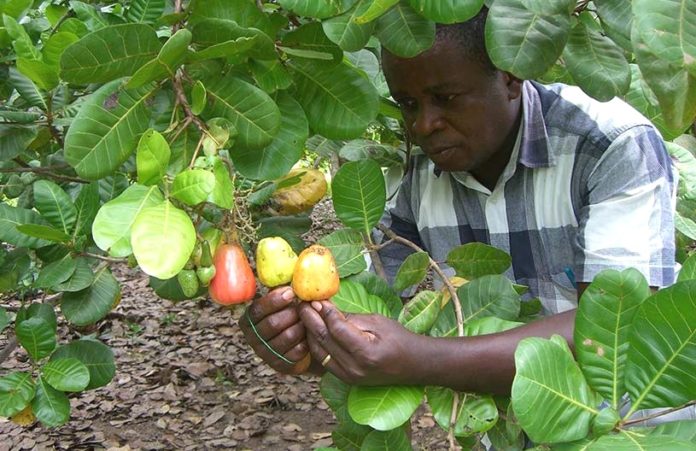
With the setting-up of the Tree Crops Authority as part of the government’s Planting for Export and Rural Development (PERD) programme, it is noteworthy that one of the six earmarked tree crops under PERD – cashew – has been able to launch the Cashew Council of Ghana (CCG) to serve as the sector’s apex body.
CCG is made up of actors in the cashew value chain and is a platform for such actors to advocate for policy reforms, and is naturally headquartered in Sunyani, the Bono Region capital.
It is also gratifying that the outdooring comes a few weeks after the president inaugurated the Tree Crops Development Authority (TCDA), aimed at regulating cashew and the five other specified tree crops under PERD.
This is a landmark activity for the cashew value chain because the production of the commodity in West Africa has doubled over the years from 800,000 metric tonnes in 2009 to 1.7 million metric tonnes in 2020.
In Ghana, production has grown from 22,000 metric tonnes to 105,000 metric tonnes for the same period under review. This monumental growth calls for proper organisation and regulation, hence the need to commend all actors in the cashew sector.
Without a doubt, the establishment of CCG will complement and enhance activities of the TCDA; and we believe this will put the industry in a better position to seek the interest of the entire value chain for better prospects.
The African Cashew Alliance (ACA) needs to be commended for its untiring efforts to improve the lot of the cashew sector as a whole. Their support was instrumental in the establishment of CCG and, as organised as they are, they are in a better position to influence the pricing of the commodity as well as policies to improve their operations.
Farmer Paul François has been locked in a legal battle with the controversial multinational corporation since 2004.
A judicial process that has pitted French cereal farmer Paul François against multinational giant Bayer/Monsanto for over a decade could end tomorrow (October 21).
The trial is currently being studied by the Cour de cessation, France’s supreme court of appeal.
Mr. François, who lives in Charente in western France, claims he was poisoned by a Monsanto product in 2004, after inhaling toxic vapours from the company’s Lasso weedkiller.
The product was banned in France three years later and is also now banned in the United Kingdom, Canada and Belgium.
Since then, Monsanto has been acquired by a German pharmaceutical and life science company, Bayer.
The legal fight began in 2007 Mr. François began his legal fight in 2007, accusing Monsanto of being responsible for poisoning him, and claiming €1million in damages.
He said that inhaling chemicals from Lasso had left him with neurological issues such as memory loss, stammering, and headaches, as well as fainting spells. Almost a year after he had inhaled the product, monochlorobenzene, a solvent used in Lasso, was found in his bloodstream.
Doctors have recognized his health problems as a “professional illness”.
However, his claim has been contested by Monsanto and, later, Bayer – with both companies denying all responsibility for Mr. François’ medical issues.
The farmer has won multiple appeals. Nonetheless, Mr. François has won multiple cases against the two companies. He won a trial in 2012, an appeal in 2015, and a second trial at an appeals court in 2019.
In each instance, Monsanto has been found to be responsible for Mr. François’ health issues, with the last trial finding Monsanto responsible on grounds of providing “defective products” – a first in France.
The trials have continued as Monsanto, and now Bayer, have repeatedly lodged appeals against rulings in Mr. François’ favour.
Legally, Monsanto has been found guilty of not clearly indicating the specific dangers of using Lasso weedkiller in vats, as Mr. François was doing.
The company has not been found to be at fault for the toxicity of the product in itself, with the 2019 trial finding that a highly dangerous product is not automatically “defective”.
Monsanto/Bayer refuses responsibility. At the 2019 trial, Monsanto defended itself by saying Mr. François had shown “negligence” when using Lasso, which he knew “perfectly well (was) a dangerous product”.
The court of appeal in Lyon responded by ruling that “the technical knowledge of Paul François…could not mitigate the lack of information on the product about its noxious effects. An agricultural farmer is not a chemist”.
Legal authorities went on to state that Monsanto had not specified “the specific dangers for use in vats and reservoirs” on the label or packaging of the product.
Farmer’s fight may end for good tomorrow If the Cour de cessation dismisses Bayer’s appeal tomorrow, legal proceedings can begin to draw to a close for Mr. François, for once and for all.
While awaiting the result, Bayer maintains that Lasso “is not the origin of the illnesses, as alleged by Mr. François”.
Mr. François’ lawyer has said his client hopes the Cour de cessation’s decision will go in his favour and provide a “definitive end to legal proceedings”.
The cereal farmer still maintains a farm in Charente, which is now dedicated to organic agriculture.