The Peasant Farmers Association of Ghana (PFAG) has called for a review of the selection process for the National Best Farmer Award to make provision for smallholder farmers, fisherfolk, youth, and women.
That, the Association said would reflect the diverse efforts of all farmers and the nation’s quest to build a just and inclusive society.
A statement issued in Accra by the Association commended the national awards committee for its work and urged it to expand the processes.
The 2020 National Farmers Day celebration is on the theme: “Agribusiness Development under COVID-19 – Opportunities and Challenges.”
It said the Association believes that the process could be improved to ensure that it reflected the current needs and challenges of the sector.
“This will strengthen not only the raison d’etre of the awards but will also ensure it becomes an effective tool for driving national cohesion and inclusivity for the sector,” it added.
The statement said PFAG and Ghana Federation of Forest and Farm Producers (GhaFFaP) congratulated all smallholder farmers in Ghana, especially women who were most impacted by the COVID-19 pandemic.
It said it was imperative to recognise that the stakeholder group continued to be the essential engine propelling the supply of raw materials for industry while ensuring the availability of food commodities for the domestic and international markets.
“Our assessment of awardees over the last two decades found farmers with large farm sizes as well as those with the capacity to invest in diversified agricultural commodities on a large scale emerging as overall award winners,” the statement noted.
According to the statement, a closer examination suggested that the majority of women, youth, smallholder farmers, and fisherfolk were targeted for district-level awards for specific commodities, which were associated with low returns and income.
“[No] woman winning the award over a 20-year period is incredibly worrying and not reflective of the immense contribution of women in the development of agriculture and family food security in Ghana,” it added.
The statement said reviewing the award criteria, would allow for equal competition among all farmers, including women and fisherfolk and boost the morale of marginalised groups, and improved productivity in the sector, particularly as some smallholder farmers posted a high level of productive efficiencies per productive factors.
It noted that historically, medium and smallholder farmers and fisherfolk constituted about 83 percent of the 11.3 million farmers in Ghana; but they had never won the overall national best farmer award.
The statement said that large-scale farmers with a minimum farm size of not less than 100 acres, who constituted about 17 percent of farmers were the recipients of all the overall national best awards and must be relooked.
It said the neglect of smallholder farmers and women in the agenda-setting of the National Farmers’ Day celebration and the national best farmers’ selection process undermined their role as key stakeholders contributing to agricultural development in the country.
The statement said the use of the scale of production as a key metric in selecting the overall best farmer, “suffers the same curse as economic productivity as used in economic parlance, which has since evolved to be more inclusive, accounting for important socio-cultural dynamics.”
“These dimensions include factors undergirding access to land for women, environmental awareness, innovation, contribution to poverty reduction and crucially reducing the inequality gap.
“It is, therefore, important that the metrics for selecting the overall best farmer reflected all the dimensions of productivity and socio-cultural narratives while making room for exploring issues such as good agronomic practices and environmental awareness-two areas, which were cardinal to sustainable food production,” the statement said.
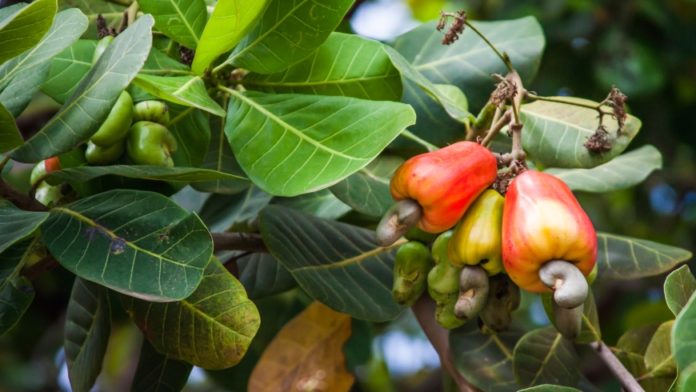
The Ghana Exports Promotion Authority (GEPA), through its flagship project the National Export Development Strategy (NEDS), has outlined plans to boost cashew exports by as much as 320 percent from its current earnings to the country.
Currently, the crop is the second-largest contributor to non-traditional exports with earnings of US$237.8million in 2019. But through the NEDS project, GEPA seeks to increase the amount to more than US$1billion by 2029.
Some of the strategic interventions that GEPA plans to implement in the cashew industry to boost production and increase revenue include developing and supplying high-yielding disease-resistant grafted planting materials; establishing scion banks in major cashew growing areas, and liaising with private nursery operators to produce grafted planting materials.
Other strategies contained in the NEDS for the industry are: undertaking mass spraying of cashew farms to control pests and diseases; capacity building and training programmes on cashew farm best practices; and instituting land reforms that reduce bureaucracy and streamline access to land.
The cashew industry has over the years faced many challenges that have affected the growth of the sector. Some of the challenges include low production of Raw Cashew Nuts (RCN); poor post-harvest handling practices; high cost of transport and energy; and the high cost of plant protection which makes farms prone to diseases and pests.
Other challenges include a bureaucratic land tenure system that has been a limiting factor to plantation development; inadequate access to finance; a small domestic market; and the struggle for local processors to mechanize and expand.
The Association of Cashew Processors Ghana (ACPG) has constantly called on the government to quicken the pace of setting up the Tree Crop Development Authority to deal with the many challenges within the cashew industry. According to the association, challenges such as an unfair Raw Cashew Nut (RCN) market, poor storage, lack of appropriate finance, and improper relationships among some stakeholders within the industry can be dealt with by the Authority.
Data from the association show that there are more than 12 large and small-scale processing companies in the country, with over 27,000mt installed processing capacity. With the coming on board of Brazil’s largest processor, Usibras, with its 35,000mt plant, the total processing capacity is now more than 60,000mt.
Data from GEPA also indicate that Ghana exports an average of 150,000mt of RCN annually. The NEDS envisions that by 2029 the country will reach annual local cashew harvests of at least 500,000 metric tonnes – enough to satisfy the raw material needs of local processors. Cashew processing is a source of employment to thousands of farmers, with over 65 percent being women; and about 200 jobs are generated per 1,000 tonnes of cashew.
GEPA is set to invest over US$600million during the next ten years, in a bid to diversify the economy through Non-Traditional Exports (NTEs).
The NEDS has developed around three main strategic pillars – which seek to expand and diversify the supply base for value-added industrial export products and services; improve the business, regulatory environment for export; and build and expand the required human capital for industrial export development and marketing.
Commercial banks are ready to pump more funds into the agriculture sector if additional measures are introduced to de-risk the sector, the Head of Agribusiness at Absa Bank, William Nettey, said.
According to him, the nature of banking makes every institution hesitant to invest funds in a venture that seems to be of high risk; most times because of inadequate information which impedes proper planning, projection, and the requisite cover needed to promote disbursement of funds.
“We are getting more interested in the sector because some of the risk areas are being mitigated. One of the challenges was the lack of information, but now we are seeing a lot more research on the sector being published, and we recently had the Ghana Census of Agriculture published. Gradually, agriculture is being supported to get quality data. Information is what drives what all the financial institutions do.”
“The support being provided by the Ghana Exim Bank, Ghana Incentive-Based Risk Sharing Agricultural Lending (GIRSAL) and Rural Development Fund to make sure that we can get some cover for the loans we give out is really helping,” he said exclusively to the B&FT ahead of the Ghana Economic Forum (GEF) to be held at Kempinski Gold Coast Hotel on November 9-10.
Mr. Nettey explained that the number of private and public risk-mitigation measures which have been introduced has encouraged commercial banks to lend more to the sector in the past few years; thus showing optimism that the sector, which is pegged to hold the highest economic growth potential of the country, will see a lot more support from commercial banks if more measures are introduced.
“With these, we are able to work with some insurance companies to ensure that we cover our risks. The information helps us to partner with some financial institution so they buy some of the risks we are taking on, and also help to reduce interest rates for the farmer or agribusiness person coming for the facility. The use of technology has also helped to cut down the risk as well, and buildings being put up to prevent post-harvest losses are also helping,” Mr. Nettey said.
Agric funding data. According to the Statistical Bulletin (November 2019) report, the sectoral distribution of outstanding credit by banks shows that the agriculture and fishing sector received increased financial support – especially toward last quarter of the year. Credit advances to the sector increased to GH¢2.5billion at the end of November 2019.
This is quite significant – because as of October 2018 through to August 2019, credit advanced to the agriculture and fishing sector never went above GH¢1.7billion. The sector only began to see increased financial support from September 2019, when more than GH¢1.8billion credit was advanced by banks and further increased to GH¢2.3billion in the following month.
The development allows a sigh of relief for players in the sector, especially farmers and agri-businesses— knowing that banks are now easing their credit stance and are ready to provide them with needed financial assistance; an opportunity they have always been waiting for. It is projected that these figures will be higher in 2020.
GEF 2020. The Ghana Economic Forum (GEF) is a gathering of Ghanaian business leaders to chart the path to economic prosperity. It is scheduled to take place on November 9 and 10, 2020 at the Kempinski Hotel, Gold Coast City, Accra. The event is on the theme ‘Resetting the economy beyond COVID-19; Building economic resilience and self-sufficiency’.
It is designed to bring together over 500 local and international business leaders to dialogue and chart a clear path for Ghanaian businesses to hone the Ghanaian economy.
This year’s discussions will focus on several areas including energy, agriculture, entrepreneurship and innovation, banking and finance, and other areas crucial to the development of Ghana’s economy.
Continuing its well-grounded tradition, Agricultural Manufacturing Group Limited (AMG) has donated a sum of GH¢100,000, 1,200 bags of fertilizers as well as a generous number of nose masks and hand sanitizers toward the 36th edition of the annual Farmers Day celebration.
With this year’s celebration to be held under the theme ‘Ensuring Agribusiness Development under COVID-19 – Opportunities and Challenges’, Communications Manager for AMG, Berchie Isaac Opoku who made the presentation on behalf of AMG at the premises of the Ministry of Food and Agriculture (MoFA) in Accra, expressed his belief that the theme for this year’s celebration is most appropriate.
He explained that his outfit, among others, has been particularly impressed by the high level of agricultural output in the nation, despite the significant disruptions particularly to supply chains caused by the pandemic.
He added that this is even more significant when neighbouring countries, with comparable levels of development, are saddled with food insecurity during the period and pledged the continued support of AGM for farmers to boost production in the crop and livestock segments.
He also called for further enhancements to the government’s flagship ‘Planting for Food and Jobs’ initiative, which he described as truly impactful.
“We know that COVID-19 has devastated a lot of industries, but we realize that our farmers have been resilient and they have made sure we have experience food security in the country. Our donation is our own small way of expressing gratitude to our farmers and assuring them we will do all that is within our power to support them,” he said.
Minister of State in charge of Agriculture, Dr. Nurah Gyeile who received the donation on behalf of MoFA, praised AMG for its unrelenting support. He stated that the consistent yearly increase, especially of the cash component by AMG, is a sign of good faith and expressed hope that it will continue in perpetuity.
“AMG has always been with us. They have been major supporters every year. It seems that with each passing year the amount keeps rising; you started with GH¢20,000 to GH¢50,000 and today we are at GH¢100,000. I’m sure by the next time a tractor will be added. We thank you again on behalf of the farmers in Ghana,” he stated.
The 36th edition of Farmers Day Celebration is slated for November 6, 2020, at Techiman in the Bono East Region.
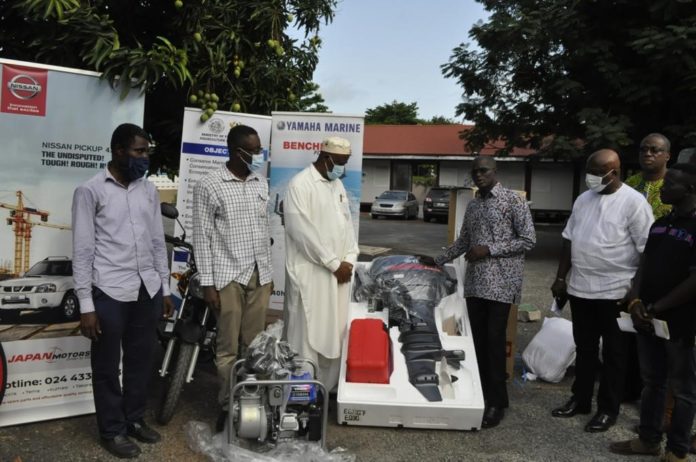
Japan Motors Trading Company Ltd (JMTC) has handed over a Yamaha Outboard Motor, Yamaha Water pumps, and Yamaha Motorcycles to the Ministry of Food and Agriculture (MOFA) towards the celebration of this year’s National Farmers Day.
Mr. Abdul-Somad Alhassan Musah, Assistant MD of Japan Motors was present at both the Ministry of Fisheries & Aquaculture Development and the Ministry of Agriculture to hand over the donation to the National Farmers Day Organizing Committee.
Handing over the donation, Mr. Abdul-Somad Alhassan Musah reiterated that the annual support towards the farmers’ day celebration was a key corporate social responsibility on the company’s calendar as a patriotic organization. “We deem it appropriate to support a national course especially considering how important agriculture is for economic development. This is why we have consistently donated towards the farmers’ day celebration”.
“We hope this donation, in particular, will spur farmers to increase their production and get the adequate raw materials to feed the factories and in the long run earn more foreign exchange for the country”.
Mr. Francis Kingsley Ato Codjoe, Deputy Minister of Fisheries and Aquaculture Development who received the Yamaha outboard motor, water pump, and Motorcycle donation on behalf of the Fisheries Ministry observed the consistency with which Japan Motors comes forth with the farmer’s day donations which he described as a clear demonstration of a faithful partner to the Ministry and farmers in Ghana.
The Chief Director at MOFA, Mr. RP Ankobiah received the MOFA donation of Yamaha water pumps and motorcycles.
He praised Japan Motors for the gesture. “As you are aware we are in an unusual time with the Covid-19 so many activities were affected as such we didn’t inform companies on time on the celebration. Japan Motors with its consistent attitude still managed to come as a trusted partner. We hope this will encourage the farmers to do more for the nation.” Source: thebftonline.com
The Food Sovereignty Platform (PSP) has expressed disappointment in the Registrar General’s Department, other governmental agencies for not embarking on a sensitisation exercise to stop the discussion of a proposed bill for farmers in Parliament.
According to the group, Parliament currently is discussing the passage of a Plant Variety Protection Bill 2020 which the group alleged was a rebranding of the previous Plant Breeders Bill they opposed in 2013.
Speaking at a press conference Tuesday, November 3, 2020, the Executive Director of Peasant Farmers Association of Ghana, Victoria Adongo said her team feels disappointed because the government has ignored them.
She emphasised that: “This press conference is to highlight our profound displeasure and sense of betrayal by key government institutions regarding the UPOV compliant Plant Breeders’ Bill currently before the legislative house under the guise of Variety Protection Bill awaiting parliamentary approval.”
She continued that “Our disappointment stems from the long history of our objection to the provisions of the Plant Breeders Bill way back in 2013. On Tuesday, November 11, 2014, the then Speaker of Parliament, Hon Edward Doe Adjaho brought the process to a halt for further consultations with all stakeholders before proceeding. This is was to enable the promoters of the bill to engage in wider consultations with stakeholders to ensure that the provisions of the bill are reflective of the collective goals of the populace and are not inimical to the plights of farmers and food security”.
Victoria Adongo averred that the government did not consult key stakeholders before presenting the bill to parliament.
She continued that her team, as it stands now have been left in the dark as they do not know the content of the bill being discussed on the floor of parliament.
Victoria Adongo also said the proposed Plant Variety Protection Bill 2020 lacks transparency.
“There were no further consultations since then until the ending of the 6th Parliament. It has therefore been our expectation that under the 7th parliament, the cabinet of the President Nana Addo Dankwa Akufo-Addo would encourage such consultations before presenting the bill to parliament but unfortunately, the process was bedeviled with lack of transparency, entrenched position, secrecy, and display of bad faith on the part of the Registrar General’s Department and the relevant bodies assigned to conduct what they called a sensitization exercise, resulting in the sneaking of the unknown bill to parliament for their speedy passage on the blind side of key stakeholders”.
She, therefore, called on Parliament to halt all proceedings until they consult all key stakeholders.
The nation’s agriculture sector has come of age and needs a regulatory authority to strategically streamline activities for economic growth, Anthony Morrison, Chief Executive Officer of the Chamber of Agribusiness Ghana, has said.
According to him, the authority must be akin to the National Petroleum Authority (NPA) or the National Communications Authority (NCA) and clothed with similar powers to enable it to harness the full potential of the sector.
Mr. Morrison, speaking to the B&FT ahead of the Ghana Economic Forum (GEF) to be held at Kempinski Gold Coast Hotel on November 9-10, explained that the authority, among other things, would be able to coordinate all agricultural research done by various institutions and plot a pragmatic vision for the sector backed by prudent timelines and well monitored.
According to data released by the Ghana Statistical Service (GSS), the agriculture sector was able to withstand shocks of the coronavirus pandemic and grew by 5.9 percent, whereas industry and services both grew at 5.7 percent in the third quarter of 2019, an indication that, even with the many challenges faced by stakeholders, the sector holds the greatest economic potential for the nation.
For Mr. Morrison, the sector has seen some massive development in recent times (Planting for Food and Jobs among others), but its growth could have been exponential if it was treated as a trade rather than a venture to assure food security.
He told the paper that the introduction of an authority to oversee the production, sales, and marketing of six major tree crops in the country (Crops Authority) is an action laudable but a limitation of the sector’s potential as there are many vested issues that go beyond the six crops to be regulated.
“We need to create the Ghana Agriculture Regulatory Authority, this has been long overdue. If you have this authority, you can now go ahead and create the Ghana Agriculture Information Management System. This can be used to coordinate the activities of all the research institutions connected to the Ministry of Food and Agriculture (MOFA).
Agriculture is now a trade: from the seed to the service, to the attraction of consultants, the chemicals, fertilizers, agro machinery, drones and sensors, technology, internet of things, everything that we do is a trade: it is money, no longer a hobby. We need to regulate farming, we need to regulate and make it a big industry and we need to regulate it to boost the economy,” Mr. Morrison said.
He added: “If we emphasize and concentrate on the agricultural sector, which has more than 10 million connected to it directly or indirectly, according to the MOFA facts and figures. What are we waiting for to regulate the industry properly?”
GEF 2020. The Ghana Economic Forum (GEF) is a gathering of Ghanaian business leaders to chart the path to economic prosperity. It is scheduled to take place on November 9 and 10, 2020 at the Kempinski Hotel, Gold Coast City, Accra. The event is on the theme: ‘Resetting the economy beyond COVID-19; Building economic resilience and self-sufficiency.’
It is designed to bring together over 500 local and international business leaders to dialogue and chart a clear path for Ghanaian businesses to hone the Ghanaian economy.
This year’s discussions will focus on several areas including energy, agriculture, entrepreneurship and innovation, banking and finance, and other areas crucial to the development of the economy of Ghana.
Source: thebftonline.com
The implementer of the Cocoa Life programme, Mondelez International, has introduced a new technology that seeks to help triple annual yields of cocoa production in Ghana.
To mitigate the effect of climate change on cocoa production in Ghana and help triple the country’s annual yield, a new technology designed to supply yearly continuous water to cocoa farmers has been introduced by Mondelez International, the implementer of the Cocoa Life Programme.
The technology, called the ‘Solar Powered Irrigation System’, is designed to mitigate the effects of climate change by supplying a consistent water supply throughout the year to over 70,000 cocoa farmers under the Cocoa Life Programme.
With this new technology, cocoa farmers will be able to produce throughout the seasons and will not have to wait for rainfall to determine their annual yields.
Speaking at the first pilot project launch of the new technology at Otwebediedua in the Eastern Region, the Head of Cocoa Life Programme in Ghana, Mrs. Yaa Peprah Amekudzi, said the new technology will ensure that cocoa trees get the litres of water needed for high yields throughout the year.
Why technology. Explaining why the new technology was introduced, she said cocoa farmers have over the years complained about the erratic and unpredictable rainfall that continues to affect cocoa production in the country.
As an organization committed to helping cocoa farmers benefit from their work, and also ensure the sustainability of cocoa production, we decided to undertake research on how other countries are able to generate enough water supply for their cocoa production,” Mrs. Amekudzi said.
The research, she emphasized, led to the discovery of the solar-powered irrigation system that has the capacity to supply more than 5,000 litres of water hourly depending on its size.
Mrs. Amekudzi said the irrigation technology’s pilot programme will cover 10 farms within the 6 regions Cocoa Life operates within.
” In all, we operate in 700 communities spread over 18 districts within six regions of Ghana. More than 70,000 cocoa farmers are under the Cocoa Life Programme,” she said.
Mrs. Amekudzi said since the inception of Cocoa Life as a cocoa sustainability programme in 2008, Mondelez International has “consistently worked with our partners, particularly cocoa farmers, to make cocoa production more efficient and sustainable”.
She reiterated Mondelez International’s commitment to continue supporting cocoa farmers to become businessmen and women, and ultimately improve their well-being.
Mrs. Amekudzi added that “With all the policies that Ghana COCOBOD is bringing out, supported by the private sector and cocoa farmers, Ghana can achieve one million metric tonnes of cocoa annually”.
She said next year a multi-million-dollar factory to process cocoa waste will be opened, adding that “this will further boost the cocoa sector in the country”.
Cocoa production. Technical aid and member of the research team at Mondelez International, Edward Kumah, said the introduction of solar irrigation technology will help mitigate the risks associated with climate change.
“When farmers purchase fertilizers and it doesn’t rain, it affects their productivity and ultimately their return on investment,” he said.
Mr. Kumah said Cocoa needs about 30 litres of water per day, and if the water requirements are achieved it will yield fruit throughout the year
The technology has three components: boreholes that serve as a water source; solar power generation; and drip-feeds for supplying the water to cocoa farms.
Farm owner. The farm owner, Mr. Francis Oko Lanquaye, described the new technology as efficient; indicating that since it was installed it has tripled annual cocoa production.
According to him, he used to experience water difficulties due to climate change, which affected his annual yield.
” With this new technology, I do not have to worry about adequate water to supply my cocoa produce,” Mr. Lanquaye said.
The Africa Centre for Energy Policy (ACEP), OXFAM, and the Friends of the Nation (FoN) has launched a campaign to ensure that adequate resources are allocated to the agriculture and education sectors to propel the country’s growth.
The campaign dubbed: “Promoting Sustained Funding for Agriculture and Education in Ghana” is to drum home the need for more of the oil fund to be infused into agriculture development, in particular, to enable the country to reduce importation.
It came out of research conducted on how the petroleum revenue was benefiting other sectors to the detriment of agriculture and education sectors.
Mr. Benjamin Boakye, the Executive Director of ACEP, said infusing more of the oil fund into agriculture would put more money in the pockets of farmers to reduce poverty.
He hinted that Ghana still lagged behind in terms of research, training, technology, and, therefore, urged the Ministry of Finance to critically pay attention to the agriculture sector.
Meanwhile, Ghana passed the Petroleum Management Act 2011 (Act 815) to provide the framework to manage petroleum revenues after commercial production began in 2010.
The Act prescribes the allocation of a portion of petroleum revenue to budgetary support through the Annual Budget Funding Amount.
Further, the Act requires the prioritization of a maximum of four areas for ABFA funding. The priority areas are relevant to maximize the rate of economic development and promote opportunities to ensure the well-being of all citizens.
Mr. Charles Gyamfi Ofori, who presented the research findings said achieving the objectives requires investments in the priority areas as oil revenues act as additional funds to existing development finance efforts for the government in those areas.
“For almost a decade, physical infrastructure and service delivery in education and agriculture modernization had featured as priority areas for ABFA allocation”, he said.
“While it is important to assess the impact of petroleum revenue on all the prioritized sectors that received petroleum revenue, this study focused on the education and agriculture sectors because these two sectors have the capacity to significantly contribute to economic diversification and provide human capital for economic growth”, Mr. Ofori said.
The African Union (AU), recognizing the importance of the agriculture sector to the economic development of its member states is committed to sustaining its growth and development through the Maputo Declaration in 2003.
The Declaration, among other decisions, directed governments to allocate at least 10 percent of expenditure to agriculture development.
Mr. Ofori said, additionally, African governments made a commitment to sustaining a minimum annual agriculture sector growth at six percent and on education, the United Nations (UN) adopted the Incheon Declaration in 2015 as a tool for ensuring inclusive and equitable quality education.
This Declaration requires governments to allocate at least four to six percent of Gross Domestic Product (GDP) and/or 15 to 20 percent of total public expenditure to education.
However, Mr. Ofori said government expenditure to agriculture and education, based on data under the Classification of Functions of Government (COFOG) from the Controller and Accountant General’s Department (CAGD), showed that Ghana had not been able to meet agriculture expenditure targets as outlined by the Comprehensive Africa Agriculture Development Programme (CAADP).
Contrary to reviews from the Ministry of Food and Agriculture, data from CAGD indicated that when actual COFOG measures were used, Ghana required an increase in efforts to meet the CAADP target of 10 percent of total government expenditure in the agriculture sector.
Mr. Ofori said the government had done well with education as the sector had met the minimum expenditure benchmark of 15 percent of total government expenditure and/or at least four percent of GDP, amidst persistent challenges.
For over a decade, government expenditure in education had surpassed the Incheon Declaration Benchmark of at least 15 percent of total expenditure.
“Education received much attention from the Annual Budget Funding Amount (ABFA) allocation than the agriculture sector”, he said.
On average, education had received about 90 percent of its planned ABFA expenditure between 2017 and 2019, compared to 33 percent for agriculture within the same period.
Mr. Ofori said the findings had exposed the need for increased petroleum revenue allocation to education and agriculture to address the challenges they faced.
He said the government must ensure that planned ABFA allocation to the two sectors is fully disbursed.
Just less than three years, a young farmer by the name, Kofi Darko who lives at Akrpong in the Eastern region decided to venture into farming. It was not an easy decision to make. Agriculture is generally regarded as a high-risk economic activity in Ghana. Financial institutions are reluctant to offer financial supports given the precariousness of the business.
“I went to different banks to apply for a loan, but all of them turned me down,’’ Mr. Darko, who is hoping to expand his five-acre pineapple farm subtly said.
The main reasons why the banks have been reluctant in lending to the agriculture sector include high-risk perception of the sector, lack of adequate risk management tools, and existential risks such as diseases, pests, and changes in climatic factors.
Smallholder pineapple farmers are predominantly located in the Central, Eastern, Greater Accra, and Volta regions in Ghana—the ecological zones known for growing the fruits but over the years lack the needed capital to produce on a commercial basis.
Most smallholder farmers living in rural communities have limited access to financial services like savings accounts. As a result, 36% of farmers in Ghana save their monies at home. According to GSMA, only 20% save their money in a bank and 28% save their monies on a mobile money wallet. Others save with village institutions, credit unions, and ‘susu’ (small personal savings) collectors.
Formal institutions like banks are unable to access this information to understand the economic activities of a farmer who is usually regarded as high risk. As a result, Farmers usually secure loans from other informal sources like friends, purchasing clerks (who are also usually farmers), money lenders who charge high interests rate.
“The banks usually informed me that my farming business, even though it looks promising, there is no guarantee that I can repay the loan. I felt that this is not right and even thought of changing my mind,’’ Darko emphasised.
“The banks do not help us because I think they have done some before, and the farmers have failed them, therefore as a farmer applying for a bank loan is usually unsuccessful. The local market is not reliable somehow—it can be that today pineapple sells at the cost of 2.50 cedis, the following week the price reduces to 1.50 cedis, so the bank looks at the fluctuations in prices and decides that if they give you money to do business, the farmer cannot pay back the loan,” says Mr. Emmanuel Appiah, a pineapple farmer and a beneficiary of the drone and precision agriculture project.
However, Emmanuel Appiah, farmer at Nsadwi in the Komenda-Edina-Eguafo-Abbrem (KEEA) district has now found immense hope in technology courtesy of drone and precision agriculture to transform his production level to a higher level. The Department of Agricultural Economics and Extension of the University of Cape Coast and partners are assisting smallholder farmers with relevant and real-time information on the pineapple production process required by farmers to produce varieties that are important for the market and in the most productive way.
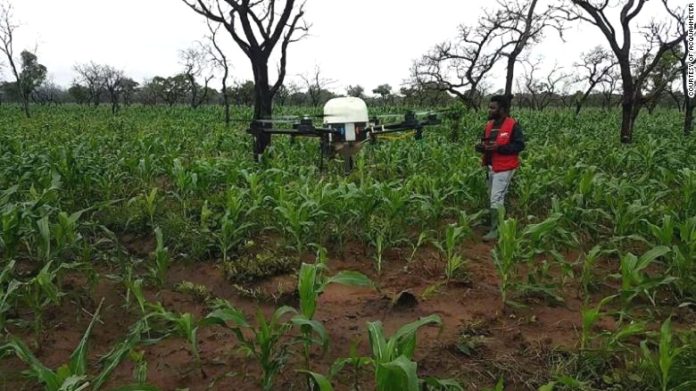
Drone technology is providing farmers with reliable information based on the farmers’ own land and crops’ requirements to optimize crop production, produce high-quality fruits, minimize production cost, and meet consumer preferences.
“Since I started the programme it has given me more knowledge. Two or three years ago, I had about two or three acres but now only this year, I have planted 6 acres of pineapples and looking forward to expanding even further,” Appiah mentioned.
“If I harvest 2000 fruits of a good size, I can get 3000 cedis and I use that to cater to my family and that is why I am expanding my farm this year,” he added.
The problem of marketing for Emmanuel Appiah’s pineapples has been addressed by the project, thus, the farmer now sells directly to HPW Fresh & Dry Ltd. located at Adeiso 70 km from the capital, Accra. The company is the largest producer of naturally dried mango, pineapple, and whole coconut in West Africa, processing over 20,000 tons of fresh fruit, exporting 2,000 tons of dried fruits.
Instead of relying on extension officer visits and low returns from informal pineapple traders, an information system has been established to link farmers to production and market information – and to each other. The system uses drones (small, unmanned aircraft) that provide feedback information on crop health, performance, and yield estimates and then relay this through a mobile phone platform linking farmers to extension agents, markets, and the university.
“Since we started to sell our product to HPW Fresh & Dry Ltd, I can say that it is far better than the local market. Since I started pineapple farming in 1990, what I get from the company HPW is higher than what I sold to the local market,” Appiah says.
According to him, the project has offered great knowledge in terms of record-keeping, plastic mulch, application of inputs, planting in rows, planting pineapples in intervals, all helping to increase the yield on his farm.
He said that the project has been a lifeline to their economic activity and helping farmers to have a decent living and eventually helping to cater for their households.
“Our pineapples are now directly sent to the market via HPW without any transportation difficulties. At first, we did not have any company to sell to and that created a lot of problems as the post-harvest loss is a concern, but now things are getting better since I have ready markets for my produce,” Mr. Nyame, at Nsadwir said.
“In the past, we did not know anything about nursing of pineapple but due to the project, we now do, and that is helping us to do the right things on the farm which will eventually improve the pineapple production in the long term,” he said.
“Currently, we have access to land for pure organic production of pineapples which will help us to get even more profits to promote our standard of living,” he stated.
He mentioned that since the project seeks to establish a factory, it will help the farmers to deal directly with the team and also not focus solely on pineapples production but also other fruits.
Mr. Zikiru Shaibu, a Ph.D. student who is working on the project said that the project has exposed farmers to market opportunities, therefore, if they should produce more of the pineapples, they would get more income.
“They are making more yields now, they are having good prices which means their income is increasing leading to increase of farm size, getting premium money to support themselves and their families, he said”
To Shaibu, the farmers’ knowledge development in terms of using the right agro-inputs like pesticides, fertilizer, how to use the application schedule, all these knowledge resources have improved. Now they have knowledge on some of the pineapple varieties we have, not only what they grow but new ones to adopt.
Sustainability of the project. Mr. Zikiru Shaibu is specializing in agricultural extension and ICT indicated that the project looks at not only focusing on pineapples production but the entire value chain from inputs, through production, processing, and then marketing, until it even reaches even the consumer.
The project off-take farmers’ products and sell them. We are establishing a processing plant for value addition. The processing plant is at the production stage and we are using drone technology, and mobile phones to enhance productivity. Sustainability wise things being put in place like machines, and other resources to continue with the project. After the project, we would still continue with the activities.
The project is designed in such a way that the farmers would be supported with some materials to establish their own farms so once the project ends, there would still be produced for the market.
Even though the government of Ghana’s new initiative—Planting for Food and Jobs seeks to contribute to the modernization of the agriculture sector, thereby leading to the structural transformation of the national economy through food security, employment opportunities, and reduced poverty, there are many challenges to agriculture, such as climate change, lack of access to input and markets accessibility; lack of basic infrastructure in rural areas, lack of extension services, and the lack of research and development facilities.
The major challenge with sustainability is the technology or inputs, like tractors. There are limited tractors in the central region and the farmers do not get access to them when needed. There are some simple tools that are not available in the country unless there is a collaboration with the Chinese to develop it for you.
Project in perspective
Most of the smallholder farmers producing pineapple variety named “Sugar Loaf” mainly sells at the local market and at low prices, leading to low income. The situation makes pineapple cultivation unattractive. Meeting the demands of the export market and agro-processing industries is one way for smallholders to increase their income level and improve their livelihoods.
The project is therefore using drones and precision agriculture to assist farmers in upscale their pineapple production.
“Aerial views and advice based on index maps generated using drone technology enabled them to be more effective and efficient in managing the farm and ensure improved plant growth and higher yields,” says the principal investigator, Festus Annor-Frempong.
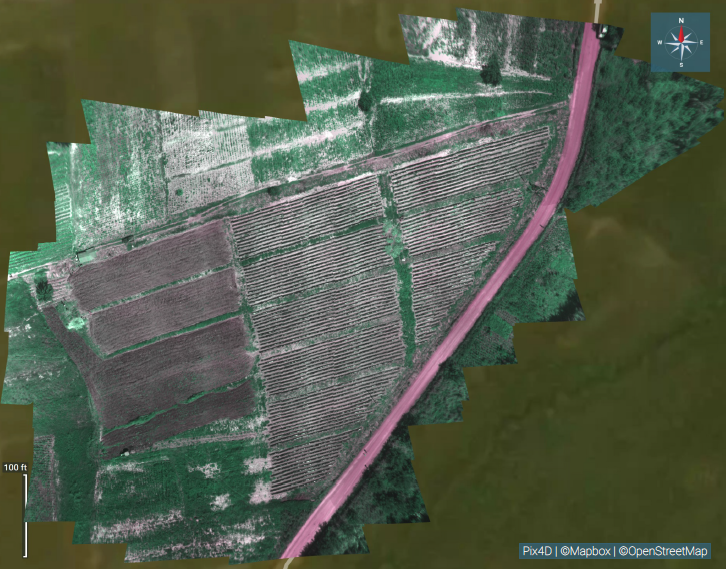
The drone, a Parrot Bluegrass, was used to map the demonstration plot and also captured initial relevant agronomic data of the crops on the field. The map enabled farmers to appreciate the shape and size of the demonstration plot.
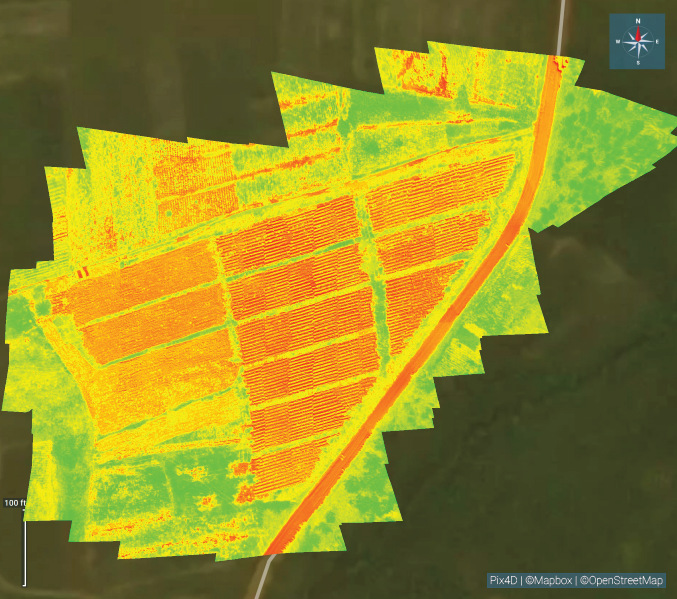
The sensors of the drone collect multispectral and Red, Green, Blue (RGB) imagery of the pineapple crops. The captured imagery was processed to generate index maps. These index maps showed the chlorophyll content of individual pineapple plants which were used to estimate the nutrient requirement of plants and provide recommended fertilizers to be applied by the farmers.
Improving farmers’ knowledge and situations. The project team measured the impact of drone technology on farmers’ livelihoods in terms of crop performance which is likely to generate more income and changes in competencies in pineapple production. The experience with farmers with respect to the management of the demonstration plot prompted the team to share knowledge on principles of precision agriculture with the farmers. Farmers learned about the type, quantity, and effect of various elements in a fertilizer and pesticide application, and the need to use these agrochemicals effectively and efficiently without causing harm to the environment.
RGB composite image of pineapple fields
NDVI index map of the same fields
From the RGB images and index maps developed using multispectral imagery, smallholder farmers were able to gain an enhanced bird’s eye view of the demonstration plot. The group discussions helped farmers to discover the relationship between land size and the crop density, land size, and the number of agrochemicals required, and the costs involved in the production of a particular area. The map from the drone technology demonstrated the importance of having clear plot boundaries to prevent conflicts and disputes with neighbours as well as optimization of land use. Hitherto, the traditional process of determining plot boundaries was not as precise, usually being orally transmitted, and depends on the location of natural boundaries such as trees and stumps.
Moreover, the map and size of the demonstration plot from the drone technology enabled farmers to plan various road paths, and the number of ridges to construct on the plot. The pineapple farmers proved to be knowledgeable and well informed in crop husbandry. Farmers were in the position to prepare the land properly to allow the soil to retain sufficient moisture for plant growth and used a bed height of about 20 centimeters with a breadth of one meter, and a length of 100 meters to improve drainage.
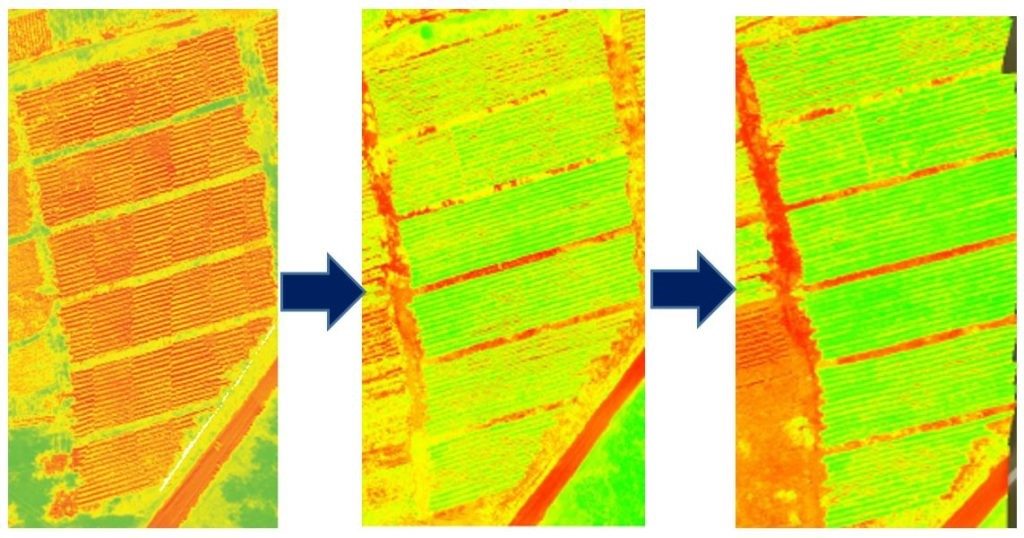
The Normalized Difference Vegetation Index (NDVI) maps showed significant changes in the growth of the pineapple plants months after the application of various agronomical practices. The applications were dependent on information from previously obtained NDVI index maps of the demonstration plots. Farmers subsequently planned on the appropriate and adequate usage of agrochemicals based on the colour bands of the NDVI index maps. The different colours on the map signify the health status of the pineapple. For instance, the red colour shows poor-performing crops, yellow coloration shows an intermediate performance, and green colour shows healthy crops and better (expected) yields.
The farmers understand that the red areas on the index map need more attention when applying fertilisers or pesticides. The use of agrochemicals in this way became demand-driven and characterized by location and specific application. Farmers anticipate high yield from the demonstration field as the time sequence of index maps demonstrate a positive change in pineapple growth in response to geo-located crop husbandry practices applied by the farmers.
Precision farming advisory based on drone technology has brought about an improvement in land use and crop performance. More importantly, farmers have developed specific skills and acquired knowledge of innovative technologies for agriculture. For them, it has not necessarily become easier to grow pineapples, but the field’s productivity has improved thanks to acting based on real-time drone-tech generated advice. This confirms that at least in some aspects, drone technology could improve the livelihoods of smallholder pineapple farmers.
“It is a great opportunity given to KEEA farmers to explore as far as modernization of agriculture is concerned. Times and trends are changing and the earlier you adapt to the change, the better for your development. Today, there are a lot of modern techniques ….You require up-to-date information….. I wouldn’t need to pick a vehicle to deliver information to you, today, mobile phones have come to save this great deal. We can now exchange information with ease,” says the Ministry of Food and Agriculture (MoFA) Director for KEEA, Mrs. Victoria Dansoa Abankwa.
The project is led by the Department of Agricultural Economics and Extension of the University of Cape Coast, with the support of the Technical Centre for Agricultural and Rural Cooperation ACP-EU (CTA), the MasterCard Foundation, and the Regional Universities Forum for Capacity Building in Agriculture (RUFORUM). The project started in 2018 and ends in 2021.
This story was produced as part of the Africa 21 Media and Journalism in Africa Days 2020: Climate change in anglophone Africa