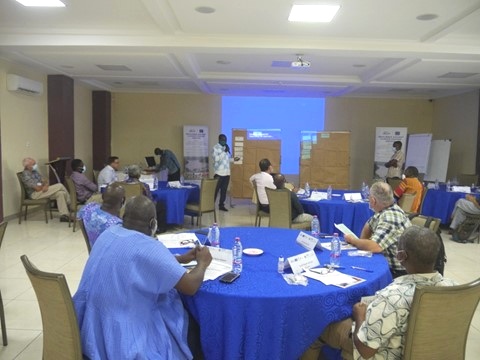
Stakeholders in Conservation Agriculture (CA) held discussions at a two-day summit in Accra, to develop a consolidated Manual for CA in Ghana. The engagement, funded by the European Union’s Resilience Against Climate Change (REACH) Project, aimed to review the myriad of existing CA manuals in Ghana to develop a standardized one that serves as a one-stop reference document for stakeholders.
Conservation Agriculture is a sustainable approach to agricultural production which aims to protect soil from erosion and degradation, improve its quality and biodiversity, and contribute to the preservation of natural resources, water, and air, whilst improving yields. CA is based on three core principles: minimum soil disturbance, maintenance of permanent soil cover, and use of crop rotations with a diversity of crop species.
The development of a consolidated CA manual is in line with component 2 of the REACH Project implemented by GIZ, which among other things would seek to ensure climate-smart livelihoods by promoting CA at the institutional, communal, and individual level.
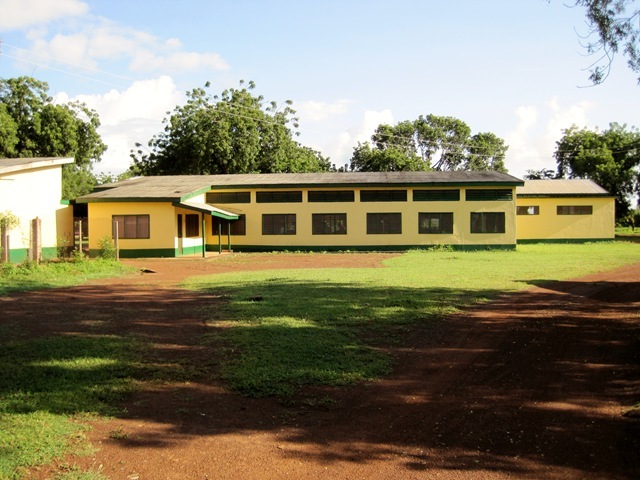
The manual will then form the basis for the design of a curriculum for training agricultural extension workers at the Damongo Agricultural College. Such a course is foreseen to be replicated in other educational and training institutions in the country. This would strengthen the extension services for farmer training in conservation agriculture in the face of a changing and variable climate, particularly in the Northwest.
The CA discussion summit brought together stakeholders from Government Institutions, Development Partners, Non-Governmental Organizations, Research Institutions, and Academia to build consensus on the concept, structure, content, and chapters of the manual. This follows the formulation of a draft concept and chapters after collecting data on already existing manuals and documents on Conservation Agriculture.
In a welcoming speech, the Team Leader for the Project, Florian Winckler stated that “the EU-REACH project is happy to contribute to government’s efforts aimed at developing the agricultural sector especially in light of the looming climate change issues. The development of the consolidated CA manual for Ghana will be beneficial to all stakeholders, especially in the agricultural sector”.
“The REACH Project takes a keen interest in the improvement of the livelihoods of the rural people who largely depend on agriculture and most importantly through climate-smart practices…” Mr. Winckler added.
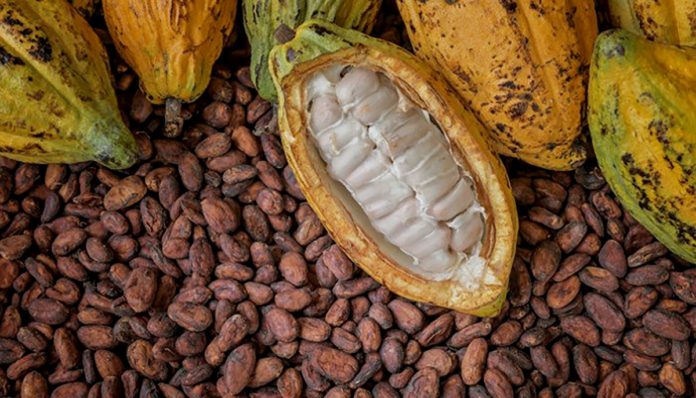
Ghana and Cote d’Ivoire have set their price tag for cocoa to counter unfair trade in the international market.
To overcome control by multinational foreign companies, the two countries partnered in 2019 and agreed on a new market price for cocoa at US$2,600 per tonne, with a living income differential of US$ 400 per tonne should price drop.
EcoCare Co-founder and Managing Campaigner in West Africa, Obed Owusu-Addai, said despite the countries contributing to the global market, cocoa farmers still live under the poverty line.
“The partnership of the two countries intends to protect and safeguard the welfare of cocoa farmers by guaranteeing them a fair price for their cocoa beans,” Owusu-Addai said at the ongoing Fourth African Conference of Science Journalists.
He said farmers get three percent of the cocoa and chocolate earnings. As a source of livelihood in West Africa, cocoa – a large bean-shaped fruit from the chocolate tree – has health benefits that include improved cholesterol and blood sugar level, and reduced inflammation.
It is also used as a chocolate flavor in foods. Owusu-Addai said processors, supermarkets, marketing companies, and manufacturers earn 73 percent of the revenue, leaving the farmers that grow the crop on two to five acres of land with almost nothing.
He said at a virtual conference that although the multibillion industry was benefiting from the trade, they were against paying extra amounts to avoid incurring additional costs.
The activist said through a lobby, the World Cocoa Foundation, and the international buyers sought to avoid the new prices through excuses of sustainability programmes.
He said the two countries threatened to cancel all sustainability programmes if the buyers refuse to pay the US $400 living income differential per tonne of cocoa beans.
Owusu-Addai said Cote d’Ivoire and Ghana are the current major exporters of raw cocoa to the European Union market, contributing to 74 percent of production in Africa.
The Ivoirians produce 54 percent and the Ghanaians 20 percent of the exports. “The major importers are the Netherlands, United States of America, Germany, and Belgium who consume cocoa from small-scale farmers and large-scale plantations,” he said.
In 2019, the cocoa market injected US$12.1 billion into the economies of Ghana and Cote d’Ivoire, while the chocolate market generated over US$ 130.7 billion.
The farmers in Cote d’Ivoire benefited from a 21 percent increase in farm gate prices by the government.
“Before 2016, the farm gate prices dropped drastically due to international prices control,” said Owusu-Addai. In Ghana, the government had capped prices at GH515 per 64kg bag for a continuous four years in the same period. “But with the new partnership and agreement, the prices in Ghana rose to GH660 (USD113) per bag, that is a 28 percent increment,” said Owusu- Addai.
He said the countries’ initiative to regulate prices through a partnership can be replicated in other African countries that trade in commercial export crops such as coffee in the East African region. “For success to regulate prices in the European Union, mutual trade partnership is the proven way to go,” he said.
Story by: Bozo Jenje Bozo and Nana Yaw Reuben Jnr.
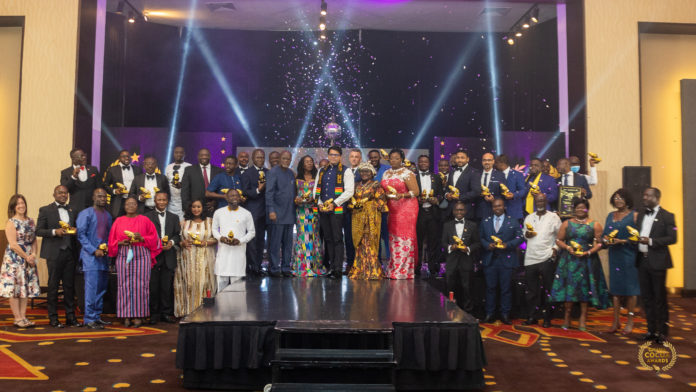
The 42 Award winners of the 2nd Ghana Cocoa Awards.
Cocoa is the chief agricultural export of Ghana and Ghana’s main cash crop. Ghana is the second-largest cocoa exporter in the world.
Ghana’s economy largely depends on agriculture which accounts for nearly 30 percent of GDP and about 60 percent of all employment of which cocoa contributes to about 10 percent of agricultural GDP. Of this immense contribution from the sector to the economy that the Cocoa Post has organized the 2nd maiden Ghana Cocoa Awards Night to honor the true heroes behind Ghana’s economic backbone.
Speaking at the prestigious event, Nana Ehunabobrim Prah Agyensaim IV, the King of Assin Owirenkyi Traditional Area, and the Chairman for the event welcomed the distinguished guests and called for patronizing and promoting cocoa by consuming a cocoa drink at the government institutions instead of tea and coffee.
Nana Ehunabobrim Prah Agyensaim IV urged Ghanaians to promote cocoa consumption to serves as an incentive to the pioneers in the cocoa sector. “To be a pioneer is paid for, and when we leave this event we should ensure that this God-giving product is actually promoted by us by ensuring consumption of cocoa products”, Nana said.
“We all know cocoa was born here and raised for the world but brazing this socialization process, are you part of the solution or part of the problem?”, he quizzed. He entreated all to support and form part of the solution to promote the cocoa sector.
Adding to the promotion and consumption of cocoa, the Chief Executive Officer of Ghana Cocoa Board, Hon. Joseph Boahen Aidoo said Ghana produces cocoa beans but a lot of Ghanaians do not take cocoa products. “When you go for functions, I am sure a lot of you would have taken tea or coffee already, you don’t ask for cocoa. When there are functions, there are tea and coffee breaks but hardly do you see cocoa break”, Hon. Boahen Aidoo echoed.
He explained the nutritional benefits of cocoa beans and the need to engage cocoa in our daily meal, “cocoa is a very important crop that we know very little about, essentially, cocoa has anti-aging properties, thus antioxidants which prevent diabetes, cancer and protect the body from all manner of cardiovascular diseases”.
Hon. Boahen Aidoo assured that the current administration of the Ghana Cocoa Board in few years to come would make it possible for cocoa to be the main food on every Ghanaian child’s table. He counseled both the young individuals and the old to patronize the chocolate that has a high concentration of cocoa for its benefits.
With its financial benefits, Hon. decried of the copious amount of revenue in the industry, yet Ghana and Cote d’Ivoire that produce about 60 percent of cocoa beans for the world gain marginal income from it. “When you look at the cocoa value chain is worth more than $100 billion and Ghana and Cote d’Ivoire are producing around 60 percent of world cocoa beans, meanwhile, the two countries together earn less than 5 percent out of $100 billion”, he bemoaned.
The actual worth of cocoa is found not in the primary sector of production he said, but at the secondary and tertiary levels of production. He beseeched the sector players and the stakeholders to add value to the cocoa beans to amass the worth that the industry presents.
To harness the cocoa industry for economic resiliency, Mr. Yofi Grant, the CEO of Ghana Investment Promotion Centre (GIPC) said the government has instituted a plan to protect the farmers by implementing certain policies including Cocoa Stabilization Plan Policy, and Free Fertilizer Distribution Policy. These policies are expected to improve the low income of farmers and eventually affect the farmers’ lives more positively than before.
Speaking at the event, Mr. Yofi Grant said Ghana would no longer become a mere producer and exporter of cocoa beans instead, there are policies geared towards the processing of cocoa would be championed. “The government would be engaged in finance and corporative system with a capital outfit as it has begun since cocoa was here, provision of support services to the cocoa sector, cocoa haulage, warehousing and partnership with the existing local processing companies for value addition to our cocoa beans”, he submitted.
According to him, the GIPC mandate is to market the cocoa products such as cocoa shower gel, shea butter, soaps as well as cocoa gin and brandy along the supply chain.
Mr. Kojo Hayford, founder of the Ghana Cocoa Awards thanked the invited guests for honoring the invitation to be part of the special occasion. He mentioned that the awards are basically in recognition of the individual as well as the collective roles played towards the sustenance of the cocoa sector in Ghana over the years.
“The Ghana Cocoa Awards was instituted as against the background that Ghana’s niche as the producer of premium quality cocoa would not have been possible without the critical roles of various stakeholders (like your good selves) play to keep the value chain unbroken”, he voiced.
He expressed his profound gratitude to the stakeholders who worked tirelessly to support the government’s effort amid the pandemic. “We appreciate the difficulties the global community has faced due to the ramifications of this Pandemic. However, amidst the far-reaching effects of COVID-19, you have not let the cocoa sector down. Some of you supported the government’s efforts at containing the disease and we are proud of you. A lot of you donated to support COCOBOD’s efforts at protecting our gallant cocoa farmers from contracting the virus”, he expressed.
The Ghana Cocoa Awards 2020 awarded 42 distinguished stakeholders (comprising 30 competitive and 12 honorary awards) who, regardless of the COVID-19 Pandemic, held the value chain uninterrupted at the Kempinski Hotel, Accra.
The advent of the African Continental Free Trade Area (AFCFTA) tends to produce wholesome foods which in turn might increase the price of foods. Thanks to the development of AFCTA Ghanaians are most likely to buy farm produce at exorbitant prices.
This was divulged during the Ghana Economic Forum 2020 with the theme: Resetting the Economy Beyond COVID-19; Building Economic Resilience and Self-sufficiency at Kempinski Hotel, Accra.
On the break-out session, experts from all walks of discipline namely academia, agribusiness, financial institution, and consultancy deliberated on the topic; building sustainable agro-economic models for Ghana’s self-sufficiency, Mr. Robert Dovlo, CEO of REEL consult said that Ghanaians must prepare to pay a higher price for food commodities.
According to Mr. Dovlo, to build a sustainable agro-economy, the advent of AFCFTA requires Ghanaians to protect the agribusiness sector since it is one of the models of paying relatively expensive prices for food commodities to enhance quality and to upscale production in order to compete with other African countries.
“AFCFTA is a good opportunity to revamp our economy but we must be prepared to pay higher prices for our food commodities because our producers would have to upscale production, and add value to their products to meet the competitive market. As such it would underline agribusiness’ growing reputation for resilience and once again demonstrates its effectiveness at the AFCFTA”, he underscored.
The CEO of the Chamber of Agribusiness Ghana, Mr. Anthony Morrison added that Ghanaians must be prepared to pay a higher amount of money to purchase food commodities to leverage on production with competitors in terms of quality goods.
He expounded the need for Ghana to mitigate selling its raw materials and do value addition to its raw products for higher income. “As a country, we cannot survive the AFCFTA with other African countries by continuing selling our raw materials, we need to do value addition to our products to meet continental standards”, he said.
Withal, he said Ghana imports about 70% of human resources to the sector which makes production costly. The high cost of agricultural experts from other countries he added drains farmers’ resources leaving them with nothing at the end of production. Therefore, to ensure sustainability and economic self-sufficient Ghanaians should prepare to pay high for food.
The District Chief Executive (DCE) of Shai Osudoku, Hon. Daniel Teye Akuffo has lamented the rate at which real estate developers are taking over greenbelt lands earmarked for agriculture purposes.
The issue, he said, needed policy intervention by the government with support from the chiefs and opinion leaders in the District to preserve the greenbelt for its intended purposes.
He said if care was not taken the future of agriculture would be bleak due to the practice.
Mr. Akuffo said this during the 36th National Farmers Day on the theme: “Ensuring Agribusiness Development under Covid-19: Challenges and Opportunities” at Kadjanya in the Osudoku District of the Greater Accra Region.
Mr. Akuffo said data from the Food and Agriculture Organisation indicated that over 78 percent of the world food needs were met by small scale farmers.
For this reason, he said, investing in agriculture is one of the most effective strategies for modeling a resilient economy by ensuring food security and employment.
He said lessons should be learned from the droughts from 1982 to 1983, coupled with the devastating effects of bushfires in 1984, which reduced agricultural yield drastically, resulting in famine.
“This is enough reason for us as a nation or district to refocus our energies on formulating better agricultural policies,” he said.
“It is, therefore, noteworthy to commend the visionary leadership and good policies of President Nana Addo Dankwa Akuffo for launching a number of unprecedented agricultural sector support initiatives aimed at modernizing agriculture and creating gainful employment for the citizens.”
He said the strategic location of the District, which had the benefit of the Kpong Irrigation Scheme, had 3,136 hectares of land for banana and rice cultivation.
He said the Assembly, in collaboration with the people of Atrobinya in the Eastern Region, established 15 hectares of coconut plantation and another 15 hectares of Mahogany and Acacia at Kordiabe with a total of 126 farmers under the Ghana Productive Safety Net Project.
Mr. Jonathan Nartey, the Director of Agriculture, said the Department of Agriculture, in its drive to reach more farmers, intensified the strategy of developing farmer-based Organizations (FBOs) and had, therefore, instituted the best FBO special award.
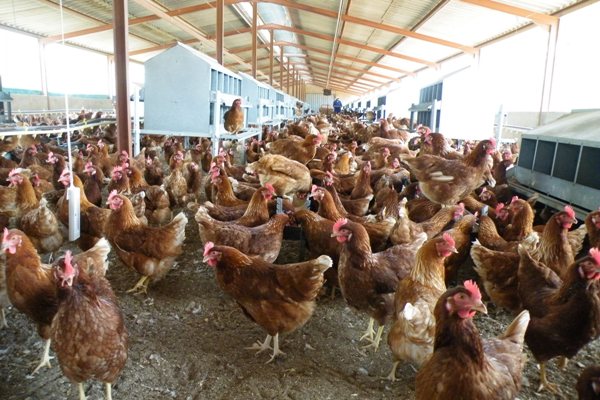
Ghana has banned poultry imports from the Netherlands, Germany, Russia, and Denmark over bird flu.
The government has temporarily banned the importation of domestic birds as well as their products from the Netherlands, Germany, Russia, Denmark and the United Kingdom with immediate effect.
This came following the outbreak of highly pathogenic Avian Influenza subtype H5N8 from these European countries.
A Press Statement issued by the Acting Chief Director of the Ministry of Agric, Robert P. Ankobiah said: “Importers are to note that all importation permits that were issued for such consignment from the Netherlands, Germany, Russia, Denmark, and the United Kingdom have been rendered invalid with immediate effect.”
The ministry stressed that day-old chicks, hatching eggs, frozen chicken, poultry products, and poultry feeds have all been affected by the ban.
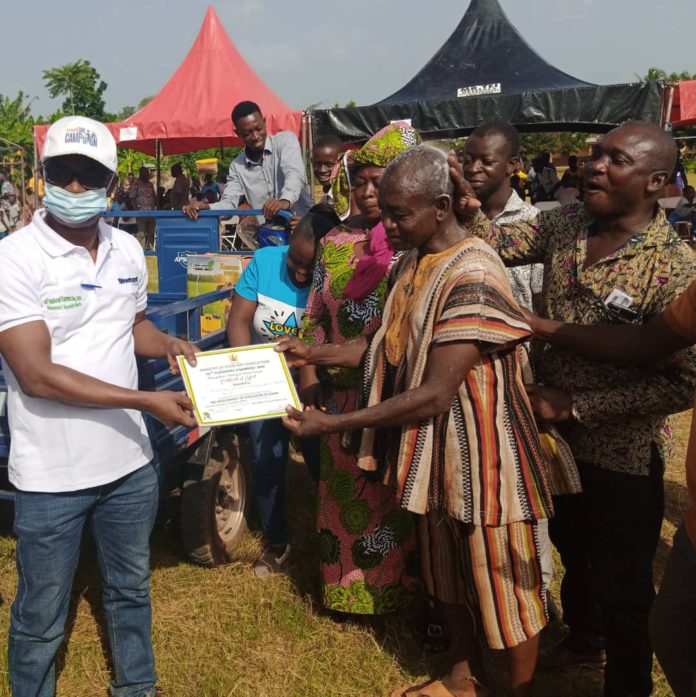
Hon. Yaw Osei Boahen, presenting an award to the Overall Youth Best Farmer at the municipality.
The Municipal Chief Executive for Asunafo North Municipal Assembly, Hon. Yaw Osei Boahen has urged the youth to exhibit a strong feeling for agriculture. He made this statement during the 36th Farmers’ Day Celebration with the theme “ENSURING AGRIBUSINESS DEVELOPMENT UNDER COVID 19 OPPORTUNITIES AND CHALLENGES” at PomaaKrom, a conurbation in the Asunafo North Municipality of the Ahafo Region.
“Farming plays a pivotal role in our national development, more importantly, the survival of every individual relies on the gallant farmers who sweat each day to provide food on our table”, he said.
Addressing the media, Hon. Boahen stated that over the years the youth have not been engaged in farming due to some numerous reasons which are best known to them.
“There is some erroneous perception that farming is a punishment therefore, it is not prudent to involve in farming, particularly the elite”, he stated. He encouraged the youth to rise from their slumber and partake in farming activities but should not rely only on white colour jobs. He stressed that farming is very critical in accelerating the growth and development of this country.
He used this great opportunity as a voluminous conduit and commended H. E. Nana Addo Dankwa Akufo-Addo, the president of the Republic of Ghana for the implementation of numerous farming policies and programmes.
“The Planting for Food and Jobs has made farming very attractive, created jobs, and brought relief to the teaming youth. The Rearing for Food and Jobs has also motivated thousands of youth who are now into livestock farming. Cocoa Pollination has added a significant value to Cocoa farming and created employment for the youth, he added.
Officers from the Ghana National Fire Service educated the congregants on how to curb bush fire in a drama, particularly during the dry season. The drama also taught the general public not to use Candlelight and Insecticide Spray at the same time because it could easily cause a fire outbreak.
The best youth farmer, best animal farmer, best crop farmer, etc
Mr. Bernard Donkor, a native of Mim who emerged as the 2020 overall best farmer for the Municipality called on the Government of Ghana to intensify the support to farmers. He eulogized the president for the increment of Cocoa price.
“There is no need for a crop authority, Ghana just needs an agriculture regulatory authority and put all other government quangos underneath and get the Ministry of Food and Agriculture to concentrate on policy formulation and policy implementation like the Ministry of Energy is doing now”, Chief Executive Officer of the Ghana Chamber of Agribusiness Anthony Morrison has said.
President Nana Addo Dankwa Akufo-Addo had earlier in September inaugurated the Tree Crops Development Authority with a focus to develop seven tree crops, namely mango, cashew, shea, rubber, cocoa, palm, and coffee and the consequential benefits to be accrued to the country.
The Authority, which operates like COCOBOD, and puts in place policies and programmes to guide research, production, pricing, and marketing the selected tree crops.
However, according to Mr. Morrison, the multiplicity of these authorities has only brought power play into the sector and is “now dissipating the front of farmers from being strong and robust”.
He maintained that with a good measure of internally generated funds flowing in, what Ghana needs to do is to develop a comprehensive national policy on agriculture that will serve as a blueprint.
He is of the view that “the blueprint must be focused on technology adoption; where the financier understands the blueprint. What is our model? We don’t have it? So, there is no actual blueprint out there and the National Development Planning Commission should be involving the private sector to understand what the blueprint is all about for the agricultural sector”.
He bemoaned the abundance of obsolete data and the absence of data in some cases and called for a centralized, robust, and timely data system to be created to improve policy formulation and implementation.
“What informs us? When you look at most of the proposals that we put out there, some of the data are as far back as 1997, 1983, 1973, and 1973 data. Data as old as 10 years when other countries are using data that is as new as 3 months, 6 months or 12 months,” he lamented.
He called for cross-sectoral collaborations, capacity building, strategy, advocacy, and a deep intelligent system to boost the gains in the sector while encouraging duty bearers to work towards establishing a national seed bank.
“For me, it is about the seed economy. Do we have control of what we plant? If we don’t, then what we eat, you do not have control over.”
The recently released 2017/2018 census on agriculture revealed that about 87 of agricultural holders have either basic education or no formal education.
This, according to the Ghana Statistical Service precludes them from appreciating the technology required to drive a productive agricultural sector.
But reacting to the agric census results, the Agribusiness Chamber boss said “the worst is that, that over 80 percent are above the age of 65 and that puts Ghana in a very serious problem in the next two to three years”.
“That’s not even my worry. My worry is youth in agriculture today are not more and the people producing for this country today, are above the age of sixty-five. Look at all our national best farmers, how many of them fall below the age of fifty or forty? That should tell you the situation. I am telling you, food security will be a problem.
“Over 80 percent of agriculture belongs to foreigners in this country. Are you aware?” a worried Morrison asked.
“Going into a year of AfCFTA where we begin to look at whether or not we are on the global stage or we are still far away from where a lot of the countries are. This is the time to look at it.”
The Chamber of Aquaculture (COA) Ghana salutes all Farmers on the 36th edition of National Farmers Day. The COA acknowledges the resilience of Farmers, especially during the COVID-19 pandemic. The role of Farmers in an agrarian nation like Ghana cannot be overemphasized. During the COVID-19 lockdown, our Farmers (both peasant and commercial) rose to the occasion to provide the nutritional needs of our dear nation despite the countless challenges they are confronted with daily.
The Chamber would like to assure our esteemed Farmers that it would continue to present research, facts, and policy preferences to persuade the government and other stakeholders into action. The Advent of the African Continental Free Trade Area (AfCTA) calls for greater efficiency in production and collaboration between industry players. To this effect, we will continue to advocate for more sustainable production practices and the adoption of modern methods of aquaculture through our partnerships with businesses, academia, host communities of fish farms, and relevant state agencies.
Considering the negative impact of unsustainable farming practices on the aquaculture sector, we would like to call on the government to ensure that businesses in the aquaculture sector are properly regulated. We would also like to challenge the government to ensure equity in the distribution of resources to the farming fraternity. The aquaculture sector has been neglected on many occasions when it comes to the distribution of resources. Indeed, the aquaculture sector holds the key to the dwindling fisheries sector. Finally, the Chamber would like to say a big thank you to all individuals and organizations that in diverse ways support the aquaculture sector in Ghana.
Long live Ghana! Long Live Our Able Hardworking Farmers of Ghana!
Agriculture has proven to be the oldest and greatest back-bone to the economic development of Ghana. Undoubtedly, it is still the power-house of the country’s development. With the enormous contributions from the sector, past and current governments continue to draft and implement policies to help advance the sector’s role in the development of Ghana’s economy.
The sector’s contribution saw the establishment of Agricultural training colleges to train the frontline staff to man the dissemination of modern agricultural technologies to farmers to boost production in the country.
After the establishment of the agricultural colleges notably; Kwadaso and Ejura in the Ashanti Region, Damongo in the Savannah region, Animal Health and Production College, Pong-Tamale, Northern region and the Ohawu Agricultural College in the Volta region. These institutions have trained various categories of agriculture frontline staff in the agricultural development of Ghana. But the journey of training these staff for the sector has had its bit of challenges in realising the full purpose it was instituted.
To begin, Ohawu and Ejura colleges were established on the mandate to train young persons in the field of agriculture engineering, Kwadaso and Damongo for crops production training, and Pong at Tamale to train certified veterinary officers for the agriculture sector but the story behind the establishment is not the same as the story has changed with lack of infrastructure riding on the shoulders of these institutions.
To shorten the story, it responds to the position of resourcing the Agriculture College to adequately deliver their mandate rather than upgrading them into fully-fledged universities in Ghana.
In separate articles with stories from political parties manifestoes and promises notably from the camp of the National Democratic Party (NDC) and the New Patriotic Party (NPP) in their rallies to canvass vote in the December 7 general election, they come with the various political gimmicks to upgrade the Ohawu Agricultural College into the University of Agriculture and Agribusiness, the Animal Health, and Production College, Pong-Tamale into the University of Agriculture with focus on veterinary sciences. I called all these promises, “a vote to canvass stories from the electoral areas where the institutions are situated”.
The NDC as captured on page 40.6.9.7 b of the “The people’s Manifesto” has it to upgrade the famous OHAWU Agricultural College into a degree-awarding institution and would be named the University of Agriculture and Agribusiness if it wins the 2020 general elections. “The purpose of the upgrade and the establishment of the university are mainly to ensure that a lot of value is added to agriculture produce in the country”, said NDC”.
On the other, the Vice President of the Republic, Dr. Mohamadu Bawumia from the NPP government said to the chief and his subjects of Savelugu where the Animal Health and Production is situated that the college would be upgraded into a fully-fledged university when the NPP is given the second term at the office. As quoted from the VEEP’s speech delivered and sighted at graphic.com.gh, he said that the area where the college is located in an agrarian community and there is the need to upgrade the college to serve the inhabitants well… hmmm.
In a welcoming address to the President Nana Addo Danquah Akuffo-Addo during his visit to the Afife Traditional Council in Afife in the Volta Region, the paramount chief, Torgbui Adrakpannya VI reiterated the call and the need to upgrade the Ohawu Agriculture College within the traditional council into a fully-fledged university of agriculture.
“Upgrading the college into university would enhance the training of students to provide the needed human resource based in the agriculture sector, increase production, value addition to the farm produce, and sustain the interest of the youth in agriculture”, Torgbui Adrakpanya VI echoed.
All parties have good intentions for the agriculture sector but as a young agriculturist, the question I have been asking myself silently is that “what the various agriculture colleges in Ghana need to deliver its core mandate?”, my position is NO and I believe graduates of the various colleges would second my opinion. The agriculture colleges in the country have been neglected to the core and this has affected its mandate to deliver although it continues to trained staff to man the agriculture extension unit of the Ministry of Food and Agriculture.
The colleges are swimming in the pool of lack of infrastructure and other basic learning and training essentials. This is making the agriculture college system unattractive to recent second cycle school leavers which cause a sink to the good history of the institutions.
I would like to highlight some of the key challenges facing the various agriculture colleges and suggestions of remedies to salvage the sinking name of agriculture colleges in Ghana. • Inadequate lecture: The agriculture colleges’ curriculum is a blend of field and classroom learning sessions but most of the colleges have inadequate classrooms to host learning sessions. In a situation where there are classrooms, the number of students is always above the capacity of the rooms. This is affecting the teaching and learning process at the colleges. Some lecture halls are without fans and proper lighting systems to aid learning. For instance, a lecture hall of Ohawu Agriculture College that was built for a thirty (30) students sitting capacity now accommodating over fifty (50) students, and this is a great hindrance to the training of this frontline staff at the Ministry of Food and Agriculture. It is important to construct more lecture halls to accommodate students for classroom sessions in the colleges. • Lack of transportation facility: transportation systems in the various colleges are very poor and nothing good can be documented out of it. Agriculture studies are a blend of field and classroom learning and due to lack of transport, the means to commute from the campuses for fieldwork continue to impede the practical knowledge that students could have. To visit the field for practical knowledge sessions students have to pay and hire commercial buses to aid their studies on the field. Across the various colleges, all the buses on the campuses are grounded and not roadworthy to convey students off campuses. The provision of reliable transport systems can make a sound impact on the training life of trainees in the colleges. A big thanks to the Canadian government for donating buses to the various colleges to ease the difficulty in student transport. • Inadequate residential facilities: accommodation is a huge problem in various colleges. The existing dormitories in the colleges were built to accommodate less than fifty (50) students but the situation is not as it supposed to be as the dormitories accommodate over seventy (70) students creating congestion. It is always my prayer that no communicable disease breaks out on the campus as both students, teaching, and non-teaching staff could be affected. It is important to begin building projects to salvage the lack the accommodation situations in the colleges. • Lack of laboratories for practical lessons – agriculture is a science and learning science is facilitated by practical experiments but that is not the stories in the agriculture colleges. There are no laboratories for practical training and where there is a laboratory it is under-resourced to execute its duty. Everything in the colleges which are supposed to be practical is currently theoretical. This is affecting the inculcation of the deep understanding of the subject matter to the trainees. A college where chemistry, physics, soil science, and home science are learned with imaginations is the Agriculture College. Resource existing laboratories in the colleges and building of new ones where necessary is very important for the development of the students. • Lack of agriculture machinery: the various colleges are the avenues for the trainees to gain basic skills in the operations of farm machinery and implements such as tractors, power tillers, tricycles, and other simple farm machines, but none of the colleges can boost functional farm machines for the training of students. All machines on the campuses are grounded and in a situation where machine services are needed private service providers have to be engaged of which is a dent in the college mission. A set of essential implements should be supplied to the colleges to aid in their practical training acquisition. This can help reduce the discouraging “manpi” – man labour use on the campuses. • Lack of basic needs: basic needs like potable water and regular source of energy continue to be a problem riding on the success of the agriculture college training. Ohawu Agriculture College in particular lacks access to potable water for domestic use by the students. The only source of water is from the Vume Dam which is not well treated for human consumption. On energy, in a situation where the national power grid goes off the whole college would be in total darkness since there is no alternative power source. There is an inadequate human resource to aid the training of students in the various colleges. • Lack of infirmary: none of the agriculture colleges has a sickbay that seeks the welfare of the populated trainees when an ill-health condition occurs. The whole community access healthcare needs from the neighbouring towns which affect better health delivering especially in the colleges in remote locations like Ohawu. Mini sick bays can be situated in the various campuses to enhance better healthcare for the college communities.
In an attempt to upgrade the Ohawu Agriculture College, as a product from the institution, I suggest that the various challenges hindering the conduct of skill training should be discussed and addressed to enhance favourable conditions for teaching and learning. The college is situated in close proximity to the defunct Crop and Soil Research Institute under the Council for Scientific and Industrial Research (CSIR) and the location of the Vume Dam which all provides an environment and potentials to make the college superior in the areas of field crop production, soil research activities, and irrigation facilities for economic gains to the college.
Ohawu Agricultural College needs resources to its full capacity in all areas that will make learning and training attractive to the second cycle school leavers and to live its core value and mandate.
I am of the view that the various colleges should not be upgraded to full-fledged universities from a political point of view but should be adequately resourced to deliver the mandate of training skillful frontline staff for the Ministry of Food and Agriculture and agriculture sector of Ghana.
There are much-unexploited potentials of the colleges and as a nation, we must avoid the cost of going to secure a loan to upgrade an institution that already has the ability to develop when well resourced.
My humble plea!
Long Live OAC
Long Live Ohawu Community
Long Live Vetco
Long Live Agric Colleges in Ghana.
Long Live Agriculture
Long Live Ghana
Written by: Abass Iddrisu
Initiator: Greeners Foundation Ghana||Nawun-Biya Agribusiness Management Consult.