
The 2019 National Best Agroforestry Farmer, Mr. Robben Asare is urging the youth to venture into agriculture which will help drive sustainable industrialization and help ensure a hunger and malnutrition free continent.
Ad article

The 2019 National Best Agroforestry Farmer, Mr. Robben Asare is urging the youth to venture into agriculture which will help drive sustainable industrialization and help ensure a hunger and malnutrition free continent.
The Trump administration this month rolled out new work requirements for the recipients of the Supplemental Nutrition Assistance Program, more commonly referred to as food stamps that will kick about 700,000 people off its rolls. The Trump administration will do this by limiting the ability of states to waive these federal work requirements for food stamps unless the county or location has a higher than 6 percent unemployment rate.
While the United States, fortunately, has a low unemployment rate today, kicking people who live in areas with relatively low unemployment off food stamps is a wantonly cruel act. In fact, the decision does not help anyone get a job and only exacerbates the already growing problem of hunger in this country. Simply put, this is an extremely bad idea from our leaders. Perhaps the most galling part is that the Trump administration has zero sense of irony or even its own hypocrisy when it comes to food policy.
This new rule will save the government about $1 billion each year for a program that receives widespread bipartisan support and helps the most vulnerable individuals and families with food assistance. At the very same time, the Trump administration has so far provided an extra $28 billion in compensation to farmers and many others who have been impacted by the trade war initiated by the president. Soybean farmers, cattle farmers, and other commodity farmers must cope with the harsh retaliatory tariffs from China and our own allies thanks to the trade war. We have also seen exports of American products to these countries decline dramatically.
While we disagree with the policies that have created this chaos for our farmers, we support sound policies that provide them relief to keep them in business. But it cannot be done on the backs of the working poor, many of whom live in rural farm communities that are most impacted by the trade war. Some of them are farmworkers who have lost their jobs, have had their hours severely reduced, or have seen their wages decline. Yet here we are now kicking farm workers, veterans, and families off of food stamps to save a small fraction of the annual cost of these subsidies.
That is heartless right before the holidays when the cost of living for these vulnerable populations are at their highest. Providing emergency relief to farmers to save their businesses while preventing poor Americans from eating the food that those farmers produce leads to one conclusion. This is not about saving taxpayer dollars or about sensible social safety net policies. This is about sticking it to the poor. Let us think hard about what this policy says about our society. We are slashing programs to feed the poor and putting in place more scrutiny on them, while the president and his allies on Capitol Hill are pushing through emergency farm program payments with little oversight, all because of an unnecessary trade war.
Is the federal deficit too high? Yes. Do we need to cut spending? Yes. But we cannot do this on the backs of the poor, cutting programs like food stamps that are a small fraction of the budget, while spending billions to institute new subsidies to support struggling farmers as they cope with the ongoing trade war. We can and must do both. We can keep farmers in business and keep Americans from going hungry at the same time. The Trump administration cannot pick winners and losers in this trade war.
Our farmers are hurting and so are the individuals and families who work for those farmers. Policymakers must make sure that these food support programs and subsidies have proper regulations in place to avoid any potential fraud or abuse. The United States is the breadbasket for the world. Let us continue producing the best food and make sure that all Americans, particularly farmworkers, have enough to eat at the table.
Dan Glickman served as agriculture secretary for President Clinton. Ann Veneman served as agriculture secretary for President Bush. They both serve as chairs of the Prevention Initiative at the Bipartisan Policy Center.

The Young Professionals for Agricultural Development (YPARD) Ghana, has urged the government and the stakeholders for farmers’ day celebration to upgrade the award items to gear towards Modernizing Agriculture in Ghana.
Peru, Paraguay, and Mexico will join six other countries in Latin America by forming Local Technical Agroclimatic Committees (LTACs). These reduce climate risk in the agricultural sector and increase the resilience of farmers against climate variability.
If your fields rely on rainfall – which is the case for the vast majority of smallholder farmers in Latin America – access to reliable information on the start of the rainy season is essential. Sowing at the right time can make the difference between a bumper harvest and crop failure, and once-reliable traditional sowing times have been upended by climate change. Access to climate information is more important now than ever for these producers.
Local Technical Agroclimatic Committees (LTACs), which are an initiative of the CGIAR Research Program on Climate Change, Agriculture and Food Security (CCAFS), are streamlining the flow of information climate information to smallholders across Latin America. This is just one example of how LTACs are working to make farmers more resilient and prosperous in spite of climate change.
Farmers from Guatemala, Honduras, Colombia, Nicaragua, Chile, Panama, El Salvador and more recently, Peru, Paraguay and soon Mexico, have benefited from agro-climatic information at the local level to prepare their crops such as corn, rice, beans, coffee, fruits, vegetables, and cattle. In total, Latin America has more than 35 LTACs in optimal operation in nine countries, reaching more than 500 thousand farmers.
How LTACs work.
LTACs are designed to give farmers and local communities greater power to make informed decisions about how to best manage their agricultural production in a time of climate change. The committees bring together farmer organizations, scientists, local officials, and other stakeholders to share and discuss climate information.
Based on this, they can decide what crops to plant, when to plant, how to manage their fields based on climate forecasts for the growing season. They can also decide what other climate-smart agriculture practices they can implement based on relevant climate and crop information.
This article in the journal Climate Risk Management by Ana María Loboguerrero and Deissy Martínez, among others, at the International Center for Tropical Agriculture, explains the successes of LTACs in greater detail.
“The basic premise behind the LTAC approach is: If farmers and the local rural community at large can access and understand weather and climate forecasts and the responses of their crop production, processing, and marketing options under local conditions, they can make better decisions on how to manage their farms and businesses,” they write.
LTACs produce widely distributed agro-climatic bulletins that include climate predictions straightforward explanations of the impact forecasts have on rain-fed crops.
“LTACs have become a vital tool to reduce climate risk because farmers and authorities know the climate forecast they could reduce the risk of disasters in agriculture, prevent new disasters, increase resilience, and reduce losses,” said Martínez.
New in Paraguay, Peru, and Mexico.
In September 2019, the first LTAC of Paraguay was launched in the department of Itapúa. Participants included the Ministry of Agriculture and Livestock, the National Office of Meteorology and Hydrology, the National University of Itapúa, government officials and associations of producers, technicians, among others.
A second LTAC was also established in San Juan Misiones, Paraguay.
Mexico, for its part, is in the early stages of building an LTAC in the state of Chiapas. In November, CCAFS-CIAT researchers met with officials of the National Meteorological Service of Mexico to share research and experience in climate forecasts and climate services in Latin America. The Chiapas LTAC is expected to be established next year.
Peru launched its Agro-climatic Management Platform as part of its National Competitiveness and Productivity Plan. This platform aims to become an agro-climatic governance space that provides timely and effective information to generate capacities in the agricultural sector to respond to climatic events in 12 regions prioritized because of its vulnerability to climatic events.
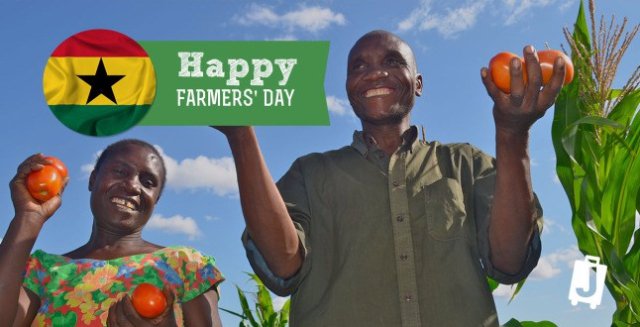
The question of who should be the best farmer still lingers in the minds of the individuals in the country.
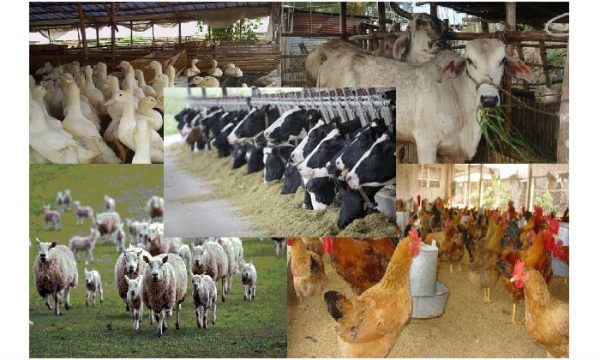
It has been observed that livestock production is considered as a culture in the sense that most of the domestic animals being like pigs, poultry, goats or sheep are left in our various communities without proper care or housing.
There is the analogy that, when someone leaves his or her money on the ground and another person takes it, it will be considered as stealing. People, therefore, take steps to protect monies as small as GHC 1.00 (One Ghana Cedis) but fail to protect their goats and other farm animals that cost well over GHC 200.00 (Two Hundred Cedis) on the streets.
It is this attitude towards Livestock production that the Director for Young Professionals for Agricultural Development (YPARD), Ghana, Mr. Kafui Agba has urged the youth in the agriculture sector to do away with the backward attitude of livestock production and rather prioritize livestock as a serious business.
Speaking to Agric Today Media, Mr. Agba challenged the youth to put more effort into the Livestock sector irrespective of the kind of particular animal the individual produces.
According to him, Ghana imports more than four hundred million dollars worth of chicken into the country. These huge sums of money could have been used domestically if we produced enough for ourselves as a country.
He advised that there should be Specialization whereby each young individual takes a role and administer it well in the production process. He said this would produce a high yield in the livestock value chain.

The Ministry of Trade and Industry, in an effort to put the Komenda Sugar Factory in production, has named Park Agrotech Ghana Limited as the strategic investor for the factory.
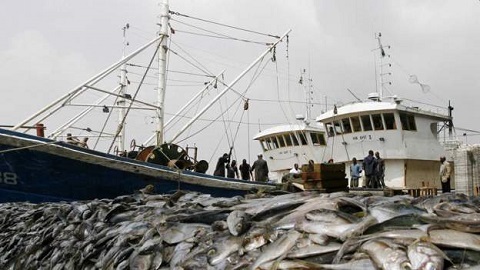
One of the most disturbing issues in the Agricultural sector in Ghana is the lack and poor maintenance culture of storage facilities for farm produce. Although governments for the past years have and are still doing their best to curtail this menace, the situation still persists. This is getting worse at Ningo-Prampram District in the Greater Accra Region of Ghana.

Ignite 2019, a business incubation programme with the theme; Inspiring Action has been unveiled at Accra on 20th November 2019 with sixteen (16) proficient and intelligent women in the Agric value chain from nine (9) African countries.
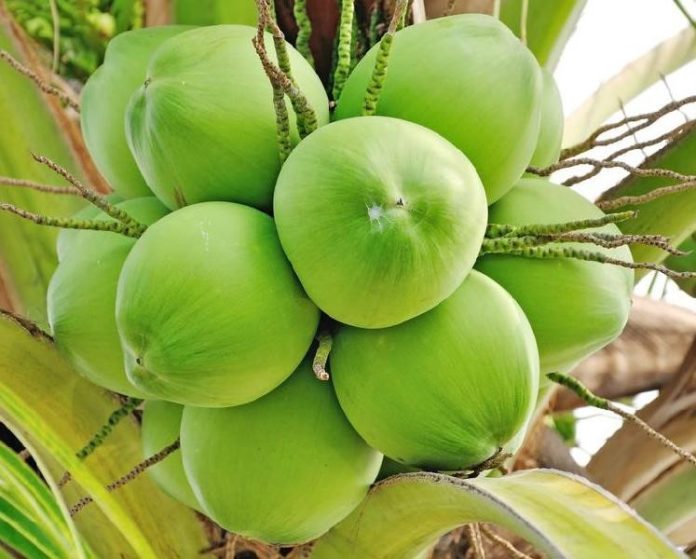
Coconut is a complete food rich in calories, vitamins, and minerals. Although its meat is excessively high in saturated fats in comparison to other common edible nuts, coconut has many health-promoting bioactive compounds. It contains lauric acid which increases good high-density lipoprotein (HDL) cholesterol levels in the blood. HDL has beneficial effects on the coronary arteries by preventing vessel blockage (atherosclerosis).
Coconut water is packed with simple sugar, electrolysis, minerals, and bioactive compounds. Although, these enzymes aid digestion and metabolism. A particular research study shows that cytokine (small secreted proteins released by cells) in coconut water showed significant anti-aging, anti-carcinogenic and anti-thrombotic properties. The kernel is an excellent source of minerals such as copper, calcium, iron, manganese, magnesium, and zinc. It is also a very good source of B-complex vitamins such as foliates riboflavin, niacin, thiamine, and pyridoxine. These vitamins are essential in the sense that the body requires them for external sources. Coconut meat and water contain a good amount of potassium.
Coconut contains a high amount of saturated fats but these could be harmless depending on the person’s health (not mostly recommended for someone who is obese), they contain medium-chain triglycerides which are fatty acids of medium length. These fatty acids are absorbed differently by the body. They go straight to the liver from the digestive system, they are further turned into ketone bodies, which can have therapeutic effects on brain disorders like epilepsy and Alzheimer’s. Other health benefits of coconut include the following.
1. Fibre content: Coconut is rich in dietary fibre. Its fibre slows down the release of glucose then transports it to the cell where it will be converted into energy.
It assists in relieving stress on the pancreas and enzyme systems which reduce the risk of developing diabetes.
2. Boost immunity: Coconut nutrition is excellent for the immunity system m it is anti-viral, anti-fungal, and bacterial and antiphrastic. Intake of coconut oil can help the body to mount resistance to both viruses and bacteria that cause illness.
3. Treat abdominal fats: Coconut is also beneficial in treating dangerous fats in the abdominal cavity.
4. Overall health: Research has proven that people who consume coconut daily are healthier when compared to those who don’t.
5. Treat epilepsy: This first can dramatically reduce the rate of seizures in epileptic children.
6. Fights cancer: Coconut nutrition has proven to have anti-cancer properties. It is especially beneficial to treat colon and breast cancer.
7. Prevent urinary tract infections: The natural diuretic property of coconut treats urinary tract infections. It improves the flow of urine to get rid of the infections.
8. Extremely beneficial during Pregnancy: Coconut water is sterile and is very good for pregnant women. It improves the immunity and health of mother and baby and prevents infection and other diseases.
9. Healthy bones and teeth: Eating coconut regularly supports the development of healthy teeth and strong bones. It improves the body’s ability yo absorb calcium and manganese which aid bone development.
10. Fights dryness: Coconut oil, if used on the skin prevents dryness and flakiness. It keeps the skin moisturized and supple.
11. Prevent scalp infections: The antibacterial and anti-fungal properties of coconut protect the scalp from dandruff, lice and itchy scalp which often slows down hair growth. It gives a healthy, shiny and silky hair.