
top ad
Home Blog Page 32

The East-West Seed Knowledge Transfer Foundation (EWS-KT) Centre in Duayaw Nkwanta is key to empower Smallholder farmers

The East-West Seed Knowledge Transfer Foundation has inaugurated a new knowledge transfer centre in Duayaw Nkwanta in the Ahafo Region, with the goal of empowering smallholder farmers through hands-on training and sustainable modern agricultural practices.

The initiative forms part of the Foundation’s broader effort to improve vegetable farming across Ghana, transforming it into a viable business venture for thousands of rural farmers.

At the opening ceremony, Kwadwo Donkor, Program Lead at East-West Seed Knowledge Transfer Foundation, underscored the importance of the “Transforming Vegetable Farming as a Business” project, which he described as pivotal in enhancing the skills and knowledge of farmers involved in vegetable cultivation.

He explained that the newly established knowledge transfer centre will serve as a hub for practical learning, where farmers and agricultural stakeholders can receive in-depth training on best practices and modern techniques in vegetable farming.

“This learning farm site is more than just a demonstration field. It is a place where knowledge meets practice, where farmers can engage directly with experts and learn through hands-on experience,” Mr. Donkor stated. “Our approach is centered around farmer-led demonstration farms, which have proven highly effective in promoting sustainable farming methods and increasing productivity.”

Since its implementation in November 2023, the project has operated across 14 districts in Ghana. With a four-year extension now secured, the initiative is set to expand its reach, aiming to train nearly 40,000 farmers in the Ahafo, Bono, Bono East, and Northern Regions. Mr. Donkor revealed that over 10,000 farmers have already benefited from the training, gaining access to crucial knowledge and resources needed to turn vegetable farming into a profitable enterprise.

“Our operations span selected districts in the Ahafo, Bono, and Bono East regions,” he noted. “The goal is to make vegetable farming more commercially viable for smallholder farmers, ensuring they can increase their incomes while contributing to national food security.”

The model of farmer-led demonstration farms, according to Donkor, is helping to bridge the gap between theory and practice, making it easier for farmers to adopt improved agricultural techniques. The emphasis on practical learning ensures that the knowledge imparted is immediately applicable on the ground, increasing the chances of long-term success for participating farmers.

Representing the Embassy of the Kingdom of the Netherlands, Marian Armoo, Agriculture Officer at the Embassy, delivered remarks on behalf of the Ambassador, H.E. Jeroen Verheul. She commended East-West Seed knowledge Transfer Foundation for its efforts in strengthening Ghana’s horticultural sector and noted that the new centre marks a meaningful advancement in the bilateral partnership between the Netherlands and Ghana.

“The opening of this knowledge transfer site is a significant step forward in the strong and evolving relationship between our two countries a relationship built on mutual respect, cooperation, and a shared vision for sustainable development,” she said.

Armoo highlighted the broad scope of agricultural support the Dutch Embassy provides in Ghana, ranging from horticulture and cocoa production to seed systems development and sustainable nature management. She also stressed the critical role that quality seeds play in transforming agriculture and securing food systems.

“Quality seeds are the foundation of successful farming,” she remarked. “They determine crop yields, climate resilience, and nutritional value. By making improved, high-yielding, and climate-resilient seed varieties available such as those showcased here by East-West Seed—we equip farmers with the tools they need to increase productivity, boost incomes, and enhance food and nutrition security.”

The Dutch Embassy has been a key partner in Ghana’s agricultural development, and its support for initiatives like the one at Duayaw Nkwanta underscores the shared commitment to achieving long-term food sustainability and economic empowerment through agriculture.

Ad article

Farmers eulogised East-West Seed Knowledge Transfer Foundation as “wealth in agriculture” for their major contribution in the agriculture sector

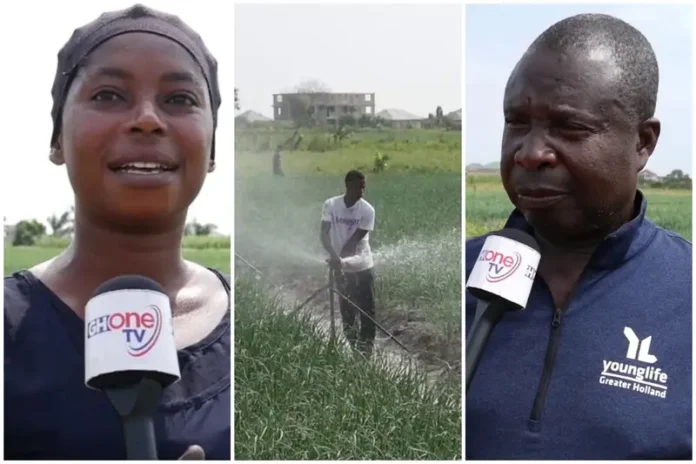
Farmers at the Bono regions; Bono East, Bono and Ahafo regions have eulogised the East-West Seed Knowledge Transfer Foundation for the good seeds distribution and the capacity building the foundation has bequeathed them.

It is undeniable that to reap bumper harvest, one needs land, good agricultural practises and quality seeds and the farmers have eulogised the foundation of these factors of production.

Attesting to this, Otuo Acheampong, a vegetable farmer from Chiraa, a town in Bono Region said farming with low quality seeds over the years nearly killed his passion for agriculture.

According to him, he was rescued by East-West Seed Knowledge Transfer Foundation when officer Simon introduced him to their right quality seeds namely cabbage, onions and cucumber together with the good agricultural practices.

“Upon my many years in this business, I was failing because I was not getting the right seed varieties, but when I met East-West’s officer called Simon, he introduced me to modern agronomic practices to vegetable farming, and I must say this has improved my yield”, he said.

He mentioned that due to the introduction of the modern agronomical practices to the effect of yields,, market women now come to his farm to purchase the cucumber and other vegetables due to its long lifespan…. “I had more yields due to the modern agronomic practices and when I went to the market my colleague farmers were impressed because of the variety long lifespan.

With the other varieties like the onion and cabbage, I did not encounter any issues and due to the high yields, I made a lot of income from my 2 acres of vegetable farm, so I commend East-West seed varieties to every farmer. They are the game changer”, he added.

Justice Koran, a farmer from Berekum West shared that planting from farm proceeds results in low yields. He could cultivate 2- or 3-acres land of vegetables but would harvest just a few.

However, patronising East-West Seed Knowledge Transfer Foundation has transformed him, he could harvest 3 times products on an acre of land than what I used to harvest on 2 or 3-acres of land.

To him, the training from the East-West Seed Knowledge Transfer Foundation has equipped him to generate more revenue on half acre of land as compare to 3 or 4 acre of land he use to farm.

He called on all vegetable farmers to actively patronise East-West Seed Knowledge Transfer Foundation to enhance their knowledge based-farming to improve their livelihoods.

To balance the gender, Madam Mavis Animwaa, a residence at Duayaw Nkwanta said the training from the Foundation has enlightened her.

Although she entered farming not long, the training has made farming easier coupling with quality seeds.

She encouraged the women farmers to call on East-West Seed Knowledge Transfer Foundation for easy and accessible quality seeds for wealth.

Ad article

Cocobod warns of production drop amid heavy rains

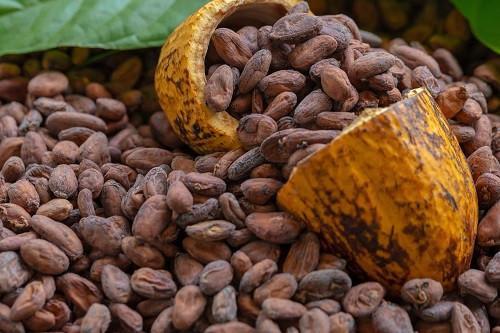
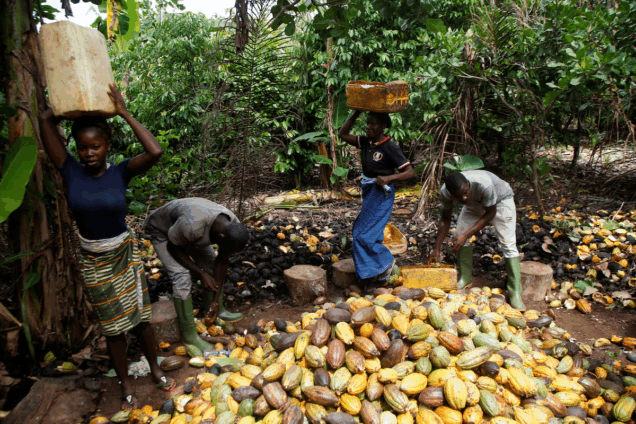
The cocoa regulator, Ghana Cocoa Board (COCOBOD), said on Tuesday that increased disease incidence caused by prolonged rainfall and not enough sunlight could lead to a moderate production decline.

This was after farmers called for state intervention to mitigate the impact of bad weather.

Ghana, the world’s second-biggest cocoa producer, has seen output fall in previous seasons due to diseases, adverse weather conditions and rampant illegal gold mining, which destroys cocoa plantations and reduces yields.

An association of Ghanaian farmers warned last week that cooler temperatures, excessive rainfall, and not enough sunlight had reduced yields and raised the risk of fungal diseases, including black pod disease.

That in turn could blow a hole in farmers’ incomes and cause long-term damage, it said in a statement.

“We visited these 72 cocoa growing districts and we witnessed fungi being spotted on the various cocoa trees due to the climate conditions,” Nana Oboadie Bonsu, the farmers’ association’s president, told Reuters.

In response to the concerns raised by the association, the Ghanaian regulator COCOBOD said it had intensified mass spraying and disease control programmes.

“While it is too early to provide definitive figures for the current season, preliminary assessments suggest that production may see a moderate decline compared to earlier projections,” the regulator told Reuters.

COCOBOD also said it aims to complete the planned distribution of fungicides before the peak harvest period to minimise yield losses.

COCOBOD data showed in May that Ghana was likely to miss its output target of 650,000 metric tons for the 2024/25 season.

Ad article

CSIR Engages Agric Minister to Drive “Feed Ghana” Agenda Forward

The Council for Scientific and Industrial Research (CSIR) met with the Hon. Eric Opoku, Minister for Food and Agriculture, (MOFA) at his office in Accra to discuss strategic support for the Government’s flagship Feed Ghana Initiative.

CSIR, led by the Deputy Director-General, Prof. Marian D. Quain, presented an overview of CSIR’s work and ongoing partnerships with MOFA.The Directors and Deputy Directors from nearly all 13 CSIR institutes were in attendance.

During the meeting, the Director, Prof. Maxwell Darko Asante, outlined key areas where CSIR will contribute to the initiative:

✅ Establishing commercial farms through our institutional farming programme.

✅ Providing technical support to schools and institutions practicing agriculture.

✅ Recommending improved crop varieties and producing high-quality seeds to reduce imports.

✅ Building the capacity of farmer groups nationwide

CSIR was thrilled to hear that the Minister had already introduced CRI-AGYAPA—our newly released, high-performing rice variety—to his constituency, where farmers have hailed it as “the best they’ve ever cultivated.”

The meeting concluded with the development of a roadmap to transform these proposals into action. Together, we’re sowing the seeds for a stronger, more resilient agricultural future for Ghana.

Ad article

You have 21 days to vacate Agric, Fisheries Ministry lands at Osu – gov’t told land encroachers

The government of Ghana has given a 21-day ultimatum to individuals occupying state lands belonging to the Ministry of Food and Agriculture and the Ministry of Fisheries and Aquaculture Development at Osu in the Greater Accra Region to vacate the premises.

According to Clemence Gyato, a government-appointed consultant tasked with reclaiming encroached state lands, the area was originally allocated to drivers of the two ministries as residential quarters.

However, after the drivers vacated, the land was taken over by unauthorized occupants.

On Monday, July 14, 2025, Gyato, accompanied by a team of security officials, stormed the premises to distribute the official notices to residents.

“This is government property, and it was never meant for private occupation. We are giving 21 days for everyone to leave peacefully before further action is taken,” Gyato stated while serving the eviction notices.

Clemence Gyato officials emphasised that the land will be reclaimed after the ultimatum expires.

Some residents admitted to living there illegally but appealed to the government for an extension of the deadline.

“We know we are not supposed to be here, but 21 days is too short. We need more time to find a place to move to, one resident pleaded.

Ad article

FAO to support Ghana’s agricultural transformation agenda

Ghana’s Minister for Food and Agriculture, Eric Opoku, has held a bilateral meeting with the Director-General of the Food and Agriculture Organisation (FAO), Dr QU Dongyu, at the FAO Headquarters in Rome, on the sidelines of the 44th Session of the FAO Conference.

The meeting focused on strengthening cooperation between Ghana and the FAO in key areas of agricultural development.

Opoku outlined Ghana’s commitment to adding value to cash crops such as cocoa, cashew, and shea, as part of a broader strategy to boost exports, create jobs, and enhance farmer incomes.

He also highlighted government efforts to establish Farmer Service Centres and to improve the deployment and capacity of agricultural extension officers, ensuring that farmers receive timely and effective technical support.

Opoku emphasised the importance of public-private partnerships in achieving sustainable agricultural growth and food security.

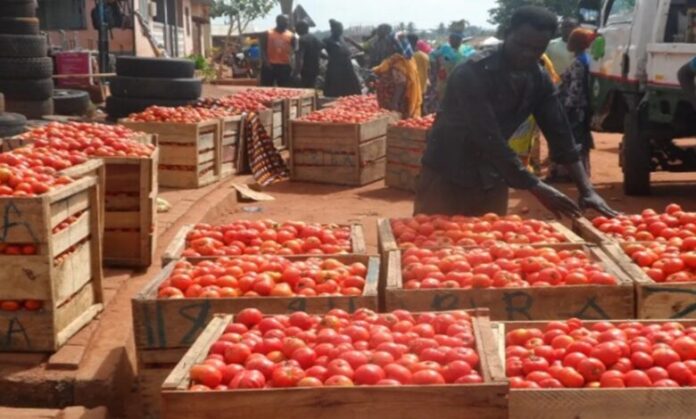
On food production, the Minister expressed the government’s intention to increase tomato cultivation and called for enhanced research into underutilised crops such as cassava, which play a crucial role in Ghana’s food systems.

Eric Opoku also appealed for increased investment in irrigation infrastructure to ensure year-round agricultural production across the country.

He lauded the FAO for supporting the rehabilitation and upgrading of the soil testing laboratory in Kumasi to international standards, describing it as a critical facility for improving soil health and boosting crop productivity.

The Minister further requested continued collaboration with the FAO to provide cold storage facilities for yam and other perishable crops to reduce post-harvest losses.

Additionally, the minister appealed for the appointment of more qualified Ghanaians to senior leadership positions within the FAO, reflecting Ghana’s commitment to contributing to global agricultural development.

In response, Director-General QU Dongyu pledged the FAO’s continued support for Ghana’s agricultural sector.

He assured the Minister of the organisation’s readiness to assist in addressing post-harvest losses, mechanising boreholes for irrigation, and supporting innovation-driven solutions to improve productivity.

He also directed the FAO Regional Representative for Africa, Dr Abebe Haile-Gabriel, to initiate the necessary processes for the implementation of irrigation infrastructure, value addition initiatives, and other critical services to enhance food production in Ghana.

The meeting underscored Ghana’s strategic push for agricultural transformation through innovation, value addition, and stronger international partnerships.

Ad article

The media contribution in agrifood sector is key to strengthening agrifood system and increasing investment on the continent – AGRA.

The media is the fourth arms of government that contribute immensely to the development of the nation by educating the public on all manner of issues. However, how often do the media highlight agrifood systems in Ghana?

Ad article

MoFA call on stakeholders and the general public to DEBUNK the Expression of Interest for the Agriculture Small and Micro Enterprises Grant Initiatives 2025.

The Ministry of Food and Agriculture (MoFA) has issued a disclaimer on a recent circulation of a publication on social media platforms with the caption “EXPRESSION OF INTEREST FOR THE AGRICULTURE SMALL AND MICRO ENTERPRISES GRANT INITIATIVES 2025″.

In a press release issued on 24th June, 2025 by the Ministry, the publication with the said caption sought to invite players in the Agriculture value chain to apply for a non-existing initiative.

The Ministry is calling on the sector players and the general public to note that the link and the content of the said publication are false and intended to deceive unsuspecting Ghanaians.

The Ministry has not called for any such expression of interest.

The General Public is hereby entreated to contact the Ministry’s Public Relations Unit for clarification on issues relating to the Ministry.

Ad article

Ghana’s economic growth lies on production, not consumption – Deputy agric minister

The Deputy Minister of Agriculture, Hon. John Dumelo underscored the need for Ghana to transmute from a consumption-driven economy to a production-driven economy to achieve greater national efficiency and long-term economic stability.

Speaking at the Ghana-China Business Summit in Accra on Monday, June 23, 2025, Dumelo underscored the importance of increasing agricultural productivity and value addition as key components of this shift.

“To feed our industries and to export is good, and adding value before we export is even better. But what we really need is efficiency, efficiency in maximising the use of the land we have. We must prioritize efficiency when it comes to agriculture,” he stated.

Dumelo noted that a production-focused economic model would drive job creation, support local businesses, and improve Ghana’s food security and export capabilities.

He also emphasised that the country’s economic resilience depends on building a strong foundation in agriculture and industrial production.

The Deputy Minister further called for innovative partnerships with technologically advanced countries, particularly China, to help modernise Ghana’s agricultural sector.

“That’s why it’s important to partner with countries like China to help us maximise the use of our land, especially in the transfer of technology. Even though our doors have been open for a long time, we are opening new doors now”, he explained.

Ad article

Ghana’s cocoa farmers optimistic about bumper harvest in 2025/2026 season

Cocoa farmers in the world’s second-biggest producer Ghana are expecting a bumper harvest for the upcoming 2025/2026 season, buoyed by improved flowering and pod development, even as they grapple with persistent challenges in input supplies and erratic weather.

The West African country has seen output fall in previous seasons due to reasons, including diseases, climate change and rampant illegal gold mining, which destroys cocoa plantations and reduces yields.

However, growers are cautiously optimistic about the next season, saying better weather conditions and a decline in diseases should help increase production.

“Farmers who have dedicated time to their cocoa farms will definitely see a bumper harvest this season,” said Theophilus Tamakloe, cocoa farmer and vice president of a national farmers’ association.

“We are witnessing significant improvement compared to last year in terms of flowers, pods, and leaf health,” Tamakloe, who farms in Ghana’s Assin North district, added.

Tamakloe is projecting an increase from 230 bags of cocoa last season to 350 bags for the upcoming harvest. But he warned that excessive rainfall and a lack of timely fungicide distribution from Ghana’s cocoa regulator, COCOBOD, could undermine yields.

Another farmer, Salomey Saah, echoed Tamakloe’s optimism but shared similar concerns about pest control in an interview with Reuters.

“This year, I approached my cocoa farm as a business, and I have seen tremendous improvement. I’m targeting about 2,000 bags, up from the 1,000 bags I harvested in the 2024/2025 season,” said Saah, who farms in the central-western Tano district.

However, she cautioned that without pesticides, insects could destroy all the crops just within three days.

Kwame Alex, who became the National Best Cocoa Farmer in 2024, produced over 2,000 bags last season. Alex is even more ambitious, aiming to reach 3,000 bags next season, he told Reuters.

COCOBOD did not immediately respond to a request for comment. The regulator has not yet announced a production target for the new season which will open in August.

Data from COCOBOD showed in May that Ghana was likely to miss its output target of 650,000 metric tons of the 2024/2025 season.

The West African country’s output is expected to plunge to just 590,000 tons this season.

Ghana and neighbouring Ivory Coast, which together account for over 60% of global cocoa production, have been facing their worst harvests in decades.

Ad article