The term Agriculture is derived from two Latin words ager or agri meaning soil and cultura or Cultus meaning cultivation. Agriculture is the science of cultivating the soil, harvesting crops, and raising livestock and also the science or art of the production of plants and animals useful to man and in varying degrees the preparation of such products for man’s use.
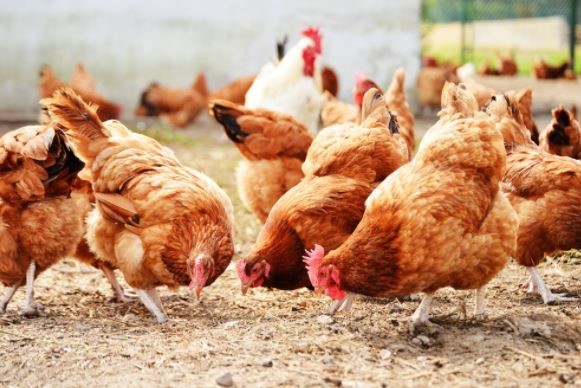
The Ministry of Food and Agriculture (MoFA) is supporting two anchor farms to scale up poultry production and processing as part of the Rearing for Food and Jobs programme.
As part of its efforts to help address poverty among cocoa farmers in the country, their household,s and the communities they live in; Cocoa Abrabopa Association (CAA) in partnership with Ritter Sports GmbH & Co KG, Fuchs & Hoffmann, and Ascot Amsterdam has taken another judicious step by supporting farmer groups with additional livelihood intervention initiatives in the Western South Region of Ghana.
You should start by sitting down (along with your spouse and any partners, financiers or managers) and assessing your situation. Have a brainstorming session; write down your thoughts or record the session. Don’t be afraid to dream, to imagine some pretty wild ideas. Think big. Imagine you could do anything; don’t be limited by practicality at this stage. Think of goals. Try to fill needs or supply possible markets. Think of new ways to use a resource you already have.
Get additional ideas from what others are doing and from published resources, watch for new and developing trends, such as public concerns about saturated fats, or growing biofuels.
Get realistic
After you have brainstormed for ideas, then it is time to be more realistic. What are your short-term and long-term goals and needs? Just for supplementary income or to start a whole new business? Do you want steady year-round income or will a seasonal operation meet your needs? Go through your ideas and pick out several that seem the most promising.
Naturally, you would like to make a profit right away, but many ventures will have sizeable start-up costs and/or may not get into the black for several years, such as growing tree fruit or pulpwood. Can you round up the needed capital—from loans, grants or investors? Check into the possibility of grants or matching funds from state or federal agencies or from private foundations. What is the likely cash-flow?
Make out a detailed (as best you can) business plan and projected budget—for each year for five or ten years. If this is too much for you to handle, there are professional small business advisers available. Some government agencies provide their service at no cost.
Now, do you still want to try that idea? Is it a wise, practical idea? Think about it for a while. Discuss it with your family and others whose opinion you trust. Could your new venture survive an unexpected disaster such as illness or injury, or a devastating storm? Don’t rush into anything. Probably it would be best to start small and see how things go. Don’t risk everything at once.
Suggestions
Following are some pointers from the book How to Make $100,000 Farming 25 Acres by Booker T. Whatley (1987):
Produce only what your customers want.
Produce high-value commodities (plants or animals) in such a way that different ones are ready to market at different times of year, thus providing year-round income and employment. Diversify into unusual products.
Be located on a hard-surfaced road within 40 miles of an urban centre of at least 50,000 population.
Run a pick-your-own operation, so that much of the labour is done by the customer.
Have a guaranteed market with a clientele membership club with an annual membership fee (community-supported agriculture).
Be weatherproof, with drip and/or sprinkler irrigation.
Looking at the production figures, it is quite evident that farmers provide the foundation for economic growth, and are in reality wealth creators. But when we look at farm incomes, the misery and pain with which farmers somehow survive remains rather unexplained. And yet, instead of helping them directly with measures and programmes that can enhance their income, and that includes providing a guaranteed price, the focus of policy makers has been to strengthen the supply chain, which implies supporting the players at the two extremes
When Glenn Davis Stone, a distinguished research professor of Environmental Studies, and author of ‘Agricultural Dilemma: How not to feed the world’, tweeted the other day, saying: “I’d separate agribusiness from farmers. Most federal aid has been to the former at expense of the latter,” I realised how truly he had summed up the dilemma that policy makers, policy analysts and the media encounter, and how wrongly we are made to believe that any aid or support to agribusiness construes support to farmers.In my response, I tweeted: “In India too, most analyst equate support to agribusiness as support to farmers. That is why agriculture continues to grow while farmers are left behind.
“At least, this is what I have observed over the years. While the profits of agribusiness companies, which provide inputs like chemical fertiliser, pesticides, tractors and other farm implements to farmers, continues to swell with their stocks rising, farmers are faced with a severe agrarian crisis. At the same time, reports of irate farmers throwing their tomato, garlic, onion, potato and brinjal harvests, to name a few, into canals or being put to fire, appear regularly in the media. With the market price not even sufficient to cover the cost of production, farmers are left with little choice but to dump the produce.While the farmers suffer the consequences, I have never seen traders (and that includes organised buyers) incurring losses as a result. In Punjab, for instance, more than 16,600 suicides by farmers and farm workers were reported in the 15-year period, between 2000 and 2015. But we hardly hear of suicides by traders (unless for personal reasons) and by input suppliers. In other words, the agricultural supply chain is so cleverly designed that both the players at the two ends rake in profits, while only the farmers take the hit. That is why despite producing a record harvest year after year, farmers continue to languish at the bottom of the ladder.
I have often wondered why is it that while the FAO estimates that India’s gross value of crop production in 2018 (report released in March 2021) is at $ 289, 802, 032 million, and that of gross food production at $400,722,025 million, farmers continue to live in misery. After all, India stands next only to China, with a gross value of $418, 541,343 million, and yet farming continues to be faced with a terrible distress. This is depicted by a Situation Assessment Survey of Agricultural Households for the year 2018-19, estimating the average farm household income at Rs 10,218 ($124.7) per month. While this includes income from non-farm activities, but when seen alone, income from farming operations, comes to a paltry Rs 27 ($0.33) per day.
Looking at the production figures, it is quite evident that farmers provide the foundation for economic growth, and are in reality wealth creators. But when we look at farm incomes, the misery and pain with which farmers somehow survive remains rather unexplained. And yet, instead of helping them directly with measures and programmes that can enhance their income, and that includes providing a guaranteed price, the focus of policy makers has been to strengthen the supply chain, which implies supporting the players at the two extremes.
A simple and easily understandable answer is provided by Venky Ramachandran, a techie who runs a resourceful website called Agribusiness Matters. Imagine an iconic emotive smiley, and take out the U-shape from the drawing which depicts a smile (see the attached figure).
On the two extremes at the top are agricultural input manufacturers on the one hand, and an agricultural output buyer at the other end. At the bottom of the curve is the producer. While the two ends of the supply chain are reeling in profits, it is the farmer who lies at the bottom of the heap. The ‘smiling curve’ therefore provides a simple answer to a sad question that most people tend to ignore, and then he asks: “Why are farmers not making money when everyone else around them in the world of agribusiness is?” As I have often explained, despite new technology improving efficiency and thereby increasing productivity, farm incomes have been on a decline. As Canadian author and critic Darrin Qualman has shown in an analysis, while the wheat price (adjusted for inflation) has come down over a period of 150 years, from $30 per bushel in 1867 to $5 per bushel in 2017, bread prices have been on a rise. In the past four decades, bread prices have jumped several times.
Similarly, take the case of bananas exported from Latin America to Europe. The farmer’s share of the end consumer price is so low that it doesn’t even cover the cost of production. Farmers toil for over nine months every year and yet live on pittance. But agribusiness companies at both the ends of the supply chain have no complaint, whatsoever.I remember a US farmer tweeting sometimes back that the price of corn he received in 2020 was less than what his father had received in the early 1970s. The point I am trying to make is that farm distress is global, and the smiley diagram aptly captures the tragedy.
The lesson here is obvious. When a budgetary boost is provided across agricultural value chains, with emphasis on building up a digital public infrastructure and for setting up a dedicated fund for agriculture start-ups, the question that needs to be asked is how will it translate into a higher income for farmers? Even in the case of Farmer Producer Organisations (FPOs), while a lot of excitement hinges on the ability to aggregate and therefore negotiate a higher price for farmers, in a majority of cases the price being provided to farmers is much lower than the Minimum Support Price (MSP).
The proposed Agriculture Accelerator Fund as announced in Budget 2023 too aims to support agriculture start-ups to find innovative solutions to challenges faced by farmers, and it remains to be seen whether it ends up nurturing the technology-provider or in reality ends up building the entrepreneurial ability of the farmer. I am not against technology but as the ‘smiling curve’ shows it hasn’t helped farmers to be equally profitable and thereby become economically viable.Perhaps a better way would be to guarantee a minimum share of the end consumer price that the agricultural supply chain must ensure to farmers.(The author is a noted food policy analyst and an expert on issues related to the agriculture sector. He writes on food, agriculture and hunger)
The Ghana Meteorological Agency (GMet) has introduced some far-reaching technological initiatives with the goal of providing timely and accurate weather and climate information services to accelerate Ghana’s socioeconomic development.
The reform efforts would see the automation and digitisation of GMet data for efficient weather and climate information services, as well as data collection and analysis for effective end-user dissemination.
‘Mr. Eric Asuma, Director-General of the Ghana Meteorological Agency, stated this at a stakeholder workshop on Nowcasting Flood Impacts of Convective Storms in the Sahel (NFLICS) in Ghana.
The Agency, in collaboration with the United Kingdom Centre for Ecology and Hydrology, organised the workshop in Koforidua to pilot the NFLICS early warning system over the Gulf of Guinea, particularly in Ghana.
Forecasters are expected to enhance their skills to be able to use the NFLICS system to generate nowcast flood impacts over Ghana. The NFLICS is also to guide policymakers and disaster management institutions in their efforts to protect lives and property.
Mr Asuma told the Ghana News Agency that it was critical for GMET to develop and maintain a strong working relationship with other agencies, such as the National Disaster Management Organisation (NADMO) to reduce the impact of disasters.
“They [NADMO] are our key stakeholders and a direct ally of ours. In fact, when we come out with our forecasts, NADMO is interested in the nature of the forecasts we issue, especially when we issue a weather warning,” he explained.
Early warning is an integral part of GMet duties, and the World Meteorological Organisation is pushing for early warning. Research has also shown approximately 40 per cent of the populations in Africa do not receive early warnings.
But to be efficient in weather and climate information | services, Mr. Asuma noted that the work called for the acquisition and application of modern equipment to collect, analyze, and disseminate data, as well as building the capacity of personnel.
“We are automating; gradually, every piece of equipment that we are buying is automatic and will save, record, and transmit very reliable, timely weather information for forecasters to analyze,” he said.
He further mentioned that there had been tremendous improvement in the operations of GMet over the last few years, particularly since 2018.
He said the government bought transformers, 10 automatic weather stations, and 12 automatic weather equipment, including a message switching system to take all information on weather and transmit it to the global telecommunications system.
“This helps for water, flood, and draught management, which assist GMet to run models and get some service,” he added, “as well as build a robust data base for meteorologists to do analysis.”
GMet is also working to digitize its data through a national adaptation programme under the Environmental Protection Agency that would see data from 60 years or so ago being archived for easy retrieval. According to him, clearance was received to recruit close to 300 staff, particularly scientists, researchers, and meteorologists.
Mr Joshua Asamoah, a meteorologist, said the training aimed to validate NFLICS tools as well, but added that “the more models or tools you have in forecasting, the higher your confidence or probability for a prediction or event.”
The nowcasting tools would also enable forecasters to see what was happening right now for about six hours, stating: “There are many tools that are already being used to develop this type of forecast,’ he explained, “but this new one will complement the old ones to improve the probability of predicting weather and climate events.”
The nowcasting, according to Nana Kweigyah, President of the Canoe and Fishing Gear Owners’ Association of Ghana, would help canoe owners in Ghana’s four coastal areas participate effectively in fisheries management and governance.
He stated that climate change had increased the vulnerability of small-scale fishers by increasing the number of bad weather days, and that their reliance on weather forecasts would boost their fishing expeditions.
“You cannot go fishing if the weather is inclement. Now, bad weather also translates into a bad pushing state or dangerous rough pushing state, and you cannot go on a fishing expedition at such times,” he said.
“So, we usually go fishing based on the weather. Just last year, between March and April, about 70 canoes were damaged,’ he added. “We have relied on the Ghana Meteorological Agency for ocean state information in order to decide whether or not to go to sea.”
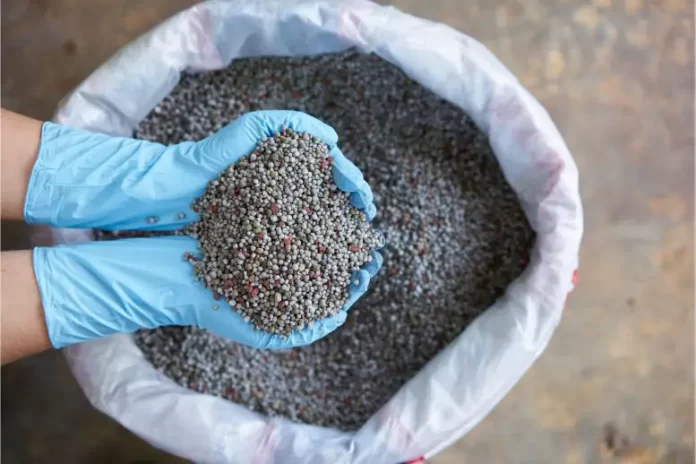
Fertilizer is an essential component in modern agriculture, providing vital nutrients to crops that help them grow healthy and abundant. Without fertilizer, soil can become depleted of key nutrients such as nitrogen, phosphorus, and potassium, leading to reduced crop yields and lower-quality produce.
A study suggests that rising fertilizer prices could threaten an additional 100 million people with undernourishment.
The conflict in Ukraine has resulted in the blockading of significant amounts of wheat, barley, and corn, however, researchers have found that the reduced food exports from the region have a lesser impact on food price increases than previously feared.
A study led by researchers from the University of Edinburgh indicates that the primary driver of food insecurity in the coming decades will be the significant increase in energy and fertilizer prices.
Until now, how energy and fertilizer price rises and export restrictions affects future global food prices was poorly understood. There has also been little analysis to quantify the scale of harm that hikes in the price of food could have on human nutritional health and the environment.
The team used a global land-use computer model to simulate the effects of export restrictions and spikes in production costs on food prices, health, and land use until 2040.
Their simulations suggest the combined effect of export restrictions, increased energy costs, and mid-2022 fertilizer prices – which are three times higher than at the start of the previous year – could cause food costs to rise by 81 percent in 2023 compared to 2021 levels.
Export restrictions account for only a small fraction of the simulated price rises, the team says. Halting exports from Russia and Ukraine would increase food costs in 2023 by 2.6 percent, while spikes in energy and fertilizer prices would cause a 74 percent rise.
Food price rises would lead to many people’s diets becoming poorer, the team says.
The findings suggest there could be up to one million additional deaths and more than 100 million people undernourished if high fertilizer prices continue. The greatest increases in deaths would be in Sub-Saharan Africa, North Africa, and the Middle East.
The modeling estimates that sharp increases in the cost of fertilizers – which are key to producing high yields – would greatly reduce their use by farmers. Without fertilizers more agricultural land is needed to produce the world’s food, the team says.
The simulations indicate that by 2030 this could increase agricultural land by an area the size of much of Western Europe – Belgium, France, Germany, Ireland, Italy, Netherlands, Portugal, Spain, and the UK. This would have severe impacts on deforestation, carbon emissions, and biodiversity loss, the team says.
The study is published in the journal Nature Food. It also involved researchers from Karlsruhe Institute of Technology in Germany, Rutgers University in the USA, and the University of Aberdeen.
Dr. Peter Alexander, of the University of Edinburgh’s School of GeoSciences, who led the study, said: “This could be the end of an era of cheap food. While almost everyone will feel the effects of that on their weekly shop, it’s the poorest people in society, who may already struggle to afford enough healthy food, who will be hit hardest.
“The Black Sea Grain Initiative is a welcome development and has largely allowed Ukraine food exports to be re-established, but the immediacy of these issues appears to have diverted attention away from the impact of fertilizer prices. While fertilizer prices are coming down from the peaks of earlier this year, they remain high and this may still feed through to continued high food price inflation in 2023. More needs to be done to break the link between higher food prices and harm to human health and the environment.”
Reference: “High energy and fertilizer prices are more damaging than food export curtailment from Ukraine and Russia for food prices, health and the environment” by Peter Alexander, Almut Arneth, Roslyn Henry, Juliette Maire, Sam Rabin, and Mark D. A. Rounsevell, 23 December 2022, Nature Food.
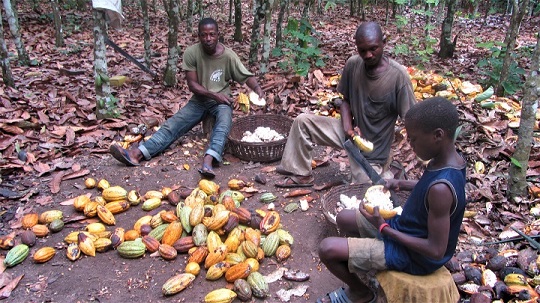
The Chief Executive Officer (CEO) of the Ghana Cocoa Board (COCOBOD), Mr. Joseph Boahen Aidoo, says COCOBOD will take on Al Jazeera over the report it has made about child labour in cocoa farms in Ghana.
He also said those who granted the interviews are being sent to court to investigate the matter.
In a report, Al Jazeera, stated that the use of child labour, has risen in cocoa farms in Ghana during the past decade despite industry promises to reduce it.
According to the report, the prevalence of children doing hazardous work, including using sharp tools, has also gone up in the world’s top two cocoa producers, according to a study funded by the United States government.
Speaking on the matter on Atinka TV’s morning show, Ghana Nie with Ama Gyenfa Ofosu Darkwa, Mr Joseph Boahen Aidoo said COCOBOD will deal with Al Jazeera because the photos are a dent on the image of the cocoa industry.
“We will plead with the media because it is the image of the industry that we are denting.” We are causing damage to the cocoa industry, which is the glue that holds the economy together. “With what has happened, we shall prosecute the people, so all the farmers who were involved have been picked up by the police and are being processed for court; when they get there and they confirm that they were called on Sunday to the farm to take photos and give explanations, then we know that the people went to trick the farmers,” he said.
He again said, “We will also deal with Al Jazeera because even in the western world, when something happens to a child, his face is not exposed, they cover their face with something, but for this, the child was just walking and picking cocoa, just like that, and so even the woman whose child was involved has been disgraced, including her child, who is not even six months old. “All these are used to portray a bad image of Ghana, and so we have to deal with all of them.”
Meanwhile, Mr. Joseph Boahen Aidoo expressed worry over the issue, saying that due to that, when they send cocoa to the foreigners, they do not want to buy it because they feel you used child labour to gather the beans.
“That is why I am advising farmers, that if you are there any media come to you, not all of them are bad, but the unscrupulous media personnel that will come, and they do not have any affection for the nation but are only interested in money, I am pleading with the farmers that when they come, before they set their cameras, alert us at COCOBOD immediately,”
Scientists agree the answers lie in a complex formula that includes our social connections, sleep habits, happiness levels, the environment, and having a sense of purpose.
Perhaps the most important ingredient, though, is the food and drink we consume.
Here is a recap of 10 key learnings of Buettner’s philosophy on following a Blue Zones diet.
1. Plant slant
See that 95 per cent of your food comes from a plant or a plant product. Favour beans, greens – especially spinach and kale – sweet potatoes, nuts and seeds, and wholegrains.
2. Retreat from meat
People in four of the five Blue Zones consume meat, but do so sparingly, as a celebratory food or a small side dish.
Consume meat no more than twice a week, favouring whole, free-range meat and avoiding processed meat such as bacon and hot dogs.
3. Fish is fine
Up to three ounces of fish daily (about the size of a deck of cards) is commonly consumed in Blue Zones.
Eat fish in the middle of the food chain, such as trout, snapper, grouper, sardines and anchovies, to avoid high levels of mercury. Avoid overfished species like Chilean sea bass, or farmed fish like salmon.
4. Ditch dairy
Cow’s milk does not feature significantly in any of the Blue Zones diets, although fermented goat and sheep’s milk, made into yogurt or cheese, do figure prominently in the diets of Ikarian and Sardinian centenarians.
Research shows our digestive systems are not optimised for cow’s milk products and we can get just as much calcium from a cup of cooked kale or a cup of tofu as a cup of milk.
5. Occasional eggs
Blue Zone residents usually eat no more than three free-range eggs a week. As with meat, eggs are consumed as a side dish, alongside wholegrains or plants.
Nicoyans fry an egg to fold into a corn tortilla to have with beans, while Okinawans boil an egg in their soup.
Mediterranean Blue Zone residents fry an egg as a side dish with bread, almonds and olives for breakfast.
6. Beans please
Eat at least half a cup of beans and legumes daily, whatever kind. Beans are the fundamental cornerstone of every Blue Zone diet on the planet, from black beans in Nicoya, to lentils, chickpeas and white beans in the Mediterranean, and soybeans in Okinawa.
Blue Zone people eat as much as four times the amount of beans as those in most developed countries, on average.
7. Slash sugar
Blue Zone centenarians only eat confectionery during celebrations. Skip any product in which sugar is among the first five ingredients and limit treats to 100 calories, such as a couple of squares of dark chocolate, or a handful of dried fruit.
Seven added teaspoons of sugar a day should be the maximum. Watch for low-fat products that are sugar-sweetened to make up for a lack of fat.
Blue Zones diets include at most seven added teaspoons of sugar a day.
8. Nibble on nuts
Aim to eat two handfuls of nuts a day, which is about the average eaten in a Blue Zones diet.
Almonds are eaten in Ikaria and Sardinia, pistachios in Nicoya, and Loma Lindans eat all kinds of nuts.
A Harvard study showed that nut eaters have a 20 per cent lower mortality rate than non-nut eaters.
9. Sourdough or wholemeal bread
Most commercial breads are based on bleached white flour, which metabolises quickly into sugar – making for empty calories.
Traditional Blue Zones breads are made with wholegrains such as wheat, pumpernickel, rye and barley; or sourdough – breads that are made with a naturally occurring bacteria that creates products with less gluten and a longer shelf.
10. Favour whole foods
Most of the planet’s centenarians eat whole foods – food that is not processed at all, or processed minimally (such as tofu from soybeans). They mostly eat them raw, cooked or ground.
Blue Zones’ recipes tend to contain half a dozen or so ingredients simply blended together, or that have been fermented or pickled. As a result, the long-lived rarely ingest artificial preservatives.