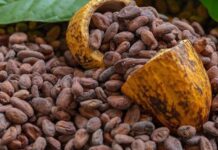

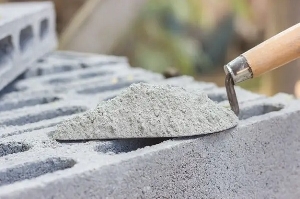
The Crops Research Institute of the Council for Scientific and Industrial Research (CSIR-CRI), has expressed deep concern about the use of cement powder for the storage and preservation of cowpea (beans) against pests by some farmers in the beans value chain.
It warned that the activity was highly unsafe and unscientific, posing serious health risk to consumers and undermined efforts to improve post-harvest storage and food safety in Ghana.
Professor Maxwell Darko Asante, the Director of CRI, in a statement to the Ghana News Agency, said the Institute had taken notice of a viral video circulating on social media, indicating the use of what looked like cement powder for the storage and preservation of cowpea against storage pests.
The statement strongly condemned the practice and discouraged all, especially farmers, traders and consumers from adopting it.
The statement said the video presented false and inaccurate information shared with the potential to deceive, manipulate or cause harm to vulnerable group of persons in Ghana.
“Cement is not a food-grade substance and is not approved for use in food or grain preservation under any circumstance. The institute wishes to also remind Ghanaians that not all information shared on social media is true and authentic.”
“The Institute, therefore, calls on the public to verify agricultural information with the credible and relevant institutions before adoption and dissemination,’ the statement said.
The statement advised farmers to always contact the nearest extension officer of the Extension Services Directorate of the Ministry of Food and Agriculture or the office of the CSIRCrops Research Institute to establish the veracity of any technology, practice or information before adoption.
It added that the CRI remained committed to promoting safe, evidence-based, and internationally accepted post-harvest handling practices.
The Crops Research Institute, while condemning such practices, also sought to promote scientifically validated, safe storage methods with which stakeholders can improve cowpea quality, enhance food safety, and increase farmer profitability across Ghana.
The Institute recommended that cowpea grains are dried to safe moisture levels (about 12-13 percent) before storing them.
Again, hermetic storage technologies including use of airtight packages such as the PICS bags or other hermetic containers are adopted and it is highly recommended for smallholder farmers in Ghana.
Farmers were advised to use approved grain protectants, ensure clean storage facilities, as well as adopt integrated pest management strategies.
Furthermore, botanical protectants must be practiced — these are locally validated or traditional practices with very low chemical residual risk including Neem seed powder or neem oil extracts and wood ash.
The statement encouraged the use of diatomaceous earth — a mutual non-toxic powder prepared from fossilised algae could be mixed with cowpea grains.