
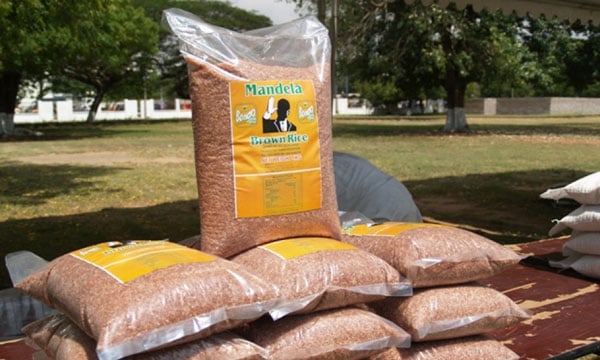
Rice has quietly become one of Ghana’s most important staple foods. From our homes and chop bars to ceremonies and quick weekday meals, rice is now part of our everyday life. Yet behind this growing appetite lies a paradox that continues to weaken our economy and frustrate Ghanaian farmers.
Today, Ghana spends an estimated US$350 million every year importing rice. We consume nearly 2 million metric tons annually, but close to 70% of that rice is imported. This means that while demand is strong, the value of what we eat is largely exported to other countries – jobs, income, and opportunities included.
The challenge is not that Ghana cannot grow rice. In fact, Ghana has suitable ecologies across the north, middle belt, and southern lowlands. The deeper problem is scale, structure, and systems. Less than 3% of Ghana’s agricultural land is under rice cultivation, compared to countries like Thailand (46.5%) and Vietnam (58.8 %) under intensive rice production (IFS, Ghana). These countries did not become rice powerhouses by chance; they invested deliberately in land development, farmer support, processing, and market protection.
Ironically, Ghanaian rice farmers are not currently suffering from lack of production alone – but from lack of markets. Local rice supply is beginning to outstrip demand, creating an artificial glut. Warehouses are full, mills are slow, and farmers are holding unsold paddy. At the same time, imported rice continues to dominate shelves due to branding, price perception, and policy gaps.
For the Ghanaian rice farmer, the pain is compounded. Cost of production remains high, driven by expensive inputs, mechanization services, and financing. Yet prices are falling, partly influenced by the recent appreciation of the Ghanaian cedi against the dollar, which makes imported rice relatively cheaper. The result is a farmer squeezed from all sides – high costs, low prices, and limited protection.
So, where do we go from here?
First, regulated rice imports are critical – not a blanket ban, but smart controls that align imports with seasonal local production. Second, government-backed buyback schemes through buffer stock systems must be strengthened to absorb excess local rice and stabilize prices. Third, Ghana urgently needs a guaranteed floor price per kilogram of local rice to protect farmers from market shocks and unfair competition. Fourth, input costs must come down – from seeds and fertilizer to mechanization services – through targeted subsidies, bulk procurement, and private sector participation. Financial institutions must also design farmer-friendly products that reflect the realities of rice production cycles.
But policy alone is not enough.
This is also a national mindset issue.
Here`s a clarion call to all Ghanaians – consumers, retailers, institutions, hotels, and caterers – to consciously choose Ghana Rice. Every bag of local rice purchased sustains a farmer, supports rural jobs, reduces pressure on our foreign exchange, and strengthens national food security. Ghana rice has improved significantly in quality, taste, and packaging. What it needs now is loyalty and confidence.
Ghana’s rice story can be rewritten – but only if we all play our part.