
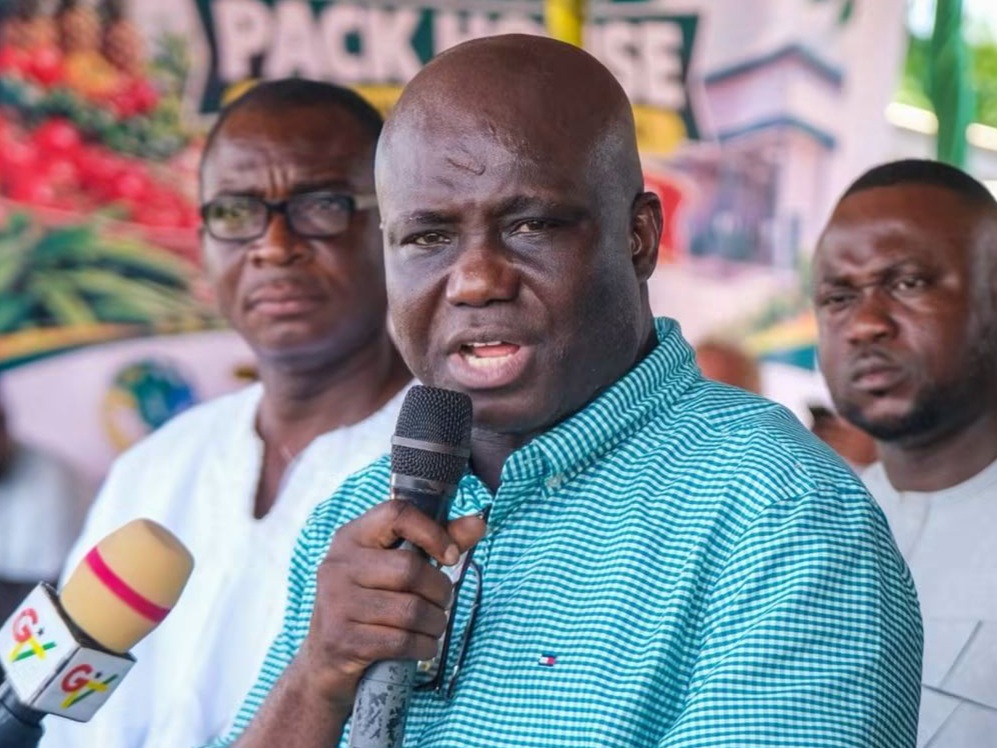
The Minister of Food and Agriculture, Hon. Eric Opoku, has revealed that farmers under the Ghana Tomato Self-Sufficient Initiative (GHATSI) are to benefit from pension contributions set aside in a pension fund.
Minister said this during the launch of the Ghana Tomato Self-Sufficient Initiative at Anloga in the Volta Region.
The initiative is a Government of Ghana initiative led by the Ministry of Food and Agriculture in partnership with FarmMate LTD that aimed to build a reliable, year-round and integrated domestic tomato value chain that progressively meets national demand, reduces import dependence and creates an eventual surplus for export.
Farmers, unlike other professions, do not benefit from pension benefits even though they contribute immensely to the lives of individuals, including the President of the Republic.
A sector that employs over 1/3 of the working population does not benefit from pension funds that leads to derailing.
He said the initiative provides for a pension arrangement under which a small, agreed percentage of the farmer’s income will be set aside in a pension fund after the harvest has been purchased and payment made.
“This will provide farmers with a measure of income security when they reach a stage at which they no longer have the strength to remain actively engaged in farming,” he mentioned.
According to him, the farmers deserve not only the support required to produce today, but also dignity and financial security in retirement.
He added that Pan-African Savings and Loans, a subsidiary of the Ecobank Group, is working directly with farmers in the production communities to provide the required financing under the initiative. This will bring liberation to farmers in accessing financial support.
“The current farmer enhancement package is estimated at approximately GHS20,000 per acre. It covers inputs, land preparation, soil testing, technical assistance, insurance and other production requirements”, he revealed.
To ensure effective extension service delivery, he explained that a portion of the financial package will also support extension delivery. This will enable Agricultural Extension Officers to remain close to participating farmers, provide regular technical guidance and ensure that farmers practise intentional, scientific and commercially oriented agriculture.
This is not free input distribution. It is productive input-credit financing intended to ensure that capable farmers are not prevented from producing because they do not have all the required capital at the beginning of the season.
The applicable financing obligation will be settled through the structured off-take arrangement after harvest.