

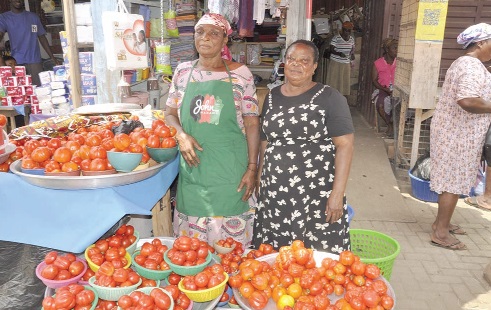
Following the recent suspension of tomato exports from Burkina Faso to Ghana, the Agribusiness Students Association of Ghana (ABSAG) has conducted a rapid field-based study titled “Rapid Assessment of Tomato Supply Disruption in Ghana”.
The study was undertaken to assess the immediate effects of the disruption on traders, transporters, and consumers across key tomato markets in Ghana. Although Burkina Faso has now lifted the export ban, the apparent restoration of supply should not be interpreted as a recovery. Instead, it reveals the extent to which Ghana’s tomato market depends on external supply to maintain stability. The current moment is therefore not one of resolution, but of temporary relief within a structurally fragile system
The survey covered major trading centres namely; Ashanti, Northern, and Volta Region, including market centres such as Tech Junction–Ayigya Market, Abinkyi Market, and Choggu Market. These markets represent key distribution and consumption hubs within Ghana’s tomato value chain.
Findings from the study reveal that the export ban has intensified existing vulnerabilities in Ghana’s tomato sector. Respondents consistently reported sharp increases in tomato prices, with some markets recording price hikes from GHS 250 to GHS 500 per box, from GHS 500 to GHS 800, and, in extreme cases, up to GHS 1,300–3,000 per box, depending on size and availability.
These extreme price movements are not merely market reactions to a temporary shortage; they represent the behaviour of a system lacking internal stabilising mechanisms. The rapid escalation underscores how quickly Ghana’s tomato market becomes unstable when external supply is disrupted. At the same time, supply has become irregular and significantly reduced, with traders noting slow restocking and difficulty accessing sufficient stock for their businesses.
The study further indicates that Ghana’s dependence on imported tomatoes, particularly from Burkina Faso, plays a critical role in stabilising supply during the dry season. However, the recent export restriction has exposed the fragility of this reliance. Some traders reported sourcing between 40% and 100% of their stock from Burkina Faso prior to the disruption, highlighting the extent of the market’s external dependence. This level of dependence suggests that Ghana’s tomato market does not function as a self-regulating system but rather as one that is externally stabilised. With the lifting of the ban, this dependence is restored rather than reduced, effectively resetting the conditions for future vulnerability.
This situation is consistent with emerging national reports. According to News Ghana, tomato traders in Sunyani have already begun experiencing price increases and shortages following Burkina Faso’s decision to suspend tomato exports to prioritise domestic processing needs. The report further notes that the suspension, which took effect on March 16, 2026, has significantly affected cross-border trade flows and market stability in Ghana. Similar concerns have been reported across other media platforms, indicating widespread market anxiety over future supply shortages and price volatility.
Transporters within the tomato value chain have also been significantly affected. Operators along major routes such as Navrongo–Bolgatanga–Tamale–Techiman–Kumasi–Accra and Ho–Kpando–Accra reported reduced trip frequency, increased fuel costs, road insecurity, theft, and delays at checkpoints and borders. These challenges have resulted in declining incomes and further constrained the movement of tomatoes from production zones to consumption markets. These logistical constraints amplify the effects of supply shocks, meaning that even when imports resume, inefficiencies within domestic distribution continue to undermine market stability.
Consumer behaviour has also shifted in response to rising prices. Many consumers are purchasing smaller quantities or seeking alternative food items, reflecting price sensitivity in the tomato market. This adjustment behaviour demonstrates that rising prices in the tomato market do not translate into proportional gains for traders or producers, but instead suppress overall market activity, reinforcing income instability across the value chain. This has, in turn, negatively affected traders’ sales volumes and incomes, creating a situation where higher prices do not necessarily translate into higher profitability.
While the lifting of the export ban is expected to ease immediate supply constraints, it risks creating a false sense of stability. The underlying structural conditions that produced the crisis—seasonality, weak infrastructure, and external dependence—remain unchanged. Overall, the findings highlight a complex and interconnected set of challenges affecting Ghana’s tomato value chain. These include seasonal production gaps, overreliance on imports, inadequate storage infrastructure, poor road networks, high transport costs, and security risks along transport corridors. The export ban from Burkina Faso has therefore served as a shock, exposing and intensifying existing structural weaknesses in the sector.
The current moment presents a narrow policy window. If structural interventions are not implemented during this period of temporary stability, Ghana is likely to experience repeated cycles of disruption and recovery. In response, stakeholders proposed several interventions, including government support for local tomato farmers, investment in irrigation and year-round production systems, construction of storage and processing facilities, improvement of road infrastructure, and enhanced security along transport routes. These measures are seen as essential to reducing Ghana’s dependence on external sources and strengthening the resilience of the tomato industry.
In conclusion, while the lifting of Burkina Faso’s export ban may temporarily restore supply, it does not address the structural weaknesses within Ghana’s tomato sector. The events surrounding the ban have demonstrated that the system is highly sensitive to external shocks and lacks internal resilience. Without deliberate investment in production systems, storage infrastructure, and market coordination, Ghana will remain vulnerable to future disruptions. The critical question is no longer whether supply has resumed, but whether the system has been strengthened to withstand the next shock.