
Ghana spends about $500m yearly to import rice from other countries, creating employment for the youth in these countries.
With the assumption of office by the government, Ghana has increased its domestic milled rice production from 650,000 in 2024, representing 38%, to 960,000 in 2025, representing 56%. However, Ghana still has a 44% deficit to tackle to achieve rice self-sufficiency.
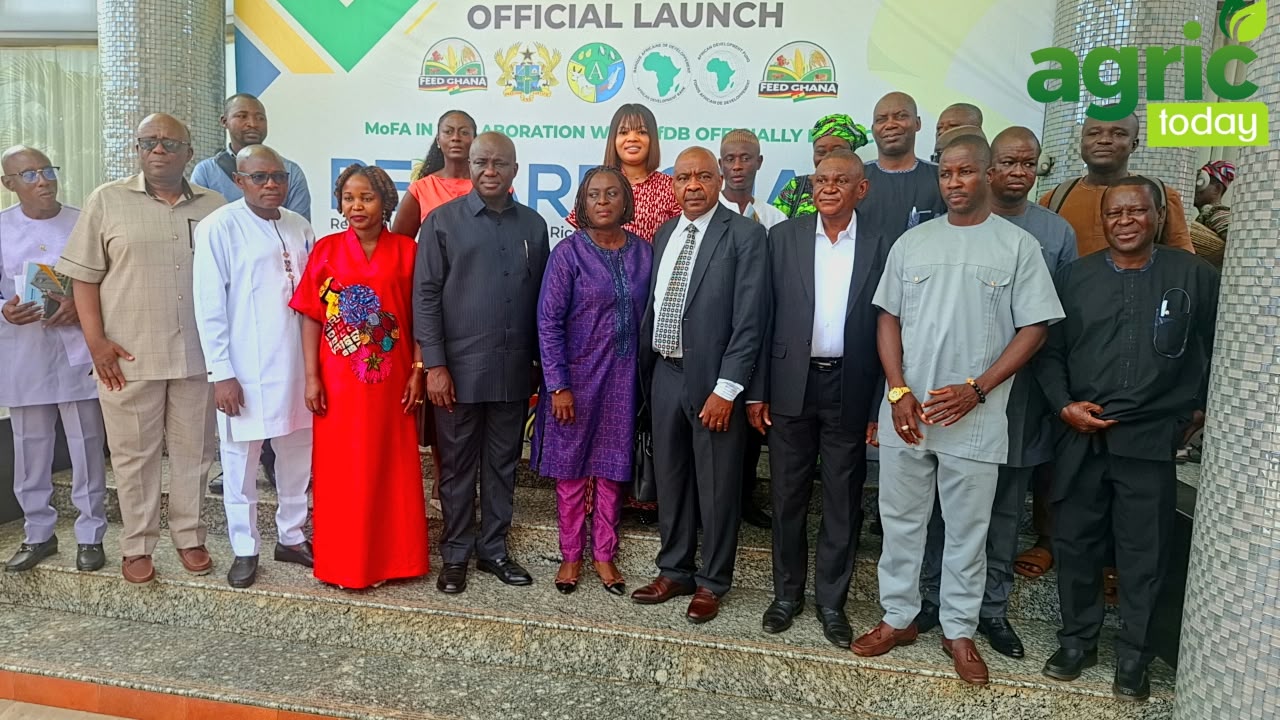
To progressively reduce rice imports and achieve rice self-sufficiency by 2028, the government has launched the Regional West Africa Resilient Rice Value Chains Development Project, Ghana (REWARD-GHANA).
The aim of the REWARD-GHANA is understood within the broader framework of the Feed Ghana Programme that comprehensively seeks to increase food production, strengthen agricultural value chains, expand agro-processing, improve market access and position agriculture as a major driver of economic growth and employment creation.
During the launch, the Minister of Food and Agriculture, Hon. Eric Opoku, commended the African Development Bank for its generous grant support of US$18.8 million towards the implementation of the project.
“This investment is a strong demonstration of the Bank’s confidence in Ghana’s agricultural potential and its commitment to supporting our national development priorities,” Minister said.
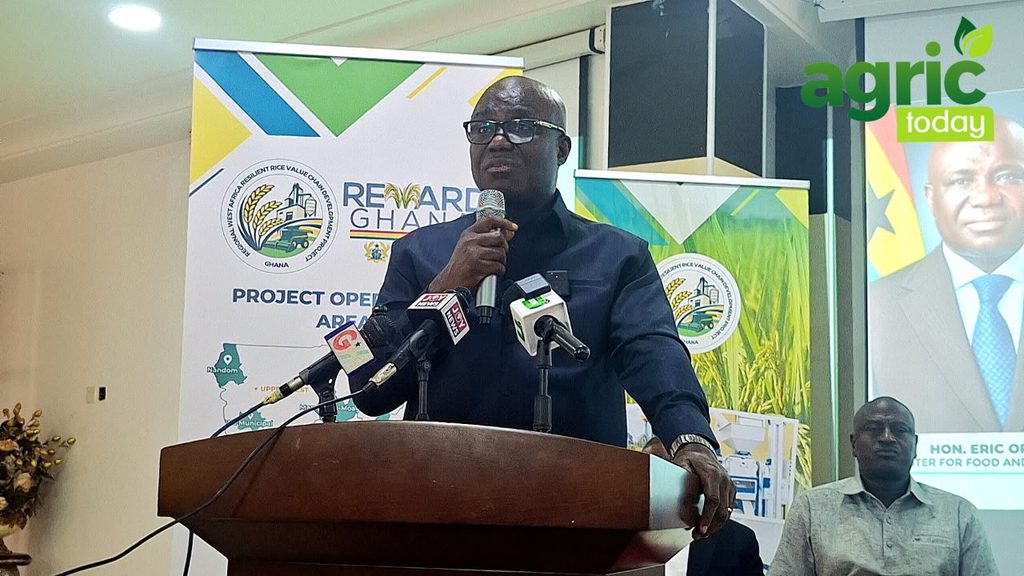
Explaining rice contribution in the daily cuisine and its opportunities to the economy, he said rice is no more occasional meal, however, the most second important staple food in Ghanaian households that creates immense opportunities for Ghana’s agricultural economy.
The project will be implemented in seven districts across the Northern Belt which possess extensive agricultural potential for rice cultivation. The districts are Tamale Metropolitan, Mion, Savelugu, Mamprugu-Moagduri, West Gonja, Wa Municipal and Nandom.
According to the Minister, the project would cover 3,200 hectares, directly employing 20,000 smallholder farmers, including women and young people, and producing 3.31 million metric tonnes.
The project integrates all the agricultural interventions like quality seed, good water management to withstand the increasing effects of climate variability, vital agricultural machinery and technologies, and efficient processing systems that preserve quality and reduce losses.
He stressed that the investments are expected to improve the quality, cleanliness, consistency and overall competitiveness of locally processed rice.
“Our ambition is to ensure that Ghanaian rice can compete confidently with imported alternatives on supermarket shelves, in restaurants, hotels, markets and households across the country”, he added.
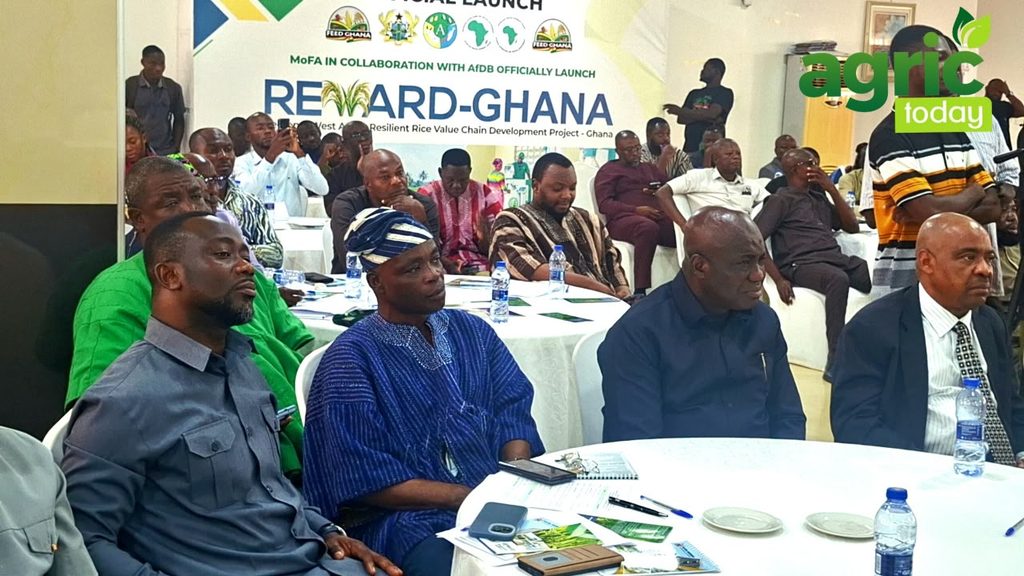
He called on the private sector to directly engage in the investments to establish meaningful partnerships with the farmers, invest in modern technologies and develop dependable purchasing arrangements that guarantee markets for locally produced rice.
Hon. Eric Opoku assured the farmers, especially women and the youth of been pivotal stakeholders to the project, stated that the success of REWARD would ultimately be measured by the improvements it would bring to their farms, productivity, incomes and livelihoods.
“I encourage you to embrace the opportunities this project provides, work closely with agricultural extension officers, adopt improved agronomic practices and strengthen your farmer-based organisations,” he urged the farmers.
He assured of transparency, accountability, efficiency and timely delivery as the project begins.
The Divisional Manager of Agriculture and Agro-Industry Department, African Development Bank, Dr. Demain Ihedioha, added that the project’s responsibility is to translate Feed Ghana into practical steps that could improve Ghanaians’ livelihoods.
He highlighted that Ghana possesses good landscape, water resources, technical knowledge, and energetic farmers to improve production and processing of rice to curb the rice import bill.
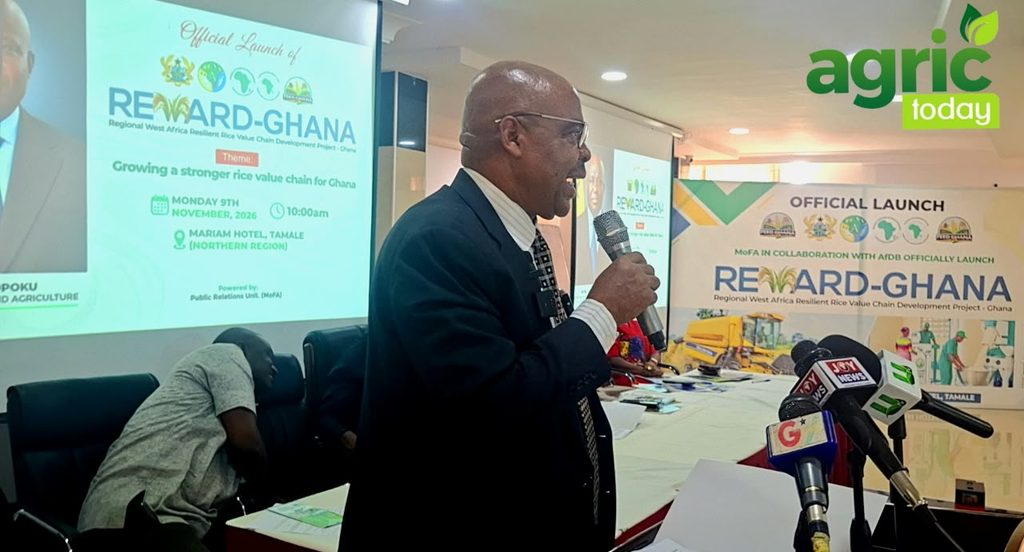
To achieve food self-sufficiency, the maxim: no farmer, no nation; poor farmer, poor nation should be prioritised in Ghana.
“We need the government support in terms of commercialization, advertisement and promotion of Ghana brand rice,” he called on the government, he said.
According to him, the government should actively engage the Ministry of Information and Communication to educate the public on the need and merits of patronising locally produced rice.
“If you match the communication outlet with a lot of studies on the analytical characteristics of local rice and make it very bold on television and radio stations, I can tell you it may shift the needle a little bit about how local rice is regarded, perceived and consumed”, he added.
He acknowledged Ghana’s effort to enhance productivity based on the government’s interventions that direct the country’s pathway in the right direction for feeding itself.
“We hope that, together, we can make the Ghana Feed Itself agenda a reality in our time, so that posterity will remember us for the wonderful work we have done”, he concluded
The representative from the Ministry of Finance, Mr. Ebenezer Botchwey, lauded the African Development Bank for such a laudable project to enhance rice production to curb Ghana’s rice import balance.
He mentioned that the project would employ about 20,000 smallholder farmers, especially women and the youth.
He assured that the funds would be available for disbursement to make the project a success.