
Ghana’s agriculture is resetting by transitioning from cultural methods of farming to agribusiness that imbibe science and technology to improve yields.
To motivate the youth to patronise the sector, the government is working towards an agricultural sector that is attractive to young individuals because it offers opportunities in technology, innovation, enterprise, and professional development.
To achieve this, the Ministry of Food and Agriculture, in collaboration with the World Food Programme (WFP) and the Korean International Cooperation Agency (KOICA), has distributed digital tools and agri-tech equipment to 5 agricultural colleges in Kumasi.
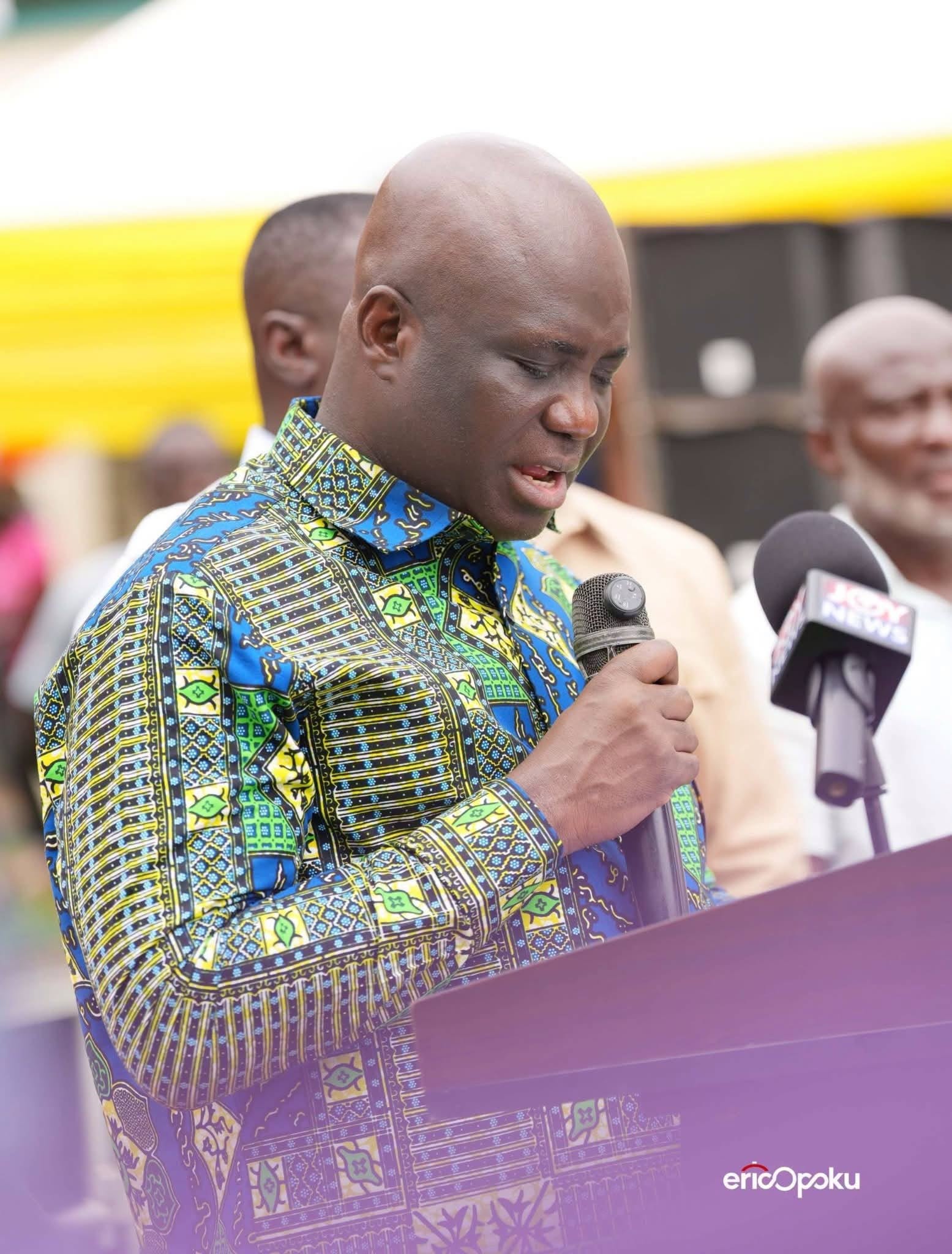
At the programme with the theme: Strengthening Agricultural Education for Digital Future, the Minister of Food and Agriculture, Hon. Eric Opoku, said the distribution of the equipment represents an investment in knowledge, skills, innovation and, most importantly, in the young men and women who will shape the future of Ghanaian agriculture.
“We are moving towards a future where farmers can assess soil conditions before applying nutrients; where weather information can inform decisions on planting and farm management; where soil moisture can be monitored to improve water-use efficiency and reduce losses; and where drones, sensors, digital platforms and data analytics become practical tools for increasing productivity,” Hon. Eric Opoku mentioned.
Leveraging technology to achieve food security, the Minister explained that the government is strengthening the capacity of the institutions, strengthening the skills of the graduates, strengthening agricultural extension and ultimately, strengthening the farmer and Ghana’s food system.
The five (5) agriculture colleges that are being positioned as important centres for practical learning in advanced agricultural technologies with digital tools and agri-tech equipment are the Kwadaso, Wenchi, Ejura, Damongo and Ohawu Agricultural Colleges.
The digital tools and agri-tech equipment that were received by these colleges include 60 moisture meters, 60 soil testers, 60 greenhouse environmental control learning kits, 60 IoT sensor education kits, weather station starter kits, 60 GPS devices, high-performance computers, business laptops and 15 mini drones.
Moreover, agricultural spraying simulation, drone flight simulation and agricultural data-processing software were added to the packages.
Underscoring the use of the tools and equipment, Hon. Eric Opoku said the items are teaching and learning tools that would help bridge the gap between agricultural theory and the practical technologies increasingly being used in modern farming.
“The programme is built on an existing programme of investment in these institutions and takes our agricultural colleges another step towards precision, digital and data-driven agriculture”, he added.
Explaining the worth of the interventions to Ghana’s food systems, he said the interventions are important because the future of Ghana’s agriculture will depend not only on the ability to produce more, but also on the ability to produce sustainably and build resilience against climate-related risks.
He urged the students to make good use of the tools and equipment to enhance skills delivery in the agriculture sector to improve the quality of food produced in the country.