
The Greater Rural Opportunities for Women 2 (GROW2) project has supported women smallholder farmers with 25 solar-powered boreholes to boost climate-smart agriculture in the Northen, Savannah and Upper West Regions of Ghana.
Read more: GROW2 boosts climate-smart agriculture for women smallholder farmers with 25 solar-powered boreholes in the Northern sectorGROW2, a project funded by Global Affairs Canada (GAC) and implemented by Mennonite Economic Development Associates (MEDA) in collaboration with the Ministry of Food and Agriculture (MoFA), has officially commissioned the 25 solar-powered boreholes at the solar-powered irrigation site in the Moglaa community, Savelugu Municipality of Ghana’s Northern Region.
These solar-powered boreholes are to strengthening women’s indigenous knowledge in vegetable farming while expanding opportunities for climate-smart, year-round production.
To grace the commissioning at Moglaa, the Minister of Agriculture, Hon. Eric Opoku expressed his gratitude for the answering to his request during the curtesy call of the Canadian High Commissioner, H.E. Myriam Montrat to his office. This request was to support the Feed
Ghana Programme with solar-powered boreholes, hence the completion of the 25 solar-powered boreholes in full operation.
According to the Minister, this project is to prevent prolong inactive farming activities by the women smallholder farmers during the drying season at the enclaves. “During the dry season, farmers, especially women farmers are forced into months of inactivity after the harvest season, resulting in food insecurity, loss of income, and deepening poverty and this is the reality that these boreholes are designed to change,” Hon. Eric Opoku said.
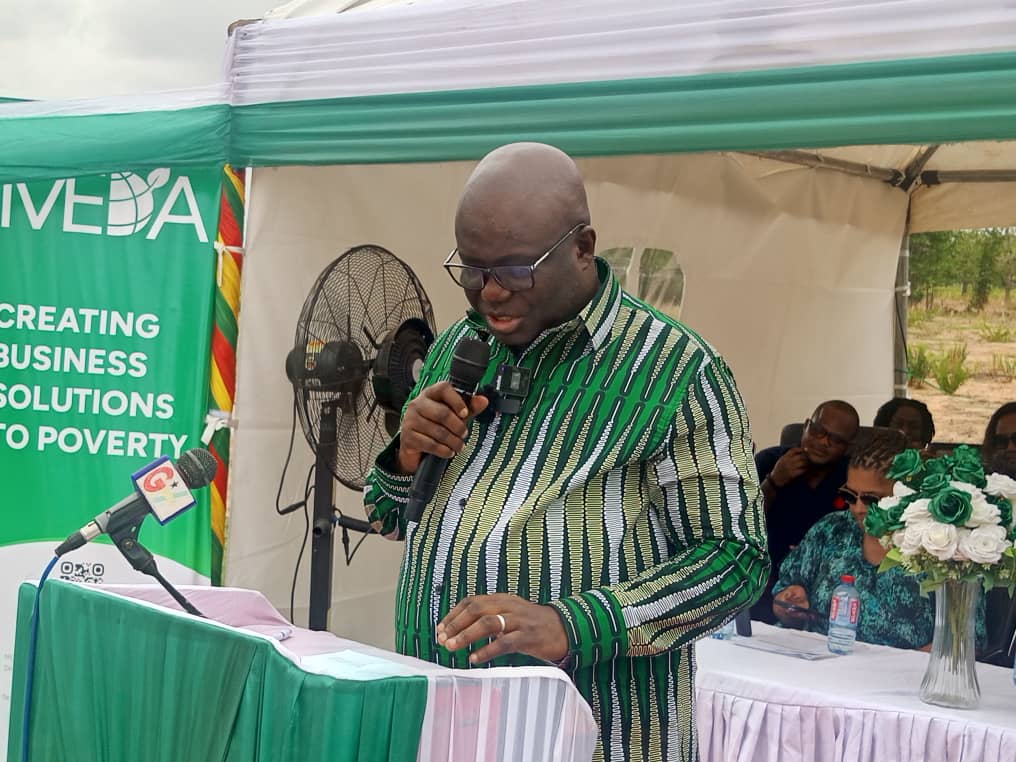
He explained that the solar-powered boreholes installed would provide clean, reliable, and renewable energy-driven water access for year-round vegetable production. He added that the beneficiary communities will now cultivate tomatoe, pepper, onion, leafy vegetables, and other high-value crops throughout the dry season, significantly boosting household food security and income.
He assured the farmers that government is fully committed to the Feed Ghana Programme, which represents the bold, comprehensive, and transformative approach to achieving food sovereignty and agricultural prosperity for all Ghanaians.
He underscored the Ministry and the Department’s assistance through the field officers to continue to provide technical support, extension services, and monitoring to ensure that the installations of the projects deliver maximum benefit to the women smallholder farmers.
“This moment represents the culmination of a shared vision: the delivery of 25 solar-powered boreholes across Northern Ghana under the Greater Rural Opportunities for Women 2 (GROW 2) project, funded by Global Affairs Canada. These boreholes are more than water systems, they are engines of transformation that directly support Ghana’s agricultural priorities, including the Big Push agenda and the Feed Ghana Programme,” H.E Myriam Montrat, the Canadian High Commissioner to Ghana gladly said.
Recounting the Minister’s request, she said the Minister called for support to expand dry-season farming opportunities, particularly for women in Northern Ghana and as a good listener, they listened, acted, and we delivered.
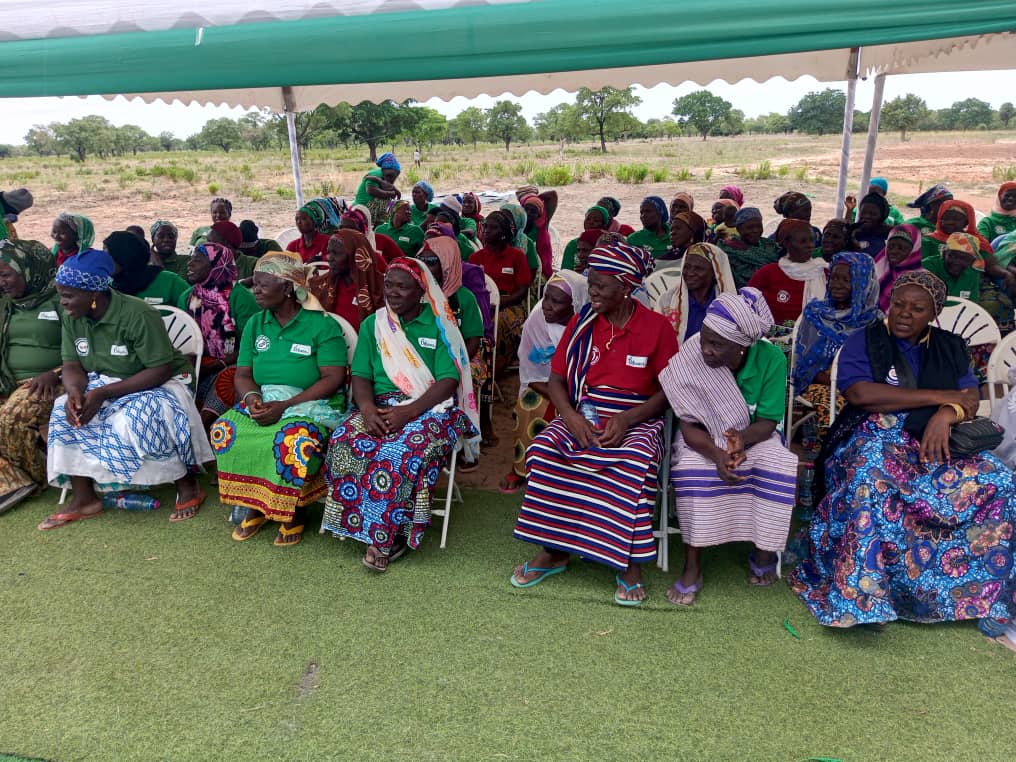
“These 25 boreholes could serve approximately 50 acres of irrigable land and will currently support at least five farmer groups per site, each made up of about 25 women. That means over 3,100 women farmers across 11 districts will directly benefit and we have lots of room to expand. Behind each number is a story—of a woman gaining independence, of a family achieving food security, and of a community building a stronger future,” she explained.
According to her, each facility is equipped with solar-powered pumps, water storage systems, and irrigation tools designed for efficiency and sustainability. But beyond the technology, what truly matters is what this enables: year-round farming, higher incomes, improved nutrition, and resilience in the face of climate challenges.
She said that the initiative is not just agricultural but transformational. It strengthens livelihoods, promotes environmental sustainability, and advances women’s economic empowerment. In regions where long dry seasons have historically limited productivity, these systems open the door to continuous cultivation and new economic possibilities.
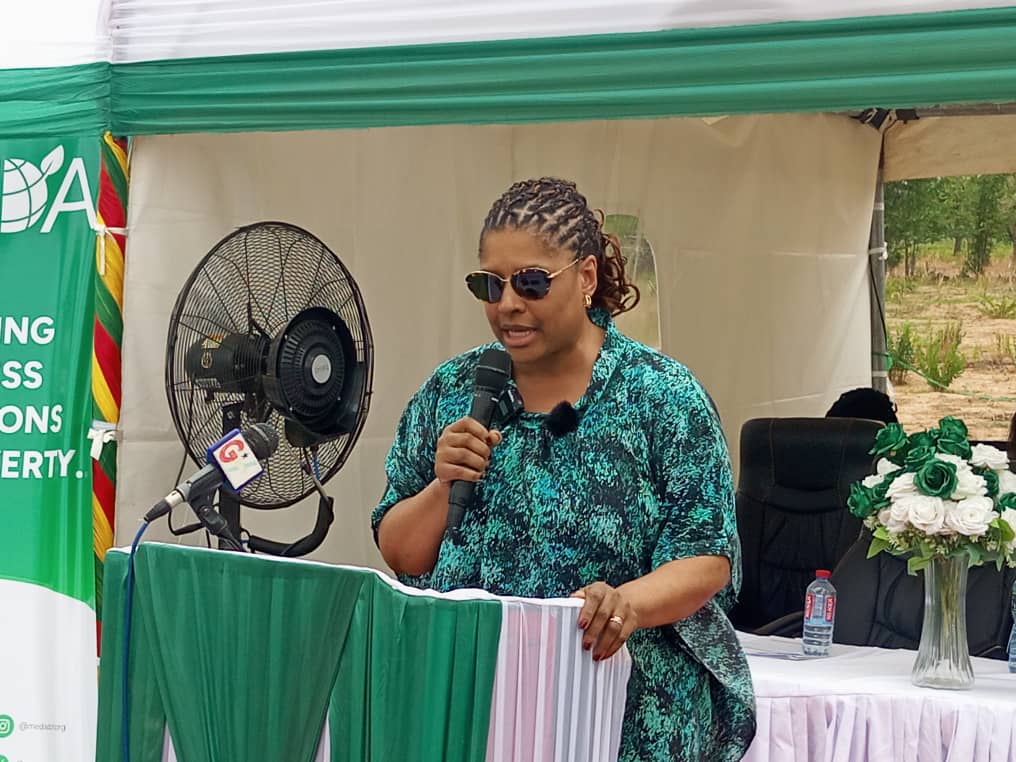
“Canada’s Africa Strategy is rooted in inclusion, resilience, and sustainability. Today, here in Moglaa, we see those values brought to life—in water flowing through pipes, in crops growing in fields, and in hope growing in communities”, she concluded.
Francis Essuman, the Country Project Manager, GROW2 Project shared the importance of the event been a ceremony that marks far more than the commissioning and handover of an irrigation site. It rather represents a shared commitment to inclusive economic growth, women’s entrepreneurship, and long-term resilience in Northern Ghana.
Through GROW2, he said they work closely with women smallholder farmers, women-led agribusinesses, entrepreneurs and market actors, as well as financial institutions and government partners.
The irrigation project in Moglaa alone serves 112 women farmers, enables year-round vegetable production, including during the dry season, and relies on renewable solar energy, reducing climate-related risks while supporting Ghana’s climate commitments. The system also contributes directly to the Feed Ghana Program which prioritize irrigation development, dry season farming, and local food production, he explained.
He urged the women smallholder farmers to grab the opportunities associated to the irrigation project as these serve as an opening opportunity for them to produce consistently, for families to thrive, and for communities to become more resilient to climate change.
He concluded that GROW2 and MEDA remain committed to working alongside the women smallholder farmers today, tomorrow, and beyond, to ensure that the impact of this investment endures well beyond the life of the project.
About Mennonite Economic Development Associates (MEDA)
MEDA has been implementing effective market-driven programs globally since 1953. MEDA combines innovative financial and technical expertise to build and enhance sustainable agri-food systems that provide decent work for people living in poverty with a focus on systemically marginalized communities, including women and youth. Our core expertise lies in market systems, environmental sustainability and climate action, gender equality and social inclusion, inclusive financial services, and impact investment. MEDA partners with local private, public, and civil society actors, strengthening individuals, institutions, communities, and ecosystems, and thereby contributing to sustainable and inclusive systemic change