

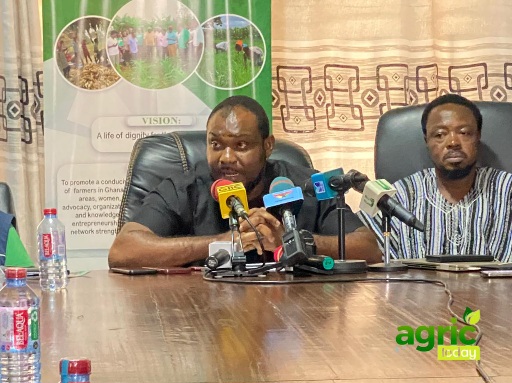
The Peasant Farmers Association of Ghana has urged the government to prioritise food processing, export development and agricultural infrastructure under its proposed US$10 billion New Economy Policy.
The Association says the policy must address longstanding structural challenges in the agricultural sector to improve productivity, expand value addition and create sustainable economic opportunities.
Its Executive Director, Bismark Nortey, says investments in storage facilities, irrigation, mechanisation and agricultural marketing systems will be critical to unlocking the sector’s potential.
The government plans to invest US$10 billion over five years in nine key sectors, including agriculture and agribusiness, under the proposed policy. The initiative is expected to receive US$2 billion annually and accelerate job creation and economic growth.
Reacting to the proposal, Mr Nortey welcomed the inclusion of agriculture and agribusiness but called for clarity on the specific interventions planned for the sector.
“Any economic policy that does not have agriculture and agribusiness at the heart of it is a non-starter and it’s bound to fail,” he said.
He argued that investment must go beyond boosting food production to establish effective systems for storing, processing and marketing agricultural produce.
Mr Nortey said processing surplus food for export could help reduce post-harvest losses, create additional markets for farmers and increase the value Ghana derives from agricultural production.
He also called for investment in irrigation and mechanisation to improve productivity and reduce the sector’s dependence on rain-fed farming.
“These investments must be able to unlock the agricultural sector, unlock the infrastructural deficits, unlock the marketing aspects, unlock value addition,” he said.
Mr Nortey further urged the government to address barriers that discourage young people from entering agriculture. These include limited access to land, mechanisation and digital infrastructure.
He said addressing these constraints would help make agriculture more attractive to young people while improving the sector’s capacity to support jobs and economic growth.
The Association is also seeking clarity on how the proposed New Economy Policy will relate to the government’s existing Feed Ghana programme.
Mr Nortey questioned whether the new policy would complement the programme or provide the framework for its implementation.
He said a clear outline of the planned interventions would help farmers and other stakeholders understand how the government intends to address the sector’s challenges.
The Association believes that aligning agricultural production with processing and export development will be essential to ensuring that the proposed investment delivers lasting benefits for farmers and the wider economy.