
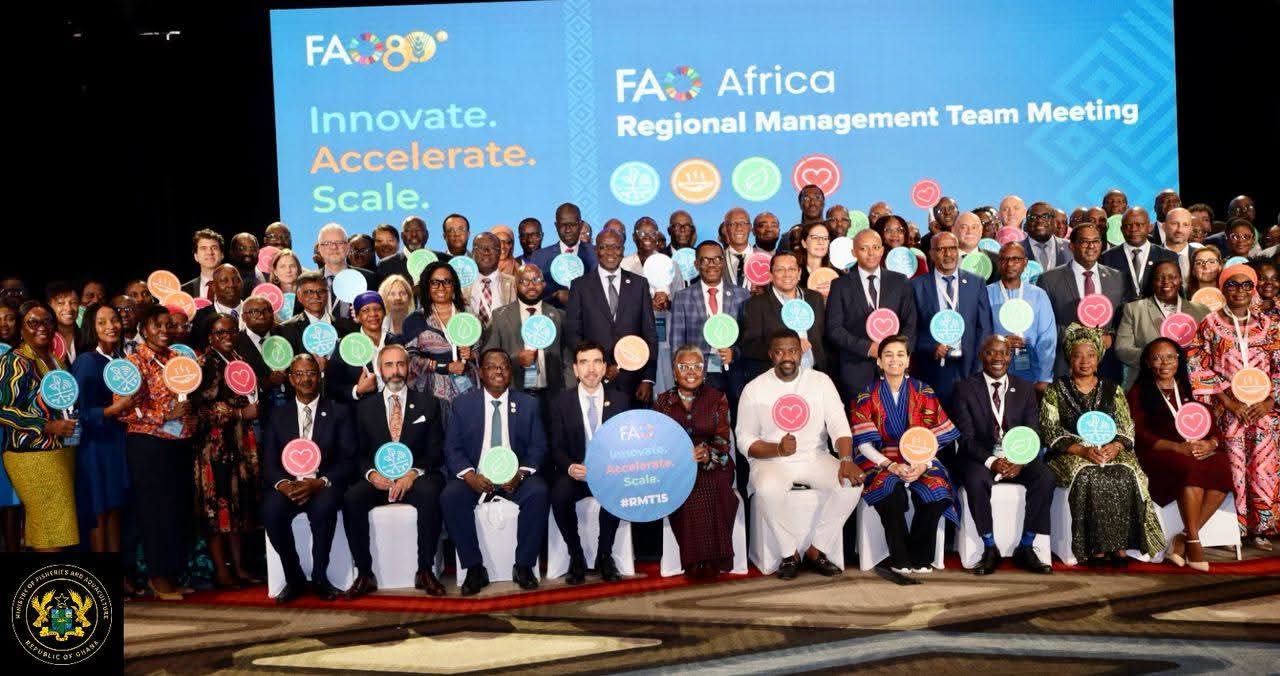
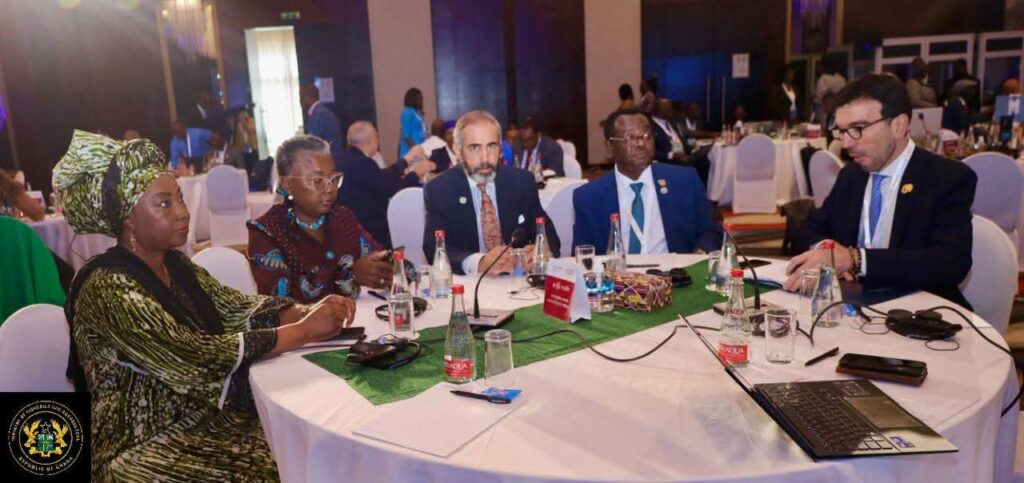
Ghana has hosted the 15th Regional Management Team Meeting (RMT15) of the Food and Agriculture Organization (FAO) on a conversation on Africa’s agricultural future in Accra.
During the meeting, the Deputy Director-General of FAO, Maurizio Martina reinforced the importance of efficiency, accountability, and coordination, noting that the “One FAO” approach is essential for coherent action.
Regional Representative, Dr. Abebe Haile-Gabriel added that FAO’s effectiveness will be judged by its ability to support country offices, detect challenges early, and respond with urgency.
The Deputy Minister for Food and Agriculture, Hon. John Dumelo, outlined the pressing structural challenges: smallholder constraints, rising demand from population growth, value chain disruptions, and nutrition gaps.
He detailed Ghana’s Feed Ghana Programme and Block Farming and Agricultural Transformation Agenda, designed to boost production, reduce imports, stabilize food prices, and modernize farming practices.
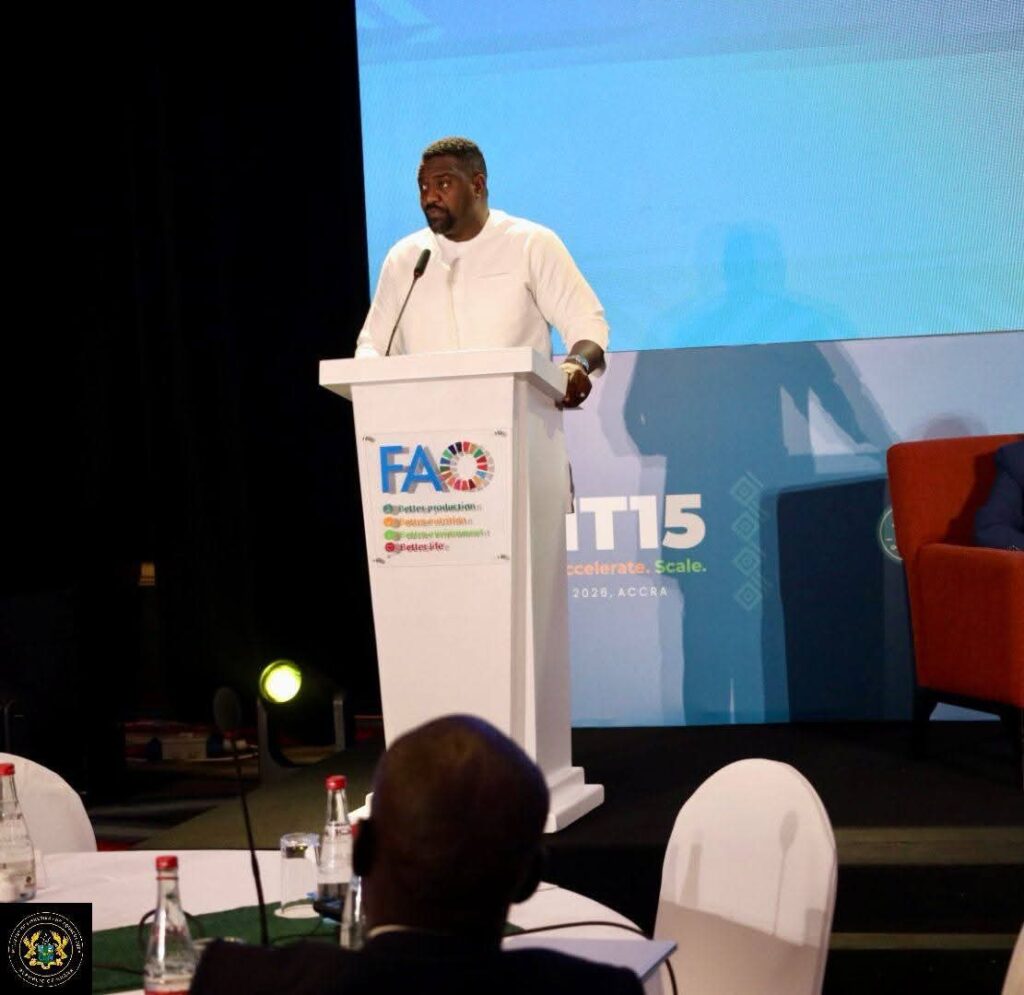
Dumelo stressed FAO’s critical role in helping countries move from fragmented interventions to scalable, evidence-based programmes aligned with FAO’s Four Betters: better production, better nutrition, a better environment, and a better life.
In opening remarks, the Minister for Fisheries and Aquaculture, Hon. Emelia Arthur, emphasized the urgency of moving Africa “from potential to performance.”
She highlighted the continent’s abundant resources, youthful population, and entrepreneurial energy, yet noted that hunger, poverty, and climate shocks persist.
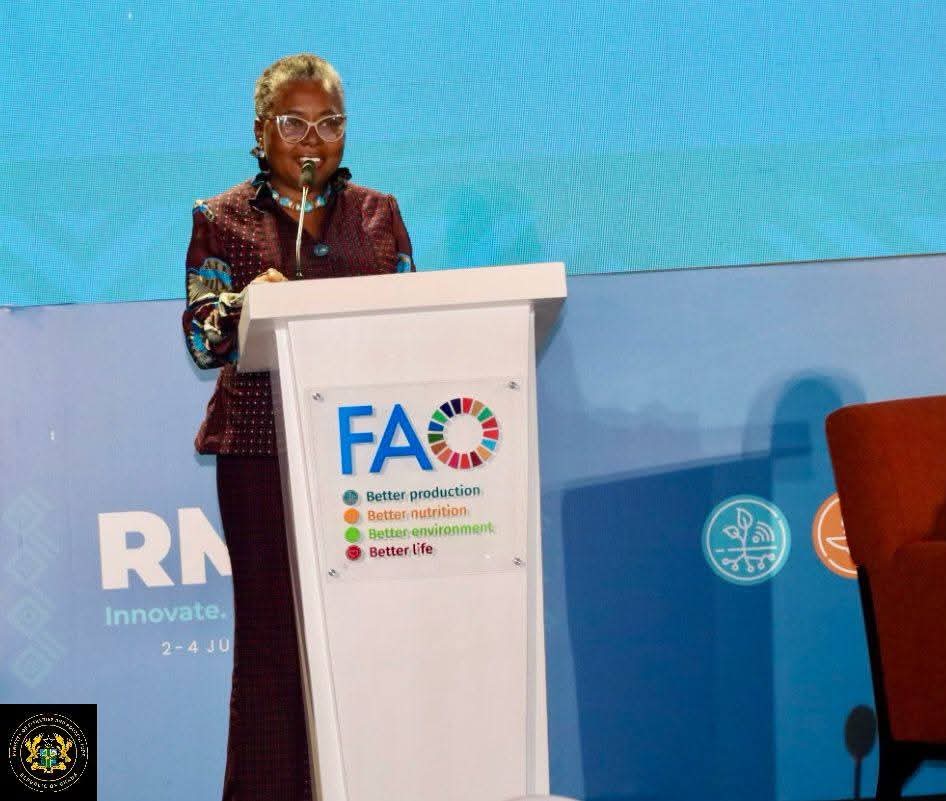
“Africa requires transformation, not incremental change or fragmented pilot projects,” she declared.
Hon. Emelia Arthur pointed to Ghana’s fish processing centre in Axim, a partnership with FAO that has uplifted women fish processors, as proof of what targeted interventions can achieve.
She underscored the Blue Economy as a major untapped opportunity, urging regional cooperation, investment, and decisive action against Illegal, Unreported and Unregulated (IUU) fishing.
The gathering brought together FAO leadership, ministers, and sub-regional coordinators to chart a path toward stronger coordination and more efficient delivery of agrifood systems across the continent.
Ghana reaffirmed its commitment to working closely with FAO and international partners to transform challenges into opportunities and drive sustainable development across Africa.