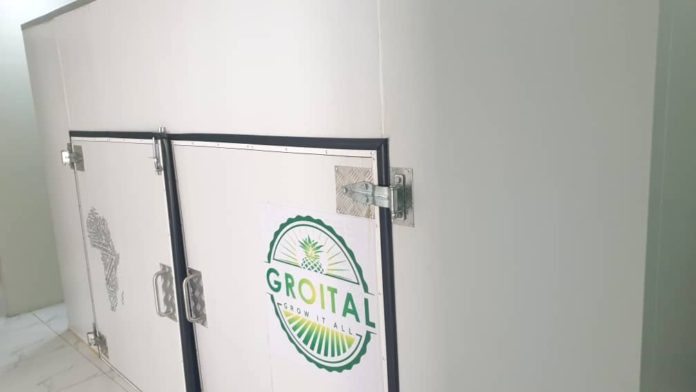
Groital Company Limited with support from HortiFresh has procured a 75kg industrial dryer and established a processing facility for the production of dried fruits to enhance its operations.
This is part of HortiFresh’s Individual Company Support of the Access to Finance Component. The project is a soft loan facilitated by HortiFresh through Rabobank Foundation to reduce post-harvest losses, increase employment, and improve upon the overall business activity of the company.
So far, the new dryer and the facility has increased the company’s production by about 100%, Groital employs a total of 31 staff, of which 55% are women.
Prior to this partnership, the company used to dry fruits with two 5kg domestic dryers which took about 24 hours to dry fruits. This slowed the production and growth of the company.
Joshua Ayinbora, CEO of Groital expressed satisfaction with the partnership, saying it has given his company a facelift to venture into the export market. “We use to operate the business from our home but this facility has given us enough space to work efficiently and effectively.”
According to Joshua, his company has received an order from the Netherlands to supply dried fruits as a result of HortiFresh’s trade mission activities.
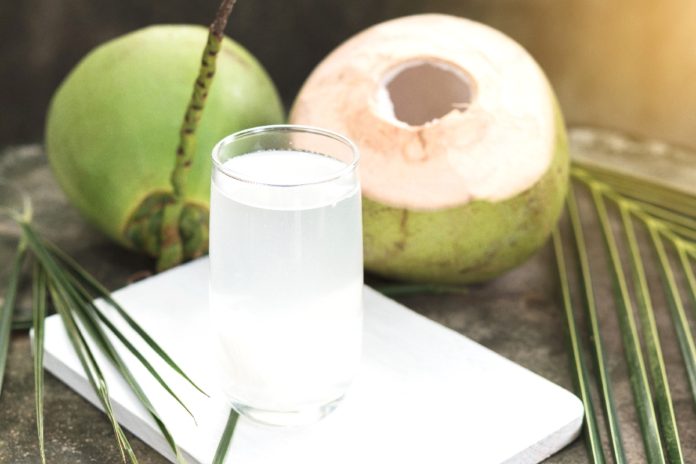
Coconut water is mainly made of water – in fact, 94% is water. It is low in calories and a good source of B vitamins and potassium.
The liquid contains amino acids and electrolytes and it has antioxidant benefits.
Coconut water, the liquid endosperm found inside coconuts, supports the development of the hard endosperm. If you harvest the liquid endosperm from immature green coconuts, you get clear, aromatic, and highly perishable coconut water. Coconut water needs to be strained through a cheesecloth-lined sieve right after you open the coconut. After that, chill it to at least 39 degrees Fahrenheit before storing it in the refrigerator or freezer.
The easiest way to store coconut water is to put it into the fridge, but it will only last for 1-2 days. Many experts suggest not storing coconut water outside of refrigeration for more than 3 or 4 hours.
If you want to keep it fresh longer, you can freeze it in ice cube trays or plastic zip-lock bags
Refrigerating. Strain the coconut water into a freezer-safe, airtight container and place it in the freezer, uncovered. Chill the coconut water for 30 minutes then seal the container and transfer it to the refrigerator.
Freezing. Pour the strained coconut water into an ice-cube tray and let it freeze for about one hour. Transfer the frozen coconut water to a heavy-duty freezer bag. It will stay safe to use indefinitely if it’s kept at 0 F.
Fruit truly is the perfect food. It is the easiest for our bodies to digest, and our system has to do almost nothing to break it down.
All fruit is good for the body, but it eating when it’s ripe to properly digest it and use it for energy.
Think of all the colors, shapes, and textures of fruit as different antioxidants and phytonutrients to load upon. And then include a variety of fruits in a diet to take advantage of all the benefits they have to offer from fighting colds and warding off inflammation to making your skin glow and your hair shiny.
Instead of sitting down to a piece of toast or an egg, Koko, or white omelet each morning, do something amazing for your health and indulge in one of these delicious fruit plates.
1. Anti-inflammatory plate: Cherry, pineapple, blueberry. Pineapple is packed with vitamin C and contains an enzyme called bromelain that reduces inflammation of the gut, boosts immune function, and stimulates protein digestion.
Try combining it with blueberries, which are loaded with antioxidants and vitamins A, C, and E.
Anthocyanin is the main antioxidant in both blueberries and cherries and is what gives these fruits their gorgeous deep blue and red colors.
Grab some tart cherries over sweet ones as they are shown to contain higher amounts of phenolic compounds, delivering a stronger anti-inflammatory punch.
2. Immune-boosting plate: Grapefruit, kiwi, strawberry. Feeling a little run down? Kiwi, grapefruit, and strawberries can give your immune system the boost it needs to keep you healthy.
Kiwis are rich in vitamin C, which helps support the immune system and prevents free radical damage that can lead to inflammation in the body.
Grapefruit and strawberries are also some of our top vitamin C foods (containing more C than oranges!) that can help boost immunity and fight off sickness. Rich in both vitamins A and C, strawberry seeds also contain minerals that support immune function.
Helpful hint doesn’t wait until it’s too late and you’re already sneezing. This would be a great fruit plate to get in before a long flight so that your immune system is strong and ready to go.
3. Antioxidant plate: Fig, red grape, pomegranate. These three fruits are high in antioxidants and disease-fighting compounds that protect our bodies from free radical damage and keep us looking and feeling youthful.
The resveratrol in red grapes and red wine offers powerful antioxidant and anti-aging properties that help combat disease and signs of aging. Grapes are also high in lutein and zeaxanthin, which keeps our vision strong and can minimize the harmful effects of ultraviolet rays.
Pomegranates contain higher levels of antioxidants than most fruits and can help to reverse free-radical skin damage.
Figs are not only dangerously delicious they are also rich in minerals including potassium, calcium, magnesium, iron, and copper and they are a great source of vitamins A, E, and K.
Incorporate some of these antioxidant fruits on your plate to help you fight disease, age gracefully, and keep strong.
4. Detoxifying plate: Goji berry, watermelon, lemon. We can’t detoxify without the help of foods that will hydrate and flush toxins out of the system.
So, let’s start with watermelon, which is 92 percent water and also contains a major detoxifying agent called glutathione. It is also a source of lycopene and vitamins A and C, which further aid in detoxing and fighting free radicals.
Super alkaline upon digestion, lemon is also a strong detoxifier and has antibacterial and antiviral qualities. I like to squeeze it over my fruit, add it to green juice (with lots of parsley and cucumber for a major de-bloating combination), or drink it with warm water first thing in the morning to help cleanse the body and get the digestive system going.
And let’s not forget goji berries. These little guys are a great source of antioxidants, vitamins (A, B, C, and E), iron, and choline, which the liver needs for detoxification processes.
5. Beauty plate: Blackberry, papaya, cantaloupe. Here’s what you should be eating in the morning before your next big event!
Papaya is full of antioxidants and nutrients that assist in the production of collagen. It also contains an enzyme called papain that helps to counter skin damage.
Blackberries are delicious low-sugar fruits that are packed with antioxidants and vitamins A and C.
We don’t want to miss out on cantaloupe. It contains beta-carotene, which is converted into vitamin A in the body and helps make our skin glow and our hair strong and shiny.
6. Energy plate: Banana, avocado, apple. The next time you’re looking for some fuel or wanting to charge up your pre-or post-workout, throw together this energy plate. These nutrient-rich fruits (yes, avocado is a fruit) will replenish and keep you going for hours.
Bananas provide us with quick energy and are a great choice pre-workout. The healthy fats in avocados slow down digestion and are better to incorporate into your post-workout meal.
Apples are high in fiber and will keep you full for long periods of time. Take your pick or choose all three… If you’re looking for a burst of energy, this plate is for you.
The Ghana Civil Society Cocoa Platform by this statement affirms its support for the decision taken by COCOBOD and CCC of Ghana and Cote d’Ivoire respectively to halt sustainability programs of chocolate and cocoa processing companies who attempt to evade the payment of the US$400 Living Income Differential (LID) per a tonne of cocoa to farmers. We envisage that some farmers who participate in these sustainability programs might be negatively affected, however, we believe the long-term benefit of this decision to all cocoa farmers far outweigh the loss to a few farmers.
On November 30, 2020, the two cocoa regulators communicated their dislike and frustration about how certain chocolatiers and cocoa processing companies are nefariously refraining from payment of the LID to farmers. They cited instances that showed the reprehensible tactics being employed by certain chocolate companies who make billions of dollars every year from the toil of cocoa farmers but are refusing to pay just a bit more to better the living standard of these farmers. Highlighted in the communique is the example of Hershey, one of America’s giant chocolate companies that resorted to bulk purchasing of dried cocoa beans on the futures market instead of buying directly from Ghana and Cote d’Ivoire in the quest to escape payment of the LID to farmers. Although this approach is legal, it also demonstrates bad-faith and complete dishonesty on the part of Hershey, who had earlier affirmed their commitment to support the LID. Hershey is not the only company that is demonstrating bad-faith and dishonesty, Mars and Olam are also resorting to similar reprehensible purchasing tactics.
As civil society actors, we first and foremost commend the two cocoa regulating bodies for their commitment and steadfastness in ensuring the well-being of cocoa farmers in their respective countries. We want to assure them that civil society in Ghana is solidly behind them on this quest and we support their decision to cancel other sustainability programs by companies that refuse to honor their commitments to farmers. The LID of $400 per tonne of cocoa beans is not a handout to farmers, but a means to address the imbalance within the cocoa value chain. The attempt by these companies to circumvent the LID speaks volumes about their commitment to farmers well-being and survivability. The recent cocoa barometer report, which depicts the distribution of the cocoa sector profits along its value chain, observed that unfair distribution of value and power in the cocoa value chain are part of the root causes of extreme poverty for cocoa farmers. Almost all cocoa farmers live well below globally defined poverty levels. The introduction of the LID, also considered as a human rights obligation was to cushion cocoa farmers in the quest to obtain living income and improved living standards. This is because, despite all the efforts in cocoa at the moment, the core of the problem is still not being addressed; the extreme poverty of cocoa farmers.
We admit how impactful sustainability initiatives by various companies are to farmers and their communities, however, we find this as an excuse by companies to deprive farmers of getting their fair share of the cocoa value chain. Let us note that only a small proportion of farmers, less than 15% are currently covered under these sustainability programs, and therefore much more has to be done. It is for this reason that the payment of the LID was such a necessary evil, to ensure that all the over 800,000 cocoa farm families in Ghana also benefit and not just those in sustainability programs. It is unfortunate that the very farmers we seek to support under these initiatives are those being victimized by the current decision by the two cocoa regulators as a result of a betrayal by some chocolatiers/companies. One of our concerns is the fact that such evasion or non-compliance by some companies has taken-off just at the inception of the LID implementation. It is no doubt that other companies may follow the same when stringent measures are not taken by the two countries that produce about 70% of the world’s cocoa.
We can however see the frustration and disappointment of these regulators as a result of the bad-faith and dishonesty demonstrated by these chocolate and cocoa processing companies. The two governments have already announced an over 28% increment in the farm-gate price of cocoa hence these nefarious activities by these companies will affect their inflows. We have seen statements by some of the affected chocolatiers in response to the COCOBOD/CCC communique which they claim to render their full support to implementing the living income differential. We, therefore, think that transparency in purchases of cocoa beans is critical and must be observed to eliminate all forms of mistrust between cocoa producing countries and buyers.
To minimize the possible effect of the decision to cancel sustainability programs being run by the affected companies, the Ghana Civil-society Cocoa Platform makes the following recommendations: • We call on the COCOBOD and CCC to engage relevant national stakeholders to discuss further and arrive at strategies to supporting such farmers and their families. • We call on all actors including international players (governments, chocolatiers/processors, NGOs, retailers, etc) to condemn such acts. • We also call on the World Cocoa Foundation to as a matter of urgency engage with their members to reaffirm their commitment to the LID implementation
In conclusion, we note that for cocoa farmers to thrive and to ensure sustainability in the sector, all chocolate manufacturers, suppliers, and processors must be very willing to support the implementation of the LID to the cocoa farmer who is largely engulfed in poverty.
About the Ghana Civil-Society Cocoa Platform (GCCP): The Ghana Civil-society Cocoa Platform (GCCP) is an independent campaign and advocacy platform for civil society actors in the cocoa sector – comprising of Civil Society Organizations, Non-governmental Organizations, Community-based Organizations, Farmer-based Organizations, Farmer Associations, Media, and interested individuals. The main aim of the platform is to advocate and influence cocoa sector policies and programmes. GCCP is currently being hosted by SEND Ghana, with membership across the country, especially in cocoa-growing areas.
For further information, contact:
Sandra Kwabea Sarkwah (Coordinator) Obed Owusu-Addai (Co-Coordinator)
sandra@sendwestafrica.org obed@ecocareghana.org
0245813232 or 0302716860 0240355320
Bread has been a staple food around the world particularly in Ghana. People continue to consume it because of its convenience, portability, nutrition, and taste.
There are many different types of bread, which people make in different ways, using a variety of ingredients. Examples include whole-grain bread, sweetened bread, cornbread, leavened and unleavened bread, flatbread, sourdough, sprouted grain bread, soda bread, and many more.
Some types of bread are more nutritious than others, but how do people make a healthful choice?
This morning we look at some aspects of bread that may make one type of bread more or less healthful than another.
Carbohydrate in bread: Good or bad? The carbohydrates in bread provide the body with fuel.
Carbohydrates are the primary nutrient in bread. Carbohydrates provide the body with fuel.
Fruits, vegetables, beans, and minimally processed grains contain the most healthful dietary sources of carbohydrates. These foods also provide vitamins, minerals, fiber, and antioxidants.
People make packaged and presliced white bread from a highly processed, simple carbohydrate. It is quick and easy to digest but has little nutritional value.
Foods made from highly processed grains cause blood sugar to spike soon after eating. Frequent blood sugar spikes can eventually contribute to the development of type 2 diabetes.
Processed carbohydrates also lack fiber. As a result, a person will not feel full after eating them. They will crave more food again soon after, especially when the blood sugar drops.
When manufacturers process foods, it often results in the loss of nutrients. The producers often add vitamins and minerals to white bread to replace these missing nutrients. However, they cannot replace the fiber, which is essential for digestive and cardiovascular health.
A high intake of simple carbohydrates, such as premade white bread, can lead to weight gain and a higher risk for diabetes, heart disease, and other lifestyle-related chronic conditions.
When is bread not healthful? The highly processed flour and additives in white, packaged bread can make it unhealthful. Consuming too much white bread can contribute to obesity, heart disease, and diabetes.
Preservatives may help bread stay fresh for longer, but people can store fresh bread that contains fewer preservatives in the refrigerator or freezer to maintain freshness.
Many types of bread contain added sugars or sugar substitutes. People should avoid those with corn syrup or any that contain ingredients ending in “-ose” listed at the beginning of the ingredient list because these are all sugars. Examples include sucrose, glucose, and fructose.
Good bread choices. Bread made with sprouted grains is a good option. When a grain is sprouted, its nutrients become easier to digest and more available to the body for use. It can be a better source of protein, fiber, vitamin C, folate, and other nutrients.
Wheat bread is a type of high fiber bread made with only sprouted grains. People should keep sprouted grain bread in the refrigerator when preserving it.
American chocolate icon Mars Inc. sought to distance itself from rivals after the world’s top cocoa producers accused companies of trying to skirt paying a premium aimed at boosting farmers’ incomes.
In a letter to cocoa regulators in Ivory Coast and Ghana, the maker of M&Ms, Twix and Snickers said that it “categorically disagrees” with allegations that it changed its purchasing patterns to avoid paying the $400-a-ton charge, a practice that may be true for others in the industry.
The move comes after the West African nations, which account for about 70% of global supplies, accused competitor Hershey Co. of squeezing the futures market in New York to get its hands on cocoa that doesn’t incur the premium. The nations also accused Mars of changing its cocoa butter purchasing and Olam International Ltd. Of changing its recipes for the same reason.
“We remain extremely concerned by these false accusations which, while maybe true for other players in the industry, are in no way reflective of Mars,” Michelle O’Neill, global vice president of corporate affairs for cocoa at Mars, said in the Dec. 1 letter, requesting to discuss the matter with the cocoa regulators’ leadership “at your earliest convenience.”
Ivory Coast and Ghana started charging the hefty premium for their beans from the season that started in October. While most traders and chocolate makers agreed to support the so-called Living Income Differential aimed at improving farmer livelihoods, the pandemic that locked down cities from Paris to Los Angeles meant many needed to cut costs.
Mars was one of the first chocolate companies to publicly support the premium, announcing more than a year ago that it had started purchases for the 2020-21 season. The company said the recent cocoa butter it bought as part of regular, repeat purchases consistent with its supplies and cocoa-bean origins it used in the past three years, according to the letter.
“We were the first chocolate company to publicly support the LID, and are disappointed that others in the industry have recently chosen different purchasing routes,” Mars said in a separate statement. “For cocoa farmers to thrive, all chocolate manufacturers and suppliers should be following our lead by supporting the LID, investing in sustainability programs to protect children and forests, and purchasing responsible and sustainable cocoa.”
Ivory Coast and Ghana suspended Hershey’s sustainability programs in the countries and those of any third parties run on behalf of the Pennsylvania-based company. They also threatened to suspend the licenses of the companies that don’t comply with the order.
“It is sad that when all parties involved really want the same end results of lifting farmers standard of living, that it has become so fractious instead of collaborating and setting examples,” said Judy Ganes, president of J. Ganes Consulting, who has followed markets for more than 30 years and previously worked for Merrill Lynch.
Professor Boniface B. Kayang, the Project Coordinator of the Ghana Grasscutter Project, has stated that the future of grasscutter farming in the country looks very bright based on the high interest and demand for grasscutter.
Prof. Kayang who is also the Head of Department of the Animal Science, School of Agriculture, University of Ghana, said grasscutter meat is a delicacy for everyone in the country, hence the availability of already market for the meat.
Prof. Kayang who stated this during a follow-up training workshop for key beneficiary farmers and stakeholders in the Upper West Region noted that due to the high demand for the grasscutter, they are trying to increase as well as add value in the form of processing the products to meet both domestic and the international market standards.
“We want to see grasscutter meat on shelves in shops like Shoprites and other supermarkets that export it to the international market,” he said.
The Grasscutter Project Coordinator noted that before the introduction of the project in the Upper West Region, there was no grasscutter in the region, however, starting with a few farmers on a pilot basis, they now breed over 700 animals.
He said the region currently has 42 grasscutter farmers with over 200 live grasscutters. He added that they had so far sold over 170 grasscutters at prices ranging from GHȻ150.00 to GHȻ200.00 per one.
Prof. Kayang noted that they had made a lot of progress in grasscutter farming in the region judging from where they started and expressed optimism that the enthusiasm was growing and more people would join after the workshop.
He said through the Grasscutter Initiative for Rural Transformation (GIFT), they would continue to supply interested farmers with grasscutters as well as the cages to enable them to start and also become grasscutter farmers.
The Grasscutter Project Coordinator, however, noted that the issue of domestication of the grasscutters is still a challenge, which together with the National Institute of Genetics in Japan they are trying to address through selective breeding.
Mr. Mahama Adams, a 66-year-old Grasscutter Farmer, said grasscutter farming for him is a big business, noting that it is out of the business that he is able to take care of his family.
He said the availability of a market for the animal is a major motivating factor to engage in the business. He stressed that anytime his grasscutter is ready for the market, all he has to do is to make a call to the project team and it would be sold.
The Ghana Grasscutter Project has been in operation for the past six years since it was launched in 2014.
The initiative is a collaborative effort between the University of Ghana, Ajinomoto Foundation, Kyoto University, Gifu University, and the National Institute of Genetics all in Japan as well as the University of Edinburgh, the UK to support farmers in the region to rear grasscutters to augment the family income, improve protein intake and promote environmental and wildlife conservation.
Your mother was right all along – breakfast actually is the most important meal of the day.
Most of the current official nutritional guidelines even recommend that one eats breakfast daily and it is claimed that by skipping it one is raising the risk of obesity.
Studies have shown that those who eat breakfast tend to be healthy with a lower chance of being overweight or obese and also have a low risk of numerous chronic diseases. There is an increased likelihood that those who eat breakfast have a healthier diet as they consume more fibre and micronutrients.
It is advisable to take breakfast each day to curtail these health effects.
The drop of Blood Sugar Level. Breakfast is literally meant to mean ‘breaking the fast’ from the time you’ve spent asleep throughout the night. Eating in the morning helps to restore glycogen and stabilize the levels of insulin. By ignoring and not replenishing your glucose levels in the morning you will end up feeling overly hungry, irritable, and fatigued. These symptoms are the first thing you’ll experience in the morning especially if you skip your morning meal.
Slows Down of Metabolism. Some evidence suggests that by eating breakfast you can encourage your body to burn more calories throughout the day. When you don’t eat any food for a long period of time, your body begins to store as many calories as it can, in order to prepare for a potential period of starvation. As metabolism levels slow down, the body even turns to the glucose which is stored in your muscles as a backup source of fuel, which effectively means that your muscles waste away.
Increase Stress Hormone Levels. Eating breakfast can have a positive effect on cortisol – the primary ‘stress hormone’ which is produced by adrenal glands. The levels of cortisol are highest at around 7 am in the morning, which is why it’s important to eat something so that you can bring the hormone levels back down. When cortisol levels are too high, you will most likely feel anxious or jittery.
Increased Risk of Heart Disease. By regularly skipping morning meals you are more susceptible to weight gain and at an increased risk of atherosclerosis, heart disease, high blood pressure, diabetes, obesity, and high cholesterol. A study over the length of sixteen years found that men who skipped breakfast daily were twenty-seven percent more likely to experience heart attacks or have coronary heart disease as the cause of their death.
One of the most common reasons that people avoid eating breakfast in the mornings is because they simply don’t feel hungry. If one can relate to this, it is better to start the day with a milkshake or a healthy smoothie instead. Aim to keep a dinner portion sizes small and cut back on alcohol and any snacks just before sleeping, so one can work towards building a healthier routine.
To mark the launch of the 2020 Cocoa Barometer on the first of December, Solidaridad’s Isaac Gyamfi & Heske Verburg write about the need to change gear in the cocoa industry.
WITH EVERY BITE OF OUR FAVOURITE CHOCOLATE BAR, WE SWALLOW THE DELICIOUS PRODUCT OF A BROKEN SYSTEM THAT NEEDS OVERHAUL.
The cocoa industry is profiting from disempowered cocoa farmers, and despite twenty years of warnings about exploitation, deforestation, and child labour, the industry has achieved very little to make things better. But now, there are enough calls in the cocoa community to make the changes that would end these practices. The battle to stop cocoa poverty has finally come.
The State of Cocoa The pervasive problems in the global cocoa industry have resurfaced with the latest publication of the Cocoa Barometer – a major report on the sustainability of the cocoa sector published every two years. It reveals that little progress has been made to improve the systemic challenges facing the future of cocoa.
While Covid-19 has caused a dip in demand, we fully expect the long term demand for cocoa to be resilient. Cocoa farmers have worked hard to meet this demand; and while cocoa production in West Africa alone has almost tripled in the past 30 years to meet global demand, farmers are still poor. The price of cocoa has been stubbornly low for a long time.
There have been many interventions by various actors in the last couple of decades to address the pervasive problems. Needless to say, these interventions have not yielded the results we need for a lasting impact on farmers and their communities.
Why Is It So Difficult? Persistent problems in the cocoa sector have a common cause; poverty.
Farmers are in poverty through a lack of living income. A lack of a living income leads to unsustainable farming practices, including deforestation linked to cocoa farming, and the pernicious problems of irresponsible labour practices including a child and forced labour.
The last 20 years of activity has partly failed because the industry’s engagement with farmers has been inadequate, and failed to address the needs of raw material producers. Failing to include farmers in the design of these interventions meant that one after another, ‘top-down’ projects and initiatives were decided using industry-based approaches. The root causes of poor cocoa prices, poor infrastructure, poor transparency, and poor accountability were unaddressed, leaving farmers poor.
Farmer-centric Approach. Cocoa farmers’ poverty persists also because of the unequal bargaining power between cocoa farmers, and both large multinational companies and governments. Despite Ghana and Côte d’Ivoire’s governments collaborating to improve prices for their farmers, the stronger position of the larger traders, processors, and retailers means that cocoa farmers are ‘price takers’. Despite the range of options available for these larger organizations, including redirecting dividends, the Barometer report makes it clear; companies say they would pay their cocoa farmers more, but only if their competitors do it first.
To make everyone pay, a level playing field is needed. Refreshingly though, some companies are beginning to break cover and call for regulation to make this possible. Finally, many in the sector are now overtly admitting farmers must be paid a living income.
Solidaridad has been working to make supply chains more inclusive for over 50 years, and with momentum building, our expertise in how to take a farmer-centric approach is crucial as these discussions progress. We will empower farmers and civil society organizations from producing countries to enable them to be part of the much-needed inclusive conversation. We will also advocate for policymakers to adopt policies that drive corporate accountability and support farmer inclusivity. With this call, we play our part as a civil society organization.
A thorough process is needed to develop effective policies, and we are pushing for a different approach that’s inclusive. With our Civil Society partners, we have already published recommendations for inclusive partnership development between the European Union, Côte d’Ivoire, and Ghana Governments. We believe that three critical shifts are needed to push the cocoa sector fully into its highest sustainability gear:
1.Refocus From Technical To Political Solutions. Most cocoa sector sustainability efforts have been looked at through a technical lens. Much of the discussion on deforestation and agroforestry focuses on technical aspects of what makes a good agroforestry system, and the lack of living incomes has been addressed through productivity increase, income diversification, and increasingly self-managed financial inclusion mechanisms (VSLAs). These are all valuable approaches, but they are not enough if you don’t discuss the elephant in the room: unequal value distribution and unequal power. Power in the form of bargaining strength, but also the power that comes with having social and political influence. It is time to balance these technical approaches with stronger political commitments and solutions by both national and international governments and the cocoa industry and to implement the payment of fair prices through sustainable arrangements.
Small and technical tweaks are just not enough anymore. The necessary changes require a culture-shift and real political ambition, commitments, and actions.
2.Ensure Inclusivity And Redistribute Value And Power. There is a real need for multi-stakeholder forums where all stakeholders can sit together to discuss and resolve issues. We know from experience that if you don’t meaningfully and permanently involve farmers in discussions about how the industry works, at all levels, they remain disenfranchised, and then initiatives serve only the industry’s needs or governments’ revenue needs.
Inclusivity helps ensure actions are fully integrated into local socio-political and economic contexts, so they can survive longer than the lifetime of just one project, and reach true farmer and community interest. Civil society institutions play an important role here.
For this to be effective, barriers to participation must be overcome. Especially important is involving women, who face more challenges to having the voices heard despite the essential role they play in agricultural work.
3.Move From Voluntary To Mandatory Frameworks. Voluntary standards just aren’t going to do the job, and the increasing numbers of cocoa companies asking for an EU due diligence regulation are proof enough of the momentum for change.
For companies, there are clear benefits. Mandatory due diligence regulation provides some clarity and certainty. It will mean that the entire sector needs to act and, importantly, that companies can be held accountable for their actions and face consequences if they fall short. It would level the playing field by requiring all competitors to operate according to the same principles, and corporations could no longer use competition as a reason to ignore human rights abuses or environmental degradation.
For Solidaridad, those frameworks have to address fair prices. This is achievable through inclusive dialogue and engagements.
The Growing Momentum For Change. The biggest prize could be that regulation enables more joined-up efforts. No more hit-and-miss standalone initiatives, but a real systemic movement with farmers at its heart.
The good thing is that cocoa won’t be alone in doing this. Other sectors are catching up with their own debates on introducing sustainability regulations. They all share similar traits; harnessing the growing political and ethical momentum to introduce mandatory sustainability regulation, involving farmers and workers as core partners in decisions, and ultimately ensuring that global companies value the farmers and communities who grow and produce the world’s food for the long term.
How We Can Help. A functioning cocoa sector is one where farmers are respected enough to be listened to and to be paid a fair price for what they give us – a taste of something rich, distinctive, and satisfying.
Whether you are the government of a producing or consuming country or just a passionate chocolate-lover, the 2020 Cocoa Barometer gives some clear actions you can make. The report is published by the VOICE Network, with support from Solidaridad and many other organizations working towards a more sustainable cocoa sector. We know how to work in partnership.
We both challenge and help companies and governments create more farmer-centric approaches. You can rely on us to help you achieve that.
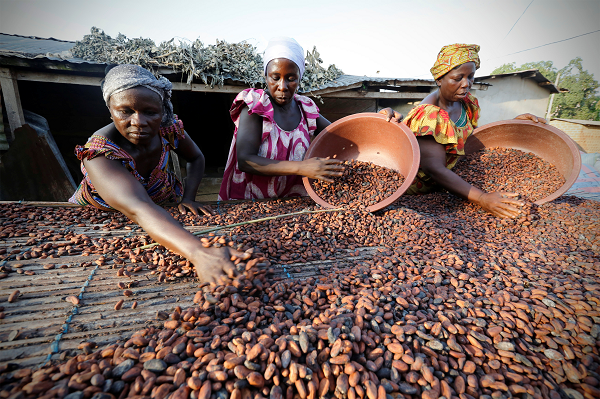
Ghana is a key leader in the world cocoa market. According to history, cocoa was first brought to Ghana by Tetteh Quarshie from Fernando Po in 1879. Ghana and Cote d’Ivoire provide about 50 percent of the world’s cocoa supply. The cash crop is of high value as the export of cocoa fetches the country’s foreign exchange.
Revenues from the exportation of cocoa are used to provide social amenities such as roads, hospitals, schools, etc., and equally, contribute to national development.
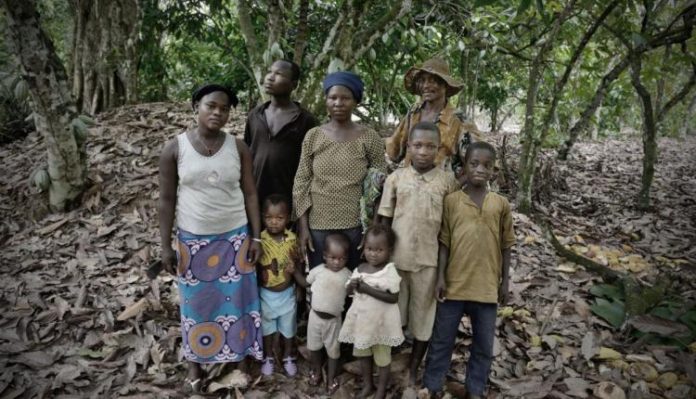
Cocoa farmers experience extreme poverty in West Africa, amid the immense contribution to the development of the country and the sub-region. Cocoa Barometer (2015) posits that farmers in Ghana earn about 85 cents a day, and Ivorian farmers, 50 cents.
As farmers are contributors to Ghana’s cocoa success story, how do we ensure that farmers enjoy much more from the fruit of their labour?
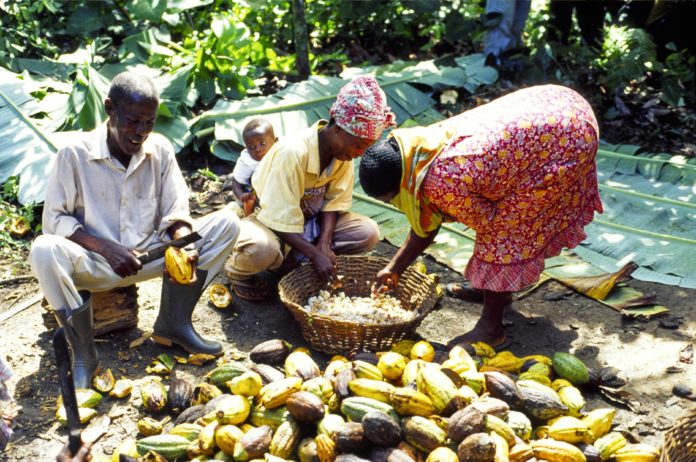
Cocoa is a perennial crop, requiring enormous attention and care, from nursery through cultivation to harvesting. In all these processes, the farmer dedicates skills, labour, time, etc. to ensure that the crop is in good condition.
Cocoa production is labour intensive. In the past, farmers, in their quest to get more hands (labour) on the farm, brought forth more children to get more hands in helping in the cultivation.
The Government of Ghana has been instrumental in improving the living conditions of cocoa farmers through various policy interventions. It is worth noting that the efforts of farmers have been boosted through policies from the central government geared towards enhancing the cultivation of the crop.
The government has implemented the mass spraying policy; a service through which cocoa farmers have their crops sprayed under the Cocoa Fertilizer Programme to boost production.
The Ghana Cocoa Board (COCOBOD) has also instituted the Cocoa Farmers Scholarship Scheme for children of cocoa farmers to be able to get an education in high schools. Other roads have been rehabilitated under the Cocoa Roads Improvement Programme.
Other benefits to farmers have been in the areas of health, infrastructure and other interventions.
Bottlenecks. The interventions outlined may not directly translate into better standards of living for cocoa farmers. Farmers are paid the basic income of raw cocoa seeds (GH¢ 475 per kilo bag of beans). Farmers are disadvantaged because the produce in its raw state has less value compared to the finished product.
Secondly, farmers are mostly at the receiving end with the fluctuation and price volatility of the cocoa price on the world market. As the prices of cocoa fall on the international market, the burden is pushed onto the farmer, reducing his/her income amid a Price Stabilisation Fund established by COCOBOD.
In order to escape the pricing effect, farmers sometimes smuggle the commodity to neighbouring countries to earn a higher price. For example, about 50,000 tonnes of cocoa were smuggled to Côte d’Ivoire during the year 2000, as taxes on cocoa in neighbouring countries were low.
As farmers work throughout the years, they are most vulnerable in times of old age. This is because the incomes earned over time may have been spent on the upkeep of their families.
In this regard, there have been calls by cocoa farmers in Ghana on the government to institute a pension scheme to manage contributions towards a secure future. This menace threatens the sustainability of cocoa farming in Ghana.
Young farmers are not replacing the old ones, as the youth are not encouraged to venture into cocoa cultivation. Other serious repercussions include the trading off of cocoa farms for illegal small-scale mining (galamsey).
A farmer in Wassa Amenfi East District in the Western Region sells his cocoa farmland for GH¢ 30,000 (USD 6833.85) as “the ‘golden pod’ – cocoa – no longer provides economic returns worth their time and energy.”
The burden of nation-building has been put on the shoulders of the central government to deliver on the country’s development agenda. However, the contribution of the private sector has proven to be a massive conduit to achieving growth.
The private sector has demonstrated achievements and results in professional fields in serving the interest of consumers and delivering on attainable goals and targets.
An instituted pension scheme for farmers will not only take care of cocoa farmers after 60 years, but it will guarantee the sustainability of cocoa production as the youth will be attracted to continue the cocoa legacy and pride.
The time is now, for us all to galvanize momentum in supporting private sector endeavours in contributing to pensions for cocoa farmers in Ghana.
In conclusion, the contributions of cocoa production to Ghana’s economy has been phenomenal. In order to complement and reward the efforts of cocoa farmers, there is the need to institute interventions, including pension schemes that will contribute to guaranteeing the sustainability of the commodity and ensure continuous contribution to national