Emelia Arthur, Minister for Fisheries and Aquaculture, has launched an innovative project to transform abandoned clay and quarry pits into productive fish farms in the Shama Municipality of the Western Region.
The initiative, dubbed the Komfueku-Shama Aquaculture Project, is being piloted in partnership with R&B Farms. It seeks to promote sustainable fisheries by repurposing abandoned and underutilised lands into productive fish farms to boost food production, create jobs, generate income, and strengthen local communities.
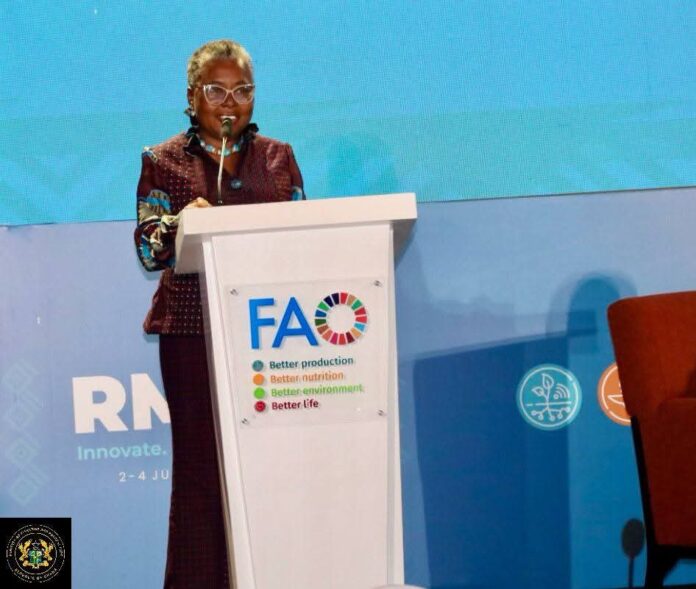
Speaking at the project launch at Komfueku, Madam Arthur said Ghana’s fisheries sector faced growing challenges, including pressure on marine resources and the impacts of climate change, making it necessary for stakeholders to diversify livelihoods and expand fish production through sustainable aquaculture practices.
She noted that aquaculture remained one of Ghana’s greatest opportunities to increase domestic fish supply, reduce fish imports, create employment, and improve food security.
According to her, the Komfueku-Shama Aquaculture Project would contribute directly to these national objectives while also supporting environmental restoration and responsible land use.
“What excites me most about this project is its potential for replication because, across Ghana, there are many abandoned excavated sites that could be converted into productive aquaculture enterprises,” she said.
“If successful, the Komfueku-Shama model can serve as a blueprint for sustainable aquaculture development in other parts of the country.”
Madam Arthur commended R&B Farms for its vision and investment in the pioneering venture, saying the company’s commitment reflected the critical role the private sector must play in driving innovation and growth within Ghana’s aquaculture industry.
She assured stakeholders that the Ministry of Fisheries and Aquaculture remained committed to supporting responsible investments that advance fish production, create jobs, and contribute to Ghana’s Blue Economy aspirations.
Mr Benjamin Turkson, Co-Founder of R&B Farms, said that following a successful pilot phase, the project would be expanded to communities such as Anto, Supomu-Dunkwa, and Daboase Junction, where several abandoned pits are located.
“Apart from converting these abandoned pits, which have become death traps, our major objective is to create jobs for the youth and women through our innovative fish farming initiative,” he said.
Mr Turkson urged the government to leverage aquaculture to combat unemployment and reduce illegal mining (galamsey) activities across the country.
Mr Joseph Nelson, the Western Regional Minister, in a speech read on his behalf, said the project aligned with the government’s efforts to promote sustainable aquaculture, enhance food security, drive economic empowerment, and ensure environmental stewardship.
He called on traditional authorities and Metropolitan, Municipal and District Assemblies (MMDAs) in the region to embrace the initiative and transform abandoned pits into productive enterprises that would stimulate local economic growth.
Dr Alhassan Iddrisu, government statistician has revealed that charcoal has become the single biggest driver of inflation in Ghana, with prices surging by more than 50% over the past year and placing renewed pressure on household budgets.
Speaking on JoyNews’ PM Express Business Edition on Thursday, Dr Iddrisu said the development comes despite what he described as a remarkable turnaround in the country’s overall inflation performance.
“By all standards, this is a remarkable turnaround, and every Ghanaian should know this,” he said.
However, he cautioned that beneath the positive headline figures, worrying signs are emerging in the food sector. According to him, food inflation rose to 3.3% in May 2026, up from 2.2% in April.
“Food inflation rose to 3.3% year on year, up from 2.2% in April,” he noted.
He added that food prices jumped sharply within a single month, a trend the Ghana Statistical Service is monitoring closely.
“In fact, in just one month, that’s between April and May 2026, we saw food prices actually jumped 2% and that’s one of the fastest we have seen, you know, in a single month in terms of price movements,” he said.
Dr Iddrisu pointed to tomatoes as one of the products behind the increase. He said tomato prices rose 35.8% between May 2025 and May 2026, and recorded an even steeper jump in a single month.
“In fact, in just the month of May, which is between April and May 2026 alone, the prices of tomatoes actually jumped up 38.8%, so that’s a real supply shock,” he explained.
He linked the spike to disruptions in supplies from Burkina Faso after attacks on Ghanaian traders and the subsequent export restrictions.
“As we all know, earlier this year, Ghanaian traders were attacked in Burkina Faso, and an export ban followed that disrupted tomato supply into our market, and even after the ban was reversed on April 2, the damage was already done, and prices, you know, already spiked,” he said.
But the Government Statistician said the biggest concern remains cooking fuel. He disclosed that charcoal accounted for the largest share in Ghana’s inflation basket.
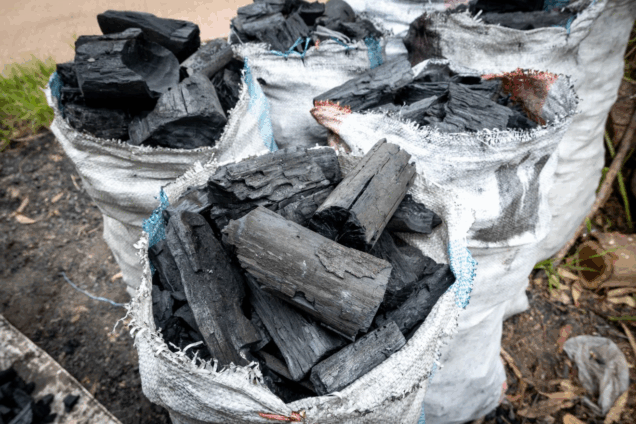
“Charcoal prices rose by 50.1% over the year, meaning year on year, that is between May 2025 and May 2026, and charcoal is actually the single largest contributor to our national inflation,” he said.
According to him, charcoal alone accounted for about 13.1% of Ghana’s total inflation figure in May.
“And as we know, many Ghanaian homes still cook with charcoal, and when that cost goes up, everyone feels it,” Dr Iddrisu added.
His comments highlight the growing gap between improving national inflation indicators and the daily realities facing households, many of which continue to grapple with rising food and energy costs despite broader economic gains.
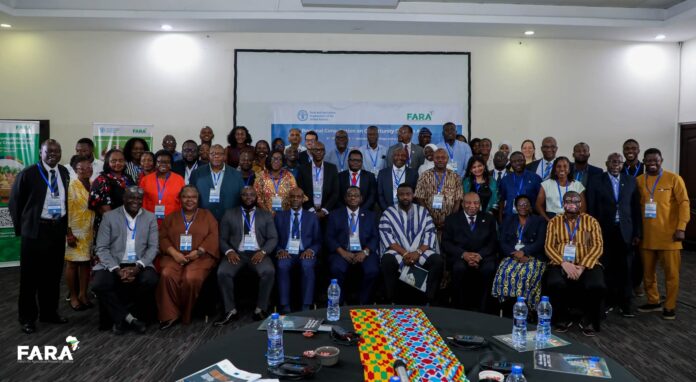
The Food and Agriculture Organisation of the United Nations (FAO), in collaboration with the Forum for Agricultural Research in Africa (FARA), have convened the Regional Consultation on Opportunity Crops in Africa, Accra.
The consultation brings together policymakers, researchers, development partners, private-sector actors, civil society, farmer organisations and regional institutions to advance the integration of neglected and underutilised crop species into Africa’s food systems.
These crops, increasingly referred to as opportunity crops, include millets, sorghum landraces, fonio, bambara groundnut, indigenous vegetables and other traditional crops that are deeply rooted in African food cultures but remain under-researched, under-invested and insufficiently represented in formal food, seed, research and market systems.
The conference comes at a critical moment for Africa’s agrifood systems. The continent continues to face interlinked challenges, including hunger, malnutrition, climate change, biodiversity loss, rapid urbanisation and growing dependence on imported foods.
According to the conference concept note, roughly one in five people in Africa faced hunger in 2024, while more than one billion people on the continent could not afford a healthy diet. At the same time, Africa’s rich plant genetic diversity, which underpins food security, nutrition, livelihoods and cultural heritage, is under increasing threat.
Opportunity crops offer practical pathways for addressing these challenges. Many are nutrient-dense, locally adapted, resilient to climate shocks, suitable for smallholder systems and capable of contributing to diversified diets, local economies and climate-resilient agriculture.
However, their potential has been constrained by limited research investment, weak seed systems, fragmented value chains, low consumer awareness, inadequate market development and insufficient policy support.
Speaking ahead of the consultation, both organizing agencies underscored that opportunity crops should be repositioned as strategic assets for Africa’s food systems transformation, given their contribution to biodiversity, nutrition, resilience and cultural identity.
The consultation will also contribute to continental policy momentum following the Kampala Comprehensive Africa Agriculture Development ProgrammeDeclaration, which calls on African Union Member States to increase the production and consumption of nutritious traditional and indigenous crops through appropriate policy, regulatory and financing mechanisms.
Over the three days, participants will review national and regional experiences with opportunity crops, discuss policy and institutional frameworks, examine approaches to conservation and sustainable use, and identify pathways to strengthen production, seed systems, value chains, research, capacity development, awareness-raising and market integration.
The programme will feature technical sessions on overcoming barriers to opportunity crops, strengthening knowledge and capacity, advancing regional action, promoting on-farm diversity and local adaptation, conserving crop genetic resources, improving breeding and pre-breeding systems, developing seed systems, and building the business case for opportunity crops.
The consultation will culminate in working-group discussions to develop an action-oriented regional roadmap to integrate opportunity crops into Africa’s agrifood systems.
The consultation will include contributions from regional and continental institutions, including the African Union Commission, AUDA-NEPAD, CORAF, ASARECA, CCARDECA, CGIAR, centres, Crop Trust, universities, farmer organisations, private sector actors, and other partners working to advance agricultural biodiversity and resilient food systems across Africa.
The event is expected to foster a shared understanding of the opportunities, gaps and priorities for mainstreaming opportunity crops in Africa, while strengthening partnerships among governments, research institutions, farmers, private-sector actors and civil society.
A key outcome will be a regional roadmap and collaborative action plan to guide future investments, policy reforms and coordinated implementation.
The consultation will be held in a hybrid format with interpretation in English and French, enabling wider participation across Africa and beyond.
The rural municipality of Péni, in the Guiriko region of Burkina Faso , has reached an important step in its economic development with the official inauguration of the new cashew and mango processing plant of GEBANA Faso in the village of Mè.
Sit on a 7.2 hectare site, this modern industrial complex positions itself as one of the most ambitious agro-industrial projects in the region.
The inauguration ceremony was presided over by the governor of the Guiriko region, represented by the Secretary General of the province of Houet, Sombéniwendé Nikiéma.
Through this major investment, GEBANA Faso reaffirms its commitment to local transformation of agricultural products and value-added creation in Burkina Faso.
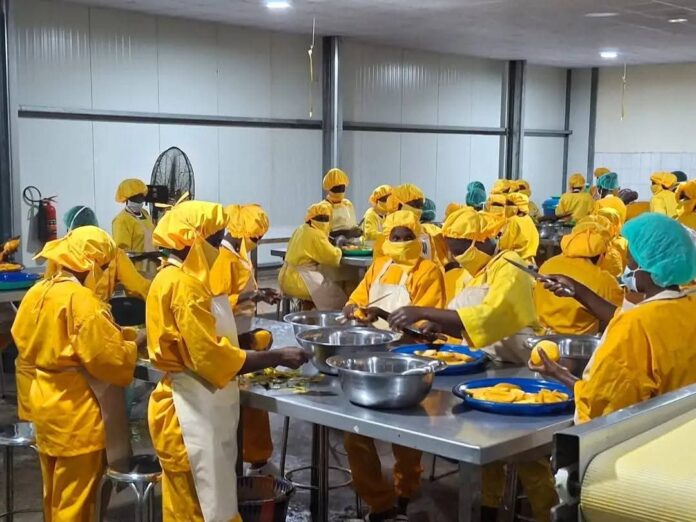
The plant will help strengthen the cashew and mango sectors while providing important job opportunities to local people, including women, strongly involved in sorting, conditioning and transformation activities.
The cashew processing plant has a processing capacity of 10,000 tonnes of raw cashew nuts per year, from the production of more than 7,200 producers. As for the mango unit, it will be able to produce up to 4,000 tonnes of dried mangoes per year, destined for both the domestic market and export.
Beyond its industrial role, this infrastructure is a real development lever for the region. It demonstrates the willingness to promote sustainable industrialization in rural areas while adhering to international standards of quality, food security and traceability.
With this new plant, GEBANA Faso actively participates in the structural transformation of the Burkinabe economy by promoting the valorization of local raw materials, improving the income of producers and the creation of sustainable jobs for the benefit of communities.
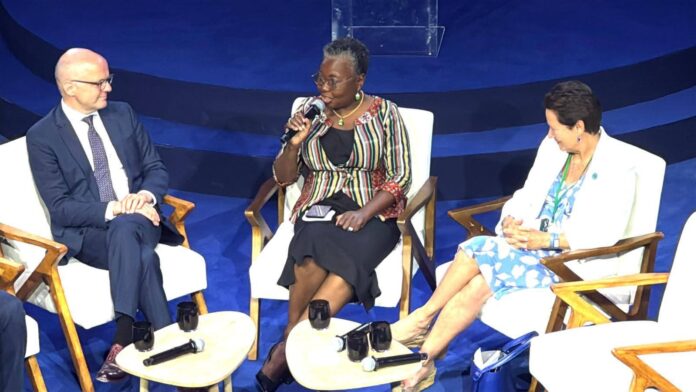
The Minister for Fisheries and Aquaculture, Hon. Emelia Arthur, has called for a more equitable, inclusive, and science-driven approach to global ocean governance during the prestigious Neptune Forum held in Paris, France, on June 8, 2026, coinciding with World Oceans Day.
The Neptune Forum, a high-level global gathering convened by Mission Neptune, brought together world leaders, scientists, diplomats, policymakers, economic actors, and ocean advocates to strengthen international cooperation for the sustainable management and preservation of the world’s oceans.
Speaking on the theme, “International Governance in a Fragmented World: Ocean Governance and Ghana’s Perspective,” Hon. Emelia Arthur highlighted the critical role the ocean plays in Ghana’s history, economy, food security, and cultural identity.
She noted that while technological advancements have significantly improved humanity’s understanding of the ocean through real-time vessel monitoring, artificial intelligence, marine data collection, and seabed mapping, major challenges remain. These include declining fish stocks, threats to marine biodiversity, increasing vulnerability of coastal communities, and persistent maritime insecurity.
The Minister emphasized that ocean governance must go beyond resource management and focus on equity, shared responsibility, and sustainable development.
She outlined Ghana’s Blue Economy vision, which integrates sustainable fisheries and aquaculture, marine spatial planning, strengthened monitoring and enforcement systems, and community stewardship within a unified governance framework.
Hon. Arthur further drew attention to the disproportionate challenges faced by developing countries, particularly African coastal states, in combating Illegal, Unreported and Unregulated (IUU) fishing.
She stressed that IUU fishing is not only an environmental concern but also a matter of economic justice, food security, and national sovereignty.
Calling for stronger international partnerships, the Minister advocated increased investment in scientific capacity building, technology transfer, and access to marine data and digital infrastructure.
She argued that Africa must not only consume ocean knowledge but also contribute to its generation and application.
As part of her address, Hon. Arthur proposed five guiding principles for the future of global ocean governance: Equity, Stewardship, Scientific Sovereignty, Recognition of Indigenous Wisdom, and Collective Security.
She concluded by reaffirming Ghana’s commitment to building a fairer and more effective system of ocean governance, stating that the ocean can serve as a bridge in a fragmented world when cooperation is founded on fairness, shared responsibility, and respect for the people whose livelihoods depend on the sea.
The Neptune Forum serves as a platform for advancing international dialogue on ocean governance, scientific exploration, climate resilience, and sustainable development, positioning the ocean as a cornerstone of global stability and multilateral cooperation.
The Federation of Associations of Ghanaian Exporters (FAGE), alongside its partners following extensive consultations with key industryplayers, government institutions, development partners, and international participants, a strategic decision has been made to reschedule HORTI EXPO 2026.
The Federation alongside its partners GEPA and Eximbank Ghana, extends our sincere gratitude to all exhibitors, sponsors, media partners, and stakeholders for the overwhelming support received so far.
To avoid clashing with several major national and international business programmes occurring in June and to ensure maximum participation, media visibility, and commercial value for our exhibitors the Expo has been moved to September 2026. This adjustment also comes with an upgrade to an exceptional new premium venue.
UPDATED EVENT DETAILS: New Dates: 3rd – 5th September 2026 New Venue: The Palms Convention Center, La Palm Royal Beach Hotel, Accra Theme: The Ghana Horticulture Expo ’26.
We sincerely regret any inconvenience this scheduling adjustment may cause. We are confident that this new window will allow us to deliver a world-class event that maximizes networking and market opportunities for the entire horticultural value chain.
Thank you for your understanding and continued partnership. Please update your calendars we look forward to welcoming you in September!
For urgent inquiries, please contact us at: +233 24 345 7783 / +233 53 522 4555
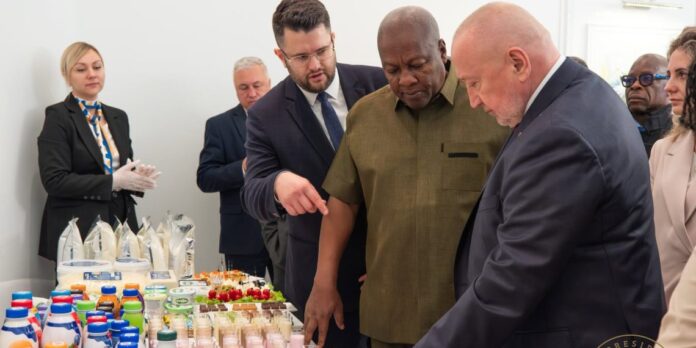
President John Dramani Mahama continued his state visit to Belarus on Saturday with a trip to the industrial city of Brest, where he explored opportunities to support the transformation of Ghana’s agricultural sector through modern agro-processing technologies.
The President was received by the Governor of Brest, Piotr Alexsandrovich Parkhomchik, and senior officials of the Belarusian Foreign Ministry before touring one of the country’s largest agro-processing facilities.
The visit formed part of efforts to strengthen bilateral cooperation and examine best practices that could be adapted to enhance agricultural production and value addition in Ghana.
During the tour, President Mahama was taken through the facility’s advanced dairy processing operations, which include the production of baby food, milk, cheese, and milk powder for both domestic consumption and export to international markets.
Accompanied by his Presidential Advisor and Special Aide, Joyce Bawah Mogtari, as well as Ghana’s Ambassador to Moscow, Dr Jehu-Appiah, the President observed the various stages of the plant’s high-tech production processes and engaged officials on the technologies driving the facility’s success.
In his post-tour remarks, the president noted Ghana’s commitment to adopting modern processing techniques to transition from smallholder farming to large-scale commercial agriculture.
“We are here to tap into Belarus’ vast experience as we work to make Ghana self-dependent in food production,” he stated.
He added that a primary goal of the visit is to identify technical solutions to reduce post-harvest losses, which is a major challenge for Ghanaian farmers.
Managing Director of the company, Aleksandr Savchits, revealed that they recorded over $1.4 billion in profit last year. The company has also recently begun exporting dairy products to Ghana and is looking forward to expanding the volume of exports as bilateral trade ties strengthen.
President Mahama extended an invitation to Belarusian investors to partner with Ghanaian business associations, citing a mutual benefit for both nations.
Belarus currently stands as a global leader in the export of dairy products, including milk powder, butter, and cheese.
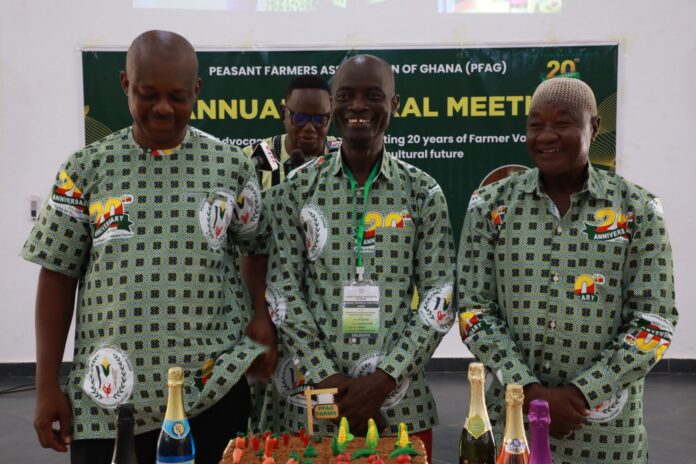
The Peasant Farmers Association of Ghana has called on the government to immediately suspend rice imports for a minimum of six (6) months to allow for the clearance of existing Ghanaian produced rice stocks.
According to the association, this critical measure will provide a breathing space for farmers to recover financially, stabilize farm-gate prices, and restore confidence in the local rice market.
In a press release issued by the association, the association urged the the government to direct the National Security apparatus to immediately and decisively clamp down on rice smuggling across all border points. “The ongoing illegal importation of rice is a direct economic sabotage of Ghanaian farmers and must be treated with the seriousness it deserves. We call for regular, publicly reported enforcement operations”, the release indicates.
The association called on the government to enact a legal and regulatory framework that mandates all government ministries, departments, agencies (MDAs), state-owned enterprises, public hospitals, schools, prisons, the military, and other public institutions to procure only locally produced rice and other staples.
Compliance with this directive must be monitored and enforced with clear sanctions for violations. In that regard, arrangements should be made with farmer organizations, including PFAG to directly aggregate and supply the produce to these institutions.
The authorities should conduct an urgent and transparent review of the operational mandate, procurement processes, financing arrangements, and institutional capacity of the National Food Buffer Stock Company Limited (NAFCO). NAFCO must be restructured and adequately resourced to serve as an effective, efficient, and accountable purchaser of locally produced agricultural commodities, especially during periods of market glut.
The call also states that the government should establish a dedicated price stabilization fund for rice and other strategic staples, to protect farm-gate prices and ensure farmers receive a fair and remunerative return on their investment, even during periods of oversupply.
The government should invest in post-harvest infrastructure, including storage facilities, milling capacity, and market linkage platforms, to reduce post-harvest losses and improve the competitiveness of locally produced rice against imported alternatives.
Implement rice import mechanism to safeguard rice farmers – PFAG urges Government
The Peasant Farmers Association of Ghana (PFAG) has urged the government to immediately implement rice import quota system to salvage current losses by farmers and extend such policy to other value chains.
The association acknowledges the government’s decision to introduce a rice import quota policy as a step in the right direction towards boosting demand for locally produced rice and strengthening the country’s domestic rice value chain.
In a press release issued by the association reads;
The Peasant Farmers Association of Ghana (PFAG) acknowledges the government’s decision to introduce a rice import quota policy as a step in the right direction towards boosting demand for locally produced rice and strengthening the country’s domestic rice value chain.
However, the Association wishes to state in the strongest possible terms that the urgency of the current glut demands immediate and decisive implementation. Delayed implementation will irrevocably defeat Ghana’s quest to achieve self-sufficiency in rice production, as farmers are rapidly losing the economic incentive to continue production.
Our independent assessment and field monitoring across major rice-growing regions reveal that over 90% of rice farmers currently hold significant unsold stocks of rice, a crisis that has persisted despite several policy interventions announced by government.
As we approach the new farming season, thousands of rice farmers across the country have issued a grave warning that they will abandon rice production entirely unless an immediate and clear pathway to market their existing stocks is provided.
The livelihoods of these farming families, and Ghana’s food security, now hang in the balance.
THE CRISIS ON THE GROUND
The situation is deeply alarming, despite government’s policy interventions. The PFAG’s observations and analysis across key farming communities expose a stark and troubling contradiction, that, while Ghanaian farmers have produced an abundance of high-quality local rice, the market continues to be flooded by imported foreign rice.
This incessant importation, even done by some state agencies that are expected to champion the cause of local procurement, coupled with rampant smuggling across several border points, is systematically undermining the efforts of our hardworking farmers.
Furthermore, the National Food Buffer Stock Company (NAFCO), which was specifically directed by the President to purchase locally produced rice, has been unable to fulfill this mandate.
The failure of NAFCO to act decisively has left farmers without a critical buyer of last resort, deepening the crisis and sending a demoralizing signal to farming communities across the country. These institutional failures directly threaten Ghana’s food security and sovereignty.
CALLTOACTION
The Peasant Farmers Association of Ghana, therefore, while welcoming this policy proposal, urgently calls on government to immediately commence full implementation of the rice import quota policy.
Beyond the quota system, we call for a comprehensive and coordinated package of measures to address the current crisis and build a resilient, sustainable domestic rice value chain.
Specifically, PFAG calls on government to:
• Immediately order a moratorium on rice imports for a minimum of six (6) months to allow for the clearance of existing Ghanaian produced rice stocks. This critical measure will provide a breathing space for farmers to recover financially, stabilize farm-gate prices, and restore confidence in the local rice market.
• Direct the National Security apparatus to immediately and decisively clamp down on rice smuggling across all border points. The ongoing illegal importation of rice is a direct economic sabotage of Ghanaian farmers and must be treated with the seriousness it deserves. We call for regular, publicly reported enforcement operations.
• Enact a legal and regulatory framework that mandates all government ministries, departments, agencies (MDAs), state-owned enterprises, public hospitals, schools, prisons, the military, and other public institutions to procure only locally produced rice and other staples. Compliance with this directive must be monitored and enforced with clear sanctions for violations. In that regard, arrangements should be made with farmer organizations, including PFAG to directly aggregate and supply the produce to these institutions.
• Conduct an urgent and transparent review of the operational mandate, procurement processes, financing arrangements, and institutional capacity of the National Food Buffer Stock Company Limited (NAFCO). NAFCO must be restructured and adequately resourced to serve as an effective, efficient, and accountable purchaser of locally produced agricultural commodities, especially during periods of market glut.
• Establish a dedicated price stabilization fund for rice and other strategic staples, to protect farm-gate prices and ensure farmers receive a fair and remunerative return on their investment, even during periods of oversupply.
• Invest in post-harvest infrastructure, including storage facilities, milling capacity, and market linkage platforms, to reduce post-harvest losses and improve the competitiveness of locally produced rice against imported alternatives.
THE BROADER AGRICULTURAL CRISIS
While the rice glut commands immediate attention, the Peasant Farmers Association of Ghana wishes to draw the government’s attention to the fact that this crisis is not isolated to rice alone. Farmers engaged in the production of other critical staples, including cassava, maize, yam, soybean, and cowpea face an equally demoralizing situation, with unsold produce, collapsed farm-gate prices, and mounting post-harvest losses threatening the viability of their enterprises.
Ghana’s broader food security and economic resilience depend on the productivity and profitability of these value chains.
The PFAG therefore urges government to adopt a holistic, sector-wide approach to resolving the market challenges facing smallholder farmers. We call for the development of a comprehensive Agricultural Market Stabilization Policy that addresses price volatility, market access, procurement, and storage across all key staple value chains. As we approach the new planting season, farmers need clear and credible signals from government that their investments will be protected and their produce guaranteed a market.
CONCLUSION
The Peasant Farmers Association of Ghana reaffirms its commitment to working collaboratively with government and all stakeholders to achieve food self-sufficiency. Farmers are watching, and they are waiting for action. The government must demonstrate, through immediate and concrete steps, that it values the men and women who feed this nation. We stand ready to engage with the relevant ministries and agencies to support the swift and effective implementation of these measures.
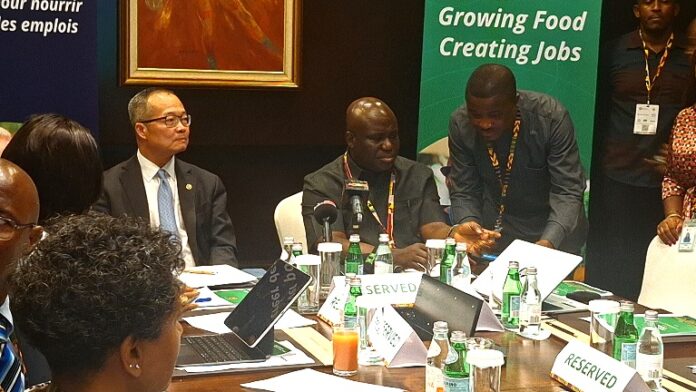
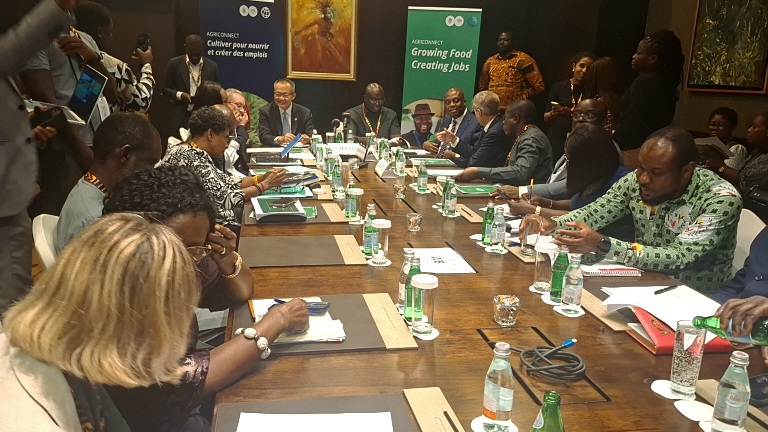
The Minister for Food and Agriculture, Hon. Eric Opoku has launched a transformative agriculture project called AGRICONNECT COMPACT that aims to cut Ghana’s US$3billion import bill and create 2.6million jobs for Ghanaian youth.
AgricConnect is a national framework to strengthen food security, create jobs, reduce food imports, and mobilize investment across priority agricultural value chains.
To alleviate abject poverty and unemployment among the youth, the government launched project called The Agriculture For Economic Transformation Agenda to liberate the youth with the enormous agriculture potentials that Ghana possesses.
To achieve this milestone, the government converged a team made up of all the experts from the various ministries to work on a document that can transform agriculture into agribusiness and create employment opportunities for the you of Ghana, thus AgricConnect.
According to the Minister of Food and Agriculture, Hon. Eric Opoku, the AgriConnect defined some specific crops with mammoth potential to develop entire chains and generate jobs for the youth.
“AgriConnect is about turning Ghana’s agricultural potential into tangible results: more food on the table, more jobs for young people, and more value created here at home. This Compact provides a clear roadmap to modernize agriculture, support farmers, and build stronger value chains that can drive growth nationwide,” Hon, said.
The crops under consideration are; rice, maize, oil palm, cocoa and poultry. The Minister commended the partners for the support and the commitment made towards the implementation of the laudable programme.
“It is our hope that resources required for the implementation of such programme would be made available in time and implementation would proceed effectively so that we can maximize the benefit and realize all the objectives and the goals that are captured in the programme”, he added.
The Remarks from the Partners of AgriConnect: The World Bank “Ghana’s AgriConnect Compact is a bold step toward building a more productive, resilient, and jobs-rich food system. By linking policy reform with investment and delivery, Ghana is creating the conditions to strengthen food security, support farmers and agribusinesses, and unlock private capital at scale,” World Bank Group Vice President for Plant, Guangzhe Chen said.
He commended Government of Ghana for the strong leadership and the vision to acknowledge that agriculture is not just about food production, but it’s central to Ghana’s economic transformation for job creation and for resilient agenda.
He underscored the core of the compact that is moving from subsistence to productivity, fragmentation to stronger value chain, and from public-led growth to a stronger private sector investment.
“What makes Ghana’s compact particular compelling is the clarity of its priorities and also the depth of the reforms that it embraces. It focuses on high potential sectors such as cocoa, palm oil, rice, maize, and poultry sector where Ghana has to have a strong comparative advantage and where the potential for job creation and import substitution is enormous,” he extoled.
He mentioned that AgriConnect will focus on six scalable solutions which are; agritech and digital tools, investment in roads, irrigation and infrastructure related, extension services and research, and stronger access to finance.
This effort, he said really reflect the power of partnership with US$3.5billion investment programme for the next 5 years and the strong support from the government with the World Bank Group and its partners of African Development Bank, IFAD, and others.
Ministry of Finance As key stakeholder of the compact, the Deputy Finance Minister, Hon, Thomas Nyarko Ampem, lauded the government for the proactive step taking to address Ghana’s import bill.
According to him, Ghana imports about two to three billion dollars annually between all food products that can be locally and competitively produced. These represent jobs exported factories never built, value chains left undeveloped, and foreign management unnecessarily drained, therefore, it is exciting to develop the compact that will help reduce and reverse all these trends.
Considering broader agri-food system in the country, Hon. said the sector supports almost 44% of employment nationwide and clearly, no serious economic transformation agenda can therefore bypass agriculture.
He stated that no wonder President has prioritized agriculture through the Feed Ghana program, the Grow24 initiative under the 24-hour economy initiative, the Big Push Infrastructure program, and the broader agro-industrialization strategy.
Giving an account to the funds released to the agric sector, he explained the Ministry of Finance have released about 1.67 billion cedis representing 85 percent of the approved 2026 budget for goods and services, 521 million cedis for 50 Farmer Service Centres to support mechanization, 110 million cedis to be invested in irrigation infrastructures across country, 515.3 million cedis for the supply of fertilizers and certified seeds, 244.9 million cedis to be invested in the poultry farm to table project and 200 million Ghana cedis to be invested by the National Buffer Stock Company.
“Poor road conditions in key production areas limit market access, increase post-harvest losses, raise transport costs, and ultimately reduce farmer incomes. Consistent with our commitment to addressing these structural bottlenecks government is partnering with the World Bank to implement the US$523 million Ghana Market Access and Connectivity Project, farm to market connectivity in selected districts across the country through this intervention we will rehabilitate approximately 1 000 kilometers of feeder roads in major food producing areas particularly those supporting staple crops such as maize rice cassava and yam by improving connectivity between farms markets storage facilities processing centers and logistic corridors”, he added.
He mentioned that AgriConnect affirms the fundamental shift of government’s notion of agriculture. The Compact focuses on strategic value chain that create common framework that align government policy, development partner support, private sector investment, and agricultural financing towards measurable economic outcomes.
Interventions by Stakeholders Peasant Farmers Association of Ghana The Former Acting Executive Director of the Peasant Farmers Association of Ghana, Bismark Owusu Nortey lauded the Compact saying it is smallholder-centered initiative.
He mentioned that compact appears to address the respective constraints within the value chain. Currently, he added we all know that when it comes to government, the major issue for our farmers is the issue of markets in the rice mill, yam, cassava, value chains.
He mentioned 3 interventions that the association is interested as the compact is concern. According to him, first, the association is very much interested to see the impacts of the compact to smallholder farmers. At times programs are being run, but the impact is quite imperceptible, therefore the impact of this program should be felt. Secondly, results should be released on time, and lastly, to have an effective system to monitor and evaluate the progress of the program.
FAGE The President for the Federation Association of Ghanaian Exporters (FAGE), Narh Korboe said the most critical part of the Compact is the releasing of the funds to the ministry to work with.
He mentioned that delay in release of funds amount to program failure and this has contributed to failure of our new programs.
He admonished that Ghana, especially the Ministry of Agriculture has one of the best agribusinesses personnels in the country, however, the financial muscles to carryout the mandate is always an issue. “I will be opening my eyes and ears since I have good lens to watch this program”, he concluded.
About AgriConnect AgriConnect is a World Bank Group initiative to transform farming for 300 million smallholders by 2030. It is supported by partners such as the African Development Bank (AfDB), the Inter-American Development Bank (IDB), the International Fund for Agricultural Development (IFAD), Google and Bayer.
The Ghana AgriConnect Compact is a multi-year national framework focused on strengthening food security, creating jobs, boosting value addition, and mobilizing financing across priority agricultural value chains. The first phase covers 2026–2030 and is aligned with Ghana’s broader goals for agricultural transformation, private investment, and economic resilience.