
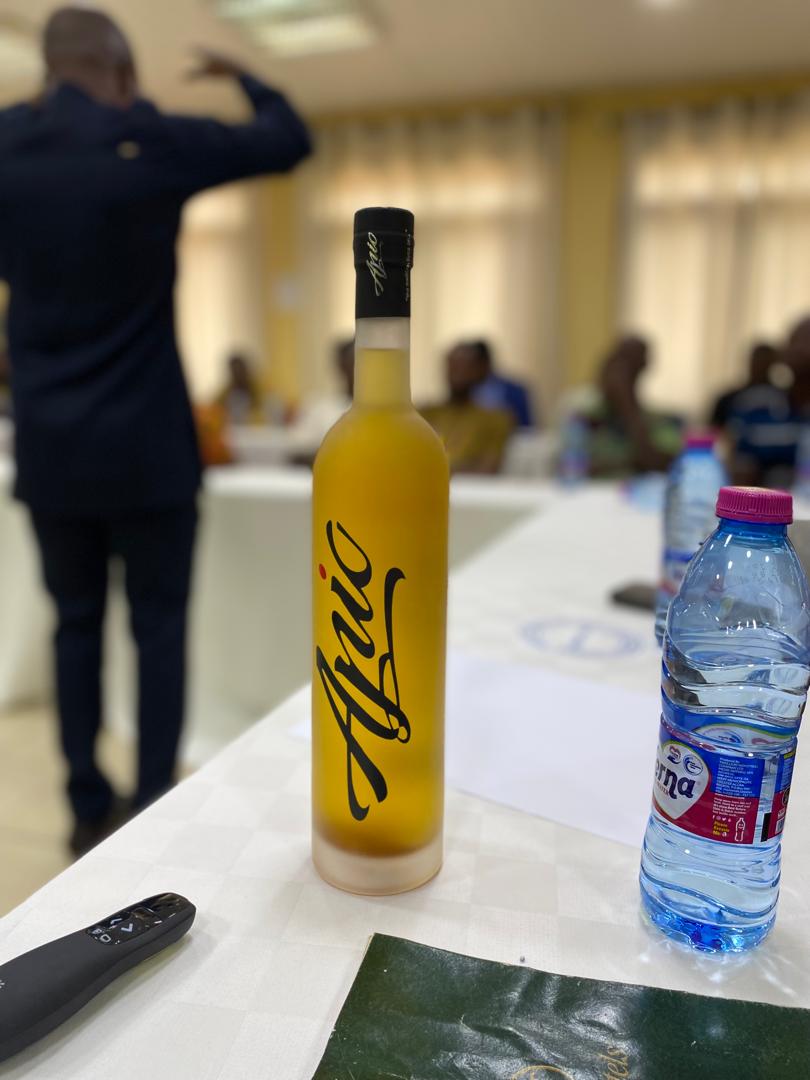
Apio is the unique name for the locally produced Ghanaian gin from palm wine and other raw products. To avoid other countries from infiltrating the product with the name, the Intellectual Property Office under the Registrar General’s Department has moved to protect the unique name and the product.
In a stakeholders’ meeting organised by the Ghana Industrial Property Office (GHIPO) under the Registrar General’s Department, the Registrar at the Registrar General’s Department, Madam Grace Issahaque, underscored the purpose of the meeting as being the efforts to support local producers of the locally produced gin by leveraging geographical indication (GI) to enhance branding and competitiveness.
According to her, Geographical Indication helps to protect and promote the unique nature of a product to a specific region, based on tradition, environment, or the skill set of the people.

“We are trying to assist the producers to come up with standards and also ensure that they do a proper review of how they produce the gin and ensure that they use their local skill sets; enhancing its safety, its uniqueness and ensuring that the reputation of production does not diminish”, she explained.
Explaining the relevance of the GI tool to production, she said that once producers and consumers understand the unique nature and the quality controls used in a particular production, consumers will continue to patronize or purchase that product.
Building producers’ capacity in GI will give them the leverage to compete on the international market by producing quality gin more than Vodka, whiskey, and others.
She urged the producers to work assiduously to produce the best product to stand the test of both the local and international standards.
Speaking on the theme, Protecting Our Heritage, Promoting Our Future, the Head of Intellectual Property of the Ghana Intellectual Property Office under the Registrar General’s Department, Dr. Courage Komla Besah-Adanu, said the stakeholders’ meeting is critical in the building of a system for geographical indications to protect the traditional distilled spirits, called Apio.
Explaining the importance of building the system for geographical indications, he said: “Once we map out the stakeholders and we have engaged with them in building the value chain, that will ensure the consistency of producing quality Akpeteshe in higher volumes.”
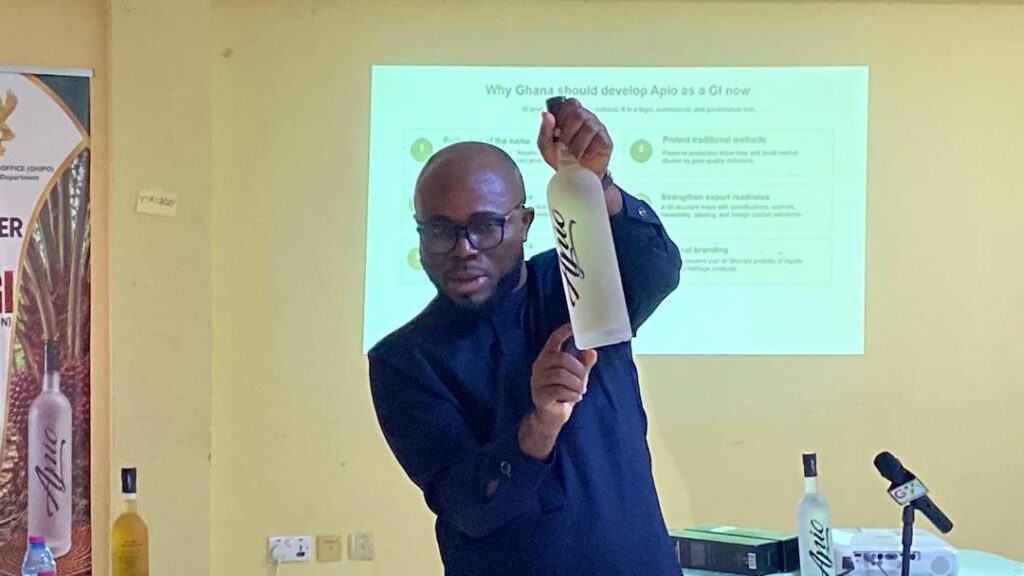
He stressed that with the relevant stakeholders involved, including GSA, the Ministry of Trade, FDA, GEPA, and more, Ghana is poised to properly brand and process unique local gin for local consumption and the global market.
He called on stakeholders, especially farmers, to cooperate, collaborate, and work effectively on the Geographical Indication to raise Ghana’s flag in the global market.
David Ahiakye, a farmer and distiller from Asamankese, extolled the organizers for such a programme.
Unfortunately, he said most of the farmers and the distillers have no knowledge about the effects of the materials that they used for distilling.
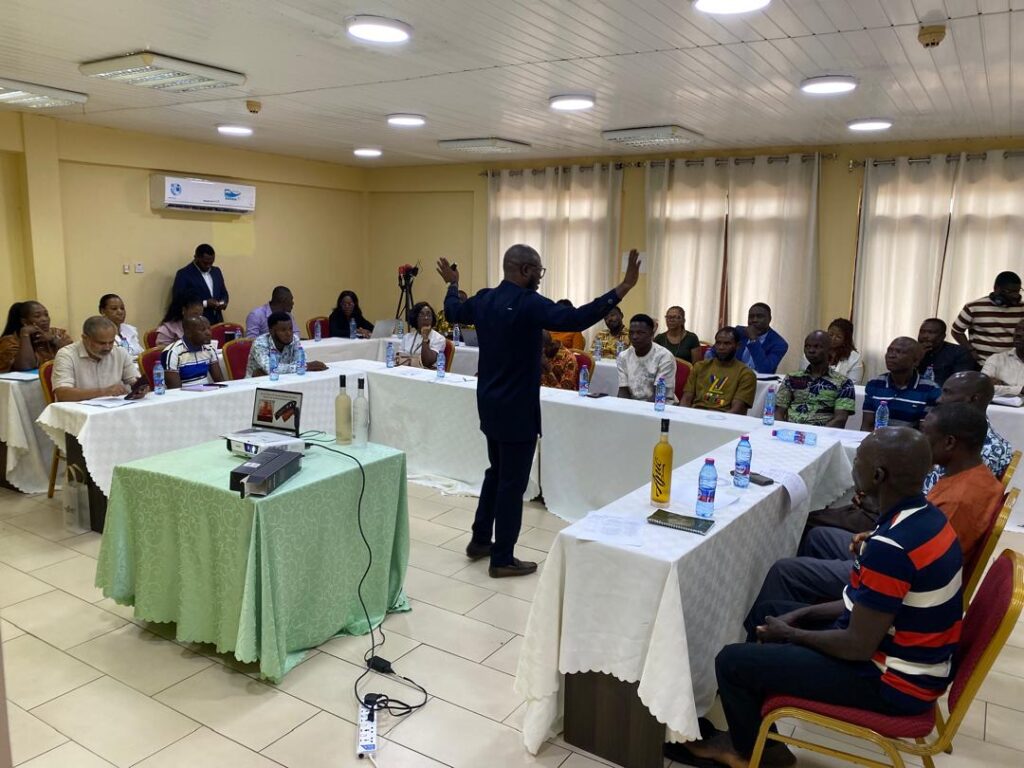
Speaking to Agric Today, he revealed that the training would enhance their working abilities by following the right protocols and using the right tools and equipment to produce quality gin.
Observing these protocols, he said it would improve the income level, which goes a long way toward improving living standards.