
The Ministry of Food and Agriculture has pushed back against concerns over delays in the distribution of farm inputs for the 2026 farming season, insisting that the timing of deliveries is being aligned with the actual crop production cycle.
In a statement issued, the Ministry said distributing inputs too early could create risks including improper storage, diversion, and application outside the recommended period.
It explained that in northern Ghana, where the major farming season begins in May, fertiliser application typically takes place between late June and the end of July.
The Ministry therefore said that inputs for the northern farming season were distributed within the recommended application window.
For southern Ghana, however, the focus is now shifting to the minor farming season, which begins in August, with distribution to targeted areas currently underway.
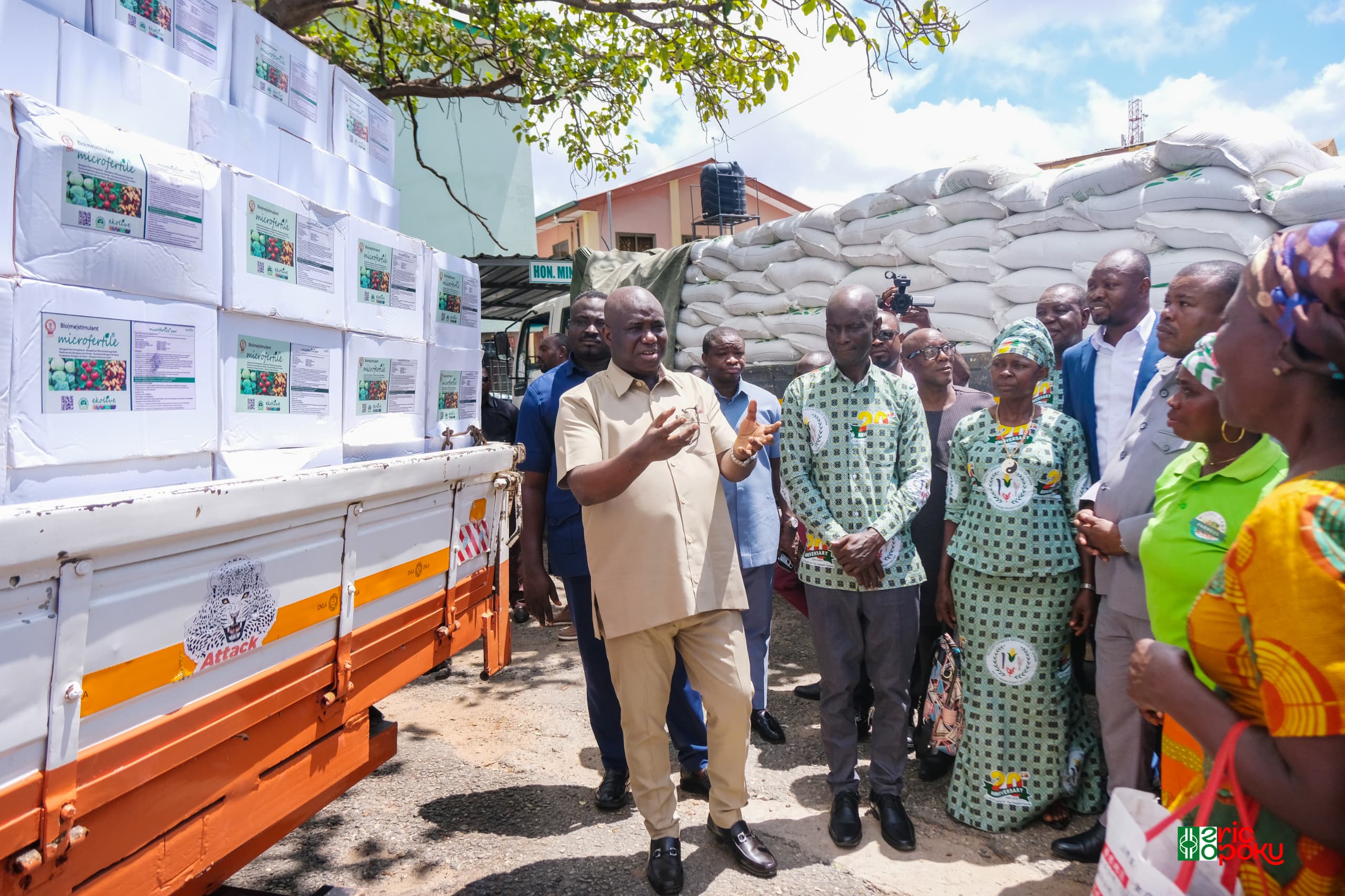
As part of the intervention, the Ministry says 40,000 bags of inorganic fertiliser have been allocated to the Peasant Farmers Association of Ghana for distribution to vulnerable farmers who may not have been covered under allocations channelled through Metropolitan, Municipal and District Assemblies.
The intervention also extends to selected irrigation schemes, where the Ministry says it has supplied inputs to support production during the lean season.
Vegetable producers, particularly tomato farmers in targeted production areas, have also received seeds and organic fertilisers, while farmers engaged in irrigated agriculture are expected to receive additional support under the government’s dry-season production initiative.
The Ministry says the interventions are targeted at vulnerable farmers and are designed to provide an emergency cushion against high production costs while boosting output and strengthening food security.
It adds that field officers are supervising the distribution and use of the inputs to ensure that the intended beneficiaries receive the required support.
The Ministry is also projecting an increase in agricultural production this year, citing favourable rainfall patterns and ongoing interventions.
It says the 2026 farming season targets could even be exceeded as government works to transform agriculture from subsistence activity into a more profitable and competitive enterprise.