The government has donated two (2) sets of portable irrigation machines and five hundred (500) bags of fertilizers to the Pomaakrom Petra Cooperative
The donation was presented by the Minister of Food and Agriculture, Hon. Eric Opoku, in Ahafo Ano North.
Ghana imports over USD400 million worth of tomatoes and paste annually, heavily driven by the December-July off-season deficit.
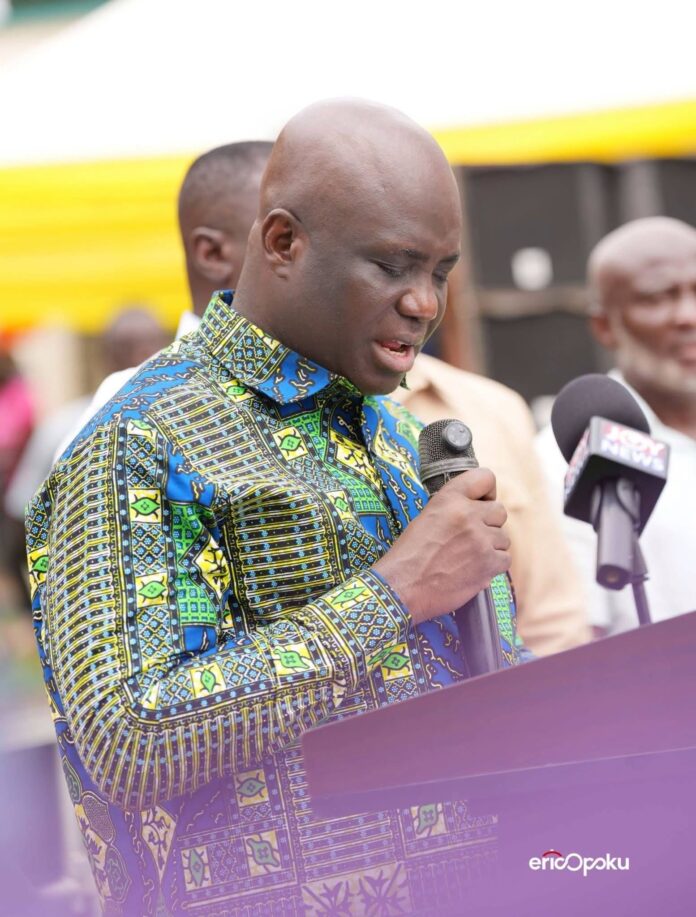
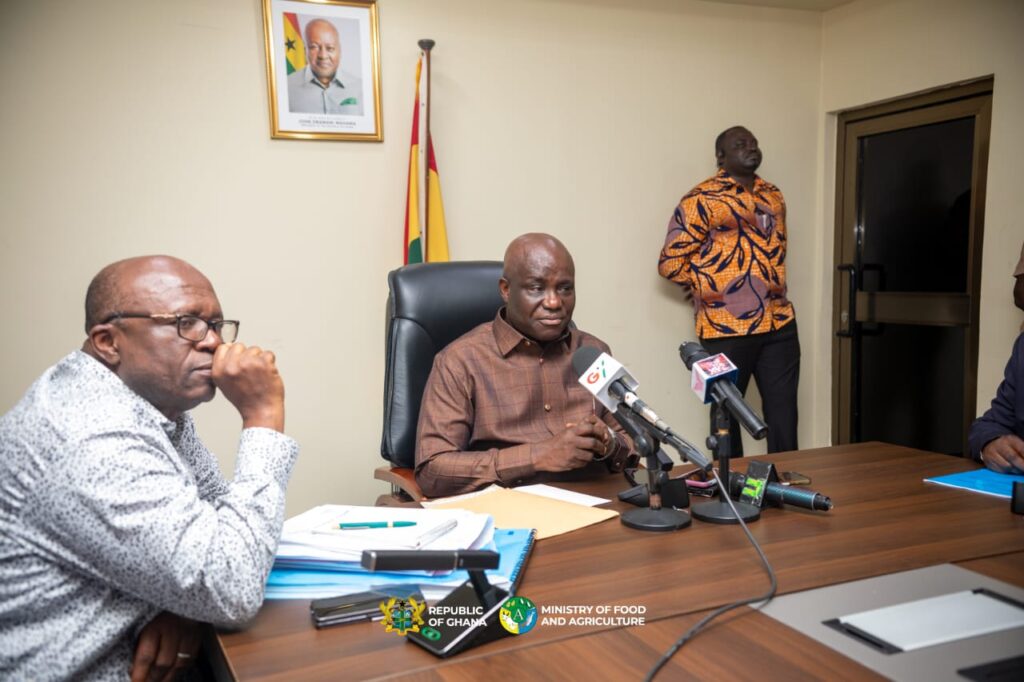
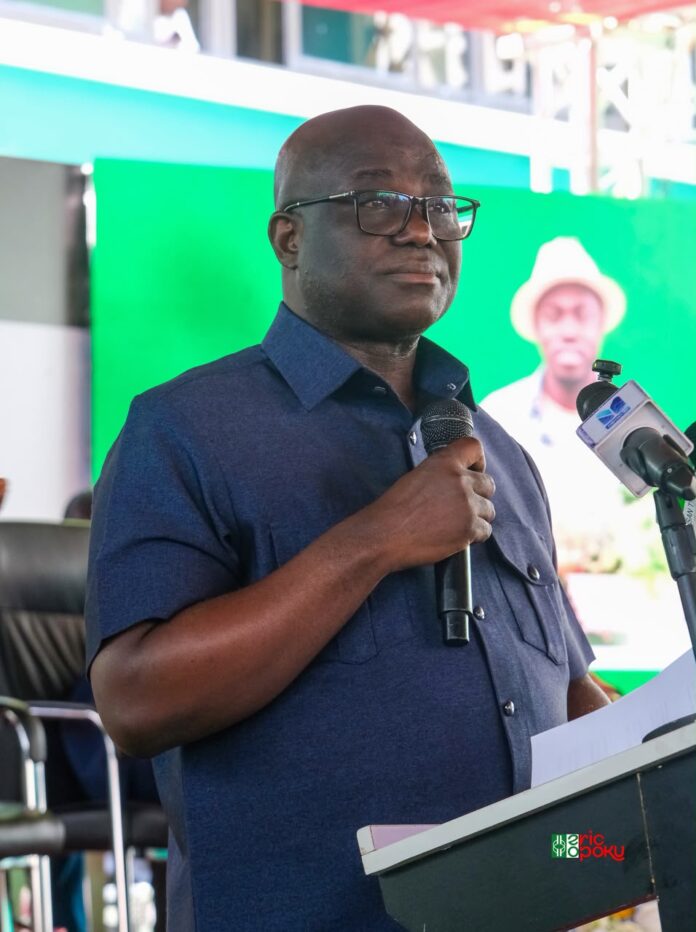
Hon. Eric Opoku, Minister of Food and Agriculture advising the youth to take agriculture as a serious business.
This donation aimed at enhancing vegetable production like tomatoes throughout the year, especially during the lean season, to curb dry-season importation of vegetables and retain and strengthen Ghana’s import balance sheet.
During the donation, the Minister of Food and Agriculture, Hon. Eric Opoku, extolled the youth for establishing the cooperative with a common goal to produce vegetables for the country to sustain food security.
According to the Minister, the vision of the President, John Dramani Mahama, is to make farmers more worthy than any other profession. To achieve this, he said, the government is providing favourable farming working conditions through the Feed Ghana Programme with the right agricultural tools and technology, and a market for the farm produce.
This government intervention includes the free donation of 2 portable irrigation machines and 500 bags of fertilizer. One of the portable irrigation machines could irrigate 5 acres of land; therefore, the 2 irrigation machines would irrigate 10 acres of land.
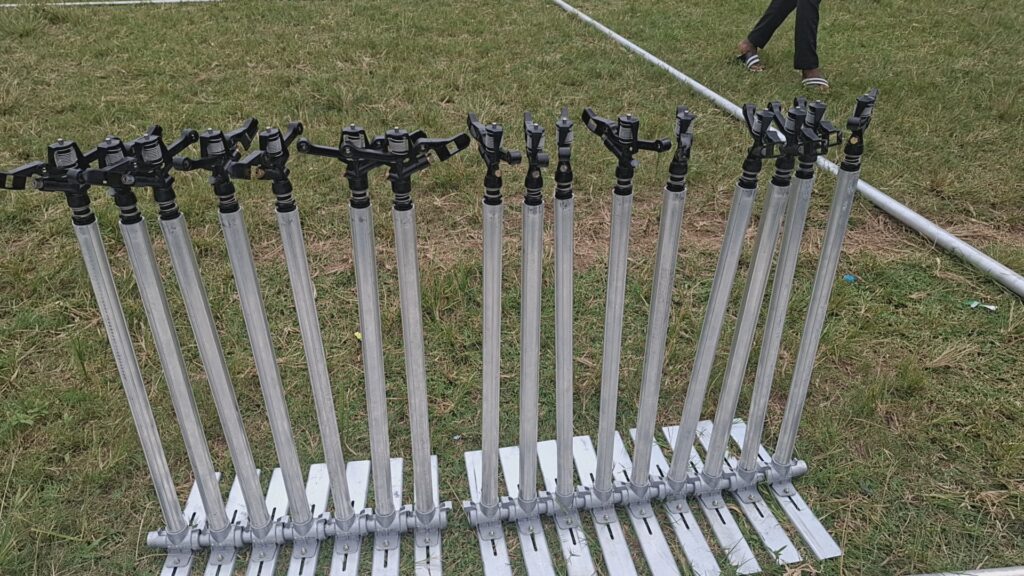
The irrigation materials presented to the Pomaakrom Cooperative
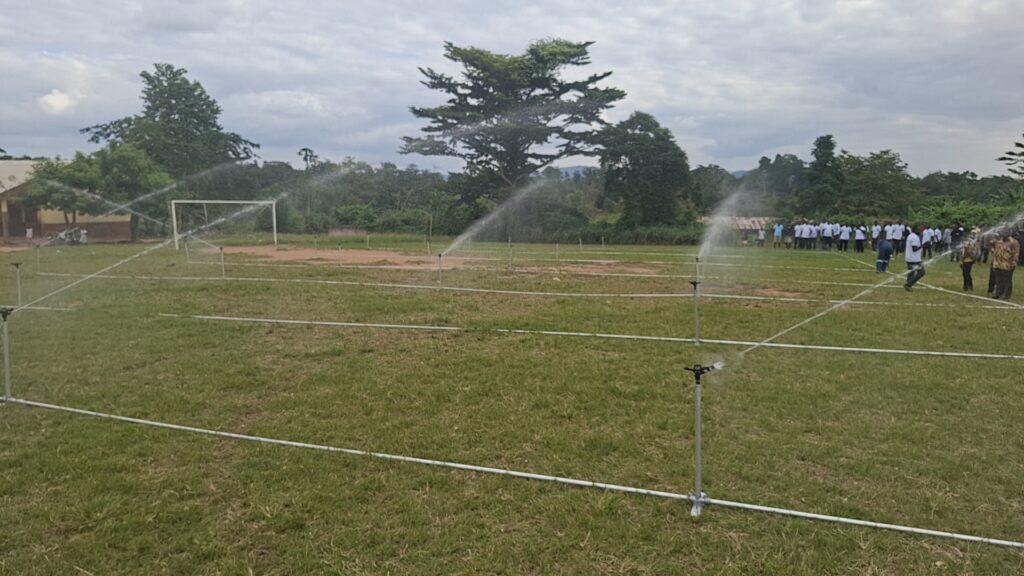
Explaining the uses of the machine, he said the machine can be assembled for use and disassembled after use. It could be moved to different farms for the same purposes.
“Resetting Ghana’s agriculture, the government, under the leadership of President Mahama, is procuring more of these portable irrigation machines. The government will subsidise the price so that every cooperative can afford to promote lean seasonal farming,” he added.
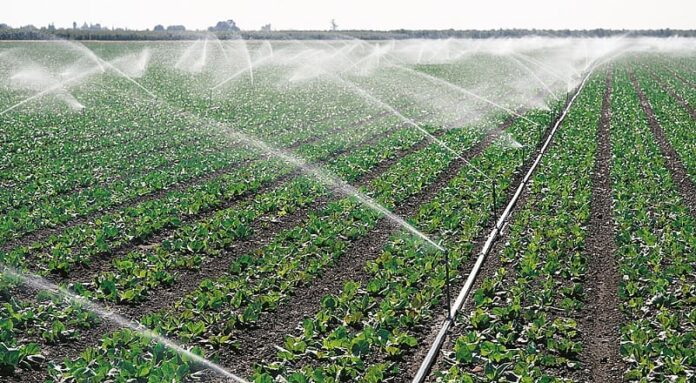
Demonstrating how the portable irrigation machine works on the field.
He mentioned that the government is making every effort to provide favourable conditions for farmers to produce vegetables, especially tomatoes during the lean season.
He urged the youth to focus on agriculture, especially during the dry season, because vegetable prices, especially for tomatoes, are high then.
He called on the youth and the elders of Pomaakrom to make good use of the irrigation machines and the fertilizers to enhance maximum production and improve farmers’ livelihoods.
Ghana’s agriculture is resetting by transitioning from cultural methods of farming to agribusiness that imbibe science and technology to improve yields.
To motivate the youth to patronise the sector, the government is working towards an agricultural sector that is attractive to young individuals because it offers opportunities in technology, innovation, enterprise, and professional development.
To achieve this, the Ministry of Food and Agriculture, in collaboration with the World Food Programme (WFP) and the Korean International Cooperation Agency (KOICA), has distributed digital tools and agri-tech equipment to 5 agricultural colleges in Kumasi.
At the programme with the theme: Strengthening Agricultural Education for Digital Future, the Minister of Food and Agriculture, Hon. Eric Opoku, said the distribution of the equipment represents an investment in knowledge, skills, innovation and, most importantly, in the young men and women who will shape the future of Ghanaian agriculture.
“We are moving towards a future where farmers can assess soil conditions before applying nutrients; where weather information can inform decisions on planting and farm management; where soil moisture can be monitored to improve water-use efficiency and reduce losses; and where drones, sensors, digital platforms and data analytics become practical tools for increasing productivity,” Hon. Eric Opoku mentioned.
Leveraging technology to achieve food security, the Minister explained that the government is strengthening the capacity of the institutions, strengthening the skills of the graduates, strengthening agricultural extension and ultimately, strengthening the farmer and Ghana’s food system.
The five (5) agriculture colleges that are being positioned as important centres for practical learning in advanced agricultural technologies with digital tools and agri-tech equipment are the Kwadaso, Wenchi, Ejura, Damongo and Ohawu Agricultural Colleges.
The digital tools and agri-tech equipment that were received by these colleges include 60 moisture meters, 60 soil testers, 60 greenhouse environmental control learning kits, 60 IoT sensor education kits, weather station starter kits, 60 GPS devices, high-performance computers, business laptops and 15 mini drones.
Moreover, agricultural spraying simulation, drone flight simulation and agricultural data-processing software were added to the packages.
Underscoring the use of the tools and equipment, Hon. Eric Opoku said the items are teaching and learning tools that would help bridge the gap between agricultural theory and the practical technologies increasingly being used in modern farming.
“The programme is built on an existing programme of investment in these institutions and takes our agricultural colleges another step towards precision, digital and data-driven agriculture”, he added.
Explaining the worth of the interventions to Ghana’s food systems, he said the interventions are important because the future of Ghana’s agriculture will depend not only on the ability to produce more, but also on the ability to produce sustainably and build resilience against climate-related risks.
He urged the students to make good use of the tools and equipment to enhance skills delivery in the agriculture sector to improve the quality of food produced in the country.
The Minister for Food and Agriculture, Hon. Eric Opoku, has paid a courtesy call on the Ga Mantse, Nii Teiko Tsuru II, as part of efforts to strengthen collaboration between the Ministry and Traditional Authorities in promoting agriculture and food security.
The meeting focused on deepening cooperation between the Ministry and traditional leaders, particularly in the dissemination of agricultural information and government interventions to farming communities.
The Ga Mantse, Nii Teiko Tsuru II, called for closer collaboration between the Ministry and Traditional Authorities to ensure that farmers and communities receive timely and accurate information on agricultural programmes and opportunities.
He also urged the Ministry to prioritise maize production, noting the crop’s importance to the diet and livelihoods of the people of the Ga State.
The Ga Mantse assured the Minister of the continued support and cooperation of the Ga State and warmly welcomed him as a son of the soil.
Responding, Hon. Eric Opoku said the Ministry’s vision was to transform Ghanaian agriculture from subsistence farming into a profitable and attractive business capable of creating sustainable jobs, particularly for the youth.
He highlighted what he described as significant gains under the government’s Feed Ghana Programme, noting that Ghana’s maize production reached more than 4.6 million tonnes in 2025, compared with an estimated national demand of about 3.6 million tonnes.
The Minister said the government would continue to implement measures aimed at increasing agricultural productivity, improving food security and creating opportunities for young people to participate meaningfully in the sector.
The courtesy call forms part of the Ministry’s broader engagement with Traditional Authorities and other stakeholders to strengthen partnerships in advancing Ghana’s agricultural development and food security.
The Tree Crops Development Authority (TCDA) has strengthened its presence in the Bono Region with the commissioning of a new Regional Office in Sunyani, a move aimed at improving access to regulatory services and strengthening support for actors in the tree crops value chain.
The office, which was commissioned by the Chief Executive Officer of TCDA, Dr. Andy Osei Okrah, together with the Bono Regional Minister, Hon. Joseph A. Akwaboa, and the Chairman of the TCDA Board, Prof. William Oduro, is expected to bring the Authority’s services closer to farmers, processors, aggregators, traders and other stakeholders.
The establishment of the office forms part of TCDA’s broader decentralisation efforts to ensure that its regulatory, development and stakeholder engagement activities are delivered more efficiently at the regional level.
For the Bono Region, which is a major hub for cashew production, the office is expected to play a particularly important role in strengthening the organisation and regulation of the cashew value chain.
Speaking at the commissioning, Dr. Okrah said the regional presence would make it easier for stakeholders to access TCDA services while strengthening the Authority’s ability to monitor and support activities within the sector.
He said the office would facilitate the registration and licensing of actors, strengthen compliance and enforcement, improve traceability and data collection, and support public education and stakeholder sensitisation.
“Our regional officers will now effectively represent the Authority here in Bono, bringing TCDA’s presence, guidance and support directly to the doorstep of our farmers and processors.”
The Bono Regional Minister, Hon. Joseph A. Akwaboa, described the establishment of the office as an important development for the region’s agricultural sector.
He said bringing TCDA’s services closer to farmers and other value chain actors would contribute to improved productivity, quality assurance, value addition and market access.
He further pledged the support of the Regional Coordinating Council and urged stakeholders to work closely with TCDA to maximise the opportunities created by the new regional presence.
The Minister also encouraged farmers to adopt climate-smart agricultural practices to improve resilience and sustainability within the tree crops sector.
Dr. Okrah expressed appreciation to His Excellency John Dramani Mahama for his leadership and continued support for TCDA, as well as the Ministry of Food and Agriculture, the Bono Regional Coordinating Council, development partners and other stakeholders who contributed to the establishment of the office.
The commissioning marks another step in TCDA’s efforts to strengthen its regional footprint and ensure that farmers and other actors across Ghana’s tree crops value chain have easier access to the Authority’s services, guidance and regulatory support.
The Minister for Food and Agriculture, Hon. Eric Opoku, has announced that the National Food Buffer Stock Company (NAFCO) will immediately release 50,000 bags of 50-kilogramme rice to settle Ghana’s outstanding obligation to the Economic Community of West African States (ECOWAS).
The Minister made the announcement at the maiden Annual General Meeting (AGM) of NAFCO, where he highlighted the company’s improved food stock position and financial performance.
According to Hon. Eric Opoku, Ghana borrowed rice from ECOWAS in 2018 to support the School Feeding Programme.
He said improved management of NAFCO and increased procurement of food commodities had enabled the company to accumulate sufficient rice stocks to repay the obligation.
“Today, by the grace of God, and with prudent management of the company, we have been able to procure enough, more than enough, for us to pay back what we borrowed,” the Minister said.
He explained that the immediate release of the 50,000 bags would enable Ghana to settle its rice obligation to ECOWAS, adding that the country would no longer need to borrow rice.
The Minister disclosed that NAFCO’s current rice stock stands at 20,443 metric tonnes, describing the development as an indication of improved food availability and strengthened national food security.
Ghana records increased maize production
Hon. Eric Opoku also highlighted developments in Ghana’s maize production following the implementation of the Feed Ghana Programme.
He said that after one year of implementing the programme, Ghana had produced maize in excess of domestic demand.
According to the Minister, the national maize balance is estimated at 3.6 million tonnes, while Ghana produced 4.6 million tonnes of maize in 2025 alone.
He said the development demonstrated progress in efforts to strengthen domestic food production and reduce Ghana’s dependence on food imports.
NAFCO records GH¢91.7 million profit
The Minister further disclosed significant improvement in NAFCO’s financial performance.
According to the company’s 2025 audited accounts submitted to the State Interests and Governance Authority (SIGA), NAFCO moved from a net loss of GH¢19 million in 2024 to a net profit of GH¢91.7 million in 2025.
The company’s gross profit margin also increased from 1.61 percent in 2024 to 13.96 percent in 2025.
Hon. Eric Opoku commended the Board and Management of NAFCO for the improvement in the company’s financial performance and urged them to sustain prudent management practices while ensuring the long-term viability of the company.
He stressed the importance of NAFCO’s role in managing Ghana’s strategic food reserves and supporting government’s efforts to strengthen food security.
The maiden Annual General Meeting provided an opportunity for the company to review its performance, assess its financial position and outline strategies to strengthen its operations and contribution to Ghana’s food security agenda.
The Ministry of Food and Agriculture has signed a significant agreement with ABC Oyeasase Yie to construct over 50 million dollars organic fertilizer blend in Ghana to enhance food production and improve soil health.
This fertilizer blend is to support Feed Ghana Initiative that aims at boosting agriculture production, alleviating food crisis, and creating youth employment in the country.
During the signage of the MoU at the conference room of the Ministry of Food and Agriculture, the Director of ABC Oyeasase Yie, Samuel Adimado said the aim of the fertilizer blend is to support the country’s food security program that feeds into sustainable agriculture production strategy.
The Director of ABC Oyeasase Yie, Samuel Adimado signing the MoU
He added that the ABC Oyeasase Yie organic fertilizer blend would not only feed the plants, but to contribute to strengthening and protecting the soil structure.
“We need a farming system that would protect the soil as well as feeding into the plant”, he mentioned.
According to him, the ABC Oyeasase Yie aligns with the government’s Feed Ghana Program that ensures national production of food, climate resilient agriculture practice and youth employability.
Considering the location for the fertilizer production, he said the company has opted to site the processing plant at the Eastern Region due to the proximity to the port as the company has it in its objectives to export some of the products.
He commended the government especially the Agric Minister for the support given to actualized the establishment of the organic fertilizer processing blend.
In response to acknowledge this milestone, the Minister of Food and Agriculture, Hon. Eric Opoku (MP) lauded ABC Oyeasase Yie for the interest to establishing blending facility to produce organic fertilizer in Ghana.
Hon. Eric Opoku, Minister of Food and Agriculture pening to kick start the construction of the organic fertilizer blend
“We appreciate perfectly the benefit of organic fertilizer to food production. Everywhere and all over the world, agriculture is shifting towards organic direction, because the food we produce is meant for consumption and even before production, we need to protect the health of the soil”, Minister added.
He underscored the essence of organic fertilizer to the soil by saying that the organic fertilizer would improve soil health and make it productive to maximize crop production.
Hon. stressed that organic fertilizers are environmentally friendly unlike the chemical fertilizers that have negative impact on human health after consumption.
“We are 100% ready to work with ABC Oyeasase Yie to ensure that Ghana is able to produce organic fertilizer in sufficient quantity to support the Feed Ghana Programme”, he concluded.
The Ministry of Food and Agriculture, in partnership with Mehak Company Limited and Covenant Farms to sponsor seven (7) days educational trip for the Overall National Best Farmer and National Best Poultry Farmer of 42nd National Farmers Day Celebration 2026.
In a press release issued by the Ministry of Food and Agriculture, the two agribusiness leaders have pledged transformative international exposure packages for the distinguished farmers to study the best agricultural practices in Italy.
The press release reads; “The Ministry of Food and Agriculture, in collaboration with Mehak Company Limited and Covenant Farms, proudly announces international sponsorship packages for the Overall National Best Farmer and the National Best Poultry Farmer at the 42nd National Farmers Day Celebration 2026.
Demonstrating a shared commitment to recognizing excellence, innovation, and resilience in Ghanaian agriculture, the two agribusiness leaders have pledged transformative international exposure packages for our distinguished farmers to study the best agricultural practices in Italy.
Overall National Best Farmer 2026: Sponsored by Mehak Company Limited, the ultimate winner and spouse/partner will enjoy an exclusive 7-day all-expenses-paid international agricultural study and leisure trip to Italy, offering exposure to modern European agritech, sustainable value chains, and processing innovations.
Best National Poultry Farmer 2026: Sponsored by Covenant Farms, the top poultry sector champion will likewise embark on an all-expenses-paid 7-day technical and benchmarking trip to Italy, focusing on modern poultry practices, sustainable and innovative systems.
These packages are designed to expose our gallant and noble farmers to modern farming technologies, processing innovations, and smart agricultural practices, directly supporting the government’s agricultural modernization goals.
The Ministry of Food and Agriculture, on its part, has completed negotiations with the Italian Embassy for successful travel for the farmers who will ultimately emerge as winners of these two categories.
The Ministry expresses deep appreciation to the management of Mehak Company Limited and Covenant Farms for setting this benchmark in support of agriculture and the National Farmers’ Day Celebration.”
The Minister of Food and Agriculture, Hon. Eric Opoku, has revealed that farmers under the Ghana Tomato Self-Sufficient Initiative (GHATSI) are to benefit from pension contributions set aside in a pension fund.
Minister said this during the launch of the Ghana Tomato Self-Sufficient Initiative at Anloga in the Volta Region.
The initiative is a Government of Ghana initiative led by the Ministry of Food and Agriculture in partnership with FarmMate LTD that aimed to build a reliable, year-round and integrated domestic tomato value chain that progressively meets national demand, reduces import dependence and creates an eventual surplus for export.
Farmers, unlike other professions, do not benefit from pension benefits even though they contribute immensely to the lives of individuals, including the President of the Republic.
A sector that employs over 1/3 of the working population does not benefit from pension funds that leads to derailing.
He said the initiative provides for a pension arrangement under which a small, agreed percentage of the farmer’s income will be set aside in a pension fund after the harvest has been purchased and payment made.
“This will provide farmers with a measure of income security when they reach a stage at which they no longer have the strength to remain actively engaged in farming,” he mentioned.
According to him, the farmers deserve not only the support required to produce today, but also dignity and financial security in retirement.
He added that Pan-African Savings and Loans, a subsidiary of the Ecobank Group, is working directly with farmers in the production communities to provide the required financing under the initiative. This will bring liberation to farmers in accessing financial support.
“The current farmer enhancement package is estimated at approximately GHS20,000 per acre. It covers inputs, land preparation, soil testing, technical assistance, insurance and other production requirements”, he revealed.
To ensure effective extension service delivery, he explained that a portion of the financial package will also support extension delivery. This will enable Agricultural Extension Officers to remain close to participating farmers, provide regular technical guidance and ensure that farmers practise intentional, scientific and commercially oriented agriculture.
This is not free input distribution. It is productive input-credit financing intended to ensure that capable farmers are not prevented from producing because they do not have all the required capital at the beginning of the season.
The applicable financing obligation will be settled through the structured off-take arrangement after harvest.
The Government has announced plans to rehabilitate all 22 existing irrigation facilities in the Volta Region by the end of 2027 as part of efforts to transition Ghana from rain-fed agriculture to year-round irrigation-based farming.
The Minister for Food and Agriculture, Hon. Eric Opoku, made the announcement at the national launch of the Ghana Tomato Self-Sufficiency Initiative (GHATSI) at Anloga in the Volta Region.
The initiative, launched on September 15, 2026, is being implemented by the Ministry of Food and Agriculture in partnership with FarmMate Limited and seeks to establish a reliable, year-round domestic tomato value chain, reduce dependence on imports and improve incomes for farmers.
According to the Minister, the rehabilitation of the irrigation facilities forms part of government’s response to President John Dramani Mahama’s directive to accelerate the transition from rain-fed agriculture to irrigation farming.
He explained that an assessment of irrigation infrastructure across the country showed that several facilities constructed over the years were operating below their designed capacities, largely due to deterioration and inadequate maintenance.
The Minister said the government would therefore invest in rehabilitating existing irrigation infrastructure while also developing new facilities to expand access to water for agricultural production.
He disclosed that two new irrigation dams were also being pursued in the Volta Region, while two new excavators would be provided to the Volta Regional Coordinating Council to support the dredging of lagoons, streams and rivers to improve water flow for irrigation.
Mobile irrigation systems
Hon. Eric Opoku further announced the introduction of mobile irrigation systems to enable farmers to access irrigation water more easily.
The systems come with a 10-horsepower diesel-powered water pump, medium-sized pipes, 44 sprinklers and 44 risers, with each unit capable of irrigating approximately five acres.
Government is subsidising 60 per cent of the cost, while farmers are expected to finance the remaining 40 per cent, equivalent to GH¢23,800. Farmers unable to make the payment upfront would be allowed to acquire the equipment through a two-year hire-purchase arrangement.
The Minister said the initiative was intended to make irrigation equipment more accessible to farmers and support increased production throughout the year.
Government has also begun expanding access to water-pumping equipment, with 100 machines already distributed through the Regional Minister and procurement underway for an additional 500 machines.
Fertiliser and improved seeds
Mr Opoku also outlined measures to improve farmers’ access to agricultural inputs, including improved seeds and fertiliser.
He said the Ministry had reached an agreement with the Council for Scientific and Industrial Research (CSIR) to develop improved seeds capable of producing yields of between 25 and 30 tonnes.
The Ministry expects the seeds to be available by the end of November, after which they would be procured and distributed to farmers.
Meanwhile, government has procured organic fertiliser for farmers and earmarked 200 cartons to support subsistence and vegetable farmers in the Volta Region.
The Minister explained that the free fertiliser intervention was introduced as an emergency measure following disasters, including the Akosombo Dam spillage and drought conditions in parts of northern Ghana, which resulted in significant losses to farmers.
Gunu commends Mahama
The Volta Regional Minister, Hon. James Gunu, commended President Mahama and the Ministry of Food and Agriculture for what he described as significant investments in agriculture in the region.
He said the interventions demonstrated government’s commitment to supporting farmers, increasing food production and strengthening food security.
Mr Gunu recalled that following the celebration of the National Farmers’ Day in the Volta Region under the theme “Eat Ghana, Feed Ghana, Secure the Future,” the region received more than 20,000 bags of fertiliser for distribution to farmers.
He added that each of the region’s 18 district assemblies had subsequently received fertiliser, while the region had also benefited from additional supplies under the government’s agricultural interventions.
The Regional Minister said the Volta Region had also received 180,000 birds under the Feed Ghana poultry support programme, while two of the 10 Farmers’ Service Centres being constructed nationwide were allocated to the region.
“If the entire country is receiving 10 projects and the Volta Region is receiving two of them, that should tell you how much attention this government is giving to the development and agricultural transformation of the people of the Volta Region,” he said.
Mr Gunu said the region had enormous potential for tomato production, particularly in Anloga, Keta, Akatsi North and Agotime Ziope, and called for the expansion of GHATSI to cover more tomato-growing communities.
He also appealed for the establishment of a tomato processing facility in the region to reduce post-harvest losses, create jobs and enable farmers to derive greater value from their produce.
GHATSI targets higher tomato production
The GHATSI initiative targets an initial production of about 100,000 tonnes of tomatoes during the 2026/2027 production cycle, with the long-term objective of reaching approximately 400,000 tonnes annually.
The programme is designed to link farmers to irrigation, improved inputs, financing, technical support, crop insurance, processing, logistics and guaranteed markets.
Mr Opoku said the broader objective was to establish a dependable year-round tomato value chain that would address Ghana’s seasonal tomato shortages, reduce post-harvest losses and eventually create opportunities for value addition and exports.
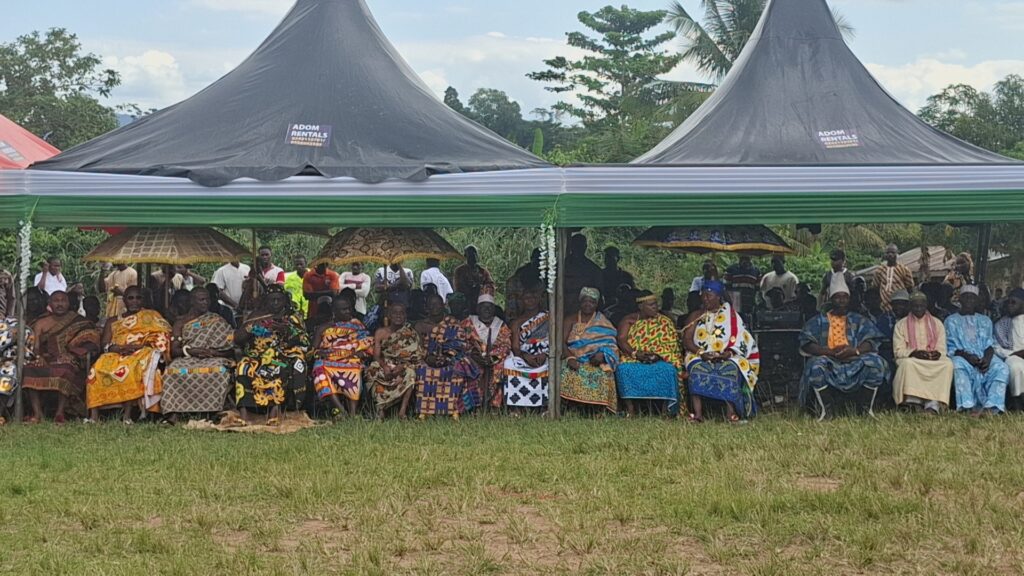
The launch at Anloga brought together government officials, traditional leaders, farmers, Members of Parliament, local government representatives and private-sector stakeholders.
The government says the combination of irrigation development, improved agricultural inputs, financing, market access and processing infrastructure will be critical to achieving food security and reducing Ghana’s dependence on imported agricultural products.
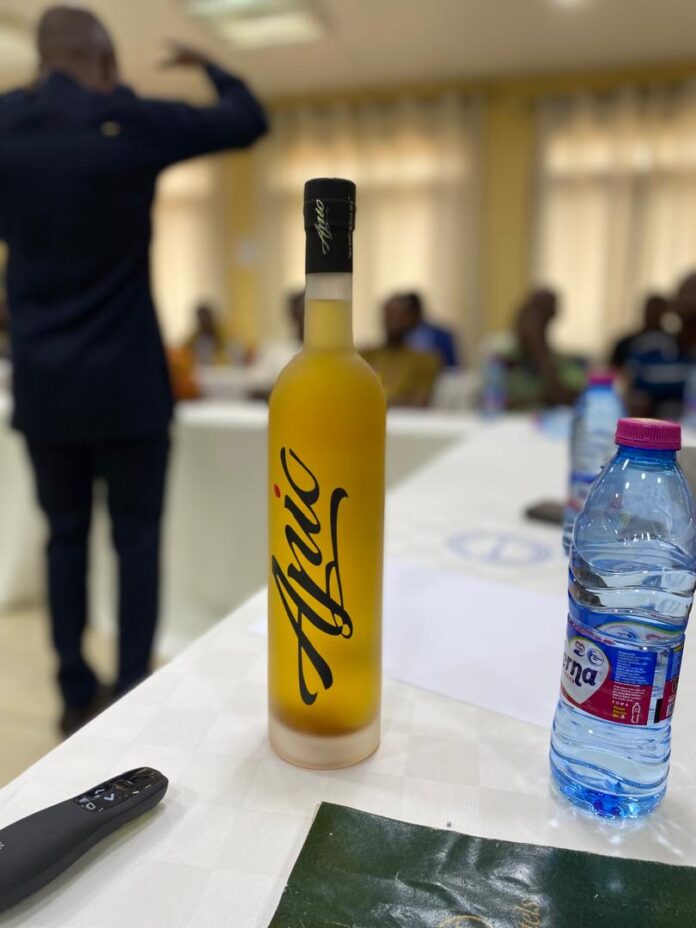
Apio is the unique name for the locally produced Ghanaian gin from palm wine and other raw products. To avoid other countries from infiltrating the product with the name, the Intellectual Property Office under the Registrar General’s Department has moved to protect the unique name and the product.
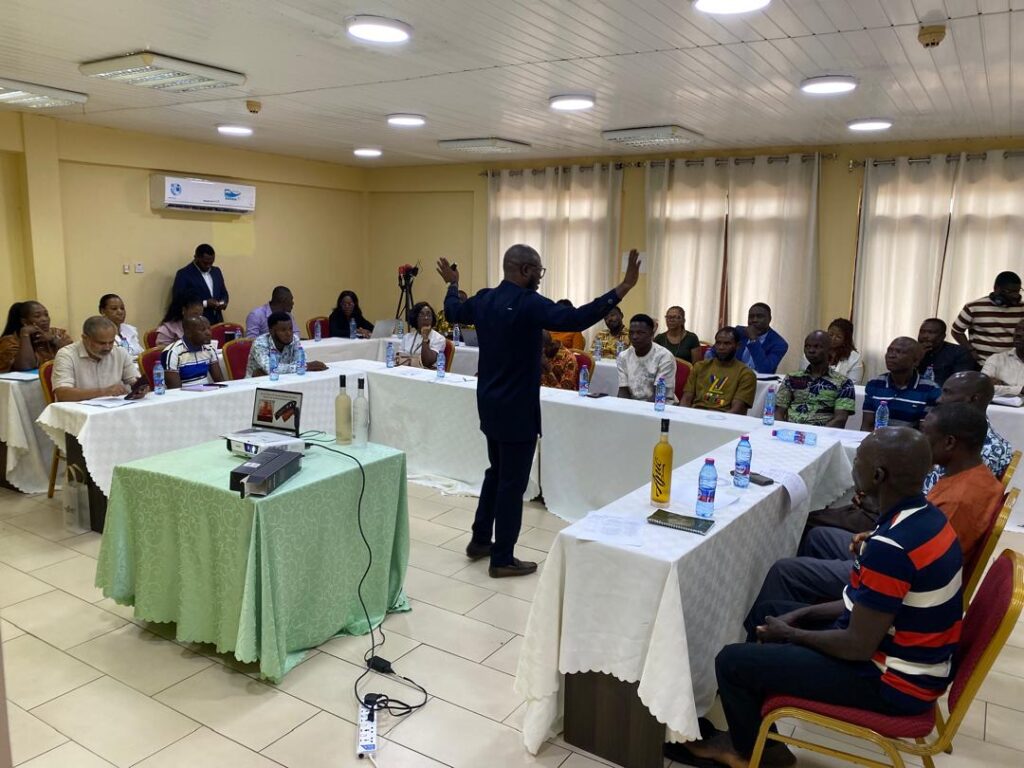
In a stakeholders’ meeting organised by the Ghana Industrial Property Office (GHIPO) under the Registrar General’s Department, the Registrar at the Registrar General’s Department, Madam Grace Issahaque, underscored the purpose of the meeting as being the efforts to support local producers of the locally produced gin by leveraging geographical indication (GI) to enhance branding and competitiveness.
According to her, Geographical Indication helps to protect and promote the unique nature of a product to a specific region, based on tradition, environment, or the skill set of the people.
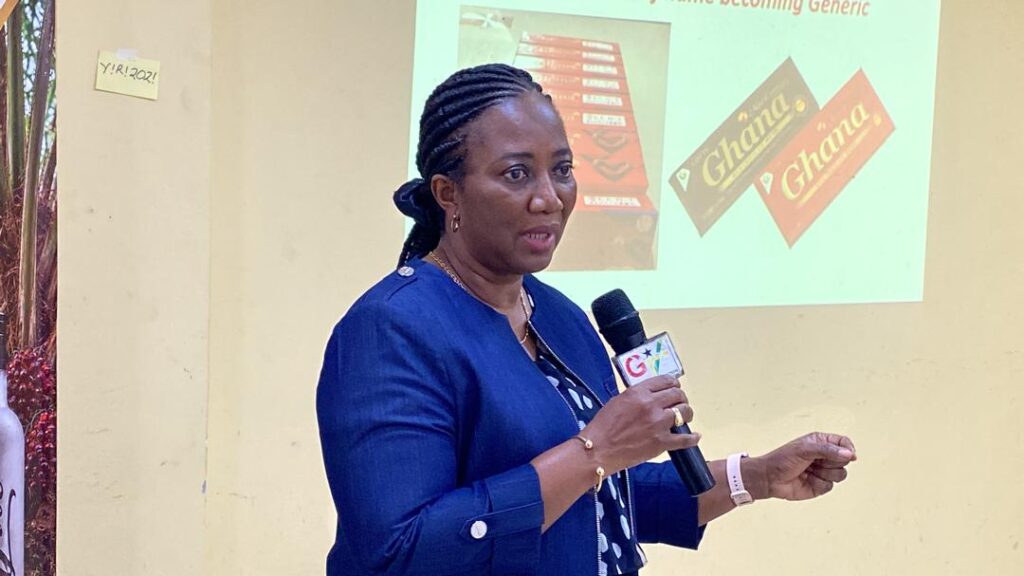
Madam Grace Issahaque, the Registrar, Registrar General’s Department, explaining the merit of GI to the Apio in local and international markets.
“We are trying to assist the producers to come up with standards and also ensure that they do a proper review of how they produce the gin and ensure that they use their local skill sets; enhancing its safety, its uniqueness and ensuring that the reputation of production does not diminish”, she explained.
Explaining the relevance of the GI tool to production, she said that once producers and consumers understand the unique nature and the quality controls used in a particular production, consumers will continue to patronize or purchase that product.
Building producers’ capacity in GI will give them the leverage to compete on the international market by producing quality gin more than Vodka, whiskey, and others.
She urged the producers to work assiduously to produce the best product to stand the test of both the local and international standards.
Speaking on the theme, Protecting Our Heritage, Promoting Our Future, the Head of Intellectual Property of the Ghana Intellectual Property Office under the Registrar General’s Department, Dr. Courage Komla Besah-Adanu, said the stakeholders’ meeting is critical in the building of a system for geographical indications to protect the traditional distilled spirits, called Apio.
Explaining the importance of building the system for geographical indications, he said: “Once we map out the stakeholders and we have engaged with them in building the value chain, that will ensure the consistency of producing quality Akpeteshe in higher volumes.”
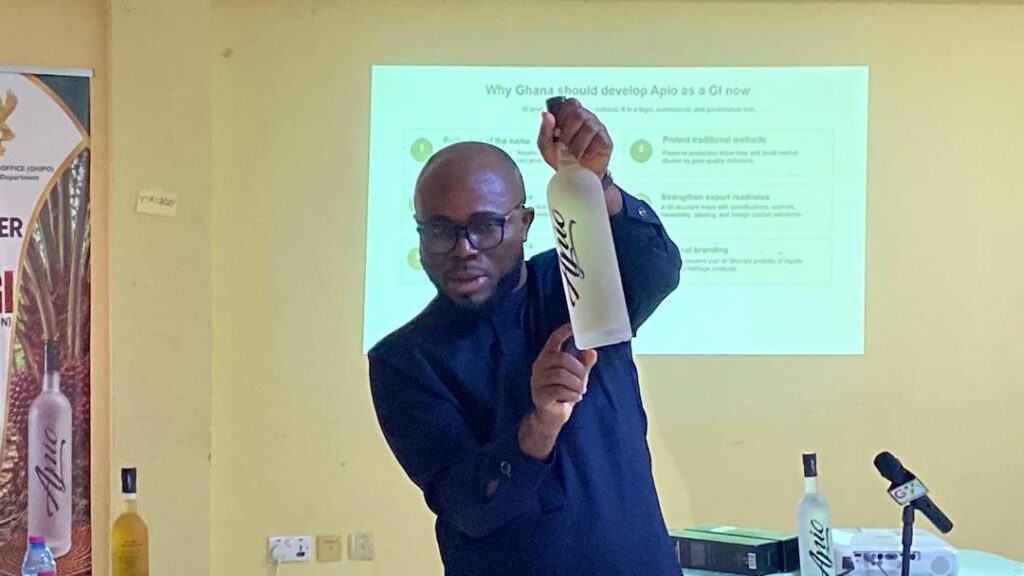
Dr. Courage Komla Besah-Adanu, the Head of Intellectual Property of the Ghana Intellectual Property Office, under the Registrar General’s Department, called on the stakeholders to collaborate to lift the flag of Ghana high on the international market.
He stressed that with the relevant stakeholders involved, including GSA, the Ministry of Trade, FDA, GEPA, and more, Ghana is poised to properly brand and process unique local gin for local consumption and the global market.
He called on stakeholders, especially farmers, to cooperate, collaborate, and work effectively on the Geographical Indication to raise Ghana’s flag in the global market.
David Ahiakye, a farmer and distiller from Asamankese, extolled the organizers for such a programme.
Unfortunately, he said most of the farmers and the distillers have no knowledge about the effects of the materials that they used for distilling.
Speaking to Agric Today, he revealed that the training would enhance their working abilities by following the right protocols and using the right tools and equipment to produce quality gin.
Observing these protocols, he said it would improve the income level, which goes a long way toward improving living standards.