The Ghana Tomato Self-Sufficiency Initiative (GHATSI), an initiative initiated by the Ministry of Food and Agriculture in partnership with FarmMate Ltd is to provide lasting solution to Ghana’s tomato crisis.
The initiative would be launched on 15th September, 2026 at the Anlo Senior High School Park (ANSECO) in Anloga, Volta Region, at 10:00 AM.
The launch will be led by the Minister for Food and Agriculture, Hon. Eric Opoku (MP), and will convene Government officials, Regional authorities, Traditional leaders, farmers, financial institutions, insurers, technical partners, and the media.
The national Public-Private Partnership (PPP) designed to move Ghana progressively toward reliable tomato self-sufficiency by building an integrated, year-round domestic value chain.
Ghana possesses favorable land, water, and climate, these notwithstanding the nation currently spends over USD 400 million annually importing fresh tomatoes and paste, heavily driven by the December-to-July off-season deficit.
In a press release issued by the Ministry of Food and Agriculture, GHATSI directly reverses this dynamic by connecting farmers and land to production enhancement, structured finance, multi-peril crop insurance, aggregation, industrial processing, and guaranteed market access.
The initiative seeks to end import dependency, guarantee a stable year-round supply, raise and secure farmer incomes through contract farming, create sustainable youth employment across the entire value chain, eliminate avoidable post-harvest losses, and reduce risks of farming against climate or pest shocks.
According to the press release, the complete rollout targets annual national tomato production of 400,000 tonnes, commencing with an initial supply target of approximately 100,000 tonnes during the 2026/2027 production cycle.
This 2026/2027 first-phase rollout will span over 10,000+ acres across 40 districts, 12 regions, and more than 100 communities, establishing the production base for progressive scale-up to the full 400,000-tonne annual target.
Under the Farmer Enhancement Package, participating growers will receive financed agro-inputs, irrigation support, extension and technical services, and multi-peril crop insurance, with repayment settled directly at off-take.
Regularly drinking beverages like tea and coffee at very hot temperatures increases the risk of cancer of the food pipe or gullet, known as oesophageal cancer, UK research suggests.
Researchers say the findings, from a study of nearly a million people, make this the largest to date to establish the link.
In the study, people who had their drinks “very hot” had around a three times higher risk of the cancer than “warm” tea or coffee drinkers – although experts stress the overall chances of developing this cancer are low.
Steaming hot liquid can damage the cell lining of the food pipe on the way down to the stomach.
Scalding hot brews
The work by Oxford University, which is published in the International Journal of Cancer, defines any drink at 65 degrees Celsuis or above as “very hot” and posing a potential risk.
Consuming six or more hot drinks per day also raises the risk, according to data from 977,282 middle-aged men and women.
Although adding milk can cool drinks down slightly, a milky tea or coffee may still be far too hot, researchers say.
Tea made immediately after a kettle is fully boiled is touching boiling point, which is 100 degrees C (212 degrees F). Once poured into a cup, that lowers to around 90 or 95 degrees C.
The advice is to wait a few minutes before drinking so the beverage cools to a safer temperature.
Cancer Research UK says it’s difficult to put an exact time on how long a hot drink should be left to cool.
“But if you’re worried, we’d suggest just waiting until it’s comfortable to drink rather than drinking it while it’s still very hot,” the charity said.
Lead researcher Dr Keren Papier said research in South America – where many people drink a very hot herbal beverage called mate – had already shown a similar link between hot drinks and oesophageal cancer.
But she said: “More research is now needed to identify the exact drink temperatures linked to this increased risk.”
A separate study of 118 young adults who did multiple tastings of different black coffees found most only deemed the drinks to be too hot if the temperature was 70 degrees C or above.
According to one takeaway coffee cup manufacturer, the ideal temperature for hot coffee on the go is between 49 and 60 degrees C.
Should a barista want the coffee to stay hotter for longer – if a customer requests extra hot – it can be served at over 82 degrees C, says MTPak Coffee.
Small overall risk
The researchers suggest that around one or two in every 10 oesophageal cancers could be avoided if people stopped drinking very hot beverages.
Squamous cell oesophageal cancer is rare, affecting a few thousand people a year. In the UK, around a 1% of the popularion has a lifetime risk of being diagnosed with this type of cancer.
So even if scalding hot drinks might increase someone’s risk, the chances of them developing the cancer are still low.
And there are other factors, such as smoking, which are a bigger risk for oesophageal cancer.
Fiona Osgun from Cancer Research UK, which funded the study, stressed: “The most important ways to reduce the risk of this cancer type are not smoking and cutting down on alcohol.”
Symptoms of oesophageal cancer can include heartburn, indigestion or a pain in your throat or chest, along with weight loss.
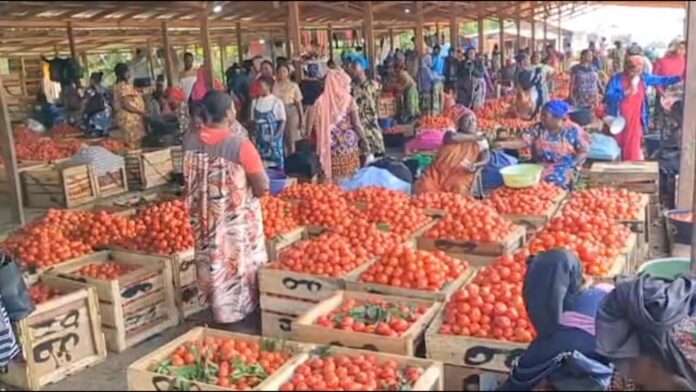
Tomato prices are expected to fall significantly in the coming weeks as local farmers begin harvesting their crops, Deputy Minister for Food and Agriculture John Dumelo has said.
According to him, the increased supply from the ongoing harvest will ease pressure on the domestic market and improve the availability of tomatoes across the country.
Mr Dumelo said the government is also preparing for large-scale dry-season tomato farming from December 2026 to June 2027 to address anticipated supply shortfalls.
He explained that lands have largely been cleared in parts of northern Ghana, with seedling nursing and transplanting expected to begin in October.
In a Facebook post on Monday, September 7, he said the government had provided farmers with solar-powered boreholes and irrigation inputs to support dry-season cultivation.
“The prices of tomatoes should see a sharp decline in the coming weeks as Ghanaian farmers have started harvesting,” he said, adding that the dry-season programme would help “augment the shortfalls” expected next year.
The initiative, he said, is aimed at boosting year-round tomato production and reducing seasonal supply gaps that often trigger sharp increases in prices. Tomato prices recorded the biggest increase among food items monitored by the Channel One Market Price Barometer in August 2026.
Traders have linked the recent surge to reduced rainfall in major tomato-growing areas, which has constrained supply. Tomato trader Mary Okyere said the cost of the commodity had risen sharply compared with the same period last year.
“Last year, a basket of tomatoes like this sold for about GH¢200, but now the same basket costs as much as GH¢700,” she said. She added that a paint rubber of tomatoes, which previously sold for about GH¢50, now costs GH¢150.
While the government expects prices to ease as the current harvest reaches the market, traders remain concerned that low rainfall could continue to affect overall tomato production and supply.
The 24-Hour Economy Secretariat and Accelerated Export Development Authority has mobilised financing commitments exceeding GH¢1 billion to support Ghana’s poultry value chain.
The financing forms part of efforts to boost local production, create jobs and reduce the country’s dependence on imported chicken.
Mr Arnold Parker, Funding Team Lead of the Secretariat, said the finances would support investments across the poultry value-chain to include feed production, day-old chick supply, equipment, processing, storage and veterinary services.
Speaking at the National Transformation Poultry Programme stakeholder discussions in Accra, Mr Parker said the Secretariat had secured strong commitments from financial institutions and investors to drive the initiative.
The funding would be undertaken by private sector actors, notably ABSA, Fidelity and Ecobank.
The first phase of the programme targets about GHS300 million, with additional financing expected to be mobilised after the initial implementation cycle.
“The funds are ready, but we must put in place the right structures to draw down the financing and deploy it effectively across the industry,” Mr Parker said.
He noted that the programme was not solely focused on increasing production but on strengthening the entire poultry value-chain from input suppliers and breeders to processors and off-takers.
The initiative also aligned with Ghana’s Accelerated Export Development agenda, which sought to position locally produced poultry products for regional and international markets.
Mr Parker stressed the need for financing products that reflected the realities of poultry production cycles, saying conventional lending structures often placed undue pressure on farmers.
He explained that banks and industry players would work together to develop customised financing solutions tailored to poultry operation.
The financing initiative comes at a time when Ghana remains heavily reliant on imported poultry products.
The 2024 Budget Statement said the country consumed about 324,047 metric tonnes of poultry in 2022 but produced only 15,000 metric tonnes locally, representing just 4.6 per cent of national demand.
As a result, about 95 per cent of poultry consumed in Ghana is imported, mainly from Brazil, the United States and Europe.
The Ghana National Association of Poultry Farmers estimates that the country spends nearly US$400 million annually on imported poultry products.
Mr Parker said the new financing framework would address those constraints by providing targeted support throughout the value-chain while strengthening enterprise management and technical capacity.
The Secretariat would collaborate with research institutions, including the Council for Scientific and Industrial Research, to improve productivity and support innovation in the industry, he noted.
Fresh tomato prices surged by 158.3% year-on-year in August 2026, making the commodity the biggest price mover recorded by the Ghana Statistical Service (GSS) during the month.
The sharp increase comes despite a moderation in overall food inflation, which eased marginally to 3.0% in August from 3.1% in July.
Presenting the August Consumer Price Index, Government Statistician, Dr. Alhassan Iddrisu, said the significant increase in fresh tomato prices highlights the varying price experiences of consumers across different commodities.
“Fresh Tomatoes more than doubled in price (+158.3%) while Lime fell 33.7%: the overall Y-on-Y inflation of 5.0% hides very different experiences at the market”, he noted.
The GSS data show that fresh tomatoes recorded the highest year-on-year price increase among the commodities tracked in August, followed by ginger, whose price increased by 128.3%.
Shrimps recorded a 67.1% increase, mango prices rose by 57.7%, while fresh coconut and fresh green pepper increased by 38.0% and 30.5%, respectively.
The sharp rise in tomato prices contrasts with declines recorded in the prices of several other food commodities. Lime recorded the biggest decline, falling by 33.7%, while maize prices dropped by 31.3%.
Cocoyam leaves, sweet apples, fried fish and pawpaw also recorded notable price reductions.
Despite the mixed movements, the GSS says food prices generally fell by 2.5% month-on-month in August.
Dr. Iddrisu explained that inflation measures the rate at which prices change rather than the absolute price level of individual goods.
“Inflation measures how fast prices in general are rising or falling, not how high they already are”, he added.
Overall year-on-year inflation increased to 5.0% in August from 4.6% in July, but remained substantially below the 11.5% recorded in August 2025.
Non-food inflation was the main driver, rising to 6.8%, compared with food inflation of 3.0%. The GSS says non-food items accounted for 70.9% of total inflation, while food contributed 29.1%.
Services also remained a major source of price pressure, recording inflation of 8.6%, compared with 3.8% for goods.
According to the GSS, locally produced goods and services accounted for 86.2% of total inflation, while imported items recorded inflation of 2.2%.
Hon. Emelia Arthur, Minister of Fisheries and Aquaculture, explaining the responsibility of the government as the to protect the resources responsibly and ensure that the resources continue to sustain the livelihoods and nourish generations yet to come.
Hon. Emelia Arthur, the Minister for Fisheries and Aquaculture has cautioned the Landing Beach Committees (LBCs) against selling premix fuel above the approved prices, hoarding the product or diverting it for private gain.
She said the Ministry and the National Premix Fuel Secretariat would sanction committees that violated the approved pricing and distribution arrangements.
“Every Landing Beach Committee must sell premix fuel at the approved price. The Ministry will not countenance any attempt to exploit fishers by increasing the price, hoarding the product or diverting it for resale,” Ms Arthur warned.
Under the new price schedule, premix fuel is to be sold at GH¢5.51 per litre, equivalent to GH¢24.80 per gallon.
Accordingly, 80 gallons will cost GH¢1,984, while 70 gallons will sell for GH¢1,736. The approved price for 50 gallons is GH¢1,240, while a yellow gallon will cost GH¢174.
Ms Arthur directed LBC executives to prominently display the approved prices at all landing beaches to ensure fishers know how much they are required to pay.
“No fisherman or fish processor should be made to pay one pesewa above the approved price. These prices must be displayed clearly at every landing beach. Any committee that violates this directive will be dealt with,” she stated.
The Administrator of the National Premix Fuel Secretariat, Ebow Mensah, also cautioned LBCs against creating artificial shortages by withholding supplies or selling the product to middlemen.
“Premix fuel is subsidised by the state to support fishing communities. It is not a commodity for committee members or individuals to hoard and resell at higher prices,” Mr Mensah said.
Prices to be publicised nationwide
Mr Mensah said the approved prices would be announced on radio stations and through community information centres across the country.
He said the price schedule would also be widely shared on social media to ensure fishers and members of the public were adequately informed.
“We are taking the approved prices directly to the people. They will be announced on radio, broadcast through community information centres and shared widely on social media. No LBC can therefore claim that it was unaware of the approved prices,” he stated.
He added that any future adjustment to the price of premix fuel would be formally communicated to fishers and other industry stakeholders through the approved channels.
“Whenever there is a new price, the Ministry and the Secretariat will communicate it clearly for the information of fishers and all industry players. Until such an announcement is made, LBCs must continue to sell at the existing approved price,” he said.
Monitoring and sanctions
Mr Mensah said the nationwide public education campaign would also enable fishers to identify and report LBCs that imposed unauthorised charges.
He said the Secretariat would strengthen monitoring at landing beaches and investigate complaints involving overpricing, diversion and unauthorised resale.
“We will follow the distribution of the product from the oil marketing company to the landing beach. Any LBC found selling above the approved price, diverting supplies or conniving with middlemen will face sanctions,” he warned.
The Secretariat urged chief fishermen, canoe owners, fishers and members of the public to report LBCs that breach the approved price schedule.
Ms Arthur said the government would protect the premix fuel subsidy from abuse and ensure the product reached the fishing communities for which it was intended.
“The era when a few people took advantage of premix fuel at the expense of fishing communities must end. Public officials and committee members entrusted with the product must account for every consignment,” she said.
The Principal Nutrition Officer and Dietician at the University of Ghana Medical Centre, Emelia Dery Gbogr has highlighted the nutritional benefits of kontomire.
According to Emelia Dery Gbogr, it offers greater nutritional value than some commonly consumed vegetables such as spinach and broccoli.
For her, kontomire, also known as cocoyam leaves, is a highly nutritious vegetable that should be part of a healthy diet.
She made the remarks during a Joy Sustainability Month discussion, where she highlighted the importance of locally available foods in promoting nutrition and healthy living.
“When you look at the nutritional values, our kontomire has some of the nutrients higher than broccoli or spinach.
When you look at the protein content of Kontomire, it is higher than that of broccoli; when you look at vitamins, it is high in Vitamin A.
We have a good amount of Vitamin A that is good for the body. Fibre levels are also higher compared to those of broccoli,” she said.
She encouraged Ghanaians to pay greater attention to indigenous vegetables such as kontomire, which are widely available and can provide important nutrients as part of a balanced diet.
“It is readily available to us, so compared to imported goods, its counterpart, which is broccoli or spinach, Kontomire is readily available. It grows easily, so you can have at your backyard, and compared to importation, you will have to pay more for the imported goods, so I will say that coming to cost wise, Kontomire is better,” she said.
The Ghana Cocoa Board (COCOBOD) has settled GH¢2.3 billion owed to bondholders under the Domestic Debt Exchange Programme (DDEP), completing its mandatory payment obligations to affected bondholders for 2026.
COCOBOD said it paid GH¢2,306,202,372.09 to holders of bonds affected by the DDEP.
The payment, announced in a statement dated September 1, 2026, follows an earlier coupon payment of GH¢376,325,910.09 made in March.
This brings the total amount paid by COCOBOD to DDEP bondholders in 2026 to GH¢2,682,582,282.18.
The latest payment also follows the full settlement in July of GH¢162 million owed to holders of Cocoa Bills who did not participate in the DDEP.
COCOBOD said the July settlement brought its outstanding obligations to affected non-DDEP Cocoa Bill holders to a close.
The Board said the payments form part of efforts to strengthen the financial sustainability of Ghana’s cocoa sector.
“Taken together, these payments demonstrate the Board’s commitment to responsible financial management and the systematic settlement of its financial obligations,” COCOBOD stated.
The Board added that the payments were made “as part of the broader effort to strengthen the financial sustainability of Ghana’s cocoa sector,” under the guidance of the Ministry of Finance.
The latest settlement means COCOBOD has completed its mandatory payment obligations to holders of bonds affected by the DDEP for the 2026 financial year.
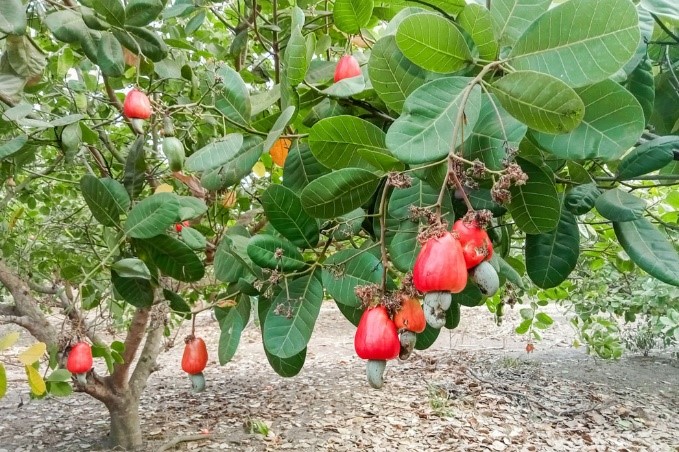
Ghana’s cashew industry is facing growing concerns over its limited capacity to process raw nuts locally, with industry players warning that the country risks losing significant economic benefits as neighbouring Côte d’Ivoire rapidly expands its cashew processing sector.
Ghana, which produces an estimated 262,000 metric tonnes of raw cashew nuts annually, processes less than six percent of its production locally, leaving the majority of the nuts exported in raw form to countries including Vietnam and India, where they are processed and sold at higher value.
The low level of domestic processing has become a major concern for farmers, processors and stakeholders who argue that Ghana is losing opportunities for job creation, industrial growth and increased export earnings.
The situation has also affected farmers, who have experienced a sharp decline in farm-gate prices in recent seasons due to market uncertainties, rising production costs and limited local demand.
Industry observers say increasing local processing capacity remains critical to creating a stable market for farmers and ensuring that more of the value generated from cashew remains within Ghana.
Côte d’Ivoire’s Processing Push
While Ghana continues to grapple with processing challenges, Côte d’Ivoire has positioned itself as a leading force in the global cashew industry through aggressive investment in local value addition.
The Ivorian cashew sector has grown significantly over the past two decades, with production rising from about 180,000 tonnes in 2005 to approximately 1.5 million tonnes in 2025.
Cashew has become one of Côte d’Ivoire’s major export crops and a key driver of economic activity, particularly in the northern, eastern, western and central parts of the country.
The sector currently supports about three million people and covers about 70 percent of the country’s territory.
Beyond production, Côte d’Ivoire has focused on building a strong processing industry, creating about 20,000 direct jobs, with women accounting for approximately 66 percent of employment opportunities in processing.
The country now has 93 active cashew processing factories, making it the third-largest cashew processor globally.
Government Support Behind Côte d’Ivoire’s Growth
The rapid expansion of Côte d’Ivoire’s processing industry has been linked to deliberate government interventions aimed at encouraging investors and strengthening local industries.
Since 2016, the government has introduced incentives including financial support for processors, tax exemptions on imported processing equipment, and special arrangements to guarantee access to raw materials for local factories.
The country has also established agro-industrial zones in Korhogo, Bondoukou and Séguéla to attract investments into cashew processing.
Additionally, institutions such as the Cashew Transformation Technologies Innovation Centre (CITA) have been created to develop technical skills and improve processing technologies.
Côte d’Ivoire Sets 2030 Processing Target
As part of its long-term strategy, Côte d’Ivoire aims to process between 50 and 60 percent of its raw cashew production locally by 2030.
The country plans to process about one million tonnes of raw cashew nuts domestically while promoting locally owned processing companies.
The strategy also includes improving storage facilities, strengthening traceability, promoting the “Origin Côte d’Ivoire” brand and developing markets for cashew by-products such as shells, cashew apple and cashew nut shell liquid.
Calls for Ghana to Accelerate Value Addition
Stakeholders in Ghana’s cashew sector believe the country can achieve similar transformation if it adopts stronger policies to support processors and farmers.
They are calling for increased investment in processing factories, improved access to finance, better storage facilities and incentives to encourage local and foreign investors.
They also want greater attention to the development of by-products and the promotion of Ghanaian cashew kernels on international markets.
According to industry experts, Ghana’s challenge is no longer only about increasing production but ensuring that the country captures more value from the commodity.
With global demand for cashew products continuing to rise, stakeholders believe strengthening local processing could transform the industry into a major source of jobs, income and industrial development.
As Côte d’Ivoire advances toward becoming a major cashew processing hub, Ghana faces the urgent task of closing its processing gap to ensure farmers and the economy benefit more from the country’s cashew resources.
The 24-Hour Economy and Accelerated Export Development Secretariat (24H+) has signed Heads of Terms with four investment partners for a US$270 million National Poultry Transformation Programme aimed at boosting domestic poultry production and creating 12,000 direct jobs.
The agreement, signed at the Tony Blair Institute for Global Change in Accra, brings together UK-based agrifood investment company Agrium Capital, Petra Trust, Axis Pension Trust and Ghana EXIM Bank.
The investment is described as the largest UK agrifood investment in Ghana to date and is expected to support the development of an integrated poultry value chain covering feed production, breeding, hatchery operations, broiler farming, processing, cold-chain facilities, logistics and market access.
Under the first phase, the programme is expected to produce about 20,000 tonnes of dressed and processed broiler products annually, with plans to scale production to 50,000 tonnes.
The initiative is also intended to reduce Ghana’s dependence on imported poultry, with the country currently spending approximately US$400 million annually on chicken and other poultry products. Increased local production is expected to retain a greater share of that expenditure within the Ghanaian economy while creating opportunities across the agricultural value chain.
Presidential Adviser on the 24-Hour Economy and Accelerated Export Development, Augustus Goosie Tanoh, said the investment demonstrates the government’s strategy of leveraging both domestic and international capital to expand productive sectors.
“This is a purposeful blend of foreign private capital and Ghanaian private capital, aligned to build this industry at scale,” he said.
Economic Counsellor and Head of the Growth Team at the British High Commission, Simone Mousey, welcomed the agreement, describing it as an opportunity to deepen commercial relations between Ghana and the United Kingdom, particularly in agriculture and agrifood.
Chief Executive Officer of Agrium Capital, Rod Bassett, said the investment reflected confidence in Ghana’s poultry industry and its capacity to contribute to food security, domestic production and value creation.
Country Director for Ghana at the Tony Blair Institute for Global Change, Sam Mensah-Baah, said the programme demonstrated the importance of partnerships capable of converting Ghana’s economic ambitions into jobs, productive capacity and sustainable growth.