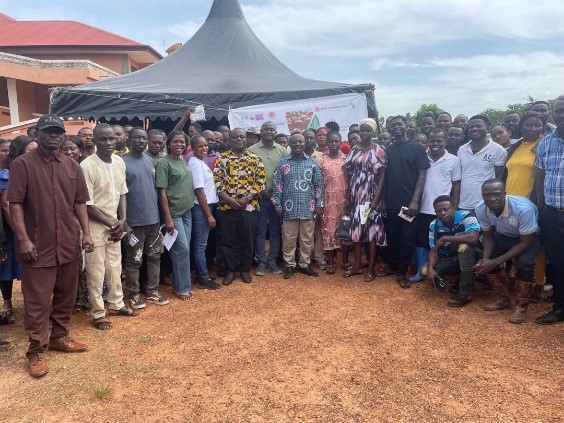
About 150 smallholder vegetable farmers in the Bono Region have received intensive training in improved agronomic practices and vegetable nutrition aimed at increasing the production of tomato, okra and amaranth, while strengthening Ghana’s vegetable value chain.
The farmers, selected from the Berekum West District, Berekum Municipality and Dormaa Municipality, were trained in seed selection, planting seasons, land preparation, nursery management, and the safe and efficient use of agrochemicals, including fertilisers and fungicides.
The capacity-building programme forms part of efforts to improve the livelihoods of smallholder farmers through the adoption of improved vegetable varieties, higher productivity and sustainable production practices.
The training was organised under the Technologies for African Agricultural Transformation (TAAT) initiative, launched by the African Development Bank (AfDB) in 2018 to accelerate agricultural growth, enhance food security and promote inclusive economic development across Africa.
In Ghana, the Council for Scientific and Industrial Research–Crops Research Institute (CSIR-CRI) is implementing the TAAT II Vegetable Compact Project, which is promoting improved technologies and modern production practices to make the country’s vegetable sector more competitive and sustainable.
Addressing a durbar of farmers at Jinijini in the Berekum West District, the Principal Research Scientist and Vegetable Breeder at CSIR-CRI, Dr Michael Kwabena Osei, said low productivity remained one of the biggest challenges facing Ghana’s vegetable industry.
He noted that tomato farmers using local seed varieties currently harvest between 7.5 and 10 tonnes per hectare, whereas improved varieties can produce up to 20 tonnes per hectare when combined with good agronomic practices.
According to him, the persistent yield gap is largely driven by the use of inappropriate seed varieties and poor farming practices, with limited technical knowledge continuing to undermine efforts to increase vegetable production.
“Lack of relevant knowledge makes farming unattractive and unproductive,” Dr Osei said.
He also expressed concern about the excessive and often inappropriate use of agrochemicals, stressing the need for continuous farmer education on the correct application of fertilisers, fungicides and other crop protection products.
“We need to keep educating farmers on the appropriate use of these chemicals, including when and how to apply them, as well as the recommended waiting period before harvesting produce after chemical application,” he said.
A Research Associate with the World Vegetable Center, Dr Alhassan Zaato, highlighted the nutritional importance of vegetables, describing them as rich sources of essential vitamins and minerals that boost energy levels, strengthen immunity and promote overall well-being.
He urged intensified public education to encourage regular vegetable consumption as part of a balanced diet while supporting increased demand for locally produced vegetables.
Speaking on behalf of the participants, 50-year-old farmer Dominic Oti Yeboah appealed to the Ministry of Food and Agriculture to improve farmers’ access to high-yielding and disease-resistant tomato varieties, particularly the ‘Kwabena Kwabena’ variety.
He said making improved seeds readily available would significantly increase tomato production, raise farm incomes, improve livelihoods and contribute to Ghana’s food security.
The TAAT II Vegetable Compact Project is expected to accelerate the adoption of improved production technologies among smallholder farmers, helping to close the country’s vegetable yield gap, improve the supply of quality vegetables to the market and enhance the resilience and profitability of Ghana’s agribusiness sector.
The government’s flagship poultry project, dubbed the “Integrated and self-sustaining poultry value chain facility” at Bechem in the Ahafo Region, is 50 per cent complete, the Minister of Food and Agriculture, Eric Opoku, has disclosed.
The $15 million integrated poultry and feed processing complex, expected to be completed next year, is projected to cut Ghana’s poultry imports by more than half while strengthening the local industry.
In an interview with The Ghanaian Times in Accra yesterday, Mr Opoku said the project, being implemented under the Feed Ghana Programme, would establish a sustainable poultry value chain, empower farmers and significantly reduce the country’s poultry import bill.
He noted that Ghana currently imports about $350 million worth of poultry and poultry products annually, describing the Bechem facility as a strategic intervention to reverse the trend, create jobs and enhance national food security.
Mr Opoku, who is also the National Democratic Congress (NDC) Member of Parliament for Asunafo South, said the government remained on course to make Ghana self-sufficient in poultry production by 2029.
He added that the project would generate thousands of direct and indirect jobs under the Poultry Industry Revitalisation Initiative, which is expected to create about 10,000 jobs.
The minister explained that the facility would include a feed processing plant to produce affordable, high-quality feed; a meat processing unit to meet domestic and export standards; a hatchery; cold storage facilities; a fertiliser manufacturing unit; a training academy for young farmers; and dormitories.
When fully operational, the two-line production system is expected to process 3,000 birds per hour on each line.
Mr Opoku explained that one line would be dedicated to processing layers, while the other would handle broilers.
He added that the hatchery, which is also under construction, would support the poultry revitalisation programme by producing day-old chicks for distribution to farmers.
The feed processing component, he said, was designed to reduce the cost of feed, which remains the largest expense in poultry production.
Mr Opoku further explained that every component of the value chain would be utilised, noting that farmers could sell eggshells to the company for use in feed production.
He said eggshells provided calcium, which would complement other feed ingredients such as maize for energy and soya for protein, particularly for layers.
The minister disclosed that the ministry had reached an agreement with a private soybean processing firm to establish a processing plant in Tamale.
He explained that the strategy was to ensure a steady supply of inputs for the poultry facility, while also creating a guaranteed market for outgrowers.
Under the arrangement, he said, the soybean factory would purchase produce from farmers, process it and supply it to the feed plant, which would then produce feed for poultry farmers.
Mr Opoku said this integrated system would ensure the steady availability of affordable feed, boost poultry production and ultimately help eliminate poultry imports in line with the 2029 target.
Ranking Member on Parliament’s Economy and Development Committee, Kojo Oppong Nkrumah, has urged Parliament not to rush the passage of the Cocoa Board Reforms Bill.
He is warning that the proposed law could have serious consequences for Ghana’s cocoa industry if stakeholders are not properly consulted.
Speaking on JoyNews’ PM Express on Tuesday, the Ofoase Ayirebi MP said the Minority opposed the attempt to fast-track consideration of the bill because of its far-reaching impact on cocoa farmers and the wider economy.
According to him, cocoa remains one of Ghana’s most important industries and any major policy change must be subjected to extensive engagement before it becomes law.
He argued that previous decisions on cocoa pricing had already affected cocoa-growing communities, making it even more important for Parliament to proceed cautiously.
“Look at the last time they took a decision at Cabinet to cut cocoa prices by about 30%. It’s impacted a lot of cocoa-growing areas across the country. You don’t take major decisions like this in a rush,” he said.
Mr Oppong Nkrumah expressed concern about the pricing formula proposed under the bill. He argued that the new arrangement would work against the interests of cocoa farmers.
“The formula they want to use now for cocoa pricing, we think, is inimical to the interest of the cocoa industry,” he stated.
He explained that although the proposal initially referred to paying farmers 70 per cent of Free on Board (FOB) prices, a different mechanism is now being discussed, raising further concerns.
“They want to say that they are going to pay 70 per cent. Well, initially they said FOB prices. Now they are coming up with some other mechanism for it,” he noted.
Mr Oppong Nkrumah warned that the proposed system could undermine the minimum guaranteed farm-gate price, which he described as a key incentive for cocoa production.
“It will put a lot of our cocoa farmers at a disadvantage because what it will do is that it will not be able to do what we have done from times past, provide what we call the minimum guarantee farm gate price, which is what now encourages people to go into cocoa farming for the year because they know that for this year this is the price that is being guaranteed.”
He added that a fluctuating pricing system would not suit the structure of Ghana’s cocoa sector.
“It’s going to be undulating, which we think is not helpful for the peculiar type of industry that we have,” he said.
The former Information Minister insisted that Parliament should suspend efforts to pass the legislation quickly and instead allow broader consultations with key stakeholders.
“So we’ve asked that they don’t rush it through. Let’s have an opportunity to engage. Let’s bring cocoa farmers in. Let’s hear from them. Let’s have their input into the law that you want us to pass.”
He stressed that discussions on the bill were still ongoing and indicated that the Minority would continue to make further submissions before Parliament takes a final decision.
“So again, on that one, it’s not a done deal yet. We will be making a lot more submissions on it.”
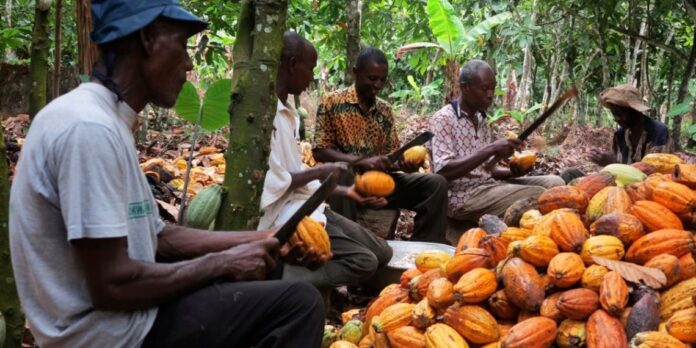
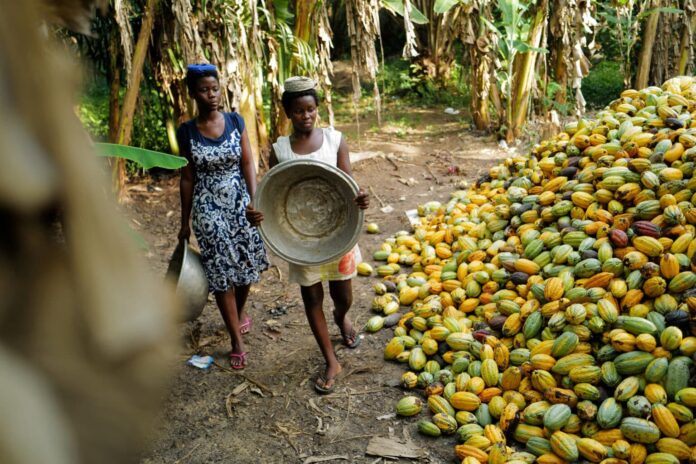
Ghana’s cocoa yields are expected to fall in the 2026/27 season as inclement weather, illegal mining and the expansion of rubber plantations reduce pod counts across growing regions, farmers said.
Some regions have been more impacted by the weather than others. In Ghana’s Western and Western North regions, which produce more than half of the country’s annual output, persistent rains have left trees with fewer pods than in previous seasons, farmers said.
In the Central and Eastern regions, where pods are still developing from flowers, farmers said pod counts remained strong.
Kwame Alex, one of Ghana’s largest growers, said heavy rain had left farms in the Western and Western North regions in poor condition. He expected his harvest to drop from 35 bags to 10 bags in the next season.
“I did everything required to maintain the farm, but the weather worked against us,” Alex said.
An official at one of Ghana’s licensed buying companies said on condition of anonymity that a significant decline was likely. The Concerned Farmers Association, which advocates for the welfare of farmers, also said a drop was expected.
Farmers all report heavier rains than usual linked to a strengthening El Nino weather pattern. The wet conditions fuel black pod disease, a fungal infection that can sharply reduce yields.
Pod counters in Ivory Coast also expect output to fall by more than 10% in the 2026/27 season.
Similar weather conditions in Ghana and Ivory Coast during the 2023/24 El Niño contributed to a tripling of global cocoa prices.
FARMLAND CLEARED FOR MINING, RUBBER
Harvests are also falling because farmland is being cleared to make way for mining and rubber plantations, permanently removing trees from production.
Nana Oboadie Boateng Bonsu, president of the Concerned Farmers Association, said illegal clearing continues because punishments are too light.
COCOBOD, the regulator, is pushing for new legislation to protect farmers, including stricter punishment for clearing farms, a requirement to replant three acres for every acre destroyed and higher compensation for impacted farmers.
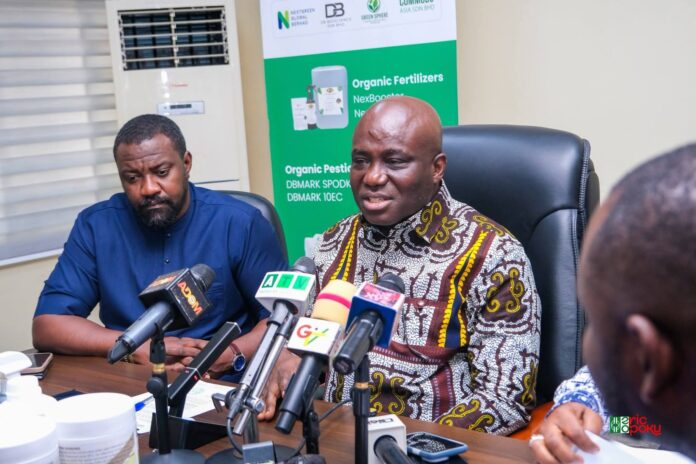
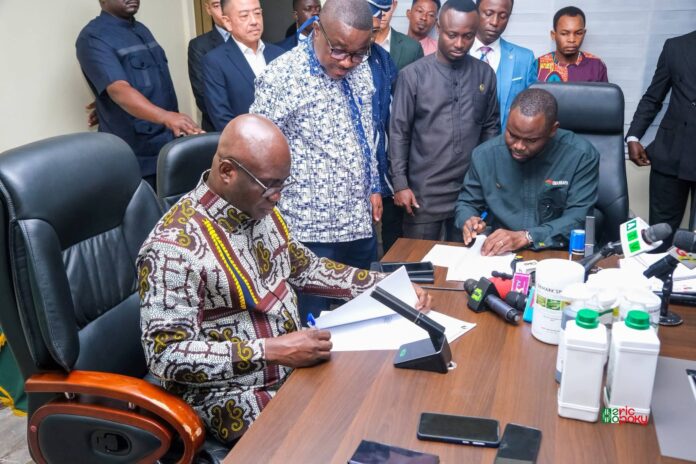
The Ministry of Food and Agriculture and Omanbapa AgriTech Limited have signed a Memorandum of Understanding to establish an organic fertiliser plant in Ghana to boost organic food production.
The agreement provides for the immediate commencement of the project, which would be situated between the Ashanti and Ahafo regions.
The project which will cost $10 million will initially operate as a blending plant using imported raw materials before transitioning into a full processing plant within one to two years’ time period.
“We are looking at how we can gradually transition from the use of inorganic or synthetic fertiliser to organic fertiliser. “We are concerned about the health of the soil; we want to protect the soil health for future production, and we are also concerned about the safety of the food that we put on the market for the Ghanaian people to consume,” Hon. Eric Opoku, the Minister of Food and Agriculture, said during the signing ceremony.
Minister explained that the project formed part of the Government’s agricultural transformation agenda to protect soil health and improve food safety.
He underscored the products haven undergone technical testing by the Plant Protection and Regulatory Services Directorate (PPRSD) and been certified for use in Ghana after demonstrating its potential to increasing food production.
From the reports of the farmers who tested the sampled products, he said they given positive results, providing the Ministry with both technical and practical evidence of its effectiveness.
He mentioned that the project would create additional income opportunities for farmers because agricultural waste materials, including maize husks and other crop residues would be purchased as raw materials for fertiliser plant.
He stressed that the government is poised of assisting farmers and the private sectors to thrive. “Ghana’s agriculture is mainly private led, and it’s the mandate of the government to provide the conducive atmosphere for them to thrive”.
Minister urged the Omanbapa AgriTech Limited and its partners to commence activities immediately to enhance quick delivery of the products to the farmers to facilitate organic production over inorganic production.
The Chief Executive Officer of Omanbapa Group, Mr Bernard Oduro Takyi, said the project would be implemented in three phases comprising the procurement of inputs, blending operations and full-scale manufacturing.
He reiterated that the company has planned to invest about US$10 million in the project.
According to him, the initial blending phase is expected to produce between 20,000 and 30,000 metric tonnes of fertiliser annually, while full-scale production could reach about 60,000 metric tonnes.
He said local production would make organic fertiliser relatively cheaper than imported alternatives and create employment opportunities for Ghanaians.
Mr Takyi added that the use of organic inputs would also support efforts to reduce agricultural waste, lower carbon emissions and improve the competitiveness of Ghanaian agricultural exports, particularly cocoa.
Under the agreement, the two parties are expected to establish a technical committee to determine the exact location of the plant and oversee implementation of the project.
To appreciate the dynamics, techniques, and give accurate and informed reporting in the media space, the Ministry of Fisheries and Aquaculture has engaged the media on its policies, activities, reforms, and achievements at the advent of the government.
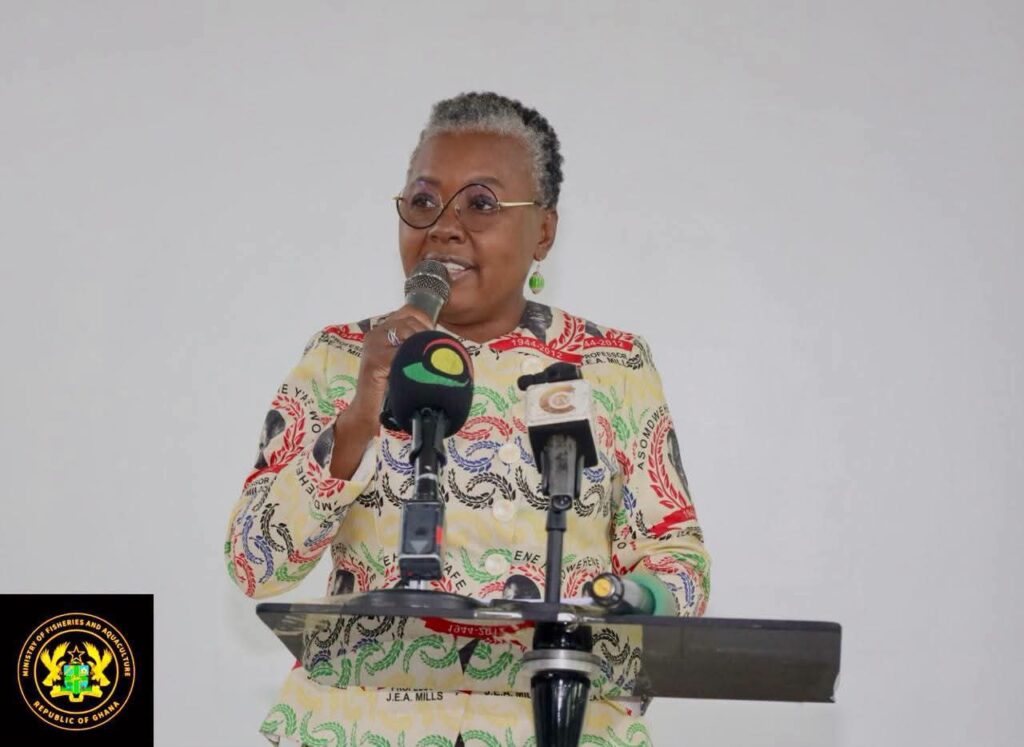
Addressing the media on the theme: Resetting Ghana’s Fisheries Sector for Sustainability, Jobs and Blue Economy Growth, the Minister of Fisheries and Aquaculture, Hon. Emelia Arthur, explained that the engagement aimed to account to the public on the activities of the ministry at the advent of this government.
Hon. Emelia Arthur, Minister of Fisheries and Aquaculture, explaining the responsibility of the government to protect the resources responsibly and ensure that the resources continue to sustain the livelihoods and nourish generations yet to come.
“It is my duty and privilege to account to the people of Ghana for the work we have undertaken since January 2025, the reforms we have initiated, the challenges we have confronted and the direction in which we are taking the fisheries and aquaculture sector,” she said.
She underscored the ministry’s responsibility for managing the nation’s resources that belong to the people of Ghana. She stressed that the government’s duty is to protect resources responsibly and ensure they continue to sustain livelihoods and nourish generations yet to come.
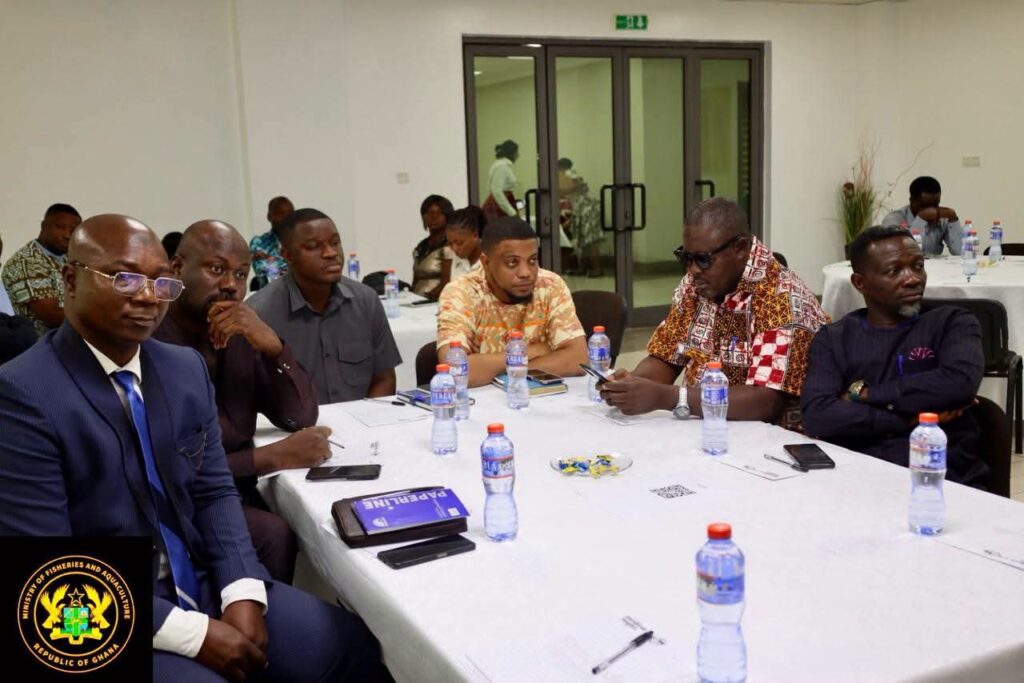
The Chief Director of the Ministry of Fisheries on the right and some of the Directors at the Ministry.
In response to the challenges faced by the sector, the government is poised to implement five transformational reforms to reset the fisheries sector by restoring sustainability, creating jobs, expanding aquaculture, promoting transparency, and positioning fisheries as a central pillar of Ghana’s Blue Economy.
The Five Transformational Reforms Agenda are: RESTORING GOOD GOVERNANCE Every transformational reform requires good governance. The foundation of every successful sector is good governance with the right laws, strong institutions, transparency and accountability.
According to the Minister, the remarkable achievement of this government is the passage of the Fisheries and Aquaculture Act, 2025 (Act 1146) that replaces the Fisheries Act of 2002.
The new Act seeks to strengthen the Fisheries Commission, establishes a dedicated Fisheries Enforcement Unit, creates a Fisheries and Aquaculture Development Fund, provide for aquaculture development zones, strengthen measures against Illegal, unreported and unregulated fishing, and most importantly, extend the Inshore Exclusion Zone to twelve nautical miles to provide stronger protection for small-scale fishers and critical breeding grounds.
Transparency is critical in good governance. She expressed that to ensure good governance, the ministry has inaugurated Ghana’s Fisheries Transparency Initiative National Multi-Stakeholder Group, and continued to strengthen Ghana’s international commitments, including the implementation of the World Trade Organization Agreement on Fisheries Subsidies.
Some of the Directors at the Ministry.
This, she mentioned, would promote openness, accountability and inclusive decision-making, eliminating harmful fishing practices, promoting responsible fisheries management and contributing to global efforts to protect marine resources.
RESTORING FISHING RESOURCES To restore the fishing resources, she opined that one of the most historic achievements of this administration has been the establishment of Ghana’s first Marine Protected Area.
Following Cabinet approval, she mentioned that the Government has officially declared the Greater Cape Three Points Marine Protected Area. The protected marine area will help restore fish stocks, protect biodiversity, strengthen climate resilience, and secure the ecological foundation upon which coastal livelihoods depend.
She, however, expressed concern about illegal mining activities along the Cape Three Points forest area, where polluted water is flowing into the marine environment around that important ecosystem.
RESTORING TRUST THROUGH BETTER SERVICE DELIVERY Restoring trust in Ghanaians through better service delivery, one of the service delivery areas that has been responsibly managed in the fishing communities is with reference to premix fuel distribution challenges.
The shortages, delays, and the price hikes of the premix fuel are now a thing of the past for the smallholder fishers in the fishing communities, bringing restoration and confidence in the government.
For many smallholder fishers, the premix fuel is not just an operational input but a tool for sustainable livelihood and economic development.
Digitalization is key to every sector’s development and reformation; the Fisheries Ministry has digitized Ghana’s premix fuel distribution system to improve transparency and reduce opportunities for manipulation.
According to the Minister, out of 157 planned automation sites, 138 have been completed and equipped, with 74 already operational, including 24 commissioned during the first half of this year.
The National Premix Fuel Secretariat’s Premix Tracker and Dashboard now provide greater visibility across the supply chain, enabling improved monitoring, accountability and decision-making.
TRANSFORMING FISH PRODUCTION The fourth reform to reset the fisheries sector is transforming fish production. Over the decades, Ghana’s fisheries conversation has focused primarily on managing declining wild fish stocks, but the reality is that Ghana cannot conserve its way to food security.
According to statistics, Minister stressed, Ghana consumes approximately 1.2 million metric tons, yet domestic production remains a little above 700,000 tons, creating an import gap.
To close the gap, aquaculture cannot remain a secondary activity. The vision of the ministry is to build an aquaculture industry that is commercially viable, environmentally sustainable, and capable of supplying both domestic and export markets.
To achieve this, the government has launched the Komfueku– Aquaculture Project, which is transforming abandoned clay and quarry pits into productive commercial fish farms through partnerships with the private sector.
This initiative will create jobs. Increase fish production. Provide technical support. Improve market access and create sustainable income opportunities for surrounding communities.
Moreover, historically, the government has introduced offshore mariculture, and a provisional license has been issued for commercial offshore marine aquaculture.
This chapter where we responsibly harness Ghana’s marine resources while reducing pressure on wild fish stocks.
BUILDING GHANA’S BLUE ECONOMY Blue Economy is the sustainable use of ocean, sea, and coastal resources for economic growth, improved livelihoods, and marine ecosystem health.
Some of the media reporters at the mid-year engagement.
To manage the ocean, sea, and coastal resources wisely enough to create wealth that benefits all Ghanaians, the government has completed the development of Ghana’s Blue Economy Strategy and has prepared a comprehensive Blue Economy Policy framework to guide its implementation. A bill is being prepared to cabinet for a law governing Ghana’s blue economy.
These frameworks would provide a roadmap for transforming Ghana’s marine and inland water resources into engines of inclusive economic growth, climate resilience and sustainable livelihoods.
ACHIEVEMENTS/ SUCCESS SO FAR Although the government is less than two years in office, massive transformations have been made, creating opportunities for Ghanaians. Some of the achievements are; • The passage of a landmark Fisheries and Aquaculture Act. • The establishment of Ghana’s first Marine Protected Area. • Improving premix fuel supply and introducing stronger accountability systems. • Expanded aquaculture development. • Opening new opportunities through offshore mariculture. • Advancing Ghana’s Blue Economy agenda. • Strengthened partnerships for investment, knowledge and innovation. • Replacing outdated systems with modern governance and many more.
The Minister commended the media for continuing cooperation to inform Ghanaians, amplify the voices of our fishing communities and hold public institutions accountable.
She concluded that these achievements are just a stepping stone to the sector’s greatness.
The Ministry of Food and Agriculture has pushed back against concerns over delays in the distribution of farm inputs for the 2026 farming season, insisting that the timing of deliveries is being aligned with the actual crop production cycle.
In a statement issued, the Ministry said distributing inputs too early could create risks including improper storage, diversion, and application outside the recommended period.
It explained that in northern Ghana, where the major farming season begins in May, fertiliser application typically takes place between late June and the end of July.
The Ministry therefore said that inputs for the northern farming season were distributed within the recommended application window.
For southern Ghana, however, the focus is now shifting to the minor farming season, which begins in August, with distribution to targeted areas currently underway.
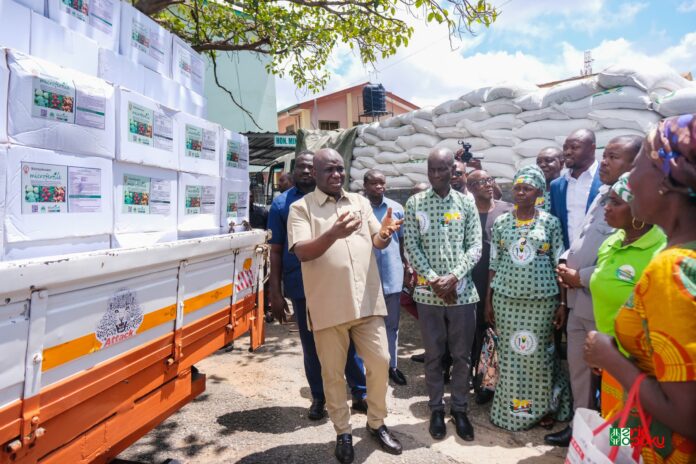
As part of the intervention, the Ministry says 40,000 bags of inorganic fertiliser have been allocated to the Peasant Farmers Association of Ghana for distribution to vulnerable farmers who may not have been covered under allocations channelled through Metropolitan, Municipal and District Assemblies.
The intervention also extends to selected irrigation schemes, where the Ministry says it has supplied inputs to support production during the lean season.
Vegetable producers, particularly tomato farmers in targeted production areas, have also received seeds and organic fertilisers, while farmers engaged in irrigated agriculture are expected to receive additional support under the government’s dry-season production initiative.
The Ministry says the interventions are targeted at vulnerable farmers and are designed to provide an emergency cushion against high production costs while boosting output and strengthening food security.
It adds that field officers are supervising the distribution and use of the inputs to ensure that the intended beneficiaries receive the required support.
The Ministry is also projecting an increase in agricultural production this year, citing favourable rainfall patterns and ongoing interventions.
It says the 2026 farming season targets could even be exceeded as government works to transform agriculture from subsistence activity into a more profitable and competitive enterprise.
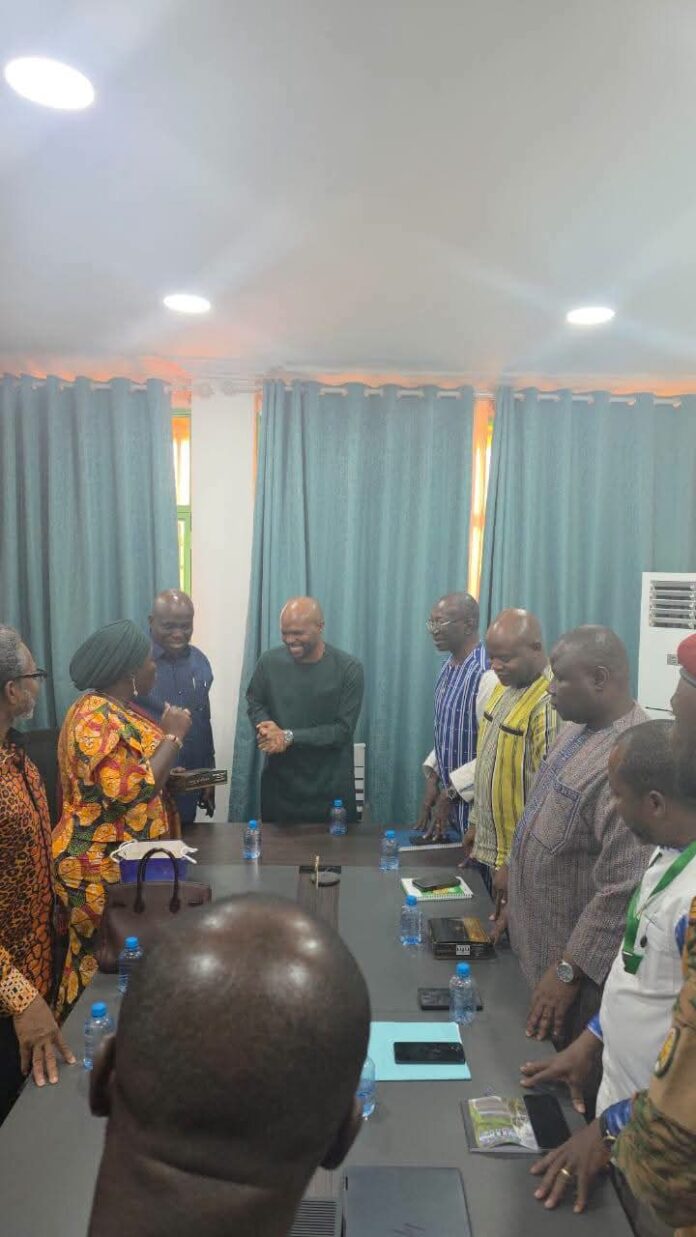
Ghana has secured the removal of restrictions on the importation of tomatoes from Burkina Faso and the exportation of eggs to Burkina, following engagements between officials of the two countries to strengthen bilateral trade.
The agreement was reached after a high-level Ghanaian delegation, led the Minister for Food and Agriculture Eric Opoku, and the Minister for Trade, Agribusiness and Industry, Elizabeth Ofosu-Adjare held discussions with Burkina Faso authorities on Friday, July 17.
The two ministries said the outcome of the meeting provides relief for Ghanaian poultry producers and egg exporters, particularly those in the Dormaa area, whose exports had recently been affected by restrictions imposed by Burkina Faso.
Burkinabe authorities had introduced the restrictions as a precautionary measure following concerns over quality issues associated with eggs from some exporting countries.
In a press statement, the government assured the private sector that it remains committed to protecting the interests of Ghanaian traders and producers while promoting stronger trade relations with neighbouring countries.
The two countries have also agreed to establish a Joint Technical Committee to ensure smooth trade flows and promptly address any challenges that may arise.
Additionally, Ghana and Burkina Faso are expected to work towards a Bilateral Trade Agreement aimed at strengthening economic cooperation, reducing trade barriers and improving market access for goods and services.
The engagement also covered Ghana’s participation in this year’s International Arts and Crafts Trade Fair (SIAO) in Burkina Faso. The Minister for Trade, Agribusiness and Industry informed Burkina Faso authorities that Ghana would present a high-level delegation to showcase locally made products and services.
Ghana’s exports to Burkina Faso have been on an upward trend, increasing from US$573 million in 2024 to US$637 million in 2025, according to the Ministry.
The Ghanaian delegation included Ghana’s Ambassador to Burkina Faso, HE Sem Kenneth Akibate, officials from the Embassy, technical representatives from the Ministry of Trade, Agribusiness and Industry, and members of the private sector, including representatives of egg exporters.
Both countries reaffirmed their commitment to ensuring that trade between them remains uninterrupted and beneficial to traders, producers and consumers on both sides.
The West Africa Centre for Agribusiness and Apiculture Development (WACAAD), with funding support from the European Union, has organised the inaugural Ghana Forum for Beekeeping and Biodiversity Initiative (GhaFBBI) – the country’s first national conference dedicated to advancing the growth of Ghana’s apiculture sector.
The pioneering initiative aims to establish a credible, enforceable quality and safety framework for Ghana’s honey industry, strengthening traceability, improving production standards and positioning Ghana’s honey for international markets.
The GhaFBBI programme included the official inauguration of “Ghana HiveHoney”, the country’s first beekeeping-sector Collective Mark. As a nationally recognised symbol of safe, traceable and sustainably produced honey, the Collective Mark is expected to support the development of export-ready value chains, promote industry-wide standards and codes of practice, and prepare as well as enhance the competitiveness of Ghana’s honey in regional and international markets.
“Even if we are already the largest export market in the world, the European Union is committed to expanding trade with Ghana. Through this collaboration, we are supporting traceability and sustainability efforts that help Ghanaian products, including honey, meet EU market requirements. This opens new export opportunities, creates jobs, and strengthens the private sector,” stated EU Ambassador to Ghana, H.E. Mr. Rune Skinnebach.
“This initiative is a giant stride in our ambition to place verifiably safe, traceable Ghanaian honey on shelves at home and abroad. Together with the EU and our partners, WACAAD is building a sector defined by integrity, sustainability and opportunities,” added Dr John Kojo Ahiakpa, Chief Executive Officer of the West Africa Centre for Agribusiness and Apiculture.
The GhaFBBI programme is organised in collaboration with key government institutions including the Ghana Standards Authority, the Food and Drugs |, Authority, the Veterinary Services Directorate, the Animal Production Directorate of the Ministry of Food and Agriculture, and the Forestry Commission.
The Ministry of Food and Agriculture has received a Nissan Pickup, a tractor with implements, and 20 motorbikes from EEZZY Group Foundation to support the hardworking farmers.
The donation, marked by a ceremony, was attended by the Directors of the Ministry and many stakeholders.
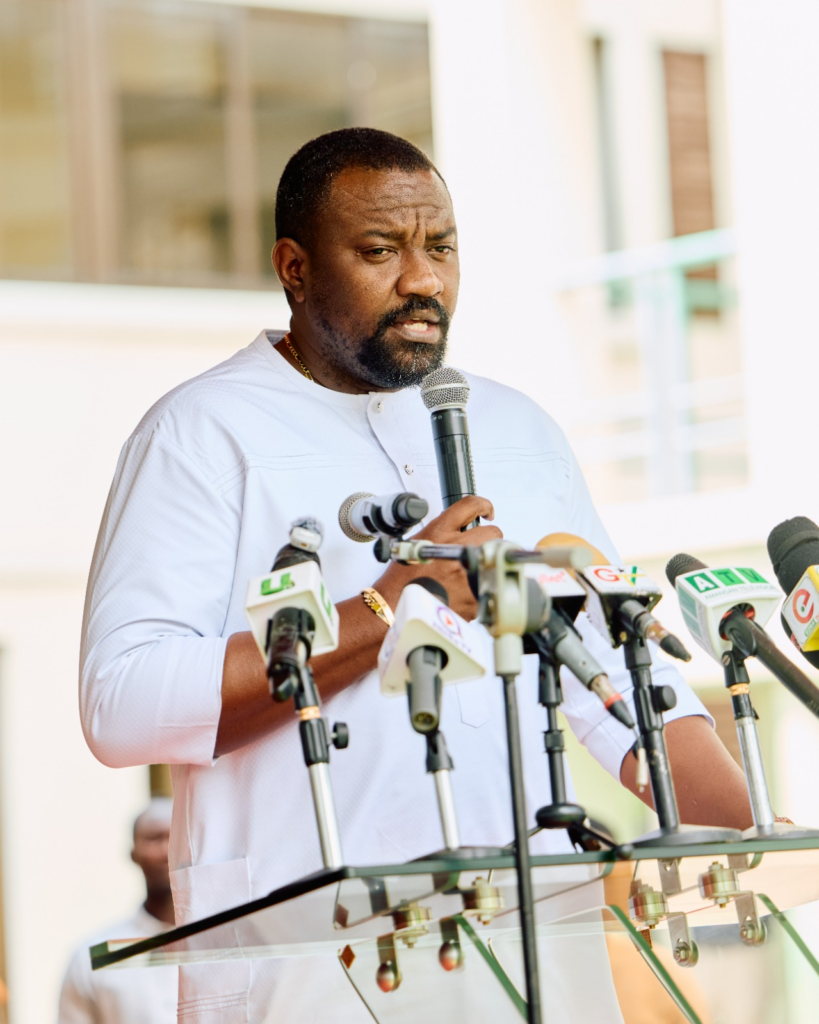
Delivering the opening remarks at the ceremony, the Chairman for the 42nd National Farmers’ Day Planning Committee, who doubles as the Deputy Minister of Food and Agriculture, Hon. John Dumelo, expressed his gratitude to EEZZY Group Foundation for its generosity to the farmers.
“Your generous donation is a strong demonstration of your company’s commitment to agriculture and to recognising the invaluable contribution of Ghanaian farmers to food security, employment and national development,” he added.
He expressed that the prizes are the productive assets to expand farmers’ operations, improve their efficiency, and inspire other farmers to strive for greater achievement.
Hon. John Dumelo, the Chairman of the National Farmers’ Day Planning Committee, delivered a speech at the EEZZY Group Foundation’s donation ceremony
He extolled EEZZY Group for the kind gesture and the support to the farmers.
The Chief Executive Officer of the EEZZY Group Foundation, Mohammed Raii, acknowledged agriculture as the backbone of national development and assured the company’s commitment to supporting the sector.
He praised President John Dramani Mahama for prioritizing agriculture for national development. “I have never seen a leader who thinks more about the future of this great country than President John Dramani Mahama. His commitment to agriculture and national development is inspiring, and we are honoured to support this vision,” he added.
Chief Executive Officer of the EEZZY Group Foundation, Mohammed Raii, stated that supporting Ghana’s agriculture means supporting every Ghanaian family, and without agriculture, there is no nation and no future.
According to him, supporting Ghana’s agriculture means supporting every Ghanaian family, and without agriculture, there is no nation and no future.
He reassured the company’s readiness to continue partnering with the government on initiatives that improve livelihoods and promote sustainable national development.
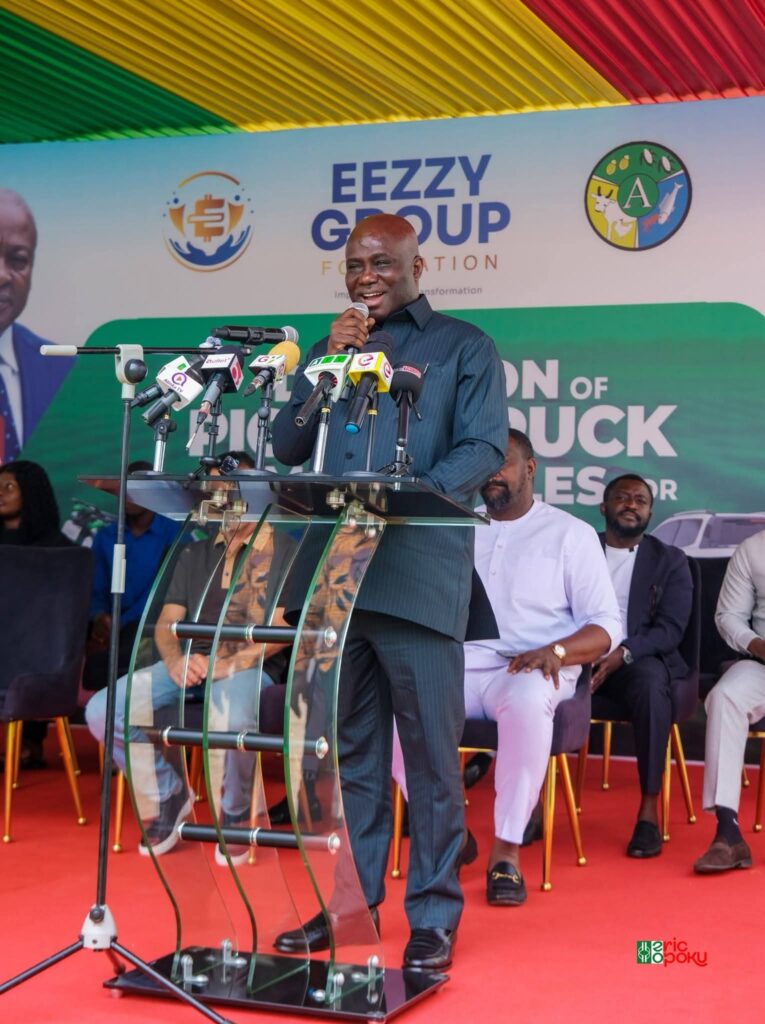
Hon. Minister Eric Opoku, receiving the donation on behalf of the Ministry of Food and Agriculture, expressed profound gratitude to EEZZY Group, demonstrating exemplary corporate citizenship through their generous support.
Hon. Eric Opoku, the Minister of Food and Agriculture commending EEZZY Group’s remarkable contribution that reflects genuine commitment to Ghana’s farmers.
Minister expressed that the EEZZY Group’s donation would enhance the value of this year’s awards and contribute directly to improving agricultural productivity.
He declared that the overall national best farmer winner will receive an extraordinary package prize comprising;
GHS1.2 million cash prize
A brand-new Nissan pickup vehicle from EEZZY Group
A brand-new tractor with complete implements from EEZZY Group
Modern farm inputs
Hon. Eric Opoku described the support as one of the biggest corporate contributions towards the 42nd National Farmers’ Day Celebration.
“This is a remarkable contribution that reflects genuine commitment to Ghana’s farmers. We are deeply grateful to EEZZY Group for partnering with the government to honour those who feed our nation,” the Minister added.
He stressed that with the combined support of the government, corporate institutions and the general public, the celebration aims not only to recognize the outstanding farmers but also to inspire greater investment in agriculture, strengthen food security and accelerate economic transformation.
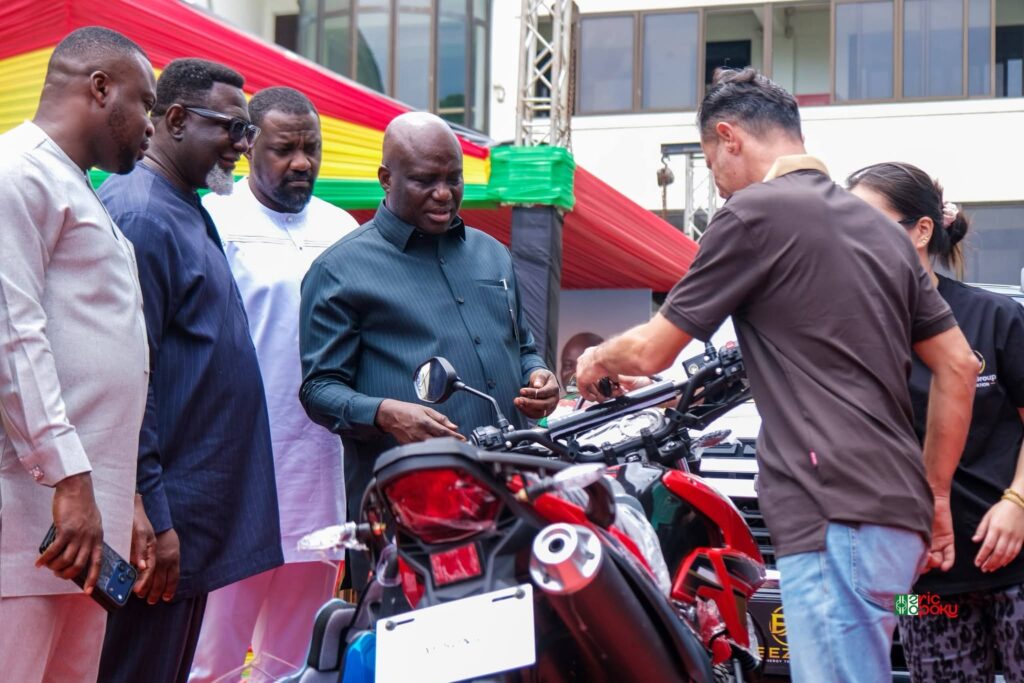
Hon. Minister Eric Opoku, receiving motorbikes from the EEZZY Group Foundation to enhance farmers’ activities.
He declared that the Chairman of the National Farmers’ Day Planning Committee, John Dumelo, will soon announce the official bank account details to enable individuals and organizations that want to contribute privately to do so.
He assured that at the end of the fundraising, the Ministry will publicly account for all the donations received privately.
Minister called on all the agencies and corporate institutions to contribute their quota to the recognition of the gallant farmers who toil to feed the nation.